Point cloud registration is a key task in many computational fields. Previous correspondence matching-based methods require the inputs to have distinctive geometric structures to fit a 3D rigid transformation according to point-wise sparse feature matches. However, the accuracy of transformation heavily relies on the quality of extracted features, which are prone to errors with respect to partiality and noise. In addition, they can not utilize the geometric knowledge of all the overlapping regions. On the other hand, previous global feature-based approaches can utilize the entire point cloud for the registration; however, they ignore the negative effect of non-overlapping points when aggregating global features. In this paper, we present a global feature-based iterative network for partial-to-partial point cloud registration. We learn overlapping masks to reject non-overlapping regions, which converts the partial-to-partial registration to the registration of the same shape. Moreover, the previously used data is sampled only once from the CAD models for each object, resulting in the same point clouds for the source and reference. We propose a more practical manner of data generation where a CAD model is sampled twice for the source and reference, avoiding the previously prevalent over-fitting issue. Experiments show that our method achieves state-of-the-art performance compared to traditional and deep learning-based methods. Furthermore, extensive evaluations on real-world datasets, including Stanford 3D Scanning, 3DMatch, and KITTI, demonstrate that our method generalizes well to real-world object scans, indoor scenes, and outdoor scenarios. Code is available on https://github.com/hxwork/OMNet_Pytorch .
Accurate segmentation of lesions is crucial for diagnosis and treatment of early esophageal cancer (EEC). However, neither traditional nor deep learning-based methods up to today can meet the clinical requirements, with the mean Dice score - the most important metric in medical image analysis - hardly exceeding 0.75. In this paper, we present a novel deep learning approach for segmenting EEC lesions. Our method stands out for its uniqueness, as it relies solely on a single input image from a patient, forming the so-called "You-Only-Have-One" (YOHO) framework. On one hand, this "one-image-one-network" learning ensures complete patient privacy as it does not use any images from other patients as the training data. On the other hand, it avoids nearly all generalization-related problems since each trained network is applied only to the same input image itself. In particular, we can push the training to "over-fitting" as much as possible to increase the segmentation accuracy. Our technical details include an interaction with clinical doctors to utilize their expertise, a geometry-based data augmentation over a single lesion image to generate the training dataset (the biggest novelty), and an edge-enhanced UNet. We have evaluated YOHO over an EEC dataset collected by ourselves and achieved a mean Dice score of 0.888, which is much higher as compared to the existing deep-learning methods, thus representing a significant advance toward clinical applications. The code and dataset are available at: https://github.com/lhaippp/YOHO.
Highly variable polarimetric signatures caused by complex structures in built-up areas make interpretation of these scattering behaviors intractable for polarimetric synthetic aperture radar (PolSAR) remote sensing. This article proposes a fine polarimetric decomposition method and derives several products to finely simulate the scattering mechanisms of urban buildings, thus fulfilling its use for effective surveillance. First, through theoretically establishing the roll-invariant condition for a completely general scatterer, a roll-invariant cross polarization (RICP) scattering model is constructed, which characterizes the cross polarization scattering in the manner of planar structure distribution. Second, by designing a root-discriminant-based parameter inversion strategy, a fine seven-component decomposition is proposed, which achieves the complete physical interpretation of matrix elements and reasonable inversion of model parameters. Third, by analyzing the external and internal scattering difference, the derivative products, i.e., scattering contribution synthesizers, are derived for built-up area monitoring. On the one hand, the experimental results derived from real PolSAR data confirm the superiority and effectiveness of the constructed descriptors. On the other hand, the extensibility of fine polarimetric decomposition in specific remote sensing is also explicitly demonstrated.
The paper proposes a method to effectively fuse multi-exposure inputs and generate high-quality high dynamic range (HDR) images with unpaired datasets. Deep learning-based HDR image generation methods rely heavily on paired datasets. The ground truth images play a leading role in generating reasonable HDR images. Datasets without ground truth are hard to be applied to train deep neural networks. Recently, Generative Adversarial Networks (GAN) have demonstrated their potentials of translating images from source domain $X$ to target domain $Y$ in the absence of paired examples. In this paper, we propose a GAN-based network for solving such problems while generating enjoyable HDR results, named UPHDR-GAN. The proposed method relaxes the constraint of the paired dataset and learns the mapping from the LDR domain to the HDR domain. Although the pair data are missing, UPHDR-GAN can properly handle the ghosting artifacts caused by moving objects or misalignments with the help of the modified GAN loss, the improved discriminator network and the useful initialization phase. The proposed method preserves the details of important regions and improves the total image perceptual quality. Qualitative and quantitative comparisons against the representative methods demonstrate the superiority of the proposed UPHDR-GAN.
Mobile captured images can be aligned using their gyroscope sensors. Optical image stabilizer (OIS) terminates this possibility by adjusting the images during the capturing. In this work, we propose a deep network that compensates for the motions caused by the OIS, such that the gyroscopes can be used for image alignment on the OIS cameras. To achieve this, we first record both videos and gyroscope readings with an OIS camera as training data. Then, we convert gyroscope readings into motion fields. Second, we propose an Essential Mixtures motion model for rolling shutter cameras, where an array of rotations within a frame are extracted as the ground-truth guidance. Third, we train a convolutional neural network with gyroscope motions as input to compensate for the OIS motion. Once finished, the compensation network can be applied for other scenes, where the image alignment is purely based on gyroscopes with no need for images contents, delivering strong robustness. Experiments show that our results are comparable with that of non-OIS cameras, and outperform image-based alignment results with a relatively large margin. Code and dataset is available at: https://github.com/lhaippp/DeepOIS .
Data association is important in the point cloud registration. In this work, we propose to solve the partial-to-partial registration from a new perspective, by introducing multi-level feature interactions between the source and the reference clouds at the feature extraction stage, such that the registration can be realized without the attentions or explicit mask estimation for the overlapping detection as adopted previously. Specifically, we present FINet, a feature interaction-based structure with the capability to enable and strengthen the information associating between the inputs at multiple stages. To achieve this, we first split the features into two components, one for rotation and one for translation, based on the fact that they belong to different solution spaces, yielding a dual branches structure. Second, we insert several interaction modules at the feature extractor for the data association. Third, we propose a transformation sensitivity loss to obtain rotation-attentive and translation-attentive features. Experiments demonstrate that our method performs higher precision and robustness compared to the state-of-the-art traditional and learning-based methods. Code is available at https://github.com/megvii-research/FINet.
Panorama images have a much larger field-of-view thus naturally encode enriched scene context information compared to standard perspective images, which however is not well exploited in the previous scene understanding methods. In this paper, we propose a novel method for panoramic 3D scene understanding which recovers the 3D room layout and the shape, pose, position, and semantic category for each object from a single full-view panorama image. In order to fully utilize the rich context information, we design a novel graph neural network based context model to predict the relationship among objects and room layout, and a differentiable relationship-based optimization module to optimize object arrangement with well-designed objective functions on-the-fly. Realizing the existing data are either with incomplete ground truth or overly-simplified scene, we present a new synthetic dataset with good diversity in room layout and furniture placement, and realistic image quality for total panoramic 3D scene understanding. Experiments demonstrate that our method outperforms existing methods on panoramic scene understanding in terms of both geometry accuracy and object arrangement. Code is available at https://chengzhag.github.io/publication/dpc.
Point cloud registration is a key task in many computational fields. Previous correspondence matching based methods require the inputs to have distinctive geometric structures to fit a 3D rigid transformation according to point-wise sparse feature matches. However, the accuracy of transformation heavily relies on the quality of extracted features, which are prone to errors with respect to partiality and noise. In addition, they can not utilize the geometric knowledge of all the overlapping regions. On the other hand, previous global feature based approaches can utilize the entire point cloud for the registration, however they ignore the negative effect of non-overlapping points when aggregating global features. In this paper, we present OMNet, a global feature based iterative network for partial-to-partial point cloud registration. We learn overlapping masks to reject non-overlapping regions, which converts the partial-to-partial registration to the registration of the same shape. Moreover, the previously used data is sampled only once from the CAD models for each object, resulting in the same point clouds for the source and reference. We propose a more practical manner of data generation where a CAD model is sampled twice for the source and reference, avoiding the previously prevalent over-fitting issue. Experimental results show that our method achieves state-of-the-art performance compared to traditional and deep learning based methods. Code is available at https://github.com/megvii-research/OMNet.
Removing rain from images is of a great importance to various applications such as autonomous driving, drone piloting, and photo editing. Conventional methods rely on some heuristics to handcraft various priors to remove or separate rain from images. Recently, deep learning models are proposed to learn various end-to-end methods to complete this task. However, these methods might fail in obtaining satisfactory results in some real-world scenarios, especially when the captured images suffer from heavy rain that brings not only rain streaks but also a haze-like effect (caused by the accumulation of tiny raindrops). Different from most of the existing deep learning deraining methods that focus on handling rain streaks, we add a new variable to model the haze-like effect in a general model for rain, based on which a deep neural network is designed accordingly. Specifically, in our method, two branches are designed to handle rain streaks and the haze-like effect, respectively. The output of such branch structure is fed to an additional module to further enhance the performance. Three modules are trained jointly, leading to an end-to-end network, which supports a adjustment to the strength of removing the haze-like effect. Extensive experiments on several datasets show that our method outperforms several state-of-the-art methods in both objective assessment and visual quality.
In this work, we study the problem of separating the global camera motion and the local dynamic motion from an optical flow. Previous methods either estimate global motions by a parametric model, such as a homography, or estimate both of them by an optical flow field. However, none of these methods can directly estimate global and local motions through an end-to-end manner. In addition, separating the two motions accurately from a hybrid flow field is challenging. Because one motion can easily confuse the estimate of the other one when they are compounded together. To this end, we propose an end-to-end global and local motion estimation network GLM-Net. We design two encoder-decoder structures for the motion separation in the optical flow based on different task orientations. One structure adopts a mask autoencoder to extract the global motion, while the other one uses attention U-net for the local motion refinement. We further designed two effective training methods to overcome the problem of lacking supervisions. We apply our method on the action recognition datasets NCAA and UCF-101 to verify the accuracy of the local motion, and the homography estimation dataset DHE for the accuracy of the global motion. Experimental results show that our method can achieve competitive performance in both tasks at the same time, validating the effectiveness of the motion separation.
The channel redundancy of convolutional neural networks (CNNs) results in the large consumption of memories and computational resources. In this work, we design a novel Slim Convolution (SlimConv) module to boost the performance of CNNs by reducing channel redundancies. Our SlimConv consists of three main steps: Reconstruct, Transform, and Fuse. It aims to reorganize and fuse the learned features more efficiently, such that the method can compress the model effectively. Our SlimConv is a plug-and-play architectural unit that can be used to replace convolutional layers in CNNs directly. We validate the effectiveness of SlimConv by conducting comprehensive experiments on various leading benchmarks, such as ImageNet, MS COCO2014, Pascal VOC2012 segmentation, and Pascal VOC2007 detection datasets. The experiments show that SlimConv-equipped models can achieve better performances consistently, less consumption of memory and computation resources than non-equipped counterparts. For example, the ResNet-101 fitted with SlimConv achieves 77.84% top-1 classification accuracy with 4.87 GFLOPs and 27.96M parameters on ImageNet, which shows almost 0.5% better performance with about 3 GFLOPs and 38% parameters reduced.
Ancylostomiasis is a fairly common small bowel parasite disease identified by capsule endoscopy (CE) for which a computer-aided clinical detection method has not been established. We sought to develop an artificial intelligence system with a convolutional neural network (CNN) to automatically detect hookworms in CE images. We trained a deep CNN system based on a YOLO-V4 (You Look Only Once-Version4) detector using 11236 CE images of hookworms. We assessed its performance by calculating the area under the receiver operating characteristic curve and its sensitivity, specificity, and accuracy using an independent test set of 10,529 small-bowel images including 531 images of hookworms. The trained CNN system required 403 seconds to evaluate 10,529 test images. The area under the curve for the detection of hookworms was 0.972 (95% confidence interval (CI), 0.967-0.978). The sensitivity, specificity, and accuracy of the CNN system were 92.2%, 91.1%, and 91.2%, respectively, at a probability score cut-off of 0.485. We developed and validated a CNN-based system for detecting hookworms in CE images. By combining this high-accuracy, high-speed, and oversight-preventing system with other CNN systems, we hope it will become an important supplement for detecting intestinal abnormalities in CE images. This trial is registered with ChiCTR2000034546 (a clinical research of artificial-intelligence-aided diagnosis for hookworms in small intestine by capsule endoscope images).
Existing deep deraining models are mainly learned via directly minimizing the statistical differences between rainy images and rain-free ground truths. They emphasize learning a mapping from rainy images to rain-free images with supervision. Despite the demonstrated success, these methods do not perform well on restoring the fine-grained local details or removing blurry rainy traces. In this work, we aim to exploit the intrinsic priors of rainy images and develop intrinsic loss functions to facilitate training deraining networks, which decompose a rainy image into a rain-free background layer and a rainy layer containing intact rain streaks. To this end, we introduce the quasi-sparsity prior to train network so as to generate two sparse layers with intact textures of different objects. Then we explore the low-value prior to compensate sparsity, forcing all rain streaks to enter into one layer while non-rain con-tents into another layer to restore image details. We introduce a multi-decoding structure to specially supervise the generation of multi-type deraining features. This helps to learn the most contributory features to deraining in respective spaces. Moreover, our model stabilizes the feature values from multi-spaces via information sharing to alleviate potential artifacts, which also accelerates the running speed. Extensive experiments show that the proposed de-raining method outperforms the state-of-the-art approaches in terms of effectiveness and efficiency.
In this supplementary material, we provide the detailed network architecture, implementation details, 3D detection on all categories, more qualitative results, and discussion of failure cases.
Single image deraining regards an input image as a fusion of a background image, a transmission map, rain streaks, and atmosphere light. While advanced models are proposed for image restoration (i.e., background image generation), they regard rain streaks with the same properties as background rather than transmission medium. As vapors (i.e., rain streaks accumulation or fog-like rain) are conveyed in the transmission map to model the veiling effect, the fusion of rain streaks and vapors do not naturally reflect the rain image formation. In this work, we reformulate rain streaks as transmission medium together with vapors to model rain imaging. We propose an encoder-decoder CNN named as SNet to learn the transmission map of rain streaks. As rain streaks appear with various shapes and directions, we use ShuffleNet units within SNet to capture their anisotropic representations. As vapors are brought by rain streaks, we propose a VNet containing spatial pyramid pooling (SSP) to predict the transmission map of vapors in multi-scales based on that of rain streaks. Meanwhile, we use an encoder CNN named ANet to estimate atmosphere light. The SNet, VNet, and ANet are jointly trained to predict transmission maps and atmosphere light for rain image restoration. Extensive experiments on the benchmark datasets demonstrate the effectiveness of the proposed visual model to predict rain streaks and vapors. The proposed deraining method performs favorably against state-of-the-art deraining approaches.
The paper proposes a solution to effectively handle salient regions for style transfer between unpaired datasets. Recently, Generative Adversarial Networks (GAN) have demonstrated their potentials of translating images from source domain ${X}$ to target domain ${Y}$ in the absence of paired examples. However, such a translation cannot guarantee to generate high perceptual quality results. Existing style transfer methods work well with relatively uniform content, they often fail to capture geometric or structural patterns that always belong to salient regions. Detail losses in structured regions and undesired artifacts in smooth regions are unavoidable even if each individual region is correctly transferred into the target style. In this paper, we propose SDP-GAN, a GAN-based network for solving such problems while generating enjoyable style transfer results. We introduce a saliency network, which is trained with the generator simultaneously. The saliency network has two functions: (1) providing constraints for content loss to increase punishment for salient regions, and (2) supplying saliency features to generator to produce coherent results. Moreover, two novel losses are proposed to optimize the generator and saliency networks. The proposed method preserves the details on important salient regions and improves the total image perceptual quality. Qualitative and quantitative comparisons against several leading prior methods demonstrates the superiority of our method.
We present a new deep point cloud rendering pipeline through multi-plane projections. The input to the network is the raw point cloud of a scene and the output are image or image sequences from a novel view or along a novel camera trajectory. Unlike previous approaches that directly project features from 3D points onto 2D image domain, we propose to project these features into a layered volume of camera frustum. In this way, the visibility of 3D points can be automatically learnt by the network, such that ghosting effects due to false visibility check as well as occlusions caused by noise interferences are both avoided successfully. Next, the 3D feature volume is fed into a 3D CNN to produce multiple layers of images w.r.t. the space division in the depth directions. The layered images are then blended based on learned weights to produce the final rendering results. Experiments show that our network produces more stable renderings compared to previous methods, especially near the object boundaries. Moreover, our pipeline is robust to noisy and relatively sparse point cloud for a variety of challenging scenes.
Legged robots have become a hot topic in robotics owing to their superior mobility. In this study, a two-segment hydraulic robotic leg with the kinematic model is first presented. In this leg, the tracking accuracy of the joint angle depends on the kinematic model precision. However, this model is highly nonlinear and it is very difficult to obtain accurate parameters by means of traditional techniques. To overcome this problem, it is converted into a constrained multimodal function optimization problem; thereafter, a novel kinematic calibration method based on an improved whale swarm algorithm (IWSA) is proposed. Several modification strategies are implemented to improve the searching ability and robustness of the IWSA. Moreover, an effective constraint-handling mechanism is designed for the IWSA. To evaluate the IWSA performance, we compare the IWSA with the WSA and other algorithms on several benchmark functions and calibration experiments. The results indicate the superiority of the IWSA over its competitors. The further case study shows that the tracking accuracy is significantly improved after calibration, which confirms the application effectiveness of the proposed IWSA-based calibration method.
This two volume set of PCM 2017 proceedings presented papers on theoretical, experimental, and applied multimedia analysis and processing.
 Shuaicheng Liu (刘帅成)合作论文数School of Information and Communication Engineering, University of Electronic Science and Technology;Megvii Research20
 Yrjo Neuvo合作论文数13Laakso, T.合作论文数4
 Anastasios (Tas) Venetsanopoulos合作论文数Edward S. Rogers Sr. Department of Electrical and Computer Engineering, Faculty of Applied Science and Engineering, University of Toronto4Hartimo, I.合作论文数4Yinglong Wang合作论文数3Taotao Yang合作论文数3
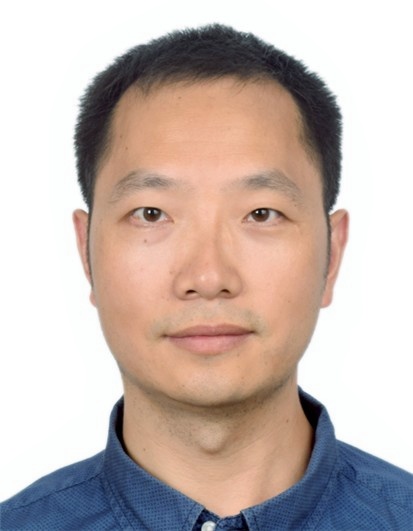 Zhengning Wang (王正宁)合作论文数School of Information and Communication Engineering, University of Electronic Science and Technology of China3
 Jue Wang (王珏)合作论文数3
 Guanghui Liu (刘光辉)合作论文数Glasgow College Hainan, University of Electronic Science and Technology of China3
 Yinda Zhang合作论文数3Guobin (Jacky) Shen合作论文数Zepp Labs3Sun Chao合作论文数2Hao Xu合作论文数2
 Dehua Xie合作论文数Univ Elect Sci & Technol China, Chengdu, Sichuan, Peoples R China2
 Guangfu Wang合作论文数Megvii Technol, Chengdu 610000, Peoples R China2Chen Cai合作论文数2
 Ru Li合作论文数School of Information and Communication Engineering, University of Electronic Science and Technology of China2Hongbing Zhou合作论文数2Gan Tao合作论文数2
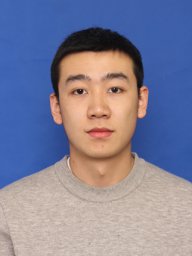 Chao Sun合作论文数Northwestern Polytechnical University, Northwestern Polytechnical Univ2
 Moncef Gabbouj合作论文数Faculty of Information Technology and Communication Sciences, Tampere University2
 Shipeng Li (李世鹏)合作论文数School of Data Science, The Chinese University of Hong Kong, Shenzhen;Shenzhen Institute of Artificial Intelligence and Robotics for Society2
 Xiren Cao (曹希仁)合作论文数Department Electronic & Computer Engineering, School of Engineering, The Hong Kong University of Science and Technology2
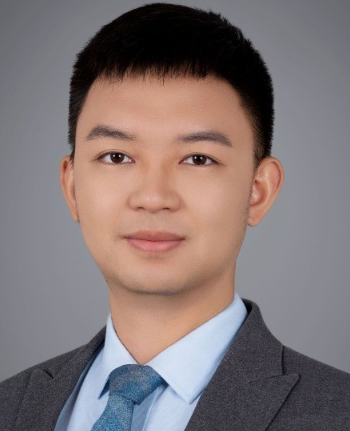 Haipeng Li (李海鹏)合作论文数University of Electronic Science and Technology of China2
 Jinlin Yang (杨锦林)合作论文数West China Hospital, Sichuan University2
 Chao Ma (马超)合作论文数AI Institute, School of Computer Science, Shanghai Jiao Tong University;MoE Key Lab of Artificial Intelligence, Shanghai Jiao Tong University2
 Zhaopeng Cui (崔兆鹏)合作论文数College of Computer Science and Technology, Zhejiang University2
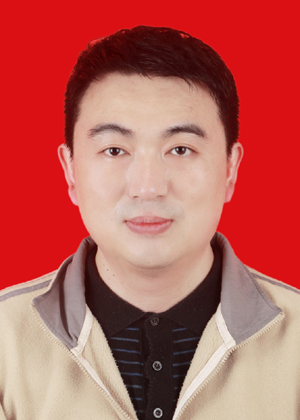 Liang Gao (高亮)合作论文数Huazhong University of Science and Technology2AN VENETSANOPOULOS合作论文数1
 Peng Dai合作论文数Computer Vision and Machine Intelligence Lab, Department of Electrical and Electronic Engineering, The University of Hong Kong1
 Zhihang Ren合作论文数1Javen Qinfeng Shi合作论文数1Tak Po Chan合作论文数1Li Yang合作论文数1
 Boxuan Zhao合作论文数Tencent AI Lab1Yuchen Yang合作论文数1Zeng Fanwei合作论文数1
 Haoran Zhong合作论文数1
 Yu Zeng合作论文数1Yuyan Zhang合作论文数1Xinyu Li合作论文数1
 Jiaxiong Qiu合作论文数Nankai University1Ml Liou合作论文数1Neuvo, Y.合作论文数1Chenghao Hu合作论文数1Haozhen Dong合作论文数Huazhong Univ Sci & Technol HUST, Sch Mech Sci & Engn, 1037 Luoyu Rd, Wuhan, Hubei, Peoples R China1




