India is the world's largest democracy due to the number of citizens eligible for adult franchise to elect their representatives to the federal parliament and provincial state assemblies. The Constitution of India, adopted in 1950 and making the country a Sovereign Democratic Republic three years after it gained independence from British rule in 1947, is the foundation of this democracy. Historically, with respect to naturalisation, Indian political leadership, from the time of the Motilal Nehru Committee (1928), was in favour of the concept of jus soli. The idea of jus sanguinis was also rejected by the Constituent Assembly with the argument that it was against the Indian ethos. This chapter focuses on the transition of citizenship in India after its independence, from the partition of India and Pakistan to the constitutional amendments in India's independent constitution, and how these amendments impacted Indian citizenship, as well as a look at the Overseas Citizenship of India. Citizenship is getting more and intertwined with issues around migration and integration which poses new challenges for legislation.
The discourse revolving around technology for sustainable development is a persistent centre of discussion and debate in both developed and developing economies. Considering 'the appropriate technology model' as a relevant model of technological development in developing economies like India and China, this article highlights how much India has influenced both the concept and practice of appropriate technological development. This article contributes an extensive literature overview to understand the relationship between frugal innovation (FI; termed Jugaad innovations in some South Asian countries) and sustainability. Applying the 'lead market theory' as a theoretical framework and using various examples, an attempt has been made to establish the nature of the association between them. These objectives are aimed at understanding India's position and potential in the market for FIs. The article addresses issues that connect and combine the underlying drivers of technology and sustainability in the context of FIs.
This article examines the effects of brain drain caused by the migration of knowledge workers from India to the United States of America (USA) during the pre- and post-global financial crisis periods, 2005–2007 and 2011–2013. Data from the Integrated Public Use Microdata Series for the year 2018 are used to compare the different population groups in the USA and to estimate the hourly wages of Indian and White workers using Mincer regression and Oaxaca decomposition. Following Khadria’s (2001–2010) analytical propositions, three premium characteristics of Indian-origin workers to the USA consisting of: (1) an age-premium, (2) a wage-premium and (3) a vintage-premium are empirically examined. The findings uphold the theoretical construct and suggest that the migration of Indian knowledge workers to the USA results in brain drain to India and brain gain for the USA.
Previous studies on the economic performance of immigrants in the United States of America showed that successive immigrants possess lower skills and experience sluggish wage growth, thereby making the wage convergence with the natives almost impossible. However, analysis of variance (ANOVA) post hoc tests using data from the American Community Survey (ACS) 2010–2019 on China- and India-born immigrants revealed otherwise. Both immigrant groups have significantly higher levels of education, better occupation and higher earnings compared to all foreign-born immigrants and natives. During 2010–2019, the earnings of China- and India-born immigrants increased faster than the natives’ due to their higher educational attainment. Thus, the general characteristics and experiences of all foreign-born vis-a-vis natives cannot be generalized across specific immigrant groups. Immigrants from different origin countries who have different skill levels and competencies show different earning differentials compared with the natives. Some immigrant groups even become more productive over time due to the increased portability of the human capital of their latest cohorts.
This chapter revisits the relationship between migration, health and development in the context of Global Compact for Safe, Orderly and Regular Migration (GCM) objectives interrupted by the external shock of the COVID-19 pandemic. By using recent and emerging data from global sources like the United Nations (UN), World Health Organization (WHO) and World Bank, it looks at health indicators, migration stocks and economic development parameters in select South Asian countries, including India, over the last three decades—1990–2020. These are compared against both the world totals and those for China—the East Asian country at the epicentre of COVID-19. The chapter provides background on comparative indicators of economic development in India, other major South Asian countries and China, and critically examines three issues: (a) lessons from the challenges COVID-19 posed to the GCM objective of making migration ‘safe, orderly and regular’ (SOR); (b) indicators of the relationship between migration, health and development in the context of the GCM and COVID-19; and (c) challenges emerging from the dynamic relationship between migration, health and development in the COVID-19 era.
This research note examines the dimension and characteristics of the outflow of Indian high-skilled and Science, Technology, Engineering and Mathematics (STEM) professionals to five key destination countries, namely, the United States of America, the United Kingdom, Canada, Australia and New Zealand. Indian migrants constitute a significant and growing share of high-skilled and STEM professionals in the major immigration countries of the world. Statistics highlight the proposition that retaining them is vital for the origin countries to realize the Sustainable Development Goals with particular focus on mitigating global inequalities in the 21st century. This note also addresses objective 1 of the Global Compact for Migration by exploring specific statistics on emigration from India representing the Global South.
India, the second most populous country and the largest democracy in the world, has experienced rapid economic development and demographic shifts in recent decades. There has been rapid urbanization caused partly due to ruralurbanmigration of more than 110 million migrants representing 54.6 percent of the urban population. India is one of the world’s largest international migration sending countries, with 14 million Indian citizens settled abroad (NRIs or non-resident Indians), consisting of lower-skilled/less-educated laborers as well as highly-educated/skilled professionals (Ministry of External Affairs, n.d.). Together with 18 million strong Indian diaspora, the persons of Indian origin (PIOs) as naturalized citizens of their countries of residence abroad, have spread out globally with significant presence in 37 countries (ICWA, 2001; Lal, 2006; United Nations, 2019). Moreover, while considered as a significant international migration sending country, India has also attracted a large number
Appropriate technology, an alternative approach to capital-intensive large-scale industries, imparts simple and indigenous technology solutions to improve the livelihood of people in resource-constrained environments. The chapter highlights the historical trajectory of technological advancements and the associated challenges faced in India. It discusses the history of technological transformations that took place in India from Gandhian 'Swadeshi and basic needs approach' to 'Nehruvian socialist approach' towards technological development and eventually discusses the impact of economic reforms on technology. Citing the examples of suitability and non-suitability of appropriate technology, the chapter critically examines the applicability of small-scale technology in Indian context and also how well it fits into the current structural framework of Indian economy. Keeping in view, the significant technological developments and innovations that India has witnessed in last few decades, the chapter draws upon some elements of frugal and frontier technology-based solutions which is 'appropriate' for the economic environment of India.
‘Brain drain’, an exodus of talent and skill, the migration of India’s cream of highly skilled professionals to developed countries comprising doctors, engineers, scientists, teachers, architects and entrepreneurs, appeared in independent India, a century-and-a-quarter after the labour migration, in the twentieth century. The dichotomies between skilled and unskilled migration could be deconstructed as a number of binaries underlying the differences between the skilled ‘knowledge workers’ and unskilled ‘service workers’ have been predicted to crystallize in the twenty-first century. An important aspect that distinguishes the unskilled from the skilled migrants is that workers in unskilled and semi-skilled categories do not enjoy protection of local labour laws. The binaries are such that whereas India exerts virtually no control over migration flows of highly skilled categories, unskilled migration flows are controlled only to the extent they fall under the purview of the Emigration Clearance Required category of passports.
A glance through previous World Migration Reports, and other policy and scientific publications on international migration, shows that at least two observations have been prevalent over time: i) recognition that migration, particularly immigration, has emerged as a prominent international and national policy issue; and ii) that the public discourse on migration has increasingly become polarized with the space for balanced, rigorous, and evidence-based analyses having diminished over time. While the nature of the public discourse has changed over time, there is widespread recognition that the “toxicity” of the migration debate has further intensified over the last few years, with the politics of fear and division increasingly framing discussions. Disruption and disinformation are increasingly being deployed as part of tactical pursuits of power, with negative impacts on public, political and social media discourse, on societal values, and on public policy issues such as migration, displacement and migrants (including refugees).
The long-term and growing body of evidence on migration and mobility shows that migration is in large part related to the broader global economic, social, political and technological transformations that are affecting a wide range of high-priority policy issues.2 As the processes of globalization deepen, these transformations increasingly shape our lives – in our workplaces, in our homes, in our social and spiritual lives – as we go about our daily routines. Increasing numbers of people are able to access information, goods and services from around the world because of the ongoing expansion in distance-shrinking technologies.
 Ratnam Mishra合作论文数5
 Narender Thakur合作论文数Dept Econ, Dr Bhim Rao Ambedkar Coll5
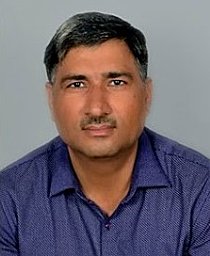 perveen kumar合作论文数4Wei Li合作论文数4
 Basant Potnuru合作论文数Econ & Business Policy, FORE Sch Management3
 Jean-Baptiste Meyer合作论文数2Marie McAuliffe合作论文数2
 Eric Leclerc合作论文数2Adrian Kitimbo合作论文数1uttam bhattacharya合作论文数1
 Christiane Kuptsch合作论文数1Imelda Nicolas合作论文数1Ychen Jang合作论文数1Takgon Lee合作论文数1
 Sandeep K. Agrawal合作论文数Ryerson University School of Urban and Regional Planning1
 Richard Bedford合作论文数University of Waikato1
 Venni Venkata Krishna合作论文数School of Humanities & Languages, Faculty of Arts, Design & Architecture, The University of New South Wales1
 Parvati Raghuram合作论文数Faculty of Arts & Social Sciences, The Open University;School of Social Sciences & Global Studies, The Open University1




