Identifying and zoning semiconductor industry agglomerations are foundational and pioneering tasks for the national planning layout and high-quality development of this industry. This study, based on headquarters-branch investment relationship data of 15 757 Chinese semiconductor enterprises in 2022, uses complex network graph segmentation techniques such as location quotient, minimum spanning tree, and modularity to construct a semiconductor industry network, covering 256 prefecture-level cities in China (excluding Hong Kong, Macao, and Taiwan of China). The study reveals that: 1) the spatial distribution pattern of China’s semiconductor industry is predominantly concentrated, with a non-uniform development trend of higher levels in the east and south compared to the west and north; 2) the overall outwards investment network exhibits a geographical distribution resembling a diamond structure and rhombus pattern. Local investment agglomeration areas differ significantly between the east and west, with the east having a dual-core or multi-core traction type and the west displaying a single-core traction type; 3) among the six major agglomeration areas, the Yangtze River Delta (YRD) has the highest level of regional integration. The Pearl River Delta (PRD) shows strong internal connections but significant polarisation on its east bank of the PRD. The Beijing-Tianjin-Hebei (BTH) urban agglomeration exhibits a gradient-driven dual-core structure, whereas the Shandong Peninsula urban agglomeration relying on the eastern Shandong metropolitan area and western Shandong metropolitan area forms horizontal connections. Dual-core growth pole agglomeration patterns are observed in the Guanzhong Plain urban agglomeration and Chengdu-Chongqing urban agglomeration; 4) ultimately, the spatial agglomeration area of China’s semiconductor industry can be divided into four primary zones (the southern zone of China, the eastern zone of China, the northern zone of China, the western zone of China) and 20 secondary zones. The results can be directly applied to national and regional industrial planning, particularly for defining development priorities, optimizing interregional division of labor, and reducing spatial fragmentation in China’s semiconductor industry.
In the current knowledge economy, regional strategies increasingly emphasize the attraction and retention of talent, making the settlement intentions of highly educated migrants a central concern for research and policymaking. While existing studies have largely examined explicit individual and regional factors, the influence of implicit dimensions, such as social integration, on long-term settlement intentions remains insufficiently and systematically explored. To fill this gap, this study examines how social integration affects the settlement intentions of highly educated migrants in China. Drawing on 9202 highly educated respondents from the 2017 China Migrants Dynamic Survey, this study constructs a multidimensional index of social integration covering four dimensions: economic integration, social adaptation, behavioral adaptation, and identity recognition. It applies a binary logistic regression model, supplemented by endogeneity, robustness, and heterogeneity tests. The findings are fourfold. First, individual integration does not necessarily rise with regional economic development; in some developed advanced regions, high housing prices and living costs hinder integration. Second, regional factors such as economic development, geographic location, city size, and capital status are more strongly associated with settlement intentions than demographic characteristics or social integration. Third, among the dimensions of integration, identity recognition shows the most stable and salient association with settlement intentions, exceeding that of economic and social adaptation. Fourth, the relationship between integration and settlement intentions differs substantially across regions; in less developed areas, stronger economic integration is associated with greater mobility and lower local settlement intentions. Overall, this study deepens theoretical understanding of the relationship between social integration and settlement intentions, highlighting its contextual variations across regions. It identifies identity recognition as a core dimension and conceptualizes behavioral adaptation as a process variable. These findings offer practical implications for formulating differentiated regional talent policies.
Adequately incentivizing firms to implement green technological innovation (GTI) is pivotal to achieving sustainable development. Green factory certification, a prominent example of voluntary environmental regulation, has garnered significant attention in both theoretical and policy concerns regarding its impact on green technological innovation. Leveraging green factory certification as a quasi-natural experiment, this paper utilizes a multi-timepoint difference-in-differences (DID) approach to systematically investigate its influence on firms’ green technological innovation. The findings reveal several important insights. (1) Green factory certification significantly enhances firms’ green technological innovation capabilities, facilitating substantial enhancements in both the quantity and quality of green technological innovation. (2) Mechanism analysis indicates that green factory certification promotes green innovation via three key channels—promoting the digitalization level, strengthening ESG practices, and facilitating financing constraints. (3) The green innovation incentive effects of green factory certification are particularly pronounced among firms in the eastern region, non-state-owned entities, and those exhibiting lower pollution levels. These findings underscore the critical role of green certification systems in fostering corporate green development, offering both theoretical insights and practical guidance for firms undergoing green transformation while contributing to the broader goal of sustainable development.
The impacts of large-scale agribusiness, commonly associated with land grabbing, on smallholder livelihoods in Africa have been the subject of an expansive array of research that tends to focus on socioeconomic or environmental issues. This study examines the nexus of smallholder land-livelihood dynamics from 2000 to 2018 owing to the resurrection of fiber estates in the "sisal belt" of Kilosa, Tanzania. Here, Chinese firms have restored former colonial sisal estates, offering wage opportunities to neighboring communities, giving rise to commercial rice production among smallholders and incentivizing in-migration with its increasing demands for subsistence agricultural land. The combination of estate, subsistence, and rice cultivation has enhanced smallholder livelihoods on average, suggesting positive impacts of the fiber estates. These emerging conditions, however, have generated significant landscape changes, which foretell impacts on environmental services. These dynamics of land systems are revealed through the lens of remote sensing data, field surveys and observations, and SURE models.
The semiconductor industry is a pivotal hub in the global information sector, in which superpowers compete for technological dominance. As a strategic, leading, and foundational sector, it is vital for advancing China’s manufacturing ambitions through new waves of transformation and upgrades. Therefore, of particular concern is the crisis surrounding China’s semiconductor supply chain insecurity and the intensifying U.S. sanctions on China’s high-tech companies. As such, in this study, we utilize data from China’s semiconductor enterprises, investments, and related statistics from 2002 to 2020; industrial agglomeration indicators; and a social network analysis to examine the spatiotemporal pattern, industrial agglomeration, and investment networks of six key value chain segments: wafer materials, packaging materials, semiconductor equipment, integrated circuit (IC) design, manufacturing, and testing/packaging. The research focuses on how these sectors can contribute to sustainable growth and economic responsibility within China’s semiconductor industry. Accordingly, the core questions explored were as follows: what are the provincial-level spatial production dynamics and evolutionary characteristics within China’s semiconductor industry, and how do the inter-provincial investment patterns manifest? The findings reveal the following: (1) The findings reveal a strong concentration of firms in the Eastern Coastal region, particularly in Jiangsu, Shanghai, Zhejiang, and Guangdong. Additionally, IC design exhibits the highest clustering, and other segments such as wafer materials, manufacturing, and packaging/testing are relatively concentrated, whereas equipment distribution is more dispersed. (2) The industry expanded steadily from 2002 to 2013, with a rapid expansion from 2014 to 2020, particularly in Guangdong. (3) Investment patterns are characterized by local and regional focus, strongly influenced by geographical proximity. This study aims to reveal the geographic concentration patterns of China’s semiconductor industry and to explore its investment networks. The findings are intended to provide theoretical support for optimizing sustainable industrial layouts, promoting sustainable industrial practices, and guiding policy formulation. Furthermore, in the broader context of de-globalization, this study offers insights and recommendations for strengthening industrial autonomy and sustainability in response to external challenges, thereby contributing to the sustainable development of a more robust domestic semiconductor supply chain. These insights are particularly significant in safeguarding China’s technological independence and future economic stability amid global tensions. Furthermore, by integrating sustainability into its semiconductor industry, China can create a more resilient, self-sufficient, and environmentally responsible industrial sector, capable of meeting both domestic and global demands. As China continues to expand its semiconductor industry, incorporating sustainable development principles will be essential for long-term success. The sustainable practices not only ensures compliance with environmental regulations but also enhances industrial competitiveness, promotes green techniques and contributes to broader societal goals. This aligns with China’s broader ambitions for sustainable development and positions the country as a key player in the global green technology revolution.
This paper advances the conceptualisation and application of intellectual capital, a key concept in the intellectual migration framework, to understand international student mobility. The intellectual migration framework contends that higher-education and highly-skilled migrants acquire, upgrade and utilise intellectual capital for upward career and social mobility. This paper argues that intellectual capital is not the sum of different forms of capitals, but a complete package with human, cultural and social capitals working in synergy through the agency of migrants. Focusing on higher-education students at the beginning of the intellectual migration continuum, it analyzes how intellectual capital is differentially accumulated at various stages of the educational process. Drawing on 51 semi-structured interviews with Chinese international students in North America, we learn that pre-migration intellectual capital, due largely to parents and family, reflects social inequality in contemporary societies whereas that obtained while studying abroad reveals more on individual agency. As such, intellectual capital accumulation abroad serves as a mediating process, especially for those with less privileged backgrounds. Supportive international higher education sectors in both sending and receiving countries can also assist students in their intellectual capital cultivation process and contribute to alleviating educational inequality.
The U.S. and Canada are countries that have been shaped and defined by immigration. In recent decades, however, changes in the immigration policies of both countries have resulted in more heterogeneous immigrant flows than ever before. These new waves of immigration have transformed the demography, as well as social, economic, and political structures of North American urban and suburban areas. Given the importance of immigration as an engine of social and political change as well as economic development, it is imperative that scholarship addresses these new realities in our metropolitan areas. This theme issue on “Immigrant and Refugee Experiences in North American Cities” explores some of the important links between immigration and the opportunities and challenges in two complex multicultural societies—the U.S. and Canada. The six articles that comprise this special issue are organized around three broad themes: (a) immigration, discrimination, and identity; (b) settlement and life experiences; and (c) housing incorporation and economic integration.
The number of skilled migrants moving from the Global North to the Global South has been increasing in recent decades. This paper develops and employs a capital-mobility framework to analyze empirical evidence about the new international migration of skilled U.S. migrants to the Pearl River Delta Region of China. Guided by the literature on im/mobility and capital, this paper asks the following questions: What affects skilled U.S. migrants' mobility to and from China? How do they experience the dynamics of voluntary and involuntary immobility in China? Drawing on 58 semi-structured interviews, we found that the level of capital accumulation and its transferability and convertibility influenced migrants' mobility and immobility. In addition, the global outbreak of Covid-19 facilitated mobility for some while hindered mobility for others. This study discusses the differences between North-to-South and South-to-North skilled migration and conceptualizes im/mobility as a continuum experienced by skilled migrants during their migratory trajectories.
The increasing globalization and rising knowledge-based economy have created a higher-than-ever demand for skilled workers. China, among some Global South countries, is joining the race for talent to alleviate the brain drain. Using the conceptual framework of 'intellectual migration', this study examines how the Pearl River Delta (PRD) region of China is increasingly becoming an 'intellectual gateway' that attracts and retains skilled international migrants. Drawing on 58 semi-structured interviews with skilled US migrants in this region, this article addresses the following research questions: (1) Why do skilled US migrants choose the region as their migration destination; and (2) As a rising intellectual gateway, how does the PRD region shape the integration of skilled US migrants?Our findings suggest that the PRD region's knowledge-based economy and socio-cultural environment serve as strong magnets that attract skilled US migrants. These factors are critical to the structural and socio-cultural integration of skilled international migrants. The research advances the intellectual migration framework by providing empirical evidence on the geography of intellectual migration in a fast-growing megalopolis in the Global South, demonstrating the diversity of intellectual migrants and intellectual gateways. Policy implications include supporting the synergy of structural and socio-cultural integration of global talent.
International student mobility, taking place within the framework of globalisation, internationalisation and transnationalism, has attained much attention. This paper adopts the Intellectual Migration framework to further our understanding of mobility regarding international higher education. It simultaneously studies China-born students in both China and North America to empirically examine the propensity for student mobility across national borders and the determining factors behind the realisation of such mobility under the same set of geopolitical and international circumstances. The analysis is based on a set of cross-sectional surveys conducted in the 2017-2019 period that yields over 1600 data points. We compare the 'who', 'why' and 'where' aspects of migration between domestic students in China and Chinese international students in North America to delineate the factors underlying international student mobility. By highlighting aspirations and capabilities on mobility outcomes, this paper contributes to differentiating mobility between undergraduate and graduate students and the implications for social inequality. Our analysis also reveals the unequal spatial distributions of educational resources between intellectual gateways and peripheries, and by extension between the Global North and the Global South. The findings of this paper have policy implications on improving the quality, accessibility, and equity of higher education.
Student migration is considered a part of the highly skilled migration. Most existing research focuses on the impact of international student migration but rarely examines the reasons and dynamics that lead to their out-migration. Our paper aims to ameliorate this gap by focusing on potential student migrants in their home countries and examines factors that enable or prevent them from studying abroad. Based on the comparative analysis of a set of surveys conducted among Indian and Chinese college students, this chapter is an attempt to gauge their intention to study abroad and the possibility of a subsequent return to their home country. We first present the demographic, socio-economic profiles of these students and their families and India-specific characteristics. We also explore China as a possible study destination, which is a part of the changing landscape of international student migration. The chapter concludes with future research directions.
As Chinese cities are issuing talent attraction policies for foreign-educated professionals, there have been waves of Chinese academic migrants returning to the homeland. By using the transnationalism/trans-locality framework and based on 30 in-depth interviews in Guangzhou, this paper studies the identity (re)construction process of skilled Chinese returnees and their integration into destination cities after returning. First, the identity negotiation of academic returnees from the time when they were overseas is investigated, and how their reconstructed identities affect their return destination choice is explored. Meanwhile, the academic returnees' dual place selection rationale is analyzed, how a globalizing city and intellectual gateway like Guangzhou in a developing country acts to attract talents is revealed, and whether its sociocultural environment facilitates or hinders returnees' integration and attachment to the city of residence is uncovered. This paper contributes to the broader migration literature by providing a micro-level detailed analysis of skilled migrants' professional and daily experience after they return to their home country in the Global South. Also, it provides some talent policy implications for higher-education administrations and local governments.
The term 'intellectual migration' initially referred to the exodus of European scientists and other professionals to the U.S. in the first half of the twentieth century. Academic and policy debates around issues of 'brain drain', 'brain gain', and 'brain circulation' in recent decades have intensified the usage of this term. A 2015 paper first attempted conceptualising Intellectual Migration as an analytical framework that encompasses a migration spectrum where students to professionals at different life stages move for intellectual pursuits that can advance career development. Li et al. (2021) articulate the framework by elaborating on the underlying key concepts - intellectual capital, intellectual nodes, intellectual gateways, intellectual peripheries - and the role they play in one's spatial and social mobilities, and connecting internal migration with international migration. This special issue assembles empirical research that addresses issues like the (un)certainty of engaging in intellectual migration, agency-structure dynamics behind migration decisions, and the value of intellectual capital in the migration process. This introductory piece traces the evolution of the intellectual migration conceptualisation while synthesising the findings to affirm the usefulness of the framework in analysing higher-education and highly-skilled migration.
Microbial fertilizers can activate and promote nutrient absorption and help inflorescence elongation. To understand the molecular mechanisms governing grape (Vitis vinifera) inflorescence elongation after microbial fertilizer application, we comprehensively analyzed the transcriptome dynamics of ‘Summer Black’ grape inflorescence at different leaf stages. With the development of ‘Summer Black’ grape inflorescence, gibberellic acid content gradually increased and was clearly higher in the microbial fertilizer group than in the corresponding control group. In addition, the microbial fertilizer and control groups had 291, 487, 490, 287, and 323 differentially expressed genes (DEGs) at the 4-, 6-, 8-, 10-, and 12-leaf stages, respectively. Kyoto Encyclopedia of Genes and Genomes pathway annotation revealed that most upregulated DEGs were enriched in starch and sucrose metabolism pathways at the 6-, 8-, and 10-leaf stages. Weighted gene coexpression network analysis identified stage-specific expression of most DEGs. In addition, multiple transcription factors and phytohormone signaling-related genes were found at different leaf stages, including basic helix-loop-helix proteins, CCCH zinc finger proteins, gibberellin receptor GID1A, 2-glycosyl hydrolases family 16, protein TIFY, MYB transcription factors, WRKY transcription factors, and ethylene response factor, suggesting that many transcription factors play important roles in inflorescence elongation at different developmental stages. These results provide valuable insights into the dynamic transcriptomic changes of inflorescence elongation at different leaf stages.
While past research has focused on the benefits of social media during pandemics, this study emphasizes the possible negative effects of social media use among healthcare professionals. It has been stated that healthcare professionals are exposed to COVID-19 and its impacts on the mental health of these workers. Even though recognizing the importance of healthcare professionals during the pandemic, the impacts of COVID-19 on the mental health of healthcare professionals have been rarely considered for investigation by researchers. By applying differential susceptibility to the media effects model (DSMM), the current article investigated the effect of COVID-19 information overload (CIO) on psychological and mental well-being and underline mechanisms. Time-wave technique was applied to collect the data. This study tested moderated mediation model by collecting data from 314 healthcare professionals. The findings stated that COVID-19 information overload impacted COVID-19 fatalism and COVID-19 exhaustion directly. Likewise, COVID-19 fatalism mediated the association between CIO and COVID-19 exhaustion. Moreover, the COVID-19 stressor moderated this mediating relationship. This study proposes several practical recommendations for healthcare professionals, social media platform providers, health authorities, organizations, and institutions on how to use social media effectively and sustainably during the global COVID-19 epidemic.
 Lucia Lo合作论文数12
 Yining Tan合作论文数Sch Geog Sci & Urban Planning, Arizona State Univ11
 Yongjun Chen (陈拥军)合作论文数School of Materials Science and Engineering, Hainan University9
 Lijie Luo (骆丽杰)合作论文数School of Materials Science and Engineering, Hainan University9
 Guiguang Chen (陈桂光)合作论文数College of Life Science and Technology, Guangxi University8
 Zhiqun Liang (梁智群)合作论文数College of Life Science and Technology, Guangxi University8
 Gary A. Dymski合作论文数University of Southern California8
 Wan Yu合作论文数7
 Jianbao Li (李建保)合作论文数Tsinghua University6
 Emily Skop合作论文数The University of Colorado at Colorado Springs5
 Yixi Lu合作论文数4Verna M Keith合作论文数4Gaolong Wu合作论文数4Li-Xia Pan合作论文数School of Medicine, Tsinghua University, Beijing 100084, China4
 Carlos Teixeira合作论文数Department of Community, Culture and Global Studies, Irving K. Barber Faculty of Arts and Social Sciences, The University of British Columbia4ShuYu Xie (谢蜀豫)合作论文数4MuMing Cao (曹慕明)合作论文数4JingXi Guan (管敬喜)合作论文数4GuoPin Chen (陈国品)合作论文数4
 Zheng Lu (路征)合作论文数School of Economics, Sichuan University;Centre for European Studies, Sichuan University4
 yu Hui合作论文数4
 Wei Ceng (曾伟)合作论文数College of Life Science and Technology, Guangxi University4Karen J. Leong合作论文数4
 Binod Khadria合作论文数School of Social Sciences, Jawaharlal Nehru University4
 Christopher A. Airriess合作论文数4
 Li Jiang (蒋丽)合作论文数West China Hospital of Stomatology, Sichuan University4Alex Oberle合作论文数4Longyang Liu合作论文数3Qiufeng HUANG (黄秋凤)合作论文数3Huan Yang (杨桓)合作论文数State Key Lab Marine Resource Utilizat South China, Hainan Univ3Zhichao Xu合作论文数3
 Yu Wan (万宇)合作论文数Tongyi Lab, Alibaba Group3Su Ding (丁苏)合作论文数College of Life Science and Technology, Guangxi University3
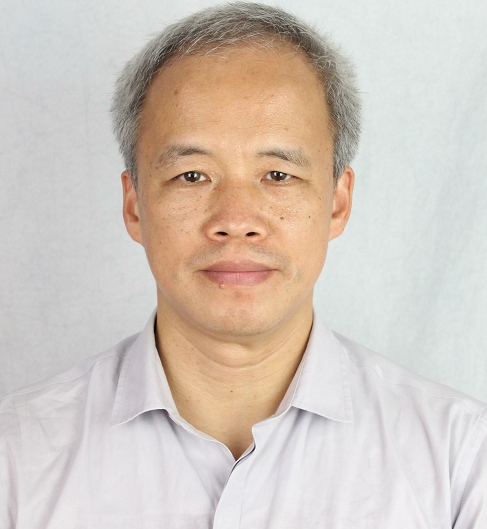 Yunkai Zhang (张云开)合作论文数College of Life Science and Technology, Guangxi University3
 Desheng Xue (薛德升)合作论文数School of Geography and Planning, Sun Yat-sen University3Yunmao Liao (廖运茂)合作论文数3Angela Chia-Chen Chen合作论文数3
 Claudia Sadowski-Smith合作论文数3Karen Leong合作论文数2Ying Zhang合作论文数2Hao Wang合作论文数2Ling Ma合作论文数2
 Yang Tao (陶洋)合作论文数School Breeding and Multiplication, Hainan University2Yu Zhou合作论文数Geog & Asian Studies, Vassar Coll2Tiantian Wu合作论文数2Kongyang Wu (吴孔阳)合作论文数2
 Xi Xie (谢曦)合作论文数School of Pharmaceutical Sciences, Hainan University2
 Qianbing Wan (万乾炳)合作论文数West China School, Sichuan University;Hospital of Stomatology, Sichuan University2Ding Su合作论文数2




