Experimental results for intracavity-laser intensity-noise suppression, or "squashing," manifested as reduced fluctuations on the transmitted field photodetector voltage are presented. It is experimentally demonstrated that a rigid optical cavity within the feedback loop is compatible with squashing. The observed closed loop detector noise floor is approximately 16 nV/sub rms///spl radic/Hz in the acoustic frequency range (/spl sim/100 Hz), well below the quantum limit due to shot noise of 148 nV/sub rms///spl radic/Hz. This corresponds to 19 dB of observed noise suppression below the quantum limit and is consistent with the measured disturbance suppression function of the feedback loop. We also present measurements demonstrating the orthogonality of the squashing and frequency-locking control loops.
The Australian Consortium for Gravitational Astronomy has built a High Optical Power Test Facility north of Perth, Western Australia. Current experiments in collaboration with LIGO are testing thermal lensing compensation, and suspension control on an 80m baseline suspended optical cavity. Future experiments will test radiation pressure instabilities and optical spring in a high power optical cavity with similar to200kW circulating power. Once issues of operation and control have been resolved, the facility will go on to assess the noise performance of the high optical power technology through operation of an advanced interferometer with sapphire tests masses, and high performance suspension and isolation systems. The facility combines research and development undertaken by all consortium members, which latest results are presented.
The Australian Consortium for Interferometric Gravitational wave Astronomy (ACIGA) is carrying out research on the detection of gravitational waves using laser interferometry. Here we discuss progress on each of the major sub systems: data analysis, lasers and optics, isolation suspension and thermal noise, and configurations, and report on the development of a high optical power test facility in Gingin, Western Australia.
This paper describes the investigation of the frequency stability of tilt locking, a technique which derives an error signal for locking a laser to an optical cavity by use of spatial-mode interference. By independently locking two lasers to the same optical cavity and measuring the beat frequency, a direct measurement of the stability of tilt locking was obtained. The beatnote exhibited a normal Allan deviation of 3.3 Hz over a time interval of 100 ms, yielding a relative frequency stability of 1.3 /spl times/ 10/sup -14/. This result implies at least a fractional locking stability of 1.3 /spl times/ 10/sup -14/. Moreover, this stability was limited by fluctuations in the cavity spacer length and not the tilt-locking technique.
Using a radio frequency coherent modulation and demodulation technique, we explicitly measure both the amplitude and the phase response of Fabry-Perot interferometers in reflection. This allows us to differentiate clearly between overcoupled and undercoupled cavities and allows a detailed measurement of the full width at half-maximum, the free spectral range, and the finesse of the cavities.
 David McClelland合作论文数Centre for Gravitational Astrophysics, Research School of Physics, Australian National University5
 A. Brooks合作论文数3J S Jacob合作论文数3B Cusack合作论文数3
 Jesper Munch合作论文数The University of Adelaide3
 Kirk McKenzie合作论文数Department of Quantum Science, Research School of Physics, College of Science, The Australian National University3de Vine, G.合作论文数3Lan Kelly合作论文数3
 David Blair合作论文数School of Physics, Maths and Computing, The University of Western Australia3D. Hosken合作论文数3John Winterflood合作论文数3Damien Mudge合作论文数3
 Conor Mow-Lowry合作论文数Faculty of Science, The Australian National University3A. Moylan合作论文数2A Searle合作论文数2Cy Lee合作论文数2Bh Lee合作论文数2K T Lee合作论文数2M Hamilton合作论文数2J-C. Dumas合作论文数2
 Bs Sheard合作论文数2M. Gray合作论文数2P. Veitch合作论文数2
 David H. Coward合作论文数Stanford Linear Accelerator Center, Stanford University2
 Jerome Degallaix合作论文数Laboratoire des Matériaux Avancés, CNRS2
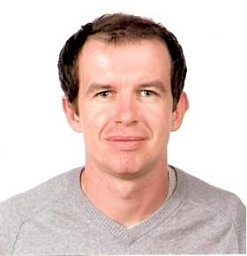 S. Gras合作论文数SUPA, Univ Glasgow2A Woolley合作论文数2
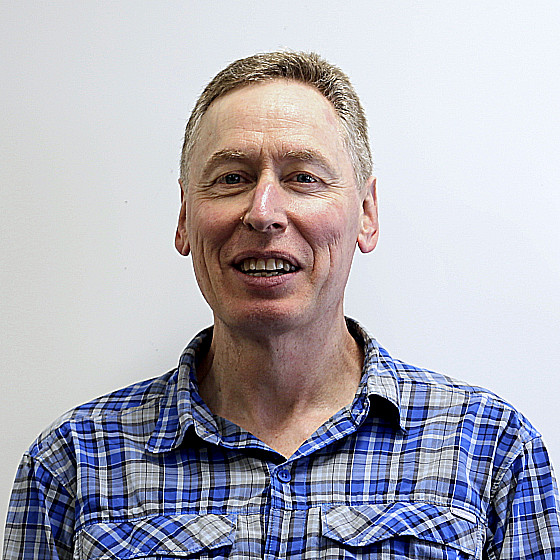 Malcom Gray合作论文数Centre for Gravitational Astrophysics, Research School of Physics, College of Science, The Australian National University2
 Joe H. Chow (周祖康)合作论文数Center for Ultra-Wide-Area Resilient Electric Energy Transmission Networks, Rensselaer Polytechnic Institute;Department Electrical, Computer, and Systems Engineering, School of Engineering, Rensselaer Polytechnic Institute2Eric Howell合作论文数2P. Barriga合作论文数2M Barton合作论文数2R. Burman合作论文数2
 Li Ju (鞠莉)合作论文数Department of Physics, University of Western Australia2
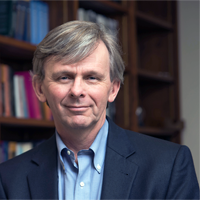 David H. Reitze合作论文数Laser Interferometer Gravitational-wave Observatory Laboratory, California Institute of Technology;The Division of Physics, Mathematics and Astronomy, California Institute of Technology2R. B. Burston合作论文数2E J Chin合作论文数2D. Rabeling合作论文数2Albert Romann合作论文数2
 Sascha Schediwy合作论文数School of Physics;University of Western;School of Physics, University of Western2CN Zhao合作论文数1Benjamin S Sheard合作论文数1Mw Hamilton合作论文数1Z. Yan合作论文数1
 Susan Scott合作论文数Physics Education Centre, Research School of Physics, College of Science, Australian National University;Centre for Gravitational Astrophysics, Australian National University1
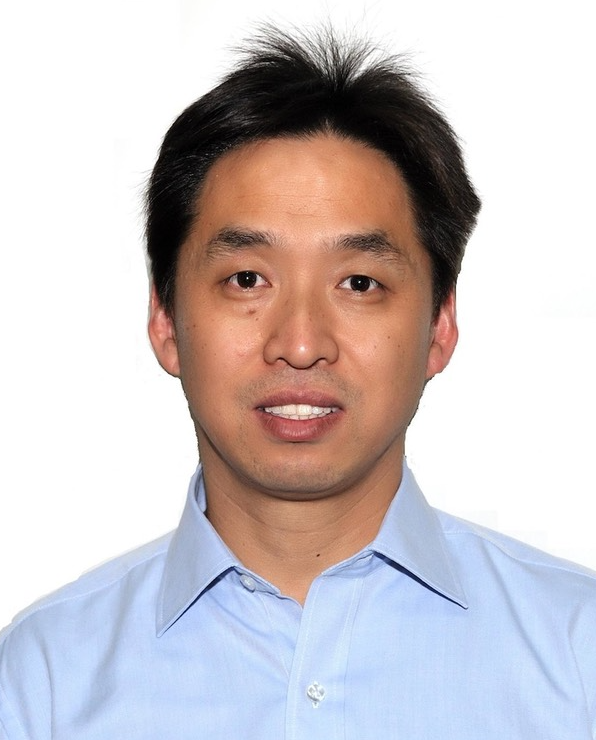 Chunsheng Zhao (赵春生)合作论文数Department of Atmospheric and Oceanic Sciences, School of Physics, Peking University1D Paget合作论文数1
 John Veitch合作论文数Institute for Gravitational Research, School of Physics and Astronomy, University of Glasgow1
 Rana Adhikari合作论文数Department of Applied Physics and Materials Science, Division of Engineering and Applied Science, California Institute of Technology1




