Despite their success in specific scenarios, existing foundation agents still struggle to generalize across various virtual scenarios, mainly due to the dramatically different encapsulations of environments with manually designed observation and action spaces. To handle this issue, we propose the General Computer Control (GCC) setting to restrict foundation agents to interact with software through the most unified and standardized interface, i.e., using screenshots as input and keyboard and mouse actions as output. We introduce Cradle, a modular and flexible LMM-powered framework, as a preliminary attempt towards GCC. Enhanced by six key modules, Information Gathering, Self-Reflection, Task Inference, Skill Curation, Action Planning, and Memory, Cradle is able to understand input screenshots and output executable code for low-level keyboard and mouse control after high-level planning and information retrieval, so that Cradle can interact with any software and complete long-horizon complex tasks without relying on any built-in APIs. Experimental results show that Cradle exhibits remarkable generalizability and impressive performance across four previously unexplored commercial video games (Red Dead Redemption 2, Cities:Skylines, Stardew Valley and Dealer's Life 2), five software applications (Chrome, Outlook, Feishu, Meitu and CapCut), and a comprehensive benchmark, OSWorld. With a unified interface to interact with any software, Cradle greatly extends the reach of foundation agents thus paving the way for generalist agents.
Recently, multimodal large language models (MLLMs) have demonstrated strong visual understanding and decision-making capabilities, enabling the exploration of autonomously improving MLLMs in unknown environments. However, external feedback like human or environmental feedback is not always available. To address this challenge, existing methods primarily focus on enhancing the decision-making capabilities of MLLMs through voting and scoring mechanisms, while little effort has been paid to improving the environmental comprehension of MLLMs in unknown environments. To fully unleash the self-learning potential of MLLMs, we propose a novel actor-critic self-learning paradigm, dubbed SELU, inspired by the actor-critic paradigm in reinforcement learning. The critic employs self-asking and hindsight relabeling to extract knowledge from interaction trajectories collected by the actor, thereby augmenting its environmental comprehension. Simultaneously, the actor is improved by the self-feedback provided by the critic, enhancing its decision-making. We evaluate our method in the AI2-THOR and VirtualHome environments, and SELU achieves critic improvements of approximately 28 improvements of about 20
 Zongqing Lu (卢宗青)合作论文数School of Computer Science, Peking University;Institute for Artificial Intelligence, Peking University2
 Runxin Xu (许润昕)合作论文数DeepSeek AI2
 Ceyao Zhang合作论文数1Xiyun Li合作论文数1Yujin Wu (吴宇锦)合作论文数Institute of Crop Sciences, Chinese Academy of Agricultural Sciences1gang Ding合作论文数1
 Bohan Zhou (周伯涵)合作论文数School of Computer Science, Peking University;National Engineering Research Center of Visual Technology, Peking University1Yifei Bi合作论文数1Xiaoqiang Chai合作论文数1Chuqiao Zong合作论文数1Junpeng Yue合作论文数1
 Wentao Zhang合作论文数School of Computer Science and Engineering, Nanyang Technological University1Ruyi An合作论文数1
 Molei Qin合作论文数School of Computer Science and Engineering, Nanyang Technological University Singapore1
 Haochong Xia合作论文数Nanyang Technological University Singapore1
 Longtao Zheng (郑龙韬)合作论文数College of Computing and Data Science, Nanyang Technological University;TikTok1
 Haobin Jiang合作论文数School of Computer Science, Peking University;ByteDance1Jiechuan Jiang合作论文数School of Computer Science, Peking University1Haoran Li合作论文数Xidian University1
 Xinrun Wang合作论文数School of Computing and Information Systems, Singapore Management University1Pengjie Gu合作论文数School of Computer Science and Engineering, Nanyang Technological University1
 Börje F. Karlsson (申博野)合作论文数Beijing Academy of Artificial Intelligence1
 Yewen Li合作论文数Kuaishou Technology1
 Weihao Tan (谭伟豪)合作论文数Nanyang Technological University;ByteDance Seed1
 Chaojie Wang合作论文数Skywork AI1
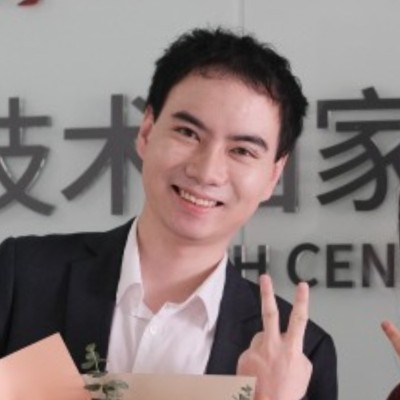 Gang (Ziluo) Ding合作论文数Beijing Academy of Artificial Intelligence1Long Tian (田隆)合作论文数Xidian University1
 Dongbin Zhao (赵冬斌)合作论文数Institute of Automation, Chinese Academy of Sciences;School of Artificial Intelligence, University of Chinese Academy of Sciences1
 Shuicheng Yan (颜水成)合作论文数Department of Computer Science, School of Computing, National University of Singapore1
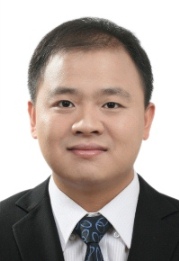 Bo An (安波)合作论文数Division of Artificial Intelligence, College of Computing and Data Science, Nanyang Technological University;School of Physical & Mathematical Sciences, Nanyang Technological University1
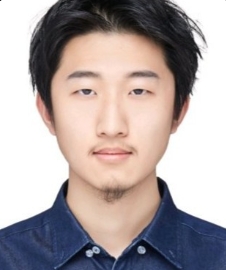 Tianbao Xie (谢天宝)合作论文数The University of Hong Kong1




