Spike camera, a type of neuromorphic sensor with high-temporal resolution, shows great promise for high-speed visual tasks. Unlike traditional cameras, spike camera continuously accumulates photons and fires asynchronous spike streams. Due to unique data modality, spike streams require reconstruction methods to become perceptible to the human eye. However, lots of methods struggle to handle spike streams in low-light high-speed scenarios due to severe noise and sparse information. In this work, we propose Diff-SPK, the first diffusion-based reconstruction method for spike camera. Diff-SPK effectively leverages generative priors to supplement texture information in low-light conditions. Specifically, it first employs an Enhanced Texture from Inter-spike Interval (ETFI) to aggregate sparse information from low-light spike streams. Then, ETFI serves as a conditioning input for ControlNet to generate the high-speed scenes. To improve the quality of results, we introduce an ETFI-based feature fusion module during the generation process. Moreover, we establish the first bona fide benchmark for the low-light spike stream reconstruction task. It significantly surpasses existing reconstruction datasets in scale and provides quantitative illumination information. The performance on real low-light spike streams demonstrates the superiority of Diff-SPK.
Recent studies have demonstrated the success of foundation agents in specific tasks or scenarios. However, existing agents cannot generalize across different scenarios, mainly due to their diverse observation and action spaces and semantic gaps, or reliance on task-specific resources. In this work, we propose the General Computer Control (GCC) setting: building foundation agents that can master any computer task by taking only screen images (and possibly audio) of the computer as input, and producing keyboard and mouse operations as output, similar to human-computer interaction. To target GCC, we propose Cradle, an agent framework with strong reasoning abilities, including self-reflection, task inference, and skill curation, to ensure generalizability and self-improvement across various tasks. To demonstrate the capabilities of Cradle, we deploy it in the complex AAA game Red Dead Redemption II, serving as a preliminary attempt towards GCC with a challenging target. Our agent can follow the main storyline and finish real missions in this complex AAA game, with minimal reliance on prior knowledge and application-specific resources. The project website is at https://baai-agents.github.io/Cradle/.
The swift evolution of Large-scale Models (LMs), either language-focused or multi-modal, has garnered extensive attention in both academy and industry. But despite the surge in interest in this rapidly evolving area, there are scarce systematic reviews on their capabilities and potential in distinct impactful scenarios. This paper endeavours to help bridge this gap, offering a thorough examination of the current landscape of LM usage in regards to complex game playing scenarios and the challenges still open. Here, we seek to systematically review the existing architectures of LM-based Agents (LMAs) for games and summarize their commonalities, challenges, and any other insights. Furthermore, we present our perspective on promising future research avenues for the advancement of LMs in games. We hope to assist researchers in gaining a clear understanding of the field and to generate more interest in this highly impactful research direction. A corresponding resource, continuously updated, can be found in our GitHub repository.
We explore leveraging large multi-modal models (LMMs) and text2image models to build a more general embodied agent. LMMs excel in planning long-horizon tasks over symbolic abstractions but struggle with grounding in the physical world, often failing to accurately identify object positions in images. A bridge is needed to connect LMMs to the physical world. The paper proposes a novel approach, egocentric vision language planning (EgoPlan), to handle long-horizon tasks from an egocentric perspective in varying household scenarios. This model leverages a diffusion model to simulate the fundamental dynamics between states and actions, integrating techniques like style transfer and optical flow to enhance generalization across different environmental dynamics. The LMM serves as a planner, breaking down instructions into sub-goals and selecting actions based on their alignment with these sub-goals, thus enabling more generalized and effective decision-making. Experiments show that EgoPlan improves long-horizon task success rates from the egocentric view compared to baselines across household scenarios.
Exploration in decentralized cooperative multi-agent reinforcement learning faces two challenges. One is that the novelty of global states is unavailable, while the novelty of local observations is biased. The other is how agents can explore in a coordinated way. To address these challenges, we propose MACE, a simple yet effective multi-agent coordinated exploration method. By communicating only local novelty, agents can take into account other agents' local novelty to approximate the global novelty. Further, we newly introduce weighted mutual information to measure the influence of one agent's action on other agents' accumulated novelty. We convert it as an intrinsic reward in hindsight to encourage agents to exert more influence on other agents' exploration and boost coordinated exploration. Empirically, we show that MACE achieves superior performance in three multi-agent environments with sparse rewards.
Recently, multimodal large language models (MLLMs) have demonstrated strong visual understanding and decision-making capabilities, enabling the exploration of autonomously improving MLLMs in unknown environments. However, external feedback like human or environmental feedback is not always available. To address this challenge, existing methods primarily focus on enhancing the decision-making capabilities of MLLMs through voting and scoring mechanisms, while little effort has been paid to improving the environmental comprehension of MLLMs in unknown environments. To fully unleash the self-learning potential of MLLMs, we propose a novel actor-critic self-learning paradigm, dubbed SELU, inspired by the actor-critic paradigm in reinforcement learning. The critic employs self-asking and hindsight relabeling to extract knowledge from interaction trajectories collected by the actor, thereby augmenting its environmental comprehension. Simultaneously, the actor is improved by the self-feedback provided by the critic, enhancing its decision-making. We evaluate our method in the AI2-THOR and VirtualHome environments, and SELU achieves critic improvements of approximately 28 improvements of about 20
One of the essential missions in the AI research community is to build an autonomous embodied agent that can attain high-level performance across a wide spectrum of tasks. However, acquiring reward/penalty in all open-ended tasks is unrealistic, making the Reinforcement Learning (RL) training procedure impossible. In this paper, we propose a novel cross-modal contrastive learning framework architecture, CLIP4MC, aiming to learn an RL-friendly vision-language model that serves as a reward function for open-ended tasks. Therefore, no further task-specific reward design is needed. Intuitively, it is more reasonable for the model to address the similarity between the video snippet and the language prompt at both the action and entity levels. To this end, a motion encoder is proposed to capture the motion embeddings across different intervals. The correlation scores are then used to construct the auxiliary reward signal for RL agents. Moreover, we construct a neat YouTube dataset based on the large-scale YouTube database provided by MineDojo. Specifically, two rounds of filtering operations guarantee that the dataset covers enough essential information and that the video-text pair is highly correlated. Empirically, we show that the proposed method achieves better performance on RL tasks compared with baselines.
Optical flow estimation is a fundamental task in computer vision and image processing. Due to the difficulty in obtaining the ground truth of flow field, unsupervised learning approaches attract more and more research interests in recent years. However, despite of their good generalization capability, unsupervised optical flow methods suffer in the scenarios with large displacement, small objects, and occlusions. In this work, we propose a novel optical flow network based on decoder with multi-scale kernels. Different from previous U-Net like or pyramidal methods, we design our network based on RAFT architecture that with a 4D correlation layer and recurrent decoder. More importantly, we incorporate three novel ideas with regard to the input, information processing and output of the update units improve the performance. Firstly, we utilize various motion-related information as input to the update units. Secondly, we propose a module of multi-scale update unit. Thirdly, for the final flow up-sampling procedure, we propose an image-guided up-sampling loss to guide the learning of up-sampling masks. Our model is trained by the occlusion-aware photometric loss, edge-aware smoothness loss, self-supervised loss, and image-guided up-sampling loss. Experimental results demonstrate that our model achieves the state-of-the-art performance on both Sintel and KITTI and outperforms other unsupervised optical flow methods remarkably.
The novel working principle enables spiking cameras to capture high-speed moving objects. However, the applications of spiking cameras can be affected by many factors, such as brightness intensity, detectable distance, and the maximum speed of moving targets. Improper settings such as weak ambient brightness and too short object-camera distance, will lead to failure in the application of such cameras. To address the issue, this paper proposes a modeling algorithm that studies the detection capability of spiking cameras. The algorithm deduces the maximum detectable speed of spiking cameras corresponding to different scenario settings (e.g., brightness intensity, camera lens, and object-camera distance) based on the basic technical parameters of cameras (e.g., pixel size, spatial and temporal resolution). Thereby, the proper camera settings for various applications can be determined. Extensive experiments verify the effectiveness of the modeling algorithm. To our best knowledge, it is the first work to investigate the detection capability of spiking cameras.
As a bio-inspired sensor with high temporal resolution, the spiking camera has an enormous potential in real applications, especially for motion estimation in high-speed scenes. However, frame-based and event-based methods are not well suited to spike streams from the spiking camera due to the different data modalities. To this end, we present, SCFlow, a tailored deep learning pipeline to estimate optical flow in high-speed scenes from spike streams. Importantly, a novel input representation is introduced which can adaptively remove the motion blur in spike streams according to the prior motion. Further, for training SCFlow, we synthesize two sets of optical flow data for the spiking camera, SPIkingly Flying Things and Photo-realistic Highspeed Motion, denoted as SPIFT and PHM respectively, corresponding to random high-speed and well-designed scenes. Experimental results show that the SCFlow can predict optical flow from spike streams in different high-speed scenes. Moreover, SCFlow shows promising generalization on real spike streams. Codes and datasets refer to https://github.com/Acnext/Optical-Flow-For-Spiking-Camera.
Event camera has offered promising alternative for visual perception, especially in high speed and high dynamic range scenes. Recently, many deep learning methods have shown great success in providing model-free solutions to many event-based problems, such as optical flow estimation. However, existing deep learning methods did not address the importance of temporal information well from the perspective of architecture design and cannot effectively extract spatio-temporal features. Another line of research that utilizes Spiking Neural Network suffers from training issues for deeper architecture. To address these points, a novel input representation is proposed that captures the events temporal distribution for signal enhancement. Moreover, we introduce a spatio-temporal recurrent encoding-decoding neural network architecture for event-based optical flow estimation, which utilizes Convolutional Gated Recurrent Units to extract feature maps from a series of event images. Besides, our architecture allows some traditional frame-based core modules, such as correlation layer and iterative residual refine scheme, to be incorporated. The network is end-to-end trained with self-supervised learning on the Multi-Vehicle Stereo Event Camera dataset. We have shown that it outperforms all the existing state-of-the-art methods by a large margin.
Communication lays the foundation for human cooperation. It is also crucial for multi-agent cooperation. However, existing work focuses on broadcast communication, which is not only impractical but also leads to information redundancy that could even impair the learning process. To tackle these difficulties, we propose Individually Inferred Communication (I2C), a simple yet effective model to enable agents to learn a prior for agent-agent communication. The prior knowledge is learned via causal inference and realized by a feed-forward neural network that maps the agent's local observation to a belief about who to communicate with. The influence of one agent on another is inferred via the joint action-value function in multi-agent reinforcement learning and quantified to label the necessity of agent-agent communication. Furthermore, the agent policy is regularized to better exploit communicated messages. Empirically, we show that I2C can not only reduce communication overhead but also improve the performance in a variety of multi-agent cooperative scenarios, comparing to existing methods.
 Tiejun Huang (黄铁军)合作论文数Institute for Artificial Intelligence, Peking University;School of Computer Science, Peking University;Beijing Academy of Artificial Intelligence;National Engineering Laboratory for Video Technology, Peking University7
 Zongqing Lu (卢宗青)合作论文数School of Computer Science, Peking University;Institute for Artificial Intelligence, Peking University6
 Rui Zhao (赵睿)合作论文数College of Computing and Data Science, Nanyang Technological University3
 Junpeng Yue合作论文数3
 Lei Ma (马雷)合作论文数National Biomedical Imaging Center, Institute for Artificial Intelligence, Peking University3
 Ruiqin Xiong (熊瑞勤)合作论文数School of Electronics Engineering and Computer Science, Peking University;School of Computer Science, Peking University3
 Runxin Xu (许润昕)合作论文数DeepSeek AI3
 Haobin Jiang合作论文数School of Computer Science, Peking University;ByteDance2Jiechuan Jiang合作论文数School of Computer Science, Peking University2Liwen Hu合作论文数2
 Zhaofei Yu (余肇飞)合作论文数Institute for Artificial Intelligence, Peking University2
 Börje F. Karlsson (申博野)合作论文数Beijing Academy of Artificial Intelligence2
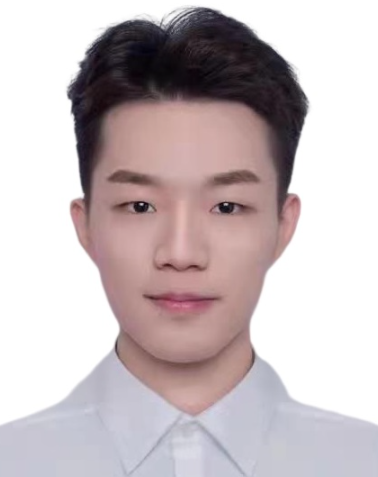 Bohan Zhou (周伯涵)合作论文数School of Computer Science, Peking University;National Engineering Research Center of Visual Technology, Peking University1Yifei Bi合作论文数1Boyu Li合作论文数1Zhirui Fang合作论文数1Yichao Xu合作论文数1Yijia Guo合作论文数1Mianzhi Liu合作论文数1
 Wentao Zhang合作论文数School of Computer Science and Engineering, Nanyang Technological University1
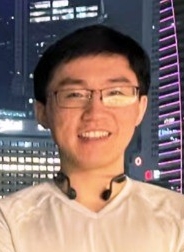 Haochong Xia合作论文数Nanyang Technological University Singapore1
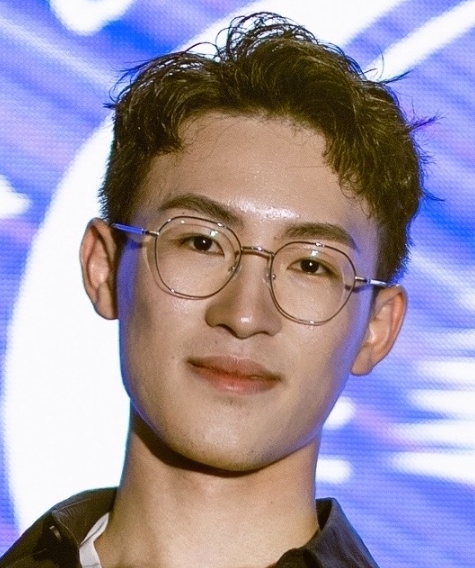 Longtao Zheng (郑龙韬)合作论文数College of Computing and Data Science, Nanyang Technological University;TikTok1Junwei Zhao合作论文数1
 Tianxiao Gao合作论文数1
 Shenghao Xie合作论文数1
 Yuxin Wang合作论文数1Haoran Li合作论文数Xidian University1Li Yang合作论文数Peking Univ, Sch Adv Agr Sci, Peking Tsinghua Ctr Life Sci, State Key Lab Prot & Plant Gene Res, Beijing 100871, Peoples R China1
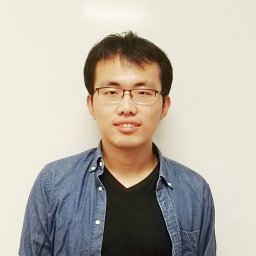 Xinrun Wang合作论文数School of Computing and Information Systems, Singapore Management University1Pengjie Gu合作论文数School of Computer Science and Engineering, Nanyang Technological University1
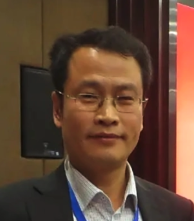 Jiyuan Zhang (张纪元)合作论文数Weichai Power Co., Ltd.1
 Boxin Shi (施柏鑫)合作论文数Institute for Artificial Intelligence, Peking University1
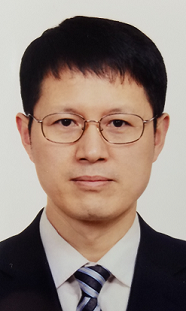 Zhiming Ding (丁治明)合作论文数Research Center of Spatial-Temporal Data Management and Data Science, Institute of Software, Chinese Academy of Sciences;University of Chinese Academy of Sciences1
 Weihao Tan (谭伟豪)合作论文数Nanyang Technological University;ByteDance Seed1
 Dongbin Zhao (赵冬斌)合作论文数Institute of Automation, Chinese Academy of Sciences;School of Artificial Intelligence, University of Chinese Academy of Sciences1
 Xiu Li (李秀)合作论文数Tsinghua Shenzhen International Graduate School1
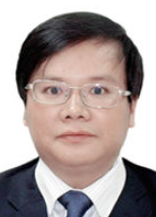 Yonghong Tian (田永鸿)合作论文数School of Computer Science, Peking University1
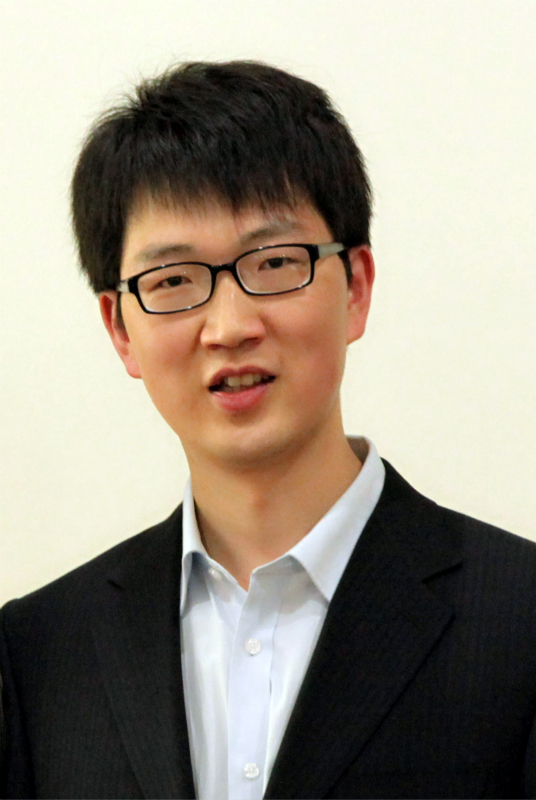 Jian Zhang (张健)合作论文数School of Electronic and Computer Engineering, Peking University;Shenzhen Graduate School, Peking University1
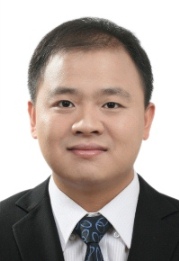 Bo An (安波)合作论文数Division of Artificial Intelligence, College of Computing and Data Science, Nanyang Technological University;School of Physical & Mathematical Sciences, Nanyang Technological University1
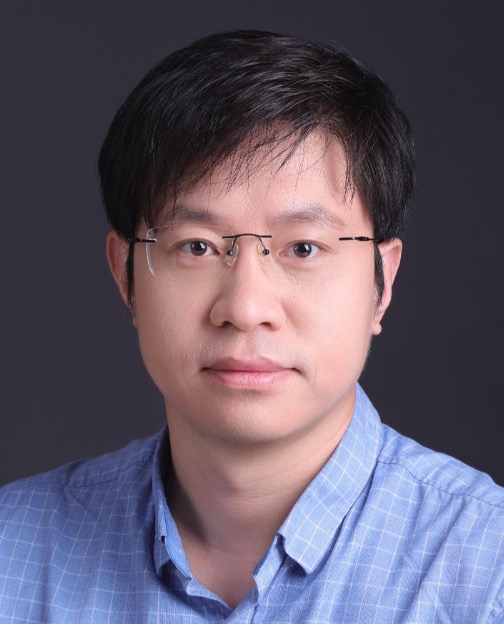 Shiliang Zhang (张史梁)合作论文数School of Computer Science, Peking University;Department of Computer Science, School of Electronics Engineering and Computer Science, Peking University1
 Xiaopeng Fan (范晓鹏)合作论文数School of Computer Science and Technology, Harbin Institute of Technology1




