The majority of genic transcription is intronic. Introns are removed by splicing as branched lariat RNAs which require rapid recycling. The branch site is recognized during splicing catalysis and later debranched by Dbr1 in the rate-limiting step of lariat turnover. Through generation of the first viable DBR1 knockout cell line, we find the predominantly nuclear Dbr1 enzyme to encode the sole debranching activity in human cells. Dbr1 preferentially debranches substrates that contain canonical U2 binding motifs, suggesting that branchsites discovered through sequencing do not necessarily represent those favored by the spliceosome. We find that Dbr1 also exhibits specificity for particular 5' splice site sequences. We identify Dbr1 interactors through co-immunoprecipitation mass spectroscopy. We present a mechanistic model for Dbr1 recruitment to the branchpoint through the intron-binding protein AQR. In addition to a 20-fold increase in lariats, Dbr1 depletion increases exon skipping. Using ADAR fusions to timestamp lariats, we demonstrate a defect in spliceosome recycling. In the absence of Dbr1, spliceosomal components remain associated with the lariat for a longer period of time. As splicing is co-transcriptional, slower recycling increases the likelihood that downstream exons will be available for exon skipping.
The pre-mRNA life cycle requires intron processing; yet, how intron-processing defects influence splicing and gene expression is unclear. Here, we find that TTDN1/MPLKIP, which is encoded by a gene implicated in non-photosensitive trichothiodystrophy (NP-TTD), functionally links intron lariat processing to spliceosomal function. The conserved TTDN1 C-terminal region directly binds lariat debranching enzyme DBR1, whereas its N-terminal intrinsically disordered region (IDR) binds the intron-binding complex (IBC). TTDN1 loss, or a mutated IDR, causes significant intron lariat accumulation, as well as splicing and gene expression defects, mirroring phenotypes observed in NP-TTD patient cells. A Ttdn1-deficient mouse model recapitulates intron-processing defects and certain neurodevelopmental phenotypes seen in NP-TTD. Fusing DBR1 to the TTDN1 IDR is sufficient to recruit DBR1 to the IBC and circumvents the functional requirement for TTDN1. Collectively, our findings link RNA lariat processing with splicing outcomes by revealing the molecular function of TTDN1.
Immunoaffinity purification allows for the purification of epitope-tagged proteins and their associated multisubunit complexes from mammalian cells. Subsequent identification of the proteins by proteomic analysis enables unbiased biochemical characterization of their associated partners, potentially revealing the physiological or functional context of any given protein. Here, we use immunoaffinity isolation of the Activating Signal Co-integrator Complex (ASCC) from human cells as an example, demonstrating the utility of the approach in revealing protein complexes involved in genotoxic stress responses.
Summary The pre-mRNA life cycle requires intron processing; yet, how intron processing defects influence splicing and gene expression is unclear. Here, we find TTDN1, which is frequently mutated in non-photosensitive trichothiodystrophy (NP-TTD), functionally links intron lariat processing to the spliceosome. The conserved TTDN1 C-terminal region directly binds lariat debranching enzyme DBR1, while its N-terminal intrinsically disordered region (IDR) binds the intron binding complex (IBC). The IDR forms condensates in vitro and is needed for IBC interaction. TTDN1 loss causes significant intron lariat accumulation, as well as splicing and gene expression defects, mirroring phenotypes observed in NP-TTD patient cells. Ttdn1 Δ/Δ mice recapitulate intron processing defects and neurodevelopmental phenotypes seen in NP-TTD. A DBR1-IDR fusion recruits DBR1 to the IBC and circumvents the requirement for TTDN1, indicating this tethering role as its major molecular function. Collectively, our findings unveil key functional connections between lariat processing, splicing outcomes, and NP-TTD molecular pathology.
Central to genotoxic responses is their ability to sense highly specific signals to activate the appropriate repair response. We previously reported that the activation of the ASCC-ALKBH3 repair pathway is exquisitely specific to alkylation damage in human cells, Yet the mechanistic basis for the selectivity of this pathway was not immediately obvious. Here, we demonstrate that RNA but not DNA alkylation is the initiating signal for this process. Aberrantly methylated RNA is sufficient to recruit ASCC, while an RNA dealkylase suppresses ASCC recruitment during chemical alkylation. In turn, recruitment of ASCC during alkylation damage, which is mediated by the E3 ubiquitin ligase RNF113A, suppresses transcription and R-loop formation. We further show that alkylated pre-mRNA is sufficient to activate RNF113A E3 ligase in vitro in a manner dependent on its RNA binding Zn-finger domain. Together, our work identifies an unexpected role for RNA damage in eliciting a specific response to genotoxins.
Trichothiodystrophy (TTD) is a rare, inherited disorder characterized by intellectual disability and severe developmental delay. Photosensitive TTD features defects to DNA repair and destabilized TFIIH transcriptional function. While non-photosensitive TTD (NP-TTD) is DNA repair proficient, the neurological and developmental phenotypes remain, and the molecular defects responsible for this shared TTD pathology are unclear. Mutations to the trichothiodystrophy non-photosensitive-1 gene (TTDN1, also called MPLKIP), constitute a majority of NP-TTD cases. Here, we identify TTDN1 as a novel spliceosomal protein that promotes RNA processing through regulation of the intron lariat debranching enzyme, DBR1. TTDN1 forms a stable interaction with DBR1 through a highly conserved C-terminal region of TTDN1, which is commonly mutated in patients harboring TTDN1 mutations. On the other hand, the N-terminal domain of TTDN1 promotes localization to nuclear speckles, and all-atom simulations strongly indicate the TTDN1 NTD has phase-separation potential. Consistent with this, loss of TTDN1 significantly reduces DBR1 localization to nuclear speckles and abrogates interaction of DBR1 with spliceosomal complexes. TTDN1 loss mimics DBR1-deficiency, where snRNP components are sequestered in late-stage intron lariat-containing complexes, resulting in reduced spliceosome efficiency and aberrant alternative splicing. Our data supports a model in which TTDN1 functions as a molecular tether, localizing DBR1 within phase-separated regions of splicing activity to allow intron-lariat complex recycling. We validate our molecular analysis via a novel mouse model of TTDN1 deficiency, which recapitulates many of the developmental phenotypes seen in NP-TTD. Collectively, our work demonstrates how the pathological alteration of TTDN1 drives aberrant alternative splicing to result in transcriptional dysregulation.
The response to DNA damage intersects with many other physiological processes in the cell, such as DNA replication, chromatin remodeling, and the cell cycle. Certain damaging lesions, such as UV-induced pyrimidine dimers, also strongly block RNA polymerases, necessitating the coordination of the repair mechanism with remodeling of the elongating transcriptional machinery, in a process called transcription-coupled nucleotide excision repair (TC-NER). This pathway is typically not thought to be engaged with smaller lesions such as base alkylation. However, recent work has uncovered the potential for shared molecular components between the cellular response to alkylation and UV damage. Here, we review our current understanding of the alkylation damage response and its impacts on RNA biogenesis. We give particular attention to the Activating Signal Cointegrator Complex (ASCC), which plays important roles in the transcriptional response during UV damage as well as alkylation damage reversal, and intersects with trichothiodystrophy, an inherited disease associated with TC-NER.
 Nima Mosammaparast合作论文数Brigham and Women's Hospital, Harvard Medical School7
 Joshua R. Brickner合作论文数4
 John A. Tainer合作论文数Department of Molecular and Cellular Oncology, Division of Basic Science Research, The University of Texas MD Anderson Cancer Center;Department of Structural Biology, The University of Texas MD Anderson Cancer Center;Department of Integrated Diffraction Analysis Technologies Program, The University of California Lawrence Berkeley National Laboratory;Skaggs Institute for Chemical Biology, Scripps Research Institute4
 Albino Bacolla合作论文数Institute of Biosciences and Technology, The Texas A&M University System Health Science Center4
 Sridhar Nonavinkere Srivatsan合作论文数Div Oncol, Washington Univ3
 Luke Buerer合作论文数3
 William Fairbrother合作论文数Department of Molecular Biology, Cell Biology, and Biochemistry, Brown University3
 Alex Holehouse合作论文数Department of Biochemistry and Molecular Biophysics, School of Medicine, Washington University3Clark Nathaniel E合作论文数3Matthew J. Walter合作论文数NINDS, NIH3Nicolas Schmidt合作论文数2Drew McDonald合作论文数2Reilly A Sample合作论文数2Timur Rusanov合作论文数Temple Univ, Lewis Katz Sch Med, Dept Med Genet & Mol Biochem, Fels Inst Canc Res, Philadelphia, PA 19140 USA2
 Hua Sun合作论文数Chinese Acad Sci, Inst Genet & Dev Biol, State Key Lab Plant Cell & Chromosome Engn, Beijing 100101, Peoples R China2Tsai Miaw-Sheue合作论文数2Soll Jennifer M合作论文数2
 Tsao Ning合作论文数a Graduate Institute of Biochemistry and Molecular Biology;College of Medicine;National Taiwan University;Taipei;College of Medicine, National Taiwan University2David F. Wozniak合作论文数2Clement Oyeniran合作论文数1Merideth Kamradt Krevosky合作论文数1Negar Goodarzi合作论文数1Rebecca Rodell合作论文数1Chaorui Duan合作论文数1Anastasia Welch合作论文数1
 Tanveer Ahmad合作论文数CNRS 5309, Grenoble Alpes Univ1Adit Ganguly合作论文数1
 Alexandre Casanova合作论文数UMR5309, Grenoble Alpes Univ1Jing Wang合作论文数Brown Univ, Mol Biol Cell Biol & Biochem, Providence, RI 02912 USA1Yi Zeng合作论文数1
 Valentina Lukinovic合作论文数UMR5309, Grenoble Alpes Univ1
 Soemedi Rachel合作论文数Institute of Genetic Medicine, Newcastle University1Lin Chien-Ling合作论文数1
 Rong Stephen合作论文数Biology Department, Washington University in St. Louis1Pena Vladimir合作论文数1Katolik Adam合作论文数Department of Chemistry, McGill University1Taggart Allison J合作论文数1
 Masad J. Damha合作论文数Department of Chemistry, McGill University1
 Chuan He (何川)合作论文数Department of Chemistry, The University of Chicago;Howard Hughes Medical Institute1
 Jonathan Prescott Staley合作论文数Department of Molecular Genetics and Cell Biology, The University of Chicago1
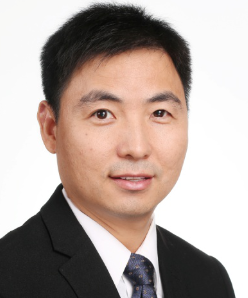 Lisheng Zhang (张利生)合作论文数College of Biomedicine and Health, Huazhong Agricultural University;College of Animal Science & Technology, Huazhong Agricultural University1
 Nicolas Reynoird合作论文数1Alessandro Vindigni合作论文数1Jeffery A. Bowen合作论文数Department of Anatomy and Cell Biology, University of Kansas Medical Center Kansas City1
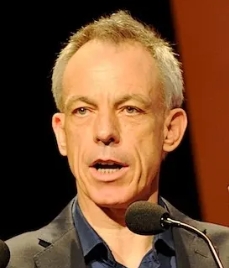 Matthew Wood合作论文数Department of Paediatrics, Medical Sciences Division, University of Oxford;Somerville College, University of Oxford1




