Novel preventive interventions are needed to address the rising incidence of human papillomavirus (HPV)-mediated oropharyngeal cancer (HPV+ OPC). This pilot study eval-uated the feasibility of a stepped, behavioral and biological screening program for oral oncogenic HPV infection, an intermediate HPV+ OPC outcome. This was a cross-sectional, feasibility study. Eligible 45-74 years old adults identified from three clinical research registries were administered a behavioral risk survey (step 1). Participant tobacco use and sexual behavior history were translated into a quantifiable risk of oral oncogenic HPV DNA, according to prior National Health and Nutrition Examination Survey analyses. Females with >2% risk and males with >7% risk were offered biological screening for oral oncogenic HPV DNA (step 2) via an oral rinse and gargle specimen. A total of 292 individuals were contacted, but only 144 (49%) were reached. Among these, 56 individuals (19%) were uninterested and 18 (13%) were ineligible. Seventy individuals began the survey and 66 completed it (step 1), among whom 46 were classified as low-risk. Among the remaining 20 participants classified as high-risk for an oral oncogenic HPV infection, 5% were current smokers and the median participant had performed oral sex on 10 unique partners. During step 2 (biological screening), 45% (9/20) completed testing, all of whom tested negative for oral oncogenic HPV DNA. In this pilot of a stepped, oral oncogenic HPV screening program, enrollment and study completion were subopti-mal. These barriers to screening should be characterized and addressed before reevaluating the feasibility of this program.
The pre-mRNA life cycle requires intron processing; yet, how intron-processing defects influence splicing and gene expression is unclear. Here, we find that TTDN1/MPLKIP, which is encoded by a gene implicated in non-photosensitive trichothiodystrophy (NP-TTD), functionally links intron lariat processing to spliceosomal function. The conserved TTDN1 C-terminal region directly binds lariat debranching enzyme DBR1, whereas its N-terminal intrinsically disordered region (IDR) binds the intron-binding complex (IBC). TTDN1 loss, or a mutated IDR, causes significant intron lariat accumulation, as well as splicing and gene expression defects, mirroring phenotypes observed in NP-TTD patient cells. A Ttdn1-deficient mouse model recapitulates intron-processing defects and certain neurodevelopmental phenotypes seen in NP-TTD. Fusing DBR1 to the TTDN1 IDR is sufficient to recruit DBR1 to the IBC and circumvents the functional requirement for TTDN1. Collectively, our findings link RNA lariat processing with splicing outcomes by revealing the molecular function of TTDN1.
Epithelial-to-mesenchymal transition (EMT) is a process by which cells lose their epithelial characteristics and gain mesenchymal phenotypes. In cancer, EMT is thought to drive tumor invasion and metastasis. Recent efforts to understand EMT biology have uncovered that cells undergoing EMT attain a spectrum of intermediate “hybrid E/M” states, which exist along an epithelial-mesenchymal continuum. Here, we summarize recent studies characterizing the epigenetic drivers of hybrid E/M states. We focus on the histone-modification writers, erasers, and readers that assist or oppose the canonical hybrid E/M transcription factors that modulate hybrid E/M state transitions. We also examine the role of chromatin remodelers and DNA methylation in hybrid E/M states. Finally, we highlight the challenges of targeting hybrid E/M pharmacologically, and we propose future directions that might reveal the specific and targetable mechanisms by which hybrid E/M drives metastasis in patients.
Summary The pre-mRNA life cycle requires intron processing; yet, how intron processing defects influence splicing and gene expression is unclear. Here, we find TTDN1, which is frequently mutated in non-photosensitive trichothiodystrophy (NP-TTD), functionally links intron lariat processing to the spliceosome. The conserved TTDN1 C-terminal region directly binds lariat debranching enzyme DBR1, while its N-terminal intrinsically disordered region (IDR) binds the intron binding complex (IBC). The IDR forms condensates in vitro and is needed for IBC interaction. TTDN1 loss causes significant intron lariat accumulation, as well as splicing and gene expression defects, mirroring phenotypes observed in NP-TTD patient cells. Ttdn1 Δ/Δ mice recapitulate intron processing defects and neurodevelopmental phenotypes seen in NP-TTD. A DBR1-IDR fusion recruits DBR1 to the IBC and circumvents the requirement for TTDN1, indicating this tethering role as its major molecular function. Collectively, our findings unveil key functional connections between lariat processing, splicing outcomes, and NP-TTD molecular pathology.
Background For human papilloma virus positive (HPV+) oropharyngeal squamous cell carcinoma (OPSCC), management recommendations for patients with a single metastatic lymph node <6 cm in diameter remain nebulous, leading to treatment heterogeneity in this common subgroup of patients. Methods We utilized the National Cancer Database to perform survival and multivariable analyses of patients with HPV+ OPSCC with one positive lymph node We found that 5-year survival is comparable between patients who receive surgery and adjuvant radiation versus surgery alone. In multivariable analyses, we found no significant difference in the hazard ratio of overall survival after adjusting for various potential confounders. Conclusions These data suggest that patients with margin-negative HPV+ OPSCC with a single positive lymph node <6 cm have comparable survival with or without adjuvant radiation. Future studies exploring outcomes for this specific group in randomized-controlled trials will be critical for further evaluating these initial observations.
Complexities in cell-type composition have rightfully led to skepticism and caution in the interpretation of bulk transcriptomic analyses. Recent studies have shown that deconvolution algorithms can be utilized to computationally estimate cell-type proportions from the gene expression data of bulk blood samples, but their performance when applied to tumor tissues, including those from head and neck, remains poorly characterized. Here, we use single-cell data (~6000 single cells) collected from 21 head and neck squamous cell carcinoma (HNSCC) samples to generate cell-type-specific gene expression signatures. We leverage bulk RNA-seq data from >500 HNSCC samples profiled by The Cancer Genome Atlas (TCGA), and using single-cell data as a reference, apply two newly developed deconvolution algorithms (CIBERSORTx and MuSiC) to the bulk transcriptome data to quantitatively estimate cell-type proportions for each tumor in TCGA. We show that these two algorithms produce similar estimates of constituent/major cell-type proportions and that a high T-cell fraction correlates with improved survival. By further characterizing T-cell subpopulations, we identify that regulatory T-cells (Tregs) were the major contributor to this improved survival. Lastly, we assessed gene expression, specifically in the Treg population, and found that TNFRSF4 (Tumor Necrosis Factor Receptor Superfamily Member 4) was differentially expressed in the core Treg subpopulation. Moreover, higher TNFRSF4 expression was associated with greater survival, suggesting that TNFRSF4 could play a key role in mechanisms underlying the contribution of Treg in HNSCC outcomes.
 Puram Sidharth V合作论文数Dept Otolaryngol Head & Neck Surg, Washington Univ3
 Brittany A Townley合作论文数2Nicolas Schmidt合作论文数2Drew McDonald合作论文数2
 Sridhar Nonavinkere Srivatsan合作论文数Div Oncol, Washington Univ2Thomas F Barrett合作论文数2Luke Buerer合作论文数2
 Pipkorn Patrik合作论文数Dept Otolaryngol Head & Neck Surg, Washington Univ2
 Angela Mazul合作论文数2Timur Rusanov合作论文数Temple Univ, Lewis Katz Sch Med, Dept Med Genet & Mol Biochem, Fels Inst Canc Res, Philadelphia, PA 19140 USA2Tsai Miaw-Sheue合作论文数2
 William Fairbrother合作论文数Department of Molecular Biology, Cell Biology, and Biochemistry, Brown University2
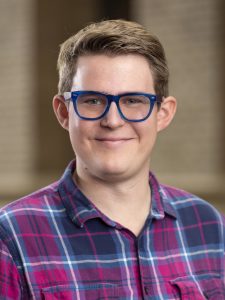 Alex Holehouse合作论文数Department of Biochemistry and Molecular Biophysics, School of Medicine, Washington University2
 Joshua R. Brickner合作论文数2Clark Nathaniel E合作论文数2
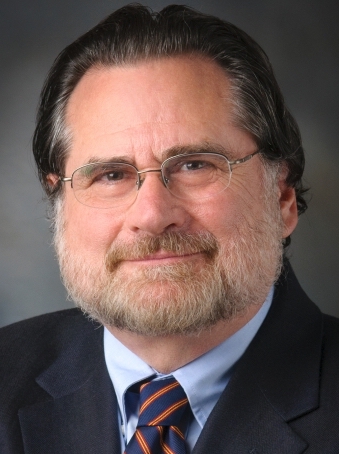 John A. Tainer合作论文数Department of Molecular and Cellular Oncology, Division of Basic Science Research, The University of Texas MD Anderson Cancer Center;Department of Structural Biology, The University of Texas MD Anderson Cancer Center;Department of Integrated Diffraction Analysis Technologies Program, The University of California Lawrence Berkeley National Laboratory;Skaggs Institute for Chemical Biology, Scripps Research Institute2David F. Wozniak合作论文数2Stephen Y. Kang合作论文数2
 Ryan S Jackson合作论文数2
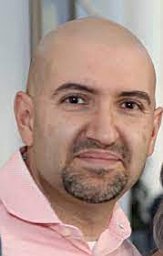 Nima Mosammaparast合作论文数Brigham and Women's Hospital, Harvard Medical School2
 Albino Bacolla合作论文数Institute of Biosciences and Technology, The Texas A&M University System Health Science Center2Matthew J. Walter合作论文数NINDS, NIH2Stephanie Y. Chen合作论文数1
 Joseph D. Dougherty合作论文数1Negar Goodarzi合作论文数1Riley D Z Mullins合作论文数1Yating Liu合作论文数Washington Univ, Sch Med, Dept Genet, St Louis, MO 63110 USA1
 Travis Law合作论文数Broad Inst MIT & Harvard, Cambridge, MA 02142 USA1
 Hua Sun合作论文数Chinese Acad Sci, Inst Genet & Dev Biol, State Key Lab Plant Cell & Chromosome Engn, Beijing 100101, Peoples R China1Jasmin Tiro合作论文数1Mints M合作论文数1
 Mac Daly合作论文数Department of Radiation Oncology, School of Medicine, University of Colorado Anschutz Medical Campus;University of Colorado Health Memorial Hospital1
 Tsao Ning合作论文数a Graduate Institute of Biochemistry and Molecular Biology;College of Medicine;National Taiwan University;Taipei;College of Medicine, National Taiwan University1Pena Vladimir合作论文数1
 Salley Jordan合作论文数Department of Pediatrics, University of Texas Southwestern Medical Center;and.;Department of Pediatrics, University of Texas Southwestern Medical Center1
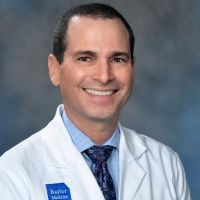 Erich M. Sturgis合作论文数Department of Head and Neck Surgery, The University of Texas M.D. Anderson Cancer Center/Population Science & Cancer Control, UT Southwestern Simmons Comprehensive Cancer Center/Head and Neck Surgery, Baylor College of Medicine1Dwight Oliver合作论文数1Anuraag Parikh合作论文数1Randal C. Paniello合作论文数1Andrew Day合作论文数1Zongtai Qi合作论文数1
 Jason T Rich合作论文数1
 Wade L. Thorstad合作论文数Department of Radiation Oncology, School of Medicine, Washington University in St. Louis1Kristina R. Dahlstrom合作论文数1
 Itay Tirosh合作论文数Department of Molecular Cell Biology, Faculty of Biology, Weizmann Institute of Science1
 Robi Mitra合作论文数Department of Genetics, School of Medicine, Washington University in St. Louis;Edison Family Center for Genome Sciences and Systems Biology, Washington University in St. Louis;McDonnell Genome Institute1
 José P. Zevallos合作论文数Department of Otolaryngology-Head & Neck Surgery, School of Medicine, University of Pittsburgh;UPMC Hillman Cancer Center;University of Pittsburgh Medical Center1




