This commentary seeks to right what is now an old wrong – to attribute Manfred Max-Neef's (2005) model of disciplinary interactions in transdisciplinarity to Erich Jantsch (1970). When I first discovered this erroneous situation, it was a startling realisation. It seemed that Manfred Max-Neef had certainly copied and possibly plagiarised Erich Jantsch. We might ask why it is that although both authors are regularly referenced together, a doctoral dissertation (Buchanan, 2016) is the sole published document pointing out this irregularity. In the process of piecing together this (hi)story, I uncovered further documents that point toward something more common and perhaps more insidious than lack of originality. Manfred Max-Neef seems to have made a choice, conscious or otherwise, to not engage with, and perhaps even to dismiss, the scholarly purpose and intent of Erich Jantsch's transdisciplinary model. Recent neurological studies suggest that although this kind of behaviour has deep biological roots, it is not unavoidable. I wonder whether dismissing another scholar's beliefs may be a more serious indictment of our shared scholarly enterprise than plagiarism. My hope is that this salutary tale sets the record a little straighter, and acts as a reflective and reflexive trigger for scholars everywhere.
Synthesizing heterogeneous findings from different scientific disciplines, thematic fields, and professional sectors is considered to be a critical component of inter- and transdisciplinary research endeavors. However, little is known about the complex interplay between synthesizing heterogeneous findings, leading creative synthesis, and learning about leading and synthesizing. In the present article, we therefore focus on the key interactions between leading and synthesizing, between synthesizing and learning, and between learning and leading in inter- and transdisciplinary contexts and compile a set of 21 principles that guide the interactions between these components. We use these principles to reflect ex post on the benefits and challenges we encountered in developing a nationwide monitoring program for river restoration in Switzerland and draw lessons learned for future inter- and transdisciplinary research endeavors. We conclude that learning and synthesizing do not happen on their own but need to be designed as intentional and purposeful processes.
The symposium brings together global scholar-practitioners to discuss and illustrate action research as a contemporary scholarly practice. Over the past decade, action research for transformations (ART) illustrates a growing capacity for grappling with and achieving global sustainability goals. Participants will learn of its key conceptual underpinnings, namely constructivist pragmatism and adult development. These in turn are shown to animate a meta-model that combines concern for relational, conceptual and experimental spaces, guided and assessed by seven quality choicepoints. Key in the transformations support by ART is researchers’ integrating objective perspectives with subjective reflexivity. As an expression of contemporary constructivist pragmatism, action research for transformations thereby illustrates and works with a deeper emphasis and respect for the relational nature of people within change contexts. In this integration ART may offer a revitalization of social science itself. The discussion of how concepts as well as objectivity, intersubjectivity, and subjectivity combine will be brought alive with two impactful cases from worlds of i) policy makers in government in Spain and ii) work of JEDI (justice, equity, diversity, and inclusion) with thousands of employees in Vancouver Canada. The symposium will be of interest to change leaders and educators concerned with transformative social change, as well as social scientists interested in new paradigms of social science.
Efforts to expand the delivery of water, sanitation and hygiene (WASH) services are occurring in the context of increasing pressures on the environmental and resource systems on which WASH services depend. As such, it is imperative to explore how sustainability considerations can be made central to WASH initiatives in ways that strengthen both service delivery and environmental systems. This article contributes insights from a transdisciplinary knowledge co-production process designed to bridge conceptual and practical priorities in a sectoral context – the WASH sector – with the intent to inform transformations at multiple levels from local practice through to global discourse. The co-production process was held online with a select group of WASH professionals from 10 countries. The design involved three components: engaging with worldviews and sustainability concepts; discussing the practical relevance of featured research studies in participant's professional roles; and co-creating ideas about desirable futures and transformation pathways. Findings from the process relate to its method, outcomes and implications for future knowledge co-production across four themes: (i) fostering self-reflection and engaging with purpose; (ii) considering sustainability across scales and contexts; (iii) generating ideas for individual and sectoral action; and (iv) reflecting on researcher power and considerations for future co-production processes. The case demonstrates the potential for co-production in a sectoral context to foster generative self-reflection, shared understandings and practical ideas for action towards sustainability transformations. Methodological insights suggest that future knowledge co-production proponents could beneficially emphasize purpose, work across scales and contexts, and take a reflexive approach to power.
Integration is a key process in transdisciplinary research and knowledge co-production. Nonetheless, it is often used as a buzzword without specifying what exactly it means or what actually happens during integration. We propose conceptualizing integration as a multidimensional interactive process. We characterize it as an open-ended learning process without pre-determined outcomes. Integration designates relations established throughout a transdisciplinary research process between elements that were not previously related. Those elements are participants in the process and their thought-styles and thought-collectives and more specifically pieces of knowledge, ideas, or practices from different thought-collectives as well as views of individual researchers and practitioners. Integration can happen at manifold instances of a transdisciplinary research process. It can take place among two, several, or all participants and can be one-sided or mutual. It might include insights, practices, frameworks, or concepts shared by two, several, or all participants. Consensus is only one along with other ways of retaining plurality of thought-styles and seeing integration as a balance between them that remains subject to continuous revision. To analyse or achieve effective integration, further dimensions beyond the cognitive have to be taken into account including at least an emotional and a social-interactional dimension.
NOTE: The first page of text has been automatically extracted and included below in lieu of an abstract Session 2251 Role Models and Environmental Education: The Good, The Bad, and the MIA Fiona S. Crofton, The ORCAD Group Inc., Vancouver, Canada Cynthia A. Mitchell, The University of Queensland, Brisbane, Australia Students 'know' that learning about communication, sustainability, social issues, even environmental issues, is "not very important." They know this because many, perhaps even most, of their engineering professors do not pay much attention to these things; they know because learning about such things means picking up a couple of courses outside of the engineering faculty as part of their 'complementary studies' requirement. "Besides," says one student, "I've never seen anyone deal with these things during work experience." Other students in the group not their heads in agreement. "Yeah," says another student, "and companies aren't going to hire 'tree-huggers' anyway." Many faculty members still maintain that, except for environmental engineering specialties, there isn't time or space to fit environmental/sustainability issues into already densely-packed courses. Some maintain that these are issues for attention after students complete their basic education. In any case, to quote one faculty member, "Sustainable development has nothing to do with engineering" (apparently it's a "policy issue"). We disagree. In fact, we believe that we are all already teaching students how to respond to environmental/sustainability issues. It is said that talk is cheap; nonetheless, it's not without effect, and what is left unsaid can be as important as what is spoken. Further, even if people doubt what you say, they'll believe (and learn from) what you do. Whether we recognise it or not, all of us are role models — for better or worse. And what we ourselves model in the classroom is as important, perhaps even more important, than what we hold up as other examples to our students. It is essential that we become more self-aware and reflective practitioners. This paper considers some of the ways that we, as 'role models' in the classroom, do and could impact students. The context for our discussion is environmental education in a broad sense, inclusive of ecological, social and economic 'environments', or what some people consider the three 'legs' of sustainable development. We believe engineering education should facilitate development of students' knowledge, attitudes and skills in ways which are attentive to these environments and that this task is not exclusive to environmental engineering specialisations. The paper provides examples of some good and not-so-good role model behaviours, and identifies areas where better or more role models are needed. The paper also includes suggestions for identifying, supporting, encouraging and/or developing role models (ourselves included!) of the environmental engineer and engineering educator of the future.
This chapter informs the development of a transdisciplinary living lab. This approach to education aims to transcend disciplinary boundaries by utilizing the university campus as a living laboratory in which students engage with a complex problem, in this case the introduction of an alternative sanitation system on campus – a urine diversion system. Collaborative, industry-engaged and interdisciplinary and/or transdisciplinary models of education are well suited to preparing students for the needs of the world, and as such constitute an important complement to traditional models of university education that involve mastering a single discipline. Transdisciplinary approaches create a space for multiple, the co-existing viewpoints and utilize the discontinuities between views as a source for further inquiry and emergent understanding. The current model of tertiary education tends to focus on knowledge creation emerging from current disciplinary paradigms rather than the transformational learning.
In Australia and internationally, key stakeholders in the engineering profession are exerting pressure on engineers to move towards more sustainable practice. The Institution of Engineers, Australia (IEAust) recently overhauled the processes by which many Australian engineers attain two important professional milestones: undergraduate baccalaureate and professional certification/recognition. Sustainability now holds a prominent position in both processes. In this paper, using a student-centered framework for understanding learning, we investigate undergraduate chemical engineering students conceptions of sustainability, and their propensity to learn more about sustainability. We use the SOLO taxonomy to categorize students’ conceptions of sustainability as naïve, intermediate, or sophisticated. We then use these categorizations as the lens through which we interpret the students’ scale responses to intrinsic and extrinsic motivation factors, and a range of sustainability attributes. We demonstrate direct linkages between complexity of an individual student’s conceptions and their interest in learning more about sustainability. This result has important implications for the design and implementation of activities for learning about sustainability in engineering.
Recent developments in high- and middle-income countries have exhibited a shift from conventional urban water systems to alternative solutions that are more diverse in source separation, decentralization, and modularization. These solutions include nongrid, small-grid, and hybrid systems to address such pressing global challenges as climate change, eutrophication, and rapid urbanization. They close loops, recover valuable resources, and adapt quickly to changing boundary conditions such as population size. Moving to such alternative solutions requires both technical and social innovations to coevolve over time into integrated socio-technical urban water systems. Current implementations of alternative systems in high- and middle-income countries are promising, but they also underline the need for research questions to be addressed from technical, social, and transformative perspectives. Future research should pursue a transdisciplinary research approach to generating evidence through socio-technical "lighthouse" projects that apply alternative urban water systems at scale. Such research should leverage experiences from these projects in diverse socio-economic contexts, identify their potentials and limitations from an integrated perspective, and share their successes and failures across the urban water sector.
Perceptions and cognitive bias in relation to reuse water can influence the responses to risk and reward. Much has been written on community perspectives and risk perceptions with regard to recycled water for non-potable use. This paper is distinct in that it focuses on the scheme proponents and those involved in designing and delivering schemes. An analysis of five case studies in Australia across a range of diverse settings revealed that the levels of treatment for various end-uses were in excess of the Australian Guidelines for Water Recycling. The evidence shows that the water industry has a fairly narrow view when identifying risks, and has an insurance type response to mitigating the risk. The overarching drivers for this are either the mitigation of the perceived risk associated with using reuse water, or the lack of an adaptive response to changes in the circumstances.
Public health benefits are often a key political driver of urban sanitation investment in developing countries, however, pathogen flows are rarely taken systematically into account in sanitation investment choices. While several tools and approaches on sanitation and health risks have recently been developed, this research identified gaps in their ability to predict faecal pathogen flows, to relate exposure risks to the existing sanitation services, and to compare expected impacts of improvements. This paper outlines a conceptual approach that links faecal waste discharge patterns with potential pathogen exposure pathways to quantitatively compare urban sanitation improvement options. An illustrative application of the approach is presented, using a spreadsheet-based model to compare the relative effect on disability-adjusted life years of six sanitation improvement options for a hypothetical urban situation. The approach includes consideration of the persistence or removal of different pathogen classes in different environments; recognition of multiple interconnected sludge and effluent pathways, and of multiple potential sites for exposure; and use of quantitative microbial risk assessment to support prediction of relative health risks for each option. This research provides a step forward in applying current knowledge to better consider public health, alongside environmental and other objectives, in urban sanitation decision making. Further empirical research in specific locations is now required to refine the approach and address data gaps.
Practitioners of transdisciplinary inquiry, which we define to include research, learning, collaboration, and action, encounter innumerable tensions. Some tensions are universal, while others are unique to that particular inquiry at that point in time. Resolving these tensions requires innovative practices, which emerge through experience with transdisciplinary inquiry. In this article, we reflect on two decades of transdisciplinary inquiry at the Institute for Sustainable Futures. Drawing on that experience, we argue that one crucial innovative practice is to create space for collective, reflective learning. Such learning frequently takes place in spaces we call "crossroads". These are formal and informal spaces where practitioners who have been on their own transdisciplinary learning journeys (experiencing diverse tensions and applying diverse approaches) come together in dialogue to share, reflect, critically and constructively question, imagine, challenge, and synthesize their experiences into collective organizational learning. Crossroads can emerge spontaneously but can also be consciously nurtured. In our experience, they help us to sustain the innovation needed for transdisciplinary inquiry and to avoid stagnation or routinization. At these reflective, and often times transformative, crossroads, we make sense of our messy, non-linear transdisciplinary journeys and develop innovations to take our transdisciplinary practices forward.
Local recycled water (LRW) can potentially contribute to resilient and sustainable urban water services critical to liveable cities. Investment in these systems has increased rapidly in Australia in the past 10 years, yet public and private investment in these systems can still be difficult, complex, costly and risky. An in depth case study analysis of Sydney, revealed that while the local policy, institutional and regulatory environment is on the surface conducive to the uptake of local recycled water, actual practice has surprisingly mitigated against further and broader investment in these systems. These instruments are often counteracted by multiple opposing levers that in some instances were developed for entirely different purposes. The generalizable insight is that a systematic, systemic, detailed review of these instruments and levers can reveal unexpected contradictions and provide a strong and defensible base from which to develop strategies to address unintended consequences and remove barriers to future investment.
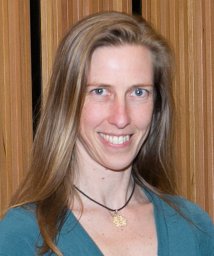 Juliet Willetts合作论文数Institute for Sustainable;University of Technology;Institute for Sustainable, University of Technology34
 Naomi Carrard合作论文数Institute for Sustainable Futures, University of Technology, Sydney19
 Monique Retamal合作论文数Institute for Sustainable;University of Technology;Institute for Sustainable, University of Technology19
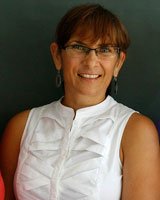 Fam Dena合作论文数17
 Kumi Abeysuriya合作论文数Institute for Sustainable;University of Technology Sydney;Institute for Sustainable, University of Technology Sydney17
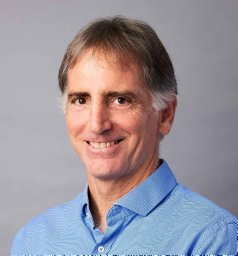 Pierre Mukheibir合作论文数University of Cape Town14Janina Murta合作论文数11
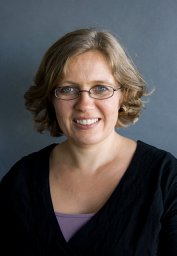 Andrea J Turner合作论文数Vet Specialists Sydney, 106 Parraweena Rd, Sydney, NSW, Australia11
 Joanne Chong合作论文数Institute of Chemical & Engineering Sciences, Agency for Science, Technology and Research (A*Star)10
 Anna L. Carew合作论文数8candice moy合作论文数7G.W. Barton合作论文数7
 Peter Holt合作论文数Department of Chemical Engineering, University of Sydney7
 Tanzi Smith合作论文数Institute for Sustainable;University of Technology;Institute for Sustainable, University of Technology6S. Fane合作论文数5
 Chris Riedy合作论文数INSTITUTE FOR SUSTAINABLE;FUTURES University of Technology;University of Technology5
 Kumudini Abeysuriya合作论文数5
 Dennis Mcnevin合作论文数4
 Simon Fane合作论文数4
 Abby Mellick Lopes合作论文数University of Western Sydney4C. Etnier合作论文数3S. Johnstone合作论文数3Katie E Ross合作论文数World Resources Institute3Sabine Hoffmann合作论文数Eawag, Swiss Fed Inst Aquat Sci & Technol3
 Dana Cordell合作论文数Institute for Sustainable Futures, University of Technology Sydney3
 Stuart White合作论文数Institute for Sustainable;University of Technology Sydney;Institute for Sustainable, University of Technology Sydney3
 Jane Palmer合作论文数Institute for Sustainable;University of Technology;Institute for Sustainable, University of Technology3
 Tanja Rosenqvist合作论文数Technical University of Denmark3s a fane合作论文数2cameron fitzgerald合作论文数2
 Rachel Watson合作论文数Dept Obstet Gynecol & Womens Hlth, Univ Missouri2Freya Mills合作论文数2
 Anne Stephens合作论文数The Cairns Institute2Roland Clift合作论文数Centre for Environment and Sustainability, University of Surrey2Lesley Jolly合作论文数2
 Candice Delaney合作论文数1a kazaglis合作论文数1P Menoud合作论文数1M. Clark合作论文数1J. Willets合作论文数1
 Susan Rebecca Petterson合作论文数1Joerg Londong合作论文数1Ulrike Feldmann合作论文数1
 Julia Chatterton合作论文数1Carol Howe合作论文数1C.H. Wong合作论文数1Kent Glenzer合作论文数1Mark Jacob Goedkoop合作论文数1Edward Price合作论文数1




