Two different media platforms played a key role in keeping Tema Port in Ghana afloat during the period immediately leading up to and during the three-week COVID-19 pandemic-related lockdown in late March–April of 2020. The one media platform, Eye on Port, is a weekly broadcast television show by the port’s authorities, which caters primarily to external commercial stakeholders of the port. The other platform is a closed WhatsApp forum used by stakeholders working at the operational level of the port. Both platforms served specific needs among their users, who had been restricted in their mobility but had to keep the port operational. Combining ‘scalable sociality’ with the concept of polymedia, we identify how the two media functioned to meet the different informational and conversational needs of their respective users. We argue that either medium alone could not fulfil the communicative needs necessary to keep the port operational during the early stage of the COVID-19 pandemic.
The Open Databases Integration for Materials Design (OPTIMADE) application programming interface (API) empowers users with holistic access to a growing federation of databases, enhancing the accessibility and discoverability of materials and chemical data. Since the first release of the OPTIMADE specification (v1.0), the API has undergone significant development, leading to the upcoming v1.2 release, and has underpinned multiple scientific studies. In this work, we highlight the latest features of the API format, accompanying software tools, and provide an update on the implementation of OPTIMADE in contributing materials databases. We end by providing several use cases that demonstrate the utility of the OPTIMADE API in materials research that continue to drive its ongoing development.
In this paper, we report on the current state of the development of the Open Translation Environment (OTE), which is based on the Elementary Multiperspective Material Ontology (EMMO) – a top-level ontology for applied science, to support Translators in the Materials domain. We describe the conceptual architecture of the OTE, as well as some of its main components.
Battery research initiatives and giga-scale production generate an abundance of diverse data spanning myriad fields of science and engineering. Modern battery development is driven by the confluence of traditional domains of natural science with emerging fields like artificial intelligence and the vast engineering and logistical knowledge needed to sustain the global reach of battery Gigafactories. Despite the unprecedented volume of dedicated research targeting affordable, high-performance, and sustainable battery designs, these endeavours are held back by the lack of common battery data and vocabulary standards, as well as, machine readable tools to support interoperability. An ontology is a data model that represents domain knowledge as a map of concepts and the relations between them. A battery ontology offers an effective means to unify battery-related activities across different fields, accelerate the flow of knowledge in both human- and machine-readable formats, and support the integration of artificial intelligence in battery development. Furthermore, a logically consistent and expansive ontology is essential to support battery digitalization and standardization efforts, such as, the battery passport. This review summarizes the current state of ontology development, the needs for an ontology in the battery field, and current activities to meet this need.
Data drives battery development. Despite the unprecedented volume of data being generated across both industry and research today, the battery data landscape remains a patchwork of heterogeneous sources with inconsistent metadata needed to correctly interpret its meaning. A new approach is needed to ensure that reported battery data is interoperable, reusable, and machine-readable. Furthermore, there is a growing need to share knowledge about batteries among groups from different backgrounds and organizations (e.g., experimentalists, modellers, engineers, technicians, etc.). The Battery Interface Ontology (BattINFO) is designed to meet these needs [1]. An ontology is a data model that represents domain knowledge as a map of concepts and the relations between them. This allows data to be mapped to common vocabulary terms, such that any two pieces of data mapped to the same term are also mapped to each other. Additionally, the network of concepts and relations allow expert knowledge to be expressed as graphs in a machine-readable form, which can then be queried to identify links between individual pieces of data and quickly share knowledge across organizations. BattINFO is a free, open-source domain ontology for electrochemistry and batteries that facilitates battery data interoperability and enables machine-readable semantic knowledge representation. A conceptual overview is shown in Figure 1. BattINFO was developed within the scope of the EU H2020 project BIG-MAP to facilitate data interoperability between more than 30 battery research institutes and companies in Europe. This contribution introduces BattINFO, demonstrates specific use cases for how it can be applied to accelerate battery data handling and development, and presents plans for future development and integration into the global battery data landscape. [1] S. Clark et al., “Toward a Unified Description of Battery Data,” Adv. Energy Mater., vol. 2102702, 2021. Figure 1
Social structures embed technologies, which people use in the implementation of national single window digital platforms. We argue that stakeholder interests determine digital transformation – with people being the key to understanding how digital platforms change or do not change the environments into which they are introduced. In our multicase studies based in the port of Tema, Ghana, stakeholders have divergent opinions about technology, which causes conflicts. Our empirical findings reflect the interpretive flexibility that moderates the traditional dichotomy between technological determinism and social constructivism. By employing the theory of sociotechnical systems, we identify the frictions and interlinkages of non‑technological factors.
Cloud platforms allow users to execute tasks directly from their web browser and are a key enabling technology not only for commerce but also for computational science. Research software is often developed by scientists with limited experience in (and time for) user interface design, which can make research software difficult to install and use for novices. When combined with the increasing complexity of scientific workflows (involving many steps and software packages), setting up a computational research environment becomes a major entry barrier. AiiDAlab is a web platform that enables computational scientists to package scientific workflows and computational environments and share them with their collaborators and peers. By leveraging the AiiDA workflow manager and its plugin ecosystem, developers get access to a growing range of simulation codes through a python API, coupled with automatic provenance tracking of simulations for full reproducibility. Computational workflows can be bundled together with user-friendly graphical interfaces and made available through the AiiDAlab app store. Being fully compatible with open-science principles, AiiDAlab provides a complete infrastructure for automated workflows and provenance tracking, where incorporating new capabilities becomes intuitive, requiring only Python knowledge.
The Open Databases Integration for Materials Design (OPTIMADE) consortium has designed a universal application programming interface (API) to make materials databases accessible and interoperable. We outline the first stable release of the specification, v1.0, which is already supported by many leading databases and several software packages. We illustrate the advantages of the OPTIMADE API through worked examples on each of the public materials databases that support the full API specification.
1 Institut de la Matière Condensée et des Nanosciences, Université catholique de Louvain, Chemin des Étoiles 8, Louvain-la-Neuve 1348, Belgium 2 Theory of Condensed Matter Group, Cavendish Laboratory, University of Cambridge, J. J. Thomson Avenue, Cambridge, CB3 0HE, United Kingdom 3 Theory and Simulation of Materials (THEOS), Faculté des Sciences et Techniques de l’Ingénieur, École Polytechnique Fédérale de Lausanne, CH-1015 Lausanne, Switzerland 4 Lawrence Berkeley National Laboratory, Berkeley, CA, USA 5 Fritz-Haber-Institut der Max-Planck-Gesellschaft, Faradayweg 4-6, 14195, Berlin, Germany 6 Humboldt-Universität zu Berlin, Institut für Physik and IRIS Adlershof, 12489 Berlin, Germany 7 Polyneme LLC, New York, NY, USA 8 Department of Physics, King’s College London, Strand, London WC2R 2LS, United Kingdom 9 Department of Physics and Namur Institute of Structured Materials, University of Namur, Rue de Bruxelles 51, 5000 Namur, Belgium DOI: 10.21105/joss.03458
The Open Databases Integration for Materials Design (OPTIMADE) consortium aims to make materials databases interoperational by developing a common REST API. This repository contains the specification of the OPTIMADE API. $$ $$ * [optimade.rst](optimade.rst): The API specification. * [AUTHORS](AUTHORS): List of contributors. * [optimade.org](https://www.optimade.org): Public OPTIMADE web site * [OPTIMADE wiki](https://github.com/Materials-Consortia/OPTIMADE/wiki): Information for developers $$ $$ The subdirectory `schemas/` contains OpenAPI schemas for the main OPTIMADE API and index meta-database as implemented by the [optimade-python-tools repository](https://github.com/Materials-Consortia/optimade-python-tools). _Note_: These schemas are an approximation of the full human-readable specification and may be missing certain constraints. Furthermore, they may not be up to date in the develop branch of this repository. $$ $$ ## For developers $$ $$ The [master branch of the repository](https://github.com/Materials-Consortia/OPTIMADE/tree/master) is at the latest release or pre-release version of the specification. Versions without a version number suffix (alpha, beta, release candidates and similar) indicate a stable release. $$ $$ The [develop branch of the repository](https://github.com/Materials-Consortia/OPTIMADE/tree/develop) contains the present in-development version of the specification. $$ $$ API and client implementations are encouraged to support the latest release or pre-release of the specification. If this is a pre-release, implementations are also encouraged to support the latest stable release.
Materials Cloud is a platform designed to enable open and seamless sharing of resources for computational science, driven by applications in materials modelling. It hosts (1) archival and dissemination services for raw and curated data, together with their provenance graph, (2) modelling services and virtual machines, (3) tools for data analytics, and pre-/post-processing, and (4) educational materials. Data is citable and archived persistently, providing a comprehensive embodiment of entire simulation pipelines (calculations performed, codes used, data generated) in the form of graphs that allow retracing and reproducing any computed result. When an AiiDA database is shared on Materials Cloud, peers can browse the interconnected record of simulations, download individual files or the full database, and start their research from the results of the original authors. The infrastructure is agnostic to the specific simulation codes used and can support diverse applications in computational science that transcend its initial materials domain.
The ever-growing availability of computing power and the sustained development of advanced computational methods have contributed much to recent scientific progress. These developments present new challenges driven by the sheer amount of calculations and data to manage. Next-generation exascale supercomputers will harden these challenges, such that automated and scalable solutions become crucial. In recent years, we have been developing AiiDA (aiida.net), a robust open-source high-throughput infrastructure addressing the challenges arising from the needs of automated workflow management and data provenance recording. Here, we introduce developments and capabilities required to reach sustained performance, with AiiDA supporting throughputs of tens of thousands processes/hour, while automatically preserving and storing the full data provenance in a relational database making it queryable and traversable, thus enabling high-performance data analytics. AiiDA's workflow language provides advanced automation, error handling features and a flexible plugin model to allow interfacing with external simulation software. The associated plugin registry enables seamless sharing of extensions, empowering a vibrant user community dedicated to making simulations more robust, user-friendly and reproducible.
Using quasi-simultaneous in situ PXRD and XANES, the direct correlation between the oxidation state of Cu ions in the commercially relevant deNOx NH3 -SCR zeolite catalyst Cu-CHA and the Cu ion migration in the zeolitic pores was revealed during catalytic activation experiments. A comparison with recent reports further reveals the high sensitivity of the redox-active centers concerning heating rates, temperature, and gas environment during catalytic activation. Previously, Cu+ was confirmed present only in the 6R. Results verify a novel 8R monovalent Cu site, an eventually large Cu+ presence upon heating to high temperatures in oxidative conditions, and demonstrate the unique potential in combining in situ PXRD and XANES techniques, with which both oxidation state and structural location of the redox-active centers in the zeolite framework could be tracked.
Efficient elimination of environmentally harmful gaseous NOx compounds from automotive diesel emission remains a challenging task. State-of-the-art zeolites with the chabazite framework containing catalytically active Cu2+ (Cu-SSZ-13) have been commercialized as NOx after-treatment catalysts in diesel-powered vehicles, due to its superior activity, selectivity, and durability.[1] However, to meet current and future legislative demands, continuous improvement is of fundamental interest. Prerequisites for an in depth understanding and further improvements, are detailed complete structural models of the Cu-loaded catalyst. This may be achieved by the use of high resolution synchrotron powder X-ray diffraction (PXRD) and iterative Rietveld analysis and Maximum Entropy Method (MEM). Since the content of Cu2+ is low, a protonated system (H-SSZ-13) and model system with monovalent Ag+ ions (Ag-SSZ-13) are also examined. The protonated and dehydrated H-SSZ-13 shows perfectly empty voids, i.e. no water residue or other non-framework species. The H-SSZ-13 structure is used as the initial model for the MEM calculations. For Ag-SSZ-13 MEM analysis clearly pinpoints the Ag+ ion as being located in the 6-ring shifted into the chabazite cage (Figure 1), consistent with the generally accepted site for Ag+ ions in chabazite and reveals the strength of the iterative Rietveld/MEM analysis. For the more challenging case of Cu-SSZ-13 it was still possible through careful analysis and reasoning to locate two separate positions for the Cu2+ in Cu-SSZ-13 (Figure 1). The B site has been suggested by several other studies, but never confirmed experimentally.[2] This is the most complete structural description of zeolite SSZ-13 with stabilizing and catalytically active Cu2+ ions.[3]
Accurate structural models of reaction centres in zeolite catalysts are a prerequisite for mechanistic studies and further improvements to the catalytic performance. The Rietveld/maximum entropy method is applied to synchrotron powder X-ray diffraction data on fully dehydrated CHA-type zeolites with and without loading of catalytically active Cu 2+ for the selective catalytic reduction of NO x with NH 3 . The method identifies the known Cu 2+ sites in the six-membered ring and a not previously observed site in the eight-membered ring. The sum of the refined Cu occupancies for these two sites matches the chemical analysis and thus all the Cu is accounted for. It is furthermore shown that approximately 80% of the Cu 2+ is located in the new 8-ring site for an industrially relevant CHA zeolite with Si/Al = 15.5 and Cu/Al = 0.45. Density functional theory calculations are used to corroborate the positions and identity of the two Cu sites, leading to the most complete structural description of dehydrated silicoaluminate CHA loaded with catalytically active Cu 2+ cations.
 Giovanni Pizzi合作论文数Theory & Simulat Mat THEOS, Ecole Polytech Fed Lausanne7
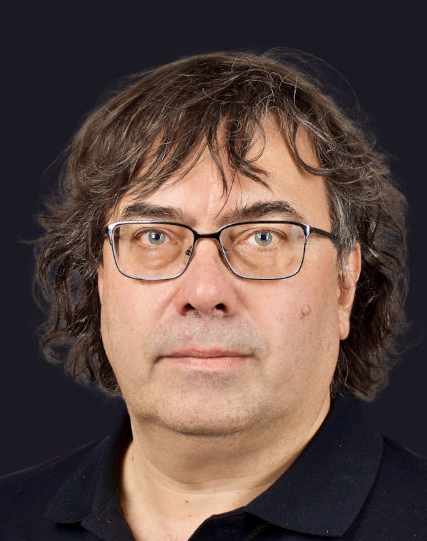 Nicola Marzari合作论文数Cavendish Laboratory, Department of Physics, University of Cambridge;École Polytechnique Fédérale de Lausanne6
 Talirz Leopold合作论文数Empa, Swiss Federal Laboratories for Materials Science and Technology6
 Donald Winston合作论文数4
 Carl S. Adorf合作论文数Theory & Simulat Mat THEOS, Ecole Polytech Fed Lausanne4Aliaksandr V. Yakutovich合作论文数Lab Mol Simulat LSMO, Inst Sci & Ingn Chim4
 Markus Scheidgen合作论文数Department of Computer Science, Humboldt Universität zu Berlin4
 Martin Uhrin合作论文数Department of Ophthalmology, University of Pittsburgh4
 Andrius Merkys合作论文数4Kumbhar Snehal合作论文数3Kristjan Eimre合作论文数Empa, Swiss Federal Laboratories for Materials Science and Technology3Ádám Fekete合作论文数3Corey Oses合作论文数3
 Shyam Dwaraknath合作论文数Lawrence Berkeley Natl Lab, Energy Technol Area, Berkeley, CA 94720 USA3
 Cormac Toher合作论文数Duke University3
 Evgeny Blokhin合作论文数Max-Planck Institute for Solid State Research3
 Gareth Conduit合作论文数University of Cambridge3
 Gian-Marco Rignanese合作论文数Ecole Polytechnique De Louvain, Université Catholique De Louvain;Institute of Condensed Matter and Nanosciences, Université Catholique De Louvain;Northwestern Polytechnical University3
 Berend Smit合作论文数School of Basic Sciences, Ecole Polytechnique Fédérale de Lausanne;Department of Chemical and Biomolecular Engineering, University of California Berkeley3
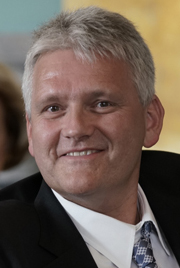 Bo Brummerstedt Iversen合作论文数Department of Chemistry, Aarhus University3
 T. Matthew Evans合作论文数School of Civil and Construction Engineering, Oregon State University3
 Daniele Passerone合作论文数Istituto Nazionale di Fisica della Materia (INFM), Italy3
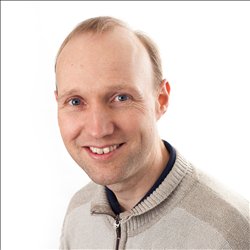 Jesper Friis合作论文数3
 Peter Nicolai Ravnborg Vennestrøm合作论文数Haldor Topsoe Res Labs3
 Martin Bremholm合作论文数Department of Chemistry and Interdisciplinary Nanoscience Centre iNANO, University of Aarhus3
 Lars F. Lundegaard合作论文数Haldor Topsøe A/S3Ole Schütt合作论文数3
 Rickard Armiento合作论文数Dept Phys Chem & Biol IFM, Linkoping Univ3Fawzi Mohamed合作论文数2
 Jonas Aryee合作论文数Regional Maritime University2Edward Ditler合作论文数Dept Chem, Univ Zurich2
 Abhijith Gopakumar合作论文数Dept Mat Sci & Engn, Northwestern Univ2Dou Du合作论文数Tongji Univ, Sch Med, Inst Biomed Engn & Nano Sci iNANO, Shanghai East Hosp, Shanghai 200092, Peoples R China2
 Eibar Flores合作论文数Dept Energy Convers & Storage, Tech Univ Denmark2
 A. J. Morris合作论文数School of Metallurgy and Materials, University of Birmingham2Elsa Passaro合作论文数2
 Claudia Draxl合作论文数Physics Department, Humboldt-Universität Berlin2
 Blichfeld Anders Bank合作论文数Center for Materials Crystallography, Aarhus University2
 Kamal Choudhary合作论文数Department of Materials Science and Engineering, University of Florida;National Institute of Standards and Technology;https://orcid.org/0000-0001-9737-80742Sebastiaan Huber合作论文数2
 Gargiulo Fernando合作论文数Institute of Theoretical Physics, Ecole Polytechnique Fédérale de Lausanne (EPFL),2
 XiaoYu Yang (杨小渝)合作论文数Computer Network Information Center, Chinese Academy of Sciences2
 Francesca Lønstad Bleken合作论文数2
 Carlo Pignedoli合作论文数Empa2
 Antanas Vaitkus合作论文数Department of Neurology;Kaunas University of Medicine;Department of Neurology, Kaunas University of Medicine2
 Chris Wolverton合作论文数Department of Materials Science and Engineering, McCormick School of Engineering, Northwestern University2
 Stefano Curtarolo合作论文数Thomas Lord Department of Mechanical Engineering and Materials Science, Pratt School of Engineering, Duke University;Center for Extreme Materials, Pratt School of Engineering, Duke University2
 Annette Skovsted Hansen合作论文数2
 Boris Kozinsky合作论文数John A. Paulson School of Engineering and Applied Sciences, Harvard University;Robert Bosch LLC2




