The local hadronic calibration scheme developed for the reconstruction and calibration of jets and missing transverse energy in ATLAS has been evaluated using data obtained during combined beam tests of modules of the ATLAS liquid argon endcap and forward calorimeters. These tests covered the pseudorapidity range of 2.5<|η|<4.0. The analysis has been performed using special sets of calibration weights and corrections obtained with the Geant4 simulation of a detailed beam-test setup. The evaluation itself has been performed through the careful study of specific calorimeter performance parameters such as e.g. energy response and resolution, shower shapes, as well as different physics lists of the Geant4 simulation.
A measurement of the $ZZ$ production cross section in proton-proton collisions at $\sqrt{s}=7\text{ }\text{ }\mathrm{TeV}$ using data corresponding to an integrated luminosity of $1.02\text{ }\text{ }{\mathrm{fb}}^{\ensuremath{-}1}$ recorded by the ATLAS experiment at the LHC is presented. Twelve events containing two $Z$ boson candidates decaying to electrons and/or muons are observed, with an expected background of $0.3\ifmmode\pm\else\textpm\fi{}0.3(\mathrm{stat}{)}_{\ensuremath{-}0.3}^{+0.4}(\mathrm{syst})$ events. The cross section measured in a phase-space region with good detector acceptance and for dilepton masses within the range 66 to 116 GeV is ${\ensuremath{\sigma}}_{ZZ\ensuremath{\rightarrow}{\ensuremath{\ell}}^{+}{\ensuremath{\ell}}^{\ensuremath{-}}{\ensuremath{\ell}}^{+}{\ensuremath{\ell}}^{\ensuremath{-}}}^{\mathrm{fid}}={19.4}_{\ensuremath{-}5.2}^{+6.3}(\mathrm{stat}{)}_{\ensuremath{-}0.7}^{+0.9}(\mathrm{syst})\ifmmode\pm\else\textpm\fi{}0.7(\mathrm{lumi})\text{ }\text{ }\mathrm{fb}$. The resulting total cross section for on-shell $ZZ$ production, ${\ensuremath{\sigma}}_{ZZ}^{\mathrm{tot}}={8.5}_{\ensuremath{-}2.3}^{+2.7}(\mathrm{stat}{)}_{\ensuremath{-}0.3}^{+0.4}(\mathrm{syst})\ifmmode\pm\else\textpm\fi{}0.3(\mathrm{lumi})\text{ }\text{ }\mathrm{pb}$, is consistent with the standard model expectation of ${6.5}_{\ensuremath{-}0.2}^{+0.3}\text{ }\text{ }\mathrm{pb}$ calculated at the next-to-leading order in QCD. Limits on anomalous neutral triple gauge boson couplings are derived.
A search for contact interactions has been performed using dimuon events recorded with the ATLAS detector in proton-proton collisions at $\sqrt{s}=7\text{ }\text{ }\mathrm{TeV}$. The data sample corresponds to an integrated luminosity of $42\text{ }\text{ }{\mathrm{pb}}^{\ensuremath{-}1}$. No significant deviation from the standard model is observed in the dimuon mass spectrum, allowing the following 95% C.L. limits to be set on the energy scale of contact interactions: $\ensuremath{\Lambda}>4.9\text{ }\text{ }\mathrm{TeV}$ (4.5 TeV) for constructive (destructive) interference in the left-left isoscalar compositeness model. These limits are the most stringent to date for $\ensuremath{\mu}\ensuremath{\mu}qq$ contact interactions.
Jet shapes have been measured in inclusive jet production in proton-proton collisions at root s = 7 TeV using 3 pb(-1) of data recorded by the ATLAS experiment at the LHC. Jets are reconstructed using the anti-k(t) algorithm with transverse momentum 30 GeV < p(T) < 600 GeV and rapidity in the region vertical bar y vertical bar < 2.8. The data are corrected for detector effects and compared to several leading-order QCD matrix elements plus parton shower Monte Carlo predictions, including different sets of parameters tuned to model fragmentation processes and underlying event contributions in the final state. The measured jets become narrower with increasing jet transverse momentum and the jet shapes present a moderate jet rapidity dependence. Within QCD, the data test a variety of perturbative and nonperturbative effects. In particular, the data show sensitivity to the details of the parton shower, fragmentation, and underlying event models in the Monte Carlo generators. For an appropriate choice of the parameters used in these models, the data are well described.
The inclusive J/psi production cross-section and fraction of J/psi mesons produced in B-hadron decays are measured in proton-proton collisions at sqrt(s) = 7 TeV with the ATLAS detector at the LHC, as a function of the transverse momentum and rapidity of the J/psi, using 2.3 pb-1 of integrated luminosity. The cross-section is measured from a minimum pT of 1 GeV to a maximum of 70 GeV and for rapidities within |y| < 2.4 giving the widest reach of any measurement of J/psi production to date. The differential production cross-sections of prompt and non-prompt J/psi are separately determined and are compared to Colour Singlet NNLO*, Colour Evaporation Model, and FONLL predictions.
The ATLAS experiment has measured the production cross-section of events with two isolated photons in the final state, in proton-proton collisions at sqrt(s) = 7 TeV. The full data set acquired in 2010 is used, corresponding to an integrated luminosity of 37 pb^-1. The background, consisting of hadronic jets and isolated electrons, is estimated with fully data-driven techniques and subtracted. The differential cross-sections, as functions of the di-photon mass, total transverse momentum and azimuthal separation, are presented and compared to the predictions of next-to-leading-order QCD.
Jet shapes have been measured in inclusive jet production in proton-proton collisions at √s=7 TeV using 3 pb−1 of data recorded by the ATLAS experiment at the LHC. Jets are reconstructed using the anti-kt algorithm with transverse momentum 30 GeV
 R.W. Clifft合作论文数Laboratoire de Physique des Particules (LAPP),, IN2P3-CNRS249P.R. Norton合作论文数244F. Combley合作论文数233Patrice Payre合作论文数231B. Pietrzyk合作论文数Laboratoire de Physique des Particules (LAPP),, IN2P3-CNRS211Terence Sloan合作论文数Department of Physics, Lancaster University210H. Drevermann合作论文数European Laboratory for Particle Physics (CERN) 1211 Geneva 23 Switzerland206Kuhn D合作论文数205c geweniger合作论文数204
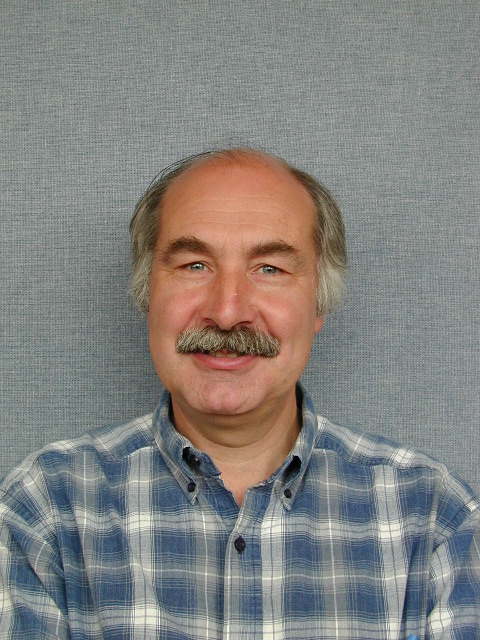 Chris Booth合作论文数School of Mathematical and Physical Sciences, University of Sheffield;Dept of Physics and Astronomy, University of Sheffield204J. C. Thompson合作论文数204E. E. Kluge合作论文数Institut für Hochenergiephysik der Universität D-6900 Heidelberg Federal Republic of Germany204
 Glen Cowan合作论文数Centre for Particle Physics and Astronomy, Department of Physics, Royal Holloway, University of London202
 Eric Lancon合作论文数Department of Physics, Brookhaven National Laboratory201J.-J. Veillet合作论文数201
 Alain Blondel合作论文数Department of Particle Physics, University of Geneva201
 Corinne Goy合作论文数CNRS198P. H. Hansen合作论文数198
 Paolo Laurelli合作论文数Laboratori Nazionali di Frascati, Istituto Nazionale di Fisica Nucleare197
 Federico Ruggieri合作论文数Dipartimento di Matematica e Fisica, Università degli Studi Roma Tre;GARR197Gerald Rudolph合作论文数196J.-F. Grivaz合作论文数Laboratoire de l'Accélérateur Linéaire, Université de Paris-Sud, IN2P3-CNRS, 91405 Orsay Cedex, France193D Pallin合作论文数192G. Zobernig合作论文数192
 G. Hughes合作论文数Consultant, Emergency Department, University Hospitals of Derby191
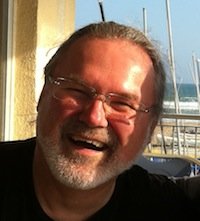 M. Delfino合作论文数Laboratoire de Physique des Particules (LAPP),, IN2P3-CNRS191W. Blum合作论文数190H. -G. Moser合作论文数190Joe E. Rothberg合作论文数189H. Dietl合作论文数189
 Mossadek Talby合作论文数Doctoral College, Aix-Marseille University189W. Tejessy合作论文数188F. Cerutti合作论文数188Francesco Ragusa合作论文数Università degli Studi di Milano188
 Peter Dornan合作论文数Department of Physics, Faculty of Natural Sciences, Imperial College London188Heinz-Georg Sander合作论文数Institut für Physik, Johannes Gutenberg-Universität Mainz188Alain Bonissent合作论文数188k tittel合作论文数187A. Vayaki合作论文数187
 Giovanni Bencivenni合作论文数Laboratori Nazionali di Frascati, INFN187Paul Hanke合作论文数Kirchhoff Institute for Physics, Heidelberg University187
 Franco Ligabue合作论文数Scuola Normale Superiore di Pisa186M. Wunsch合作论文数186I. Lehraus合作论文数186Daniel Decamp合作论文数186A. Falvard合作论文数186G. Bologna合作论文数186A. Rougé合作论文数186P. Campana合作论文数186




