A desigualdade de Bell expôs um dos aspectos mais fundamentais da mecânica quântica: a teoria é incompatível com a forma usual de se interpretar conceitos básicos como realidade e localidade. Embora o argumento original de Bell não seja de difícil compreensão, existem maneiras mais acessíveis de demonstrar desigualdades similares. Neste artigo apresentamos duas dessas demonstrações, propostas por Nick Herbert e Asher Peres, ambas muito simples e, ao que parece, relativamente pouco conhecidas apesar de seu interesse pedagógico. Também discutimos como a localidade e elementos de realidade descritos por variáveis ocultas se manifestam nessas demonstrações.
Apresentamos uma abordagem do conceito de matéria escura, desenvolvida visando o ensino médio. Evidências da existência de matéria escura são estudadas a partir das curvas de rotação de galáxias, utilizando apenas elementos presentes na grade curricular de estudantes pré-universitários, como a mecânica do movimento circular, conceitos básicos da gravitação newtoniana e a terceira lei de Kepler. Uma aplicação dessa abordagem é relatada.
Pesquisas em ensino de física indicam que o processo de limite é um obstáculo no entendimento do conceito de velocidade instantânea por estudantes em cursos introdutórios de física. Autores medievais, contudo, conseguiram definir o conceito sem uso aparente do processo de limite. Galileu Galilei explorou as ideias medievais para estabelecer as leis da queda dos corpos. Seus métodos inspiram uma alternativa de ensino do conceito de velocidade instantânea.
Difficulties presented by students on the concept of instantaneous velocity are well known. This is in part due to instantaneous speed being often defined in terms of the notion of mathematical limit, which may not be clear to many students in introductory physics courses. In this work we present a complementary teaching proposal that can help students to get a better grasp of instantaneous velocity. The approach is based on Galileo’s ideas on instantaneous speed, which he borrowed from the Mertonian scholars much before infinitesimal calculus was developed.
The udu is a traditional Nigerian percussion instrument that can be thought of as a Helmholtz resonator with two apertures. We use a simple two-particle mechanical analogue to study the behaviour of such a resonator and find that the model describes quite well the main features of udu acoustics.
Investigamos o efeito do ensino remoto adotado durante a pandemia de Covid-19 no desempenho acadêmico de estudantes em duas disciplinas de Física, uma de graduação e outra de pós-graduação. Esse desempenho foi avaliado por meio de um teste conceitual sobre Termodinâmica, tema abordado em ambas as disciplinas. O teste foi aplicado em turmas presenciais antes da pandemia e remotas durante a pandemia. A comparação dos resultados não revelou diferença estatisticamente significativa entre os escores dos estudantes nos dois períodos. As precauções tomadas para garantir a validade dessa análise são apresentadas e o alcance das conclusões é discutido.
Recent historiographic results in Galilean studies disclose the use of proportions, graphical representation of the kinematic variables (distance, time, speed), and the medieval double distance rule in Galileo’s reasoning; these have been characterized as Galileo’s “tools for thinking.” We assess the import of these “tools” in Galileo’s reasoning leading to the laws of fall ( $$v^{2} \propto D$$ and $$v \propto t$$ ). To this effect, a reconstruction of folio 152r shows that Galileo built proportions involving distance, time, and speed in uniform motions, and applied to them the double distance rule to obtain uniformly accelerated motions; the folio indicates that he tried to fit proportions in a graph. Analogously, an argument in Two New Sciences to the effect that an earlier proof of the law of fall started from an incorrect hypothesis (v ∝ D) can be recast in the language of proportions, using only the proof that v ∝ t and the hypothesis.
Neste trabalho apresentamos os detalhes técnicos de construção de um termômetro em que as medidas de temperatura são audíveis. Inicialmente planejado para atender estudantes com deficiência visual em atividades práticas de termometria, o projeto se mostra perfeitamente adaptável para medir uma variedade de outras grandezas físicas. O projeto é baseado na placa Arduino Uno e no escudo (shield) para Arduino dedicado a reprodução de arquivos de som (Arduino MP3 shield player). A medida da temperatura é realizada com auxílio do sensor digital DS18B20 que opera na faixa de −55 a +125 oC. Todo o projeto é de fácil construção e os componentes usados são acessíveis e facilmente encontrados no mercado nacional.
We discuss Galileoʼs kinematical ‘paradox’ taking into account the effects of sliding friction and of resistive forces proportional to velocity. We show that sliding friction eliminates the paradox but still allows for very simple synchronous curves. Perhaps surprisingly, Galileoʼs paradox is preserved when the resistive force is proportional to velocity.
The latest trend in special education policy is to teach students both with and without special needs in the same school system. In the case of students with visual impairment, one of the main problems they face, particularly in physics, is the lack of instructional material adapted for the experimental laboratory. In this paper, we present strategies, activities and resources for instructional use by physics teachers in classrooms with students with visual impairment using laser devices. For the best results, we suggest that teachers use resources from the perspective of building models to stimulate the interest and active involvement of the students.
We describe experiments with coaxial transmission lines for the study of some of the velocities used to characterize the propagation of electromagnetic waves in a medium, namely phase, group and signal velocities. The experiments are suitable for undergraduates at advanced laboratory level. Their purpose is to acquaint the students with the fact that in a dispersive medium there are many possible definitions for the speed of light, and that the measurement of these different velocities is important for general understanding of wave propagation.
Experimentos de mecânica frequentemente requerem medidas de intervalos de tempo da ordem de décimos ou centésimos de segundo, difíceis de realizar com cronômetros manuais. Neste trabalho nós apresentamos um método de efetuar tais medidas, utilizando um computador equipado com placa de som e microfone. A ideia básica é simples: como muitos sistemas mecânicos têm sua evolução temporal marcada pela emissão de sons, uma gravação de áudio pode fornecer medidas extremamente precisas dos intervalos de tempo de interesse, mesmo quando eles são muito pequenos. Descrevemos dois experimentos didáticos que utilizam gravações digitais para medir tempos. Em um deles determinamos a velocidade com que uma bola de futebol é chutada. No outro obtemos o tempo de queda livre de um corpo. Descrevemos também a implementação dos experimentos em escolas de ensino médio e apresentamos alguns resultados obtidos pelos estudantes.
Experiments in mechanics often require measurements of time intervals of the order of tenths or hundredths of a second, not easily performed with hand-held stopwatches. In this paper we present a method for carrying out such measurements, using a personal computer equipped with sound card and microphone. The basic idea is simple: the time evolution of many mechanical systems can be traced by the sounds they produce, and in these cases an audio recording may provide accurate measurements of the time intervals of interest, even if they are very small. We illustrate this method with two experiments: in one we measure the speed of a hard-kicked soccer ball, and in the other we time the free fall of an object. The experiments were successfully implemented in high-schools and we present some of the results obtained by the students.
We propose a discussion on the concept of phase velocity and the way the speed of light is introduced in high-school physics. A method for measuring the phase velocity of electromagnetic waves is experimentally developed.
We propose a discussion on the concept of phase velocity and the way the speed of light is introduced in high-school physics. A method for measuring the phase velocity of electromagnetic waves is experimentally developed.
Experiments in mechanics often involve measuring time intervals much smaller than one second, a task that is hard to perform with handheld stopwatches. This is one of the reasons why photogate timers are so popular in school labs. There is an interesting alternative to stopwatches and photogates, easily available if one has access to a personal computer with sound-recording capability. The idea is simple: a computer sound card can record audio frequencies up to several kilohertz, which means it has a time resolution of a fraction of a millisecond, comparable to that of photogate timers. Many experiments in mechanics can be timed by the sound they produce, and in these situations a direct audio recording may provide accurate measurements of the time intervals of interest. This idea has already been explored in a few cases,1–5 and here we apply it to an experiment that our students found very enjoyable: measuring the speed of soccer balls they kicked.
Se estudian las fuerzas aerodinámicas que actúan sobre una pelota de fútbol. Analizando el video de una jugada famosa de Pelé mostramos que un fenómeno curioso (la crisis del arrastre), la transición de régimen laminar a turbulento, influyó significativamente en el movimiento de la pelota. El efecto Magnus, asociado a la rotación de la pelota, también se reveló importante para el fracaso de la jugada. Usando un programa de computadora que simula el movimiento de las pelotas pateadas en diferentes condiciones, discutimos varios aspectos de la jugada de Pelé y de la Física del fútbol, en particular las pelotas con efecto y la “hoja seca” de Didi.
Dynamic geometry software has played a major role in the renewal of geometry teaching that occurred in recent years. These computer programs produce visually accurate representations of geometrical objects and relations, which can be manipulated with simple point-and-click mouse operations. In this paper we discuss how dynamic geometry programs can be transformed into environments for learning geometrical optics. In particular, we suggest that well known conceptual difficulties frequently encountered by students of this discipline may be reduced with help of dynamic geometry. We show examples of how reflection and refraction phenomena can be studied with these tools.
Os programas de geometria dinâmica foram os principais responsáveis pela revitalização do ensino de geometria ocorrida nos últimos anos. Esses programas de computador produzem representações visualmente acuradas de objetos e relações geométricas, que são modificadas interativamente com simples movimentos do mouse. Neste trabalho nós discutimos como programas de geometria dinâmica podem ser transformados em ambientes de aprendizagem de óptica geométrica. Em particular, sugerimos que algumas dificuldades conceituais que os estudantes tradicionalmente encontram nessa disciplina podem ser superadas com ajuda da geometria dinâmica. A título de exemplo, mostramos como fenômenos de reflexão e refração podem ser estudados com essas ferramentas.
 G. Rubini合作论文数97
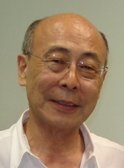 Takeshi Kodama合作论文数Instituto de F ´ õsica;Universidade Federal do Rio de Janeiro;Rio de Janeiro;Instituto de F ´ õsica, Universidade Federal do Rio de Janeiro18Y. Hama合作论文数10
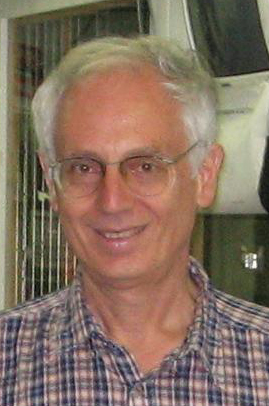 Raul Jose Donangelo合作论文数Instituto de Física, Universidade Federal do Rio de Janeiro9T Osada合作论文数8Marta F. Barroso合作论文数Universidade Federal do Rio de Janeiro5Frederique Grassi合作论文数Instituto de F ´ õsica;Universidade de Sao Paulo;Instituto de F ´ õsica, Universidade de Sao Paulo5Luiz Felipe L F Canto合作论文数5A. C. F. Santos合作论文数5R. A. M. S. Nazareth合作论文数4w s santos合作论文数3
 G. Pech合作论文数Centro Brasileiro de Pesquisas Físicas3Luiz Carlos Chamon合作论文数IFUSP3Valmir C. Barbosa合作论文数Systems Engineering and Computer Science Program;Federal University of Rio de Janeiro3E. S. Rossi合作论文数3T. Koide合作论文数2T. Kodama合作论文数2Otavio Socolowski Jr.合作论文数2R. Andrade合作论文数2Sergio R. Souza合作论文数2
 Carlos Farina合作论文数Instituto de F ´ õsica;Universidade Federal do Rio de Janeiro;Rio de Janeiro;Instituto de F ´ õsica, Universidade Federal do Rio de Janeiro2Penha Maria Cardozo Dias合作论文数2R. P. G. Andrade合作论文数2A. N. F. Aleixo合作论文数2Eduardo S. Fraga合作论文数2Daniela Abrao Baroni合作论文数2Francisco Laudares合作论文数Instituto de F ´ isica;Universidade Federal do Rio de Janeiro;Rio de Janeiro2
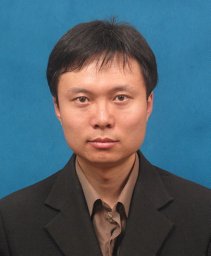 Wei-Liang Qian合作论文数Department of Basic and Environmental Science, Engineering School of Lorena, Universidade de São Paulo2A. L. V. R. Dos Reis合作论文数2Marta Maximo Pereira合作论文数1K. Paech合作论文数1licinio l s portugal合作论文数1F. Zardi合作论文数1l p vieira合作论文数1Mariana F. B. Francisquini合作论文数1g ramirez合作论文数1
 Geral Ramirez合作论文数1F. A. Barone合作论文数1
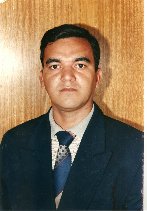 Seabra-Gomes R合作论文数1Silva Christiano Pereira合作论文数1
 Fernando Antonio de Melo Pereira合作论文数1
 Carlos Bertulani合作论文数Department of Physics and Astronomy, Texas A&M University1
 Klaus Werner合作论文数Département de Physique, Université de Nantes1
 Elena Bratkovskaya合作论文数GSI Helmholtzzentrum fur Schwerionenforschung GmbH;Institut fur Theoretische Physik, Goethe-Universitat Frankfurt am Main1
 Daniel Palheta Pereira合作论文数1
 Dagolberto Calazans Araujo Pereira合作论文数1A. Borges合作论文数1
 Stefan Scherer合作论文数FIAS1




