We report the detection of the [O iii ] auroral line in 42 galaxies within the redshift range of 3 < z < 10. These galaxies were selected from publicly available JWST data releases, including the JADES and PRIMAL surveys, and observed using both the low-resolution PRISM/CLEAR configuration and medium-resolution gratings. The measured electron temperatures in the high-ionization regions of these galaxies range from T e ([O iii ]) = 12,000 to 24,000 K, consistent with temperatures observed in local metal-poor galaxies and previous JWST studies. In 10 galaxies, we also detect the [O ii ] auroral line, allowing us to determine electron temperatures in the low-ionization regions, which range between T e ([O ii ]) = 10,830 and 20,000 K. The direct T e -based metallicities of our sample span from 12 + log(O/H) = 7.2 to 8.4, indicating these high-redshift galaxies are relatively metal-poor. By combining our sample with 25 galaxies from the literature, we expand the data set to a total of 67 galaxies within 3 < z < 10, effectively more than doubling the previous sample size for direct T e - based metallicity studies. This larger data set allows us to derive empirical metallicity calibration relations based exclusively on high-redshift galaxies, using six key line ratios: R3, R2, R23, Ne3O2, O32, and O3N2. Notably, we derive a novel metallicity calibration relation for the first time using high-redshift T e -based metallicities: R ˆ = 0.18log R2 + 0.98log R3. This new calibration significantly reduces the scatter in high-redshift galaxies compared to the R ˆ relation previously calibrated for low-redshift galaxies.
The Advanced X-ray Imaging Satellite (AXIS), an astrophysics NASA probe mission currently in phase A, will provide high-throughput, high-spatial resolution X-ray imaging in the 0.3 to 10 keV band. We report on the notional ground calibration plan for the High Speed Camera on AXIS, which is being developed at the MIT Kavli Institute for Astrophysics and Space Research using state-of-the-art CCDs provided by MIT Lincoln Laboratory in combination with an integrated, high-speed ASIC readout chip from Stanford University. AXIS camera ground calibration draws on previous experience with X-ray CCD focal plans, in particular Chandra/ACIS and Suzaku/XIS, utilizing mono-energetic X-ray line sources to measure spectral resolution and quantum efficiency. Relative quantum efficiency of the CCDs will be measured against an sCMOS device, with known absolute calibration from synchrotron measurements. We walk through the envisioned CCD calibration pipeline and we discuss the observatory-level science and calibration requirements and how they inform the camera calibration.
Future strategic X-ray missions, such as those targeted by the Great Observatories Maturation Program (GOMaP), require fast, low-noise X-ray imaging spectrometers. To achieve the speed and noise capabilities required by such programs, our Stanford team, in collaboration with the MIT Kavli Institute (MKI) and MIT Lincoln Laboratory (MIT-LL), is developing enhanced X-ray charge-coupled devices (CCDs) and readout systems that leverage tailored application-specific integrated circuits (ASICs). Here, we report the energy resolution and noise performance achieved using some of the latest MIT-LL CCDs in conjunction with Stanford-developed Multi-Channel Readout Chip (MCRC) ASICs. Additionally, we present a new sampling method for simultaneous optimization of the output gate (OG), reset gate (RG), and reset drain (RD) biases which, in combination with new integrated fast summing well (SW) and RG clock operation modes, enables the data rates and noise required for future X-ray telescopes. Finally, we present noise power spectral density (PSD) and waveform analysis methods and posit a physical model for characterizing and understanding output stage noise behavior.
In this report we summarize the activities of the International Astronomical Consortium for High Energy Calibration (IACHEC) from the 16th IACHEC Workshop at Parador de La Granja, Spain. Sixty-one scientists directly involved in the calibration of operational and future high-energy missions gathered during 3.5 days to discuss the status of the cross-calibration between the current international complement of X-ray observatories, and the possibilities to improve it. This summary consists of reports from the Working Groups with topics ranging across: the identification and characterization of standard calibration sources, multi-observatory cross-calibration campaigns, appropriate and new statistical techniques, calibration of instruments and characterization of background, preservation of knowledge, and results for the benefit of the astronomical community.
The first generation of Single electron Sensitive Read Out (SiSeRO) amplifiers, employed as on-chip charge detectors for charge-coupled devices (CCDs) have demonstrated excellent noise and spectral performance: a responsivity of around 800 pA per electron, an equivalent noise charge (ENC) of 3.2 electrons root mean square (RMS), and a full width half maximum (FWHM) energy resolution of 130 eV at 5.9 keV for a readout speed of 625 Kpixel/s. Repetitive Non Destructive Readout (RNDR) has also been demonstrated with these devices, achieving an improved ENC performance of 0.36 electrons RMS after 200 RNDR cycles. In order to mature this technology further, Stanford University, in collaboration with MIT Kavli Institute and MIT Lincoln Laboratory, are developing new SiSeRO detectors with improved geometries that should enable greater responsivity and improved noise performance. These include CCD devices employing arrays of SiSeRO amplifiers to optimize high speed, low noise RNDR readout and a proof-of-concept SiSeRO active pixel sensor (APS). To read out these devices, our team has developed a compact, 8-channel, fast, low noise, low power application specific integrated circuit (ASIC) denoted the Multi-Channel Readout Chip (MCRC) that includes an experimental drain current readout mode intended for SiSeRO devices. In this paper, we present results from the first tests of SiSeRO CCD devices operating with MCRC readout, and our designs for next generation SiSeRO devices.
The level and uncertainty of the particle induced background in CCD detectors plays a crucial role for future X-ray instruments, such as the Wide Field Imager (WFI) onboard Athena. To mitigate the background systematic uncertainties, which will limit the Athena science goals, we aim to understand the relationship between the energetic charged particles interacting in the detector and satellite, and the instrumental science background to an unprecedented level. These particles produce easily identified "cosmic-ray tracks" along with less easily identified signals produced by secondary particles, e.g., X-rays generated by particle interactions with the instrument and indistinguishable from genuine sky X-rays. We utilize the Small Window Mode of the PN camera onboard XMM-Newton to understand the time, spatial and energy dependence of the various background components, particularly the particle induced background. While the distribution of particle events follows expected detector readout patterns, we find a particle track length distribution inconsistent with the simple, isotropic model. We also find that the detector mode-specific readout results in a shifted Cu fluorescent line. We illustrate that on long timescales the variability of the particle background correlates well with the solar cycle. This 20-year lightcurve, can be reproduced by a particle detector onboard Chandra, the HRC anti-coincidence shield. We conclude that the self-anti-coincidence method of removing X-ray-like events near detected particle tracks in the same frame can be optimized with the inclusion of additional information, such as the energy of the X-ray. The results presented here are relevant for any future pixelated X-ray imaging detector, and could allow the WFI to probe to truly faint X-ray surface brightness.
The Advanced X-ray Imaging Satellite (AXIS) is one of two candidate mission concepts selected for Phase-A study for the new NASA Astrophysics Probe Explorer (APEX) mission class, with a planned launch in 2032. The X-ray camera for AXIS is under joint development by the X-ray Astronomy and Observational Cosmology (XOC) Group at Stanford, the MIT Kavli Institute (MKI), and MIT Lincoln Laboratory (MIT-LL). To accelerate development efforts and meet the AXIS mission requirements, XOC has developed a twin beamline testing system, capable of providing the necessary performance, flexibility, and robustness. We present design details, simulations, and performance results for the newer of the two beamlines, constructed and optimized to test and characterize the first full-size MIT-LL AXIS prototype detectors, operating with the Stanford-developed Multi-Channel Readout Chip (MCRC) integrated readout electronics system. The XOC X-ray beamline design is forward-looking and flexible, with a modular structure adaptable to a wide range of detector technologies identified by the Great Observatories Maturation Program (GOMAP) that span the X-ray to near-infrared wavelengths.
We present joint South Pole Telescope and XMM-Newton observations of eight massive galaxy clusters (0.8–2 × 10 ^15 M _⊙ ) spanning a redshift range of 0.16–0.35. Employing a novel Sunyaev–Zel’dovich + X-ray fitting technique, we effectively constrain the thermodynamic properties of these clusters out to the virial radius. The resulting best-fit electron density, deprojected temperature, and deprojected pressure profiles are in good agreement with previous observations of massive clusters. For the majority of the cluster sample (five out of eight clusters), the entropy profiles exhibit a self-similar behavior near the virial radius. We further derive hydrostatic mass, gas mass, and gas fraction profiles for all clusters up to the virial radius. Comparing the enclosed gas fraction profiles with the universal gas fraction profile, we obtain nonthermal pressure fraction profiles for our cluster sample at >0.5 R _500 , demonstrating a steeper increase between R _500 and R _200 that is consistent with the hydrodynamical simulations. Our analysis yields nonthermal pressure fraction ranges of 8%–28% (median: 15% ± 11%) at R _500 and 21%–35% (median: 27% ± 12%) at R _200 . Notably, weak-lensing mass measurements are available for only four clusters in our sample, and our recovered total cluster masses, after accounting for nonthermal pressure, are consistent with these measurements.
AXIS, a Probe mission concept now in a Phase A study, will provide transformative studies of high-energy astrophysical phenomena thanks to its high-resolution X-ray spectral imaging. These capabilities are enabled by improvements to the mirror design that greatly increase the X-ray throughput per unit mass; and to the detector system, which operates more than an order of magnitude faster than heritage instruments while maintaining excellent spectral performance. We present updates to the design of the AXIS High-Speed Camera, a collaborative effort by MIT, Stanford University, the Pennsylvania State University, and the Southwest Research Institute. The camera employs large-format MIT Lincoln Laboratory CCDs that feature multiple high-speed, low-noise output amplifiers and an advanced single-layer polysilicon gate structure for fast, low-power clock transfers. A first lot of prototype CCID100 CCDs has completed fabrication and will soon begin X-ray performance testing. The CCDs are paired with high-speed, low-noise ASIC readout chips designed by Stanford to provide better performance than conventional discrete solutions at a fraction of the power consumption and footprint. Complementary Front-End Electronics employ state-of-the-art digital video waveform capture and advanced signal processing to further deliver low noise at high speed. The Back-End Electronics provide high-speed identification of candidate X-ray events and transient monitoring that relays fast alerts of changing sources to the community. We highlight updates to our parallel X-ray performance test facilities at MIT and Stanford, and review the current performance of the CCD and ASIC technology from testing of prototype devices. These measurements achieve excellent spectral response at the required readout rate, demonstrating that we will meet mission requirements and enable AXIS to achieve world-class science.
The Arcus Probe mission concept provides high-resolution soft X-ray and UV spectroscopy to reveal feedback-driven structure and evolution throughout the universe with an agile response capability ideal for probing the physics of time-dependent phenomena. The X-ray Spectrograph (XRS) utilizes two nearly identical CCD focal planes to detect and record X-ray photons from the dispersed spectra and zero-order of the critical angle transmission gratings. In this paper we describe the Arcus focal plane instrument and the CCDs, including laboratory performance results, which meet observatory requirements.
Future X-ray astrophysics missions will survey large areas of the sky with unparalleled sensitivity, enabled by lightweight, high-resolution optics. These optics inherently produce curved focal surfaces with radii as small as 2 m, requiring a large area detector system that closely conforms to the curved focal surface. We have embarked on a project using a curved charge-coupled device (CCD) detector technology developed at MIT Lincoln Laboratory to provide large-format, curved detectors for such missions, improving performance and simplifying design. We present the current status of this work, which aims to curve back-illuminated, large-format (5 cm x 4 cm) CCDs to 2.5-m radius and confirm X-ray performance. We detail the design of fixtures and the curving process, and present intial results on curving bare silicon samples and monitor devices and characterizing the surface geometric accuracy. The tests meet our accuracy requirement of <5 mu m RMS surface non-conformance for samples of similar thickness to the functional detectors. We finally show X-ray performance measurements of planar CCDs that will serve as a baseline to evaluate the curved detectors. The detectors exhibit low noise, good charge-transfer efficiency, and excellent, uniform spectroscopic performance, including in the important soft X-ray band.
We present a 368 ks deep Chandra observation of Abell~1240, a binary merging galaxy cluster at a redshift of 0.195 with two Brightest Cluster Galaxies (BCGs) may have passed each other 0.3 Gyr ago. Building upon previous investigations involving GMRT, VLA, and LOFAR data, our study focuses on two prominent extended radio relics at the north-west (NW) and south-east (SE) of the cluster core. By leveraging the high-resolution Chandra imaging, we have identified two distinct surface brightness edges at $\sim$ 1 Mpc and 1.2 Mpc NW and SE of the cluster center, respectively, coinciding with the outer edges of both relics. Our temperature measurements hint the edges to be shock front edges. The Mach numbers, derived from the gas density jumps, yield $\cal{M}_{\rm SE}$ = 1.49$^{+0.22}_{-0.24}$ for the South Eastern shock and $\cal{M}_{\rm NW}$ = 1.41$^{+0.17}_{-0.19}$ for the North Western shock. Our estimated Mach numbers are remarkably smaller compared to those derived from radio observations ($\cal{M}_{\rm SE}$ = 2.3 and $\cal{M}_{\rm NW}$ = 2.4), highlighting the prevalence of a re-acceleration scenario over direct acceleration of electrons from the thermal pool. Furthermore, we compare the observed temperature profiles across both shocks with that of predictions from collisional vs. collisionless models. Both shocks favor the Coulomb collisional model, but we could not rule out a purely collisionless model due to pre-shock temperature uncertainties.
The Advanced X-ray Imaging Satellite (AXIS), a concept recently submitted to NASA's Astrophysics Probe Explorer competition, will offer low-background, arcsecond-resolution imaging in the 0.3-10 keV band across a 450-arcmin2 field of view, with an effective area at 1 keV of at least 4200 cm2. AXIS will bring X-ray astronomy back to the forefront of modern mainstream astrophysics, reaching equivalent depths in X-rays to many of the major facilities of the 2030's (e.g., JWST, Roman, Rubin, ngVLA, LISA) to address the most important questions identified by the Astro2020 Decadal Survey. Here, we present an update on the status of AXIS.
As the Advanced CCD Imaging Spectrometer (ACIS) on the Chandra X-ray Observatory completes a quarter century of on orbit operations, it continues to perform well and produce spectacular scientific results. The response of ACIS has evolved over the lifetime of the observatory due to radiation damage, molecular contamination, changing particle environment, and aging of the spacecraft in general. We present highlights from the instrument team's monitoring program and our expectations for the future of ACIS. Performance changes on ACIS continue to be manageable, and do not indicate any limitations on ACIS lifetime. We examine aspects of the design and operation of ACIS that have impacted its long lifetime with lessons learned for future instruments.
Bringing artificial intelligence (AI) alongside next-generation X-ray imaging detectors, including CCDs and DEPFET sensors, enhances their sensitivity to achieve many of the flagship science cases targeted by future X-ray observatories, based upon low surface brightness and high redshift sources. Machine learning algorithms operating on the raw frame-level data provide enhanced identification of background vs. astrophysical X-ray events, by considering all of the signals in the context within which they appear within each frame. We have developed prototype machine learning algorithms to identify valid X-ray and cosmic-ray induced background events, trained and tested upon a suite of realistic end-to-end simulations that trace the interaction of cosmic ray particles and their secondaries through the spacecraft and detector. These algorithms demonstrate that AI can reduce the unrejected instrumental background by up to 41.5 per cent compared with traditional filtering methods. Alongside AI algorithms to reduce the instrumental background, next-generation event reconstruction methods, based upon fitting physically-motivated Gaussian models of the charge clouds produced by events within the detector, promise increased accuracy and spectral resolution of the lowest energy photon events.
Future mega-pixel imaging X-ray detectors will require excellent spectral response at soft (E < 1 keV) X-ray energies while operating at fast frame-rates. We have characterized the sub-keV spectral resolution of two low-noise MIT Lincoln Laboratory CCDs in detail. These devices are identical in format but differ in gate structure and output stage design. We report measurements of the shape of the spectral redistribution function as a function of energy for each of these sensor types and compare our measurements with theoretical expectations. We also assess the implications of the observed response functions for scientific performance in deep X-ray imaging and high-resolution spectroscopy applications.
The Arcus Probe mission addresses a wide range of Astro2020 Decadal and NASA Science Mission Directorate Priority science areas, and is designed to explore astrophysical feedback across all mass scales. Arcus' three baseline science goals include: (i) Characterizing the drivers of accretion-powered feedback in supermassive black holes, (ii) Quantifying how feedback at all scales drives galaxy evolution and large-scale structure, including the tenuous cosmic web, and (iii) Analyzing stellar feedback from exoplanetary to galactic scales, including its effects on exoplanet environments targeted by current and future NASA missions. These science goals, along with a robust General Observer program, will be achieved using a mission that provides a high-sensitivity soft (10-60 angstrom) X-ray spectrometer (XRS), working simultaneously with a co-aligned UV spectrometer (UVS; 970-1580 angstrom). Arcus enables compelling baseline science and provides the broader astronomy community a revolutionary tool to characterize the full ionization range of warm and hot plasmas - including hydrogen, helium, and all abundant metals - in the Universe, from the halos of galaxies and clusters to the coronae of stars.
High spatial- and spectral-resolution X-ray capabilities are essential for future strategic missions to address the key priorities set forth by the 2020 Decadal Survey on Astronomy and Astrophysics. These missions will require megapixel X-ray imaging detectors more capable than any available today, providing frame rates at least a factor of 20 faster and pixel aspect ratios twice as large, while retaining the low noise and excellent spectral performance of current sensors. We summarize recent results from our NASA-funded technology development program to develop imaging sensors required for future strategic missions, and describe the prototype CCD sensor we are developing for AXIS, the Advanced X-ray Imaging Satellite mission concept recently proposed in response to NASA's Astrophysics Probe Explorer call. We have designed and are fabricating at MIT Lincoln Laboratory a 16-output, 1440 x 1440 pixel frame-store CCD to serve as a form/fit/function prototype for AXIS. This sensor incorporates the low-voltage, single-polysilicon gate and low-noise pJFET technologies we have proven in previous work. Our goal is to demonstrate a device meeting or exceeding the noise, spectral resolution and frame-rate requirements of AXIS when operated with the Multi-channel Readout Chip developed by our team at Stanford University. We also describe our strategy for optimizing CCD output amplifier architecture and design for even lower noise and faster readout for AXIS and subsequent high-energy astrophysics missions.
In this report, we summarize the activities of the International Astronomical Consortium for High Energy Calibration (IACHEC) from the 15th IACHEC Workshop in Pelham, Germany. Sixty scientists directly involved in the calibration of operational and future high-energy missions gathered for 3.5 days to discuss the status of the cross-calibration between the current international complement of X-ray observatories and the possibilities to improve it. This summary consists of reports from the Working Groups with topics ranging across the identification and characterization of standard calibration sources, multi-observatory cross-calibration campaigns, appropriate and new statistical techniques, calibration of instruments and characterization of background, preservation of knowledge, and results for the benefit of the astronomical community.
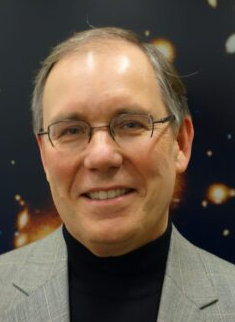 Marshall W. Bautz合作论文数Kavli Institute for Astrophysics and Space Research, Massachusetts Institute of Technology70
 Eric D. Miller合作论文数Kavli Institute for Astrophysics and Space Research, School of Science, Massachusetts Institute of Technology34
 Beverly Lamarr合作论文数33
 Gregory Y. Prigozhin合作论文数Center for Space Research;Massachusetts Institute of Technology;Center for Space Research, Massachusetts Institute of Technology26
 Steven Allen合作论文数LSST Science Department, SLAC National Accelerator Laboratory, Stanford University;Department of Physics, Stanford University25
 richard f foster合作论文数Kavli Inst Astrophys & Space Res, MIT21Andrew Malonis合作论文数18
 Paul P. Plucinsky合作论文数Chandra X-ray Center, Center for Astrophysics, Harvard and Smithsonian18
 Ralph Kraft合作论文数Center for Astrophysics, Harvard Smithsonian18R. Glenn Morris合作论文数14Sven Herrmann合作论文数13
 Paul Nulsen合作论文数Department of Astronomy, Faculty of Arts and Sciences, Harvard University12Michael Cooper合作论文数11
 Andrew Ptak合作论文数Goddard Space Flight Cente, National Aeronautics and Space Administration11Abraham D. Falcone合作论文数10B. Schneider合作论文数CEA Saclay, Université Paris-Saclay10
 Dan Wilkins合作论文数National Physical Laboratory10
 Esra Bulbul合作论文数Max Planck Institute for Extraterrestrial Physics10
 Tanmoy Chattopadhyay合作论文数Kavli Inst Particle Astrophys & Cosmol, Stanford Univ9
 Eric Miller合作论文数Department of Electrical and Computer Engineering, School of Engineering, Tufts University9
 Scott J. Wolk合作论文数Center for Astrophysics, Harvard & Smithsonian9Kevan Donlon合作论文数8Christopher W. Leitz合作论文数7
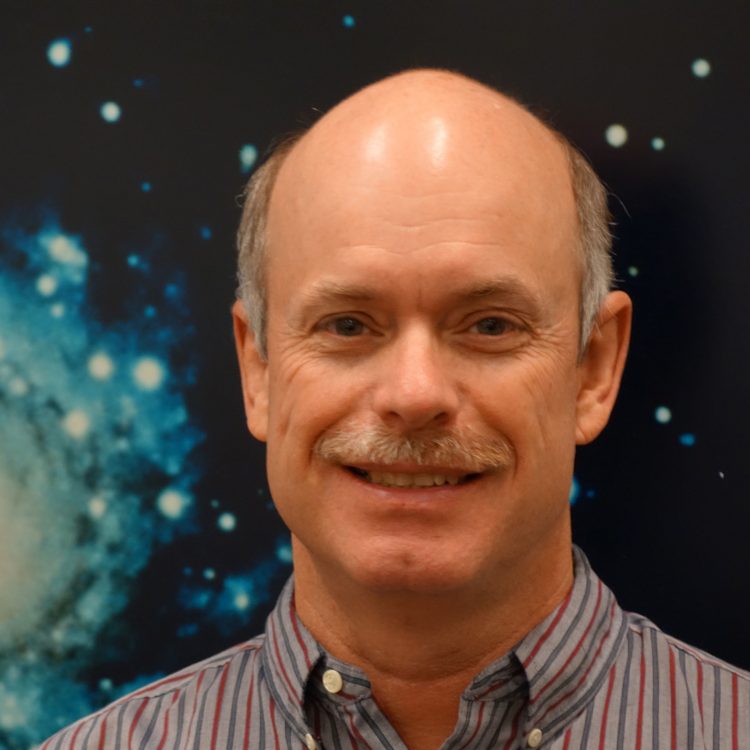 Herman L. Marshall合作论文数Kavli Institute for Astrophysics and Space Research, Massachusetts Institute of Technology;Center for Space Research, Massachusetts Institute of Technology7David N. Burrows合作论文数7
 A Sarkar合作论文数7
 G. Schellenberger合作论文数Ctr Astrophys Harvard & Smithsonian6
 Dan Schwartz合作论文数Center for Astrophysics, Harvard-Smithsonian Astrophysical Observatory;The Chandra X-Ray Center, Harvard-Smithsonian Astrophysical Observatory6
 Shanil N. Virani合作论文数Yale University6
 Kristin Madsen合作论文数NASA Goddard Space Flight Center6
 Matteo Guainazzi合作论文数European Space Agency6Adam R. Foster合作论文数5S. Herrmann合作论文数5
 George Chartas合作论文数Department of Physics and Astronomy, College of Charleston5
 Jon Miller合作论文数Department of Astronomy, College of Literature, Science, and the Arts, University of Michigan-Ann Arbor5
 Michael McDonald合作论文数MIT Department of Physics5
 Silvano Molendi合作论文数Istituto di Fisica5
 Vadim Burwitz合作论文数5A. D. Falcone合作论文数5
 Barry Burke合作论文数Lincoln Laboratory, Massachusetts Institute of Technology5Jukka Nevalainen合作论文数4
 Ilya Prigozhin合作论文数Department of Electrical and Computer Engineering, Boston University4
 Alexey Vikhlinin合作论文数Division of High Energy Astrophysics, Harvard-Smithsonian Center for Astrophysics, Institute for Theory and Computation, Harvard University4
 Richard Mushotzky合作论文数Department of Astronomy, University of Maryland, College Park4Keelan Jonathan合作论文数Department of Physical Sciences, Open University4
 Chris Reynolds合作论文数Department of Astronomy, College of Computer, Mathematical, and Natural Sciences, University of Maryland, College Park;Joint Space Science Institute, University of Maryland, College Park4




