Quantum correlations have played a central role from the very beginning of Quantum Mechanics, and currently the concept of Entanglement has become a key resource in the research on quantum information and quantum computation [1]. The availability of entangled quantum states and their characterization are among the most important questions in quantum information. In this sense, there have been a considerable number of theoretical works that have allowed for characterizing quantum entanglement. From a mathematical point of view, a quantum state of a pair of particles is separable if this can be written as a convex sum of product states [2], ρ = ∑k i pi|ai〉 〈ai| ⊗ |bi〉 〈bi|, where |ai〉 and |bi〉 correspond to different particles in the pair and ∑
The dynamic of correlations in a system composed of a two-mode quantum field coupled with the environment is studied. The quantum field corresponds to two entangled coherent states whose amplitude we vary up to the mesoscopic regime. We show that under the onset of decoherence, correlations in the quantum field are not lost but transferred to the environment. We also found that sudden transitions in the decoherence regimes appear along with the dynamics depending on the coherent states’ amplitude. Increasing the amplitude of the entangled coherence state results in the apparition of a metastable decoherence-free subspace (DFS) in the field subsystem, and the transference of classical correlations freezes. This subspace only exists during a time interval that depends on the average number of photons. Interestingly, the reservoir subsystem also experiences the apparition of a DFS. Only quantum correlations are transferred while the DFS exists.
Two initially correlated coherent states, each interacting with its own independent dissipative environment, exhibit a sudden transition from classical to quantum decoherence. This change in the dynamics is a turning point in the decoherence in the sense that depending on the average number of photons of each harmonic oscillator, decoherence can even be suppressed. Indeed, the quantum state is time independent for a time span in the mesoscopic regime, revealing a decoherence-free subspace. Furthermore, the absence of decoherence is manifested in the apparition of a metastable pointer-state basis.
We study the generation of maximally correlated states of two qubits in the absence of quantum entanglement. We show that stationary maximally correlated states can be generated under the assistance of a collective dissipative dynamics. The absence of entanglement necessarily requires maximal entanglement to an environment. The conditions under which two qubits can be maximally correlated to a finite environment are studied. We find the existence of maximally correlated states without entanglement for $3 \otimes 3$ bipartite quantum states
We study the dynamics of quantum and classical correlations in a two-qutrit system coupled to independent reservoirs. In particular, we addressed the differences in the dynamics of Markovian and non-Markovian regimes and show that for specific initial states, classical correlations exhibit abrupt changes along the dynamics. A particular sudden change occurs when the classical correlations freezes to a certain value at a given time, revealing the apparition of a pointer-state basis. After this given time, the decoherence only affects quantum correlations. Here we identify two regimes in the decoherence dynamics: a mixed regime when both classical and quantum correlations decay and a quantum regime when only quantum correlations decay. We show that the freezing of classical correlations can be stable or metastable depending on the system-reservoirs parameters. In the long-time limit, we find analytical expressions for the pointer-state basis the system settles in, and consequently for classical and quantum correlations.
We investigate the dynamics of classical and quantum correlations between two qubits. Each qubit is implemented by a pair of phosphorous impurities embedded in a silicon substrate. The main decoherence mechanism affecting these types of qubits is provided by the coupling of the phosphorous impurities to the acoustical vibrations of the silicon lattice. We find that depending on the temperature of the substrate and the initial state, three different dynamics can be found. These are characterized by the number of abrupt changes in both classical and quantum correlations. We also show that the correlations do not disappear. Moreover, before the classical correlations reach a constant value, they may experience successive abrupt changes associated with the apparition of a metastable pointer-states basis. Then a constant value for the classical correlations is reached when the preferred basis is established.
Magnetization reversal in planar nanowires has been controlled using structures with a larger area pad connected to a nanowire or by means of patterned variations in the planar nanowire such as notches. In this letter, we have introduced a magnetic nanostructure defined as a planar nanostructure with wire-ring morphology. In particular, we have performed micromagnetic simulations to investigate how the magnetic properties (coercivity and remanence) change as a function of the geometric parameters of the nanostructure. Additionally, we observe that when the ring is very thin, the system reverses its magnetization by nucleation and propagation of domain walls along the nanowire. Conversely, when the ring has very thick walls, or directly turns into a solid cylinder, the system nucleates a vortex in the ring/cylinder, and then propagates the domain walls toward the nanowire sections. This reversal process is characterized by a step or plateau in the hysteresis curve, that is, a region in which differential magnetic susceptibility presents a local minimum or, ideally, vanishes. Finally, this nanostructure can be used in many potential applications related to the control of domain walls in planar nanowires.
We propose a method to generate arbitrary symmetric states of $N$ qubits, which can be easily associated with their entanglement classes. It is particularly suited to quantum optics systems like trapped ions or superconducting circuits. We encode each qubit in two metastable levels of the system and use a bosonic quantum bus for creating the states. The method is deterministic and relies on a sequence of selective unitary gates upon the qubits within the system coherence time.
We introduce a method of quantum tomography for a continuous variable system in position and momentum space. We consider a single two-level probe interacting with a quantum harmonic oscillator by means of a class of Hamiltonians, linear in position and momentum variables, during a tunable time span. We study two cases: the reconstruction of the wavefunctions of pure states and the direct measurement of the density matrix of mixed states. We show that our method can be applied to several physical systems where high quantum control can be experimentally achieved.
Entanglement of formation for arbitrary mixed states in a (2 circle times 2)-dimensional Hilbert space is well known. For higher-dimensional mixed states analytical expressions for quantifying entanglement exist for a particular family of states. In this work, we calculate analytically the entanglement of formation for a family of bipartite (2 circle times d)-dimensional mixed states which can be obtained from tripartite 2 circle times 2 . d pure states following the entanglement relations obtained by Koashi and Winter [Phys. Rev. A 69, 022309 (2004)].
We show that controllable inhomogeneous coupling between two-level systems and a common data bus provides a fast mechanism to produce multipartite entanglement. Our proposal combines resonant interactions and engineering of coupling strengths-between the qubits and the single mode-leading to well-defined entangled states. Furthermore, we show that, if the two-level systems interact dispersively with the quantized mode, engineering of coupling strengths allows the controlled access of the symmetric Hilbert space of qubits.
We study the dynamics of entanglement transfer in a system composed of two initially correlated three-level atoms, each located in a cavity interacting with its own reservoir. Instead of tracing out reservoir modes to describe the dynamics using the master equation approach, we consider explicitly the dynamics of the reservoirs. In this situation, we show that the entanglement is completely transferred from atoms to reservoirs. Although the cavities mediate this entanglement transfer, we show that under certain conditions, no entanglement is found in cavities throughout the dynamics. Considering the entanglement dynamics of interacting and noninteracting bipartite subsystems, we found time windows where the entanglement can only flow through interacting subsystems, depending on the system parameters.
We study the evolution of entangled coherent states of the two quantized electromagnetic fields under dissipation. Characteristic time scales for the decay of the negativity are found in the case of large values of the phase space distance among the states of each mode. We also study how the entanglement emerges among the reservoirs.
We study the entanglement dynamics of two cavities interacting with independent reservoirs. Expectedly, as the cavity entanglement is depleted, it is transferred to the reservoir degrees of freedom. We find also that when the cavity entanglement suddenly disappears, the reservoir entanglement suddenly and necessarily appears. Surprisingly, we show that this entanglement sudden birth can manifest before, simultaneously, or even after entanglement sudden death. Finally, we present an explanatory study of other entanglement partitions and of higher dimensional systems.
We discuss the loss of entanglement under dissipation for a class of entangled coherent states of two modes of the electromagnetic field. The dynamics may be conveniently studied in a finite dimensional time dependent orthogonal basis for the case of superposing coherent states of real amplitudes on the line. Both asymptotic decays and finite disentanglement occur depending of the initial conditions.
We study the evolution of entangled coherent states of the two quantized electromagnetic fields under dissipation. Characteristic time scales for the decay of the negativity are found in the case of large values of the phase space distance among the states of each mode. We also study how the entanglement emerges among the reservoirs.
We study the quantum dynamics of a single mode (particle) interacting inhomogeneously with a large number of particles and introduce an effective approach to find the accessible Hilbert space, where the dynamics takes place. Two relevant examples are given: the inhomogeneous Tavis-Cummings model (e.g., $N$ atomic qubits coupled to a single cavity mode, or to a motional mode in trapped ions) and the inhomogeneous coupling of an electron spin to $N$ nuclear spins in a quantum dot.
In this work we study entanglement properties of a two-qubit system being affected by a classical noisy environment and coupled through exchange interaction. We study the dynamical generation of entanglement considering different initial conditions for the two-qubit system. We evaluate the rate at which entanglement is lost by calculating the concurrence as a function of time.
Entanglement evolution in high dimensional bipartite systems under dissipation is studied through a lower bound of entanglement of formation. Discontinuities for the time derivative of these quantity are found depending on the initial conditions for entangled states. These abrupt changes along the evolution appear as precursors of entanglement sudden death.
The evolution of the lower bound of entanglement proposed by Chen et al. [Phys. Rev. Lett. 95, 210501 (2005)] in high-dimensional bipartite systems under dissipation is studied. Discontinuities for the time derivative of this bound are found depending on the initial conditions for entangled states. These abrupt changes along the evolution of the entanglement bound appear as precursors of sudden death.
 Juan Carlos Retamal合作论文数Departamento de F ´ õsica;Universidad de Santiago de Chile;Departamento de F ´ õsica, Universidad de Santiago de Chile19
 F. Lastra合作论文数16G. Romero合作论文数11
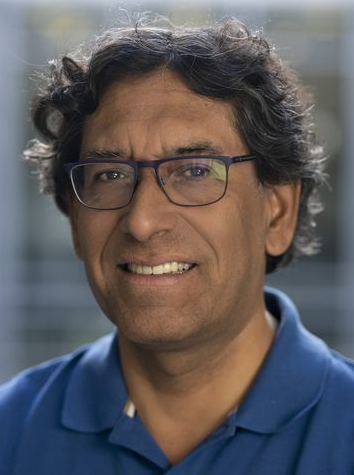 Enrique Solano合作论文数Kipu Quantum8Nicim Zagury合作论文数Instituto de F ´ õsica;Universidade Federal do Rio de Janeiro;Instituto de F ´ õsica, Universidade Federal do Rio de Janeiro3
 Marcelo Paleologo Franca Santos合作论文数Instituto de Física, Universidade Federal do Rio de Janeiro2F. Albarran-Arriagada合作论文数1L. Lamata合作论文数1
 Thierry Bastin合作论文数1h christ合作论文数1
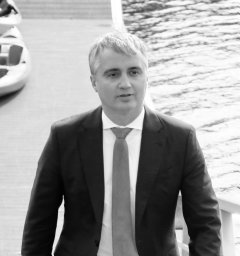 Jorge Casanova合作论文数Departamento de Química Física, Universidad del País Vasco-Euskal Herriko Unibertsitatea1
 Sebastian Allende合作论文数1
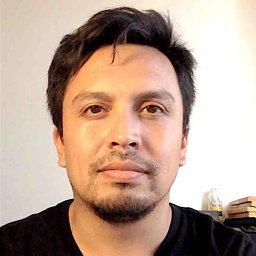 Juan Luis Palma合作论文数1
 Rosa Maria Corona合作论文数1
 Christian Roos合作论文数Institute for Experimental Physics, Universität Innsbruck1Ben P. Lanyon合作论文数Department of Physics;Centre for Quantum Computer Technology;University of Queensland;Centre for Quantum Computer Technology, University of Queensland1
 Luis Roa合作论文数Center for Quantum Optics and Quantum Information;Departamento de F ´ õsica;Center for Quantum Optics and Quantum Information|Departamento de F ´ õsica1
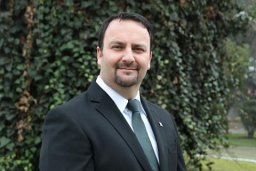 Juan Escrig合作论文数USACH, Universidad de Santiago de Chile1
 Sascha Wallentowitz合作论文数Facultad de Física1
 Sebastian Reyes合作论文数Department of Physics;and Research Center;University of Kaiserslautern;Department of Physics|and Research Center, University of Kaiserslautern1
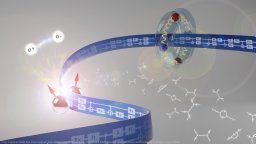 Pavel Lougovski合作论文数Department of Physics;Oregon Center for Optics;Department of Physics, Oregon Center for Optics1
 Alfredo Aranda合作论文数U. Colima1
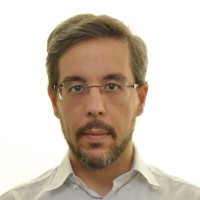 Juan Jose Garcia-Ripoll合作论文数Inspiration-Q1




