Characterization of noise of a quantum harmonic oscillator is important for many experimental platforms. We experimentally demonstrate motional spin-locking spectroscopy, a method that allows us to directly measure the motional noise spectrum of a quantum harmonic oscillator. We measure motional noise of a single trapped ion in a frequency range from 200 Hz to 5 kHz with a power spectral density that resolves noise over two orders of magnitude. Coherent modulations in the oscillation frequency of the oscillator can be probed with a relative frequency sensitivity at the 10^-6 level.
In quantum mechanics, the probability distribution function and full counting statistics play a fundamental role in characterizing the fluctuations of quantum observables, as they encode the complete information about these fluctuations. In this Letter, we measure these two quantities in a trapped-ion quantum simulator for the transverse and longitudinal magnetization within a subsystem. We utilize the toolbox of classical shadows to postprocess the measurements performed in random bases. The measurement scheme efficiently allows access to the full counting statistics and probability distribution function of all possible operators on desired choices of subsystems of an extended quantum system.
The oscillating magnetic field produced by unbalanced currents in radio-frequency ion traps induces transition frequency shifts and sideband transitions that can be harmful to precision spectroscopy experiments. Here, we describe a methodology, based on two-photon spectroscopy, for determining both the strength and direction of rf-induced magnetic fields without modifying any DC magnetic bias field or changing any trap RF power. The technique is readily applicable to any trapped-ion experiment featuring narrow linewidth transitions.
In this work, we present a method for measuring the motional state of a two-level system coupled to a harmonic oscillator. Our technique uses ultra-narrowband composite pulses on the blue sideband transition to scan through the populations of the different motional states. Our approach does not assume any previous knowledge of the motional state distribution and is easily implemented. It is applicable both inside and outside of the Lamb-Dicke regime. For higher phonon numbers especially, the composite pulse sequence can be used as a filter for measuring phonon number ranges. We demonstrate this measurement technique using a single trapped ion and show good detection results with the numerically evaluated pulse sequence.
The nonequilibrium physics of many-body quantum systems harbors various unconventional phenomena. In this Letter, we experimentally investigate one of the most puzzling of these phenomena-the quantum Mpemba effect, where a tilted ferromagnet restores its symmetry more rapidly when it is farther from the symmetric state compared to when it is closer. We present the first experimental evidence of the occurrence of this effect in a trapped-ion quantum simulator. The symmetry breaking and restoration are monitored through entanglement asymmetry, probed via randomized measurements, and postprocessed using the classical shadows technique. Our findings are further substantiated by measuring the Frobenius distance between the experimental state and the stationary thermal symmetric theoretical state, offering direct evidence of subsystem thermalization.
Ramsey interferometry is a widely used tool for precisely measuring transition frequencies between two energy levels of a quantum system, with applications in time-keeping, precision spectroscopy, quantum optics, and quantum information. Often, the coherence time of the quantum system surpasses the one of the oscillator probing the system, thereby limiting the interrogation time and associated spectral resolution. Correlation spectroscopy overcomes this limitation by probing two quantum systems with the same noisy oscillator for a measurement of their transition frequency difference; this technique has enabled very precise comparisons of atomic clocks. Here, we extend correlation spectroscopy to the case of multiple quantum systems undergoing strong correlated dephasing. We model Ramsey correlation spectroscopy with $N$ particles as a multi-parameter phase estimation problem and demonstrate that multiparticle quantum correlations can assist in reducing the measurement uncertainties even in the absence of entanglement. We derive precision limits and optimal sensing techniques for this problem and compare the performance of probe states and measurement with and without entanglement. Using one- and two-dimensional ion Coulomb crystals with up to 91 qubits, we experimentally demonstrate the advantage of measuring multi-particle quantum correlations for reducing phase uncertainties, and apply correlation spectroscopy to measure ion-ion distances, transition frequency shifts, laser-ion detunings, and path-length fluctuations. Our method can be straightforwardly implemented in experimental setups with globally-coherent qubit control and qubit-resolved single-shot read-out and is thus applicable to other physical systems such as neutral atoms in tweezer arrays.
Well isolated quantum systems are exquisite sensors of electromagnetic fields. In this work, we use a single trapped ion for characterizing chirped ultraviolet (UV) picosecond laser pulses. The frequency swept pulses resonantly drive a strong dipole transition via rapid adiabatic passage, resulting in near deterministic population exchange caused by absorption or stimulated emission of photons. When subjecting an ion to counterpropagating pulse pairs, we observe the loss and revival of atomic coherence as a function of the pulse pair spatial overlap enabling quantification of the temporal pulse broadening caused by a frequency chirp in shaped UV pulses with a very low peak power. We find good agreement between measured and applied chirp. The ultrafast population exchange imparts an impulsive force where the estimated change in the mean phonon numbers of 0.5 is measured for two pairs of pulses. The resonant ultrafast kicks could be applied to matter wave interferometry experiments and present a step towards ultrafast entanglement operations in trapped ions.
This upload contains the data set for the manuscript titled "Quantum-enhanced sensing on optical transitions via finite-range interactions". Notes describing the added data set are uploaded alongside. Please see the Arxiv version https://arxiv.org/abs/2303.10688 for plots.
Coulomb crystals of cold trapped ions are a leading platform for the realisation of quantum processors and quantum simulations and, in quantum metrology, for the construction of optical atomic clocks and for fundamental tests of the Standard Model. For these applications, it is not only essential to cool the ion crystal in all its degrees of freedom down to the quantum ground state, but also to be able to determine its temperature with a high accuracy. However, when a large ground-state cooled crystal is interrogated for thermometry, complex many-body interactions take place, making it challenging to accurately estimate the temperature with established techniques. In this work we present a new thermometry method tailored for ion crystals. The method is applicable to all normal modes of motion and does not suffer from a computational bottleneck when applied to large ion crystals. We test the temperature estimate with two experiments, namely with a 1D linear chain of 4 ions and a 2D crystal of 19 ions and verify the results, where possible, using other methods. The results show that the new method is an accurate and efficient tool for thermometry of ion crystals.
Quantum simulators have recently enabled experimental observations of quantum many-body systems' internal thermalization. Often, the global energy and particle number are conserved, and the system is prepared with a well-defined particle number - in a microcanonical subspace. However, quantum evolution can also conserve quantities, or charges, that fail to commute with each other. Noncommuting charges have recently emerged as a subfield at the intersection of quantum thermodynamics and quantum information. Until now, this subfield has remained theoretical. We initiate the experimental testing of its predictions, with a trapped-ion simulator. We prepare 6-21 spins in an approximate microcanonical subspace, a generalization of the microcanonical subspace for accommodating noncommuting charges, which cannot necessarily have well-defined nontrivial values simultaneously. We simulate a Heisenberg evolution using laser-induced entangling interactions and collective spin rotations. The noncommuting charges are the three spin components. We find that small subsystems equilibrate to near a recently predicted non-Abelian thermal state. This work bridges quantum many-body simulators to the quantum thermodynamics of noncommuting charges, whose predictions can now be tested.
The control over quantum states in atomic systems has led to the most precise optical atomic clocks to date. Their sensitivity is currently bounded by the standard quantum limit, a fundamental floor set by quantum mechanics for uncorrelated particles, which can nevertheless be overcome when operated with entangled particles. Yet demonstrating a quantum advantage in real world sensors is extremely challenging and remains to be achieved aside from two remarkable examples, LIGO and more recently HAYSTAC. Here we illustrate a pathway for harnessing scalable entanglement in an optical transition using 1D chains of up to 51 ions with state-dependent interactions that decay as a power-law function of the ion separation. We show our sensor can be made to behave as a one-axis-twisting (OAT) model, an iconic fully connected model known to generate scalable squeezing. The collective nature of the state manifests itself in the preservation of the total transverse magnetization, the reduced growth of finite momentum spin-wave excitations, the generation of spin squeezing comparable to OAT (a Wineland parameter of $-3.9 \pm 0.3$ dB for only N = 12 ions) and the development of non-Gaussian states in the form of atomic multi-headed cat states in the Q-distribution. The simplicity of our protocol enables scalability to large arrays with minimal overhead, opening the door to advances in timekeeping as well as new methods for preserving coherence in quantum simulation and computation. We demonstrate this in a Ramsey-type interferometer, where we reduce the measurement uncertainty by $-3.2 \pm 0.5$ dB below the standard quantum limit for N = 51 ions.
Entanglement is a distinguishing feature of quantum many-body systems, and uncovering the entanglement structure for large particle numbers in quantum simulation experiments is a fundamental challenge in quantum information science. Here we perform experimental investigations of entanglement based on the entanglement Hamiltonian, as an effective description of the reduced density operator for large subsystems. We prepare ground and excited states of a 1D XXZ Heisenberg chain on a 51-ion programmable quantum simulator and perform sample-efficient `learning' of the entanglement Hamiltonian for subsystems of up to 20 lattice sites. Our experiments provide compelling evidence for a local structure of the entanglement Hamiltonian. This observation marks the first instance of confirming the fundamental predictions of quantum field theory by Bisognano and Wichmann, adapted to lattice models that represent correlated quantum matter. The reduced state takes the form of a Gibbs ensemble, with a spatially-varying temperature profile as a signature of entanglement. Our results also show the transition from area to volume-law scaling of Von Neumann entanglement entropies from ground to excited states. As we venture towards achieving quantum advantage, we anticipate that our findings and methods have wide-ranging applicability to revealing and understanding entanglement in many-body problems with local interactions including higher spatial dimensions.
Over the recent years coherent, time-periodic modulation has been established as a versatile tool for realizing novel Hamiltonians. Using this approach, known as Floquet engineering, we experimentally realize a long-ranged, anisotropic Heisenberg model with tunable interactions in a trapped ion quantum simulator. We demonstrate that the spectrum of the model contains not only single magnon excitations but also composite magnon bound states. For the long-range interactions with the experimentally realized power-law exponent, the group velocity of magnons is unbounded. Nonetheless, for sufficiently strong interactions we observe bound states of these unconventional magnons which possess a non-diverging group velocity. By measuring the configurational mutual information between two disjoint intervals, we demonstrate the implications of the bound state formation on the entanglement dynamics of the system. Our observations provide key insights into the peculiar role of composite excitations in the non-equilibrium dynamics of quantum many-body systems.
Linear strings of trapped atomic ions held in radio-frequency (rf) traps constitute one of the leading platforms for quantum simulation experiments, allowing for the investigation of interacting quantum matter. However, linear ion strings have drawbacks, such as the difficulty to scale beyond $\sim 50$ particles as well as the inability to naturally implement spin models with more than one spatial dimension. Here, we present experiments with planar Coulomb crystals of about 100 $^{40}$Ca$^+$ ions in a novel monolithic rf trap, laying the groundwork for quantum simulations of two-dimensional spin models with single-particle control. We characterize the trapping potential by analysis of crystal images and compare the observed crystal configurations with numerical simulations. We further demonstrate stable confinement of large crystals, free of structural configuration changes, and find that rf heating of the crystal is not an obstacle for future quantum simulation experiments. Finally, we prepare the out-of-plane motional modes of planar crystals consisting of up to 105 ions close to their ground state by electromagnetically-induced transparency cooling, an important prerequisite for implementing long-range entangling interactions.
Identifying universal properties of nonequilibrium quantum states is a major challenge in modern physics. A fascinating prediction is that classical hydrodynamics emerges universally in the evolution of any interacting quantum system. We experimentally probed the quantum dynamics of 51 individually controlled ions, realizing a long-range interacting spin chain. By measuring space-time–resolved correlation functions in an infinite temperature state, we observed a whole family of hydrodynamic universality classes, ranging from normal diffusion to anomalous superdiffusion, that are described by Lévy flights. We extracted the transport coefficients of the hydrodynamic theory, reflecting the microscopic properties of the system. Our observations demonstrate the potential for engineered quantum systems to provide key insights into universal properties of nonequilibrium states of quantum matter.
Scaling a trapped-ion based quantum simulator to a large number of ions creates a fully-controllable quantum system that becomes inaccessible to numerical methods. When highly anisotropic trapping potentials are used to confine the ions in the form of a long linear string, several challenges have to be overcome to achieve high-fidelity coherent control of a quantum system extending over hundreds of micrometers. In this paper, we describe a setup for carrying out many-ion quantum simulations including single-ion coherent control that we use for demonstrating entanglement in 50-ion strings. Furthermore, we present a set of experimental techniques probing ion-qubits by Ramsey and Carr-Purcell-Meiboom-Gill (CPMG) pulse sequences that enable detection (and compensation) of power-line-synchronous magnetic-field variations, measurement of path length fluctuations, and of the wavefronts of elliptical laser beams coupling to the ion string.
H. Hainzer, 2 D. Kiesenhofer, 2 T. Ollikainen, M. Bock, F. Kranzl, 2 M. K. Joshi, G. Yoeli, R. Blatt, 2 T. Gefen, and C. F. Roos 2 Institut für Quantenoptik und Quanteninformation, Österreichische Akademie der Wissenschaften, Technikerstraße 21a, 6020 Innsbruck, Austria Institut für Experimentalphysik, Universität Innsbruck, Technikerstraße 25, 6020 Innsbruck, Austria Racah Institute of Physics, The Hebrew University of Jerusalem, Givat Ram, Jerusalem, 91904, Israel Institute for Quantum Information and Matter, Caltech, Pasadena, CA, USA (Dated: March 25, 2022)
The conventional approach to perform two-qubit gate operations in trapped ions relies on exciting the ions on motional sidebands with laser light, which is an inherently slow process. One way to implement a fast entangling-gate protocol requires a suitable pulsed laser to increase the gate speed by orders of magnitude. However, the realization of such a fast entangling-gate operation presents a big technical challenge, as such the required laser source is not available off the shelf. For this, we engineer an ultrafast entangling-gate source based on a frequency comb. The source generates bursts of several hundred mode-locked pulses with pulse energy approximately 800 pJ at 5-GHz repetition rate at 393.3 nm and complies with all requirements for implementing a fast two-qubit gate operation. Using a single, chirped ultraviolet pulse, we demonstrate a rapid adiabatic passage in a ${\mathrm{Ca}}^{+}$ ion. To verify the applicability and projected performance of the laser system for inducing entangling gates we run simulations based on our source parameters. The gate time can be faster than a trap period with an error approaching ${10}^{\ensuremath{-}4}$.
An amendment to this paper has been published and can be accessed via a link at the top of the paper.
We describe a protocol for cross-platform verification of quantum simulators and quantum computers. We show how to measure directly the overlap Tr[ρ_{1}ρ_{2}] and the purities Tr[ρ_{1,2}^{2}], and thus a fidelity of two, possibly mixed, quantum states ρ_{1} and ρ_{2} prepared in separate experimental platforms. We require only local measurements in randomized product bases, which are communicated classically. As a proof of principle, we present the measurement of experiment-theory fidelities for entangled 10-qubit quantum states in a trapped ion quantum simulator.
 Rainer Blatt合作论文数Institut fur Experimentalphysik, Universitat Innsbruck;Institute of Quantum Optics and Quantum Information, Austrian Academy of Science85
 M. Riebe合作论文数23
 Gerhard Kirchmair合作论文数Institut fur Quantenoptik und Quanteninformation21Rene Gerritsma合作论文数Institut für Quantenoptik und Quanteninformation19j benhelm合作论文数18M. Chwalla合作论文数18
 Manoj Kumar Joshi合作论文数Inst Quantum Opt & Quantum Informat, Austrian Acad Sci17Ben P. Lanyon合作论文数Department of Physics;Centre for Quantum Computer Technology;University of Queensland;Centre for Quantum Computer Technology, University of Queensland17
 Cornelius Hempel合作论文数Institute for Quantum Electronics, Eidgenössische Technische Hochschule Zürich;Laboratory for Nano- and Quantumtechnology, Quantum Computing Hub, Paul Scherrer Institute, Eidgenössische Technische Hochschule Zürich15
 Petar Jurcevic合作论文数Inst Quantenopt & Quanteninformat, Austrian Acad Sci15
 Hartmut Haeffner合作论文数Department of Physics, University of California, Berkeley14
 Thomas Monz合作论文数Institute for Experimental Physics, University of Innsbruck14
 Kihwan Kim (金奇奂)合作论文数Institute for Interdisciplinary Information Sciences, Tsinghua University13
 Philipp Schindler合作论文数Quantum Molecules Group, Institut für Experimentalphysik, Universität Innsbruck12Wolfgang Hänsel合作论文数11
 Peter Zoller (彼得·佐勒)合作论文数Institute for Theoretical Physics, University of Innsbruck;Institute for Quantum Optics and Quantum Information, Austrian Academy of Sciences11
 Enrique Solano合作论文数Kipu Quantum10Florian Kranzl合作论文数8
 Tiff Brydges合作论文数Austrian Acad Sci, Inst Quantenopt & Quanteninformat, Technikerstr 21A, A-6020 Innsbruck, Austria8
 Jürgen Eschner合作论文数Experimentalphysik - Quanten-Photonik, Universität des Saarlandes8F. Schmidt‐Kaler合作论文数7C. Maier合作论文数7
 Jorge Casanova合作论文数Departamento de Química Física, Universidad del País Vasco-Euskal Herriko Unibertsitatea7
 Otfried Gühne合作论文数University of Siegen7
 Christine Maier合作论文数6
 Christoph Becher合作论文数Department of Physics, Faculty of Natural Sciences and Technology, Saarland University6
 Markus Hennrich合作论文数Max-Planck-Institut fur Quantenoptik6
 Juan Jose Garcia-Ripoll合作论文数Inspiration-Q6h haeffner合作论文数5D. Guéry-Odelin合作论文数5F. Zähringer合作论文数5
 Philipp Hauke合作论文数Pitaevskii BEC Center, University of Trento;Department of Physics, University of Trento5
 Vermersch Benoît合作论文数Laboratoire de Physique des Lasers, Université Lille 1 Sciences et Technologies;F-59655 Villeneuve d'Ascq Cedex, France.;Laboratoire de Physique des Lasers, Université Lille 1 Sciences et Technologies5
 Jean Dalibard合作论文数Collège de France5
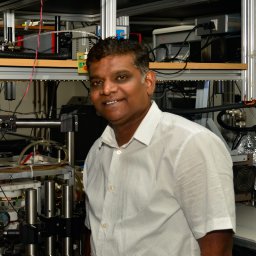 Umakant Rapol合作论文数Department of Physics;Indian Institute of Science;Department of Physics, Indian Institute of Science5F. Zaehringer合作论文数4P. Cren合作论文数4M. Guevara-Bertsch合作论文数4W. Haensel合作论文数4Florian Zaehringer合作论文数4Johannes Franke合作论文数4
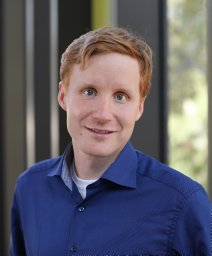 Andreas Elben合作论文数Ctr Quantum Phys, Univ Innsbruck4D. Heinrich合作论文数4
 Dietrich Leibfried合作论文数National Institute of Standards and Technology4Matthias Kleinmann合作论文数Institut fur Theoretische4
 Alessandro S. Villar合作论文数Instituto de F ´ õsica;Universidade de Sao Paulo;Instituto de F ´ õsica, Universidade de Sao Paulo4
 Adán Cabello合作论文数Departamento de Fisica Aplicada II, Universidad de Sevilla4S. Gulde合作论文数4M Guggemos合作论文数3




