Reservoir computing promises a fast method for handling large amounts of temporal data. This hinges on constructing a good reservoir–a dynamical system capable of transforming inputs into a high-dimensional representation while remembering properties of earlier data. In this work, we introduce a reservoir based on recurrent quantum feature maps where a fixed quantum circuit is reused to encode both current inputs and a classical feedback signal derived from previous outputs. We evaluate the model on the Mackey-Glass time-series prediction task using our recently introduced CP feature map, and find that it achieves lower mean squared error than standard classical baselines, including echo state networks and multilayer perceptrons, while maintaining compact circuit depth and qubit requirements. We further analyze memory capacity and show that the model effectively retains temporal information, consistent with its forecasting accuracy. Finally, we study the impact of realistic noise and find that performance is robust to several noise channels but remains sensitive to two-qubit gate errors, identifying a key limitation for near-term implementations.
Ultraweak photon emission, also referred to as biological autoluminescence or biophoton emission, is the spontaneous emission of extremely low levels of light from a broad range of biological systems. Recent studies have reported that UPE measured extracranially can serve as a potential noninvasive biomarker of brain activity. Here, we show that this interpretation suffers from serious problems. We show that, when observed under properly dark conditions, the UPE from the head is much weaker than what is reported in certain papers on "brain UPE" from human heads. We also show that the large signals reported in these studies can be explained by background light contamination. Furthermore, photons with wavelengths <600 nm are strongly attenuated by scalp and skull tissues, and longer wavelengths fall largely outside the effective spectral sensitivity of the photomultiplier tubes (PMTs) used. As a consequence, even if UPE from the head is detected under properly background-free conditions, it is likely to be dominated by emission from the scalp rather than from the brain, certainly as long as PMTs are used. Our results emphasize the importance of careful experimental design to make genuine progress on this important question.
In this paper, we investigate three schemes for implementing Controlled-Z (CZ) gates between individual ytterbium (Yb) rare-earth ions doped into yttrium orthovanadate (YVO$_4$ or YVO). Specifically, we investigate the CZ gates based on magnetic dipolar interactions between Yb ions, photon scattering off a cavity, and a photon interference-based protocol, with and without an optical cavity. We introduce a theoretical framework for precise computations of state and gate infidelities, accounting for noise effects. We then compute the state fidelity for each scheme to evaluate the feasibility of their experimental implementation. Based on these results, we compare the performance of the two-qubit gate schemes and discuss their respective advantages and disadvantages. We conclude that the probabilistic photon interference-based scheme offers the best fidelity scaling with cooperativity and is superior with the current technology of Yb values, while photon scattering is nearly deterministic but slower with less favourable fidelity scaling as a function of cooperativity. The cavityless magnetic dipolar scheme provides a fast, deterministic gate with decent fidelities if close ion localization can be realized. While focusing on $^{171}$Yb$^{3+}$:YVO system as a case study, the theoretical tools and approaches developed in this work are broadly applicable to other spin qubit systems.
Quantum reservoir computing offers a promising approach to the utilization of complex quantum dynamics in machine learning. Statistical noise inevitably arises in real settings of quantum reservoir computing (QRC) due to the practical necessity of taking a small to moderate number of measurements. We investigate the effect of statistical noise in spin-network QRC on the possible performance benefits conferred by quantumness. As our measures of quantumness, we employ both quantum entanglement, which we quantify by the partial transpose of the density matrix, and coherence, which we quantify as the sum of the absolute values of the off-diagonal elements of the density matrix. We find that reservoirs which enjoy a finite degree of quantum entanglement and coherence are more stable against the adverse effects of statistical noise on performance compared to their unentangled, incoherent counterparts. Our results thus indicate that the potential benefit reservoir computers may derive from quantumness depends on the number of measurements used for training and testing, and that statistical noise, albeit detrimental on the whole, may leave quantum reservoirs in a stronger position relative to less quantum ones. These findings not only emphasize the importance of incorporating realistic noise models, but also suggest that the search for computational regimes that benefit from quantumness may be aided rather than impeded by the practical constraints of implementation within existing machines.
The dependence of superoxide concentration and tissue regeneration on weak magnetic field strength in planarians exhibits a nonmonotonic behavior that classical physics struggles to explain. Here, we experimentally verify the predictions of a simple radical pair (RP) model for magnetic field modulation of superoxide levels during planarian regeneration. The model predicted increased superoxide concentrations at both hypomagnetic and higher fields (>500 µT). Previously reported magnetic field effects on blastema size do not follow the same pattern as our predictions for superoxide levels, while in earlier experiments blastema size was correlated with superoxide levels within a narrower magnetic field range (200 and 500 µT). Surprisingly, our experiments confirmed the model's predictions. We also performed a search over the parameter space of a more general RP model and identified multiple parameter sets that produce magnetic field profiles consistent with the observed ranges of superoxide levels. While the precise relationship between blastema size and superoxide concentration is evidently more complex than previously thought, and important biochemical aspects-including the identities of the radicals involved-remain to be determined, our findings support a general RP hypothesis and bolster the case for a quantum-biological explanation for these magnetic field effects.
Weak magnetic fields influence a wide range of biological processes, yet the underlying mechanisms are poorly understood. The radical pair mechanism (RPM), which involves quantum spin dynamics, is a leading hypothesis. Here we show that weak magnetic fields modulate morphological pigmentation – specifically, the number of perioptic melanophores – in Xenopus laevis tadpoles in a field-strength-dependent manner. The response is light- and eye-dependent. The observed field-strength dependence is quantitatively consistent with a radical pair model. These properties are reminiscent of the light-dependent magnetoreception that is thought to operate in migratory birds, and establish amphibian pigmentation as a tractable vertebrate system for the study of radical-pair quantum biology.
The meeting of artificial intelligence (AI) and quantum computing is already a reality; quantum machine learning (QML) promises the design of better regression models. In this work, we extend our previous studies of materials discovery using classical active learning (AL), which showed remarkable economy of data, to explore the use of quantum algorithms within the AL framework (QAL) as implemented in the MLChem4D and QMLMaterials codes. The proposed QAL uses quantum support vector regressor (QSVR) or a quantum Gaussian process regressor (QGPR) with various quantum kernels and different feature maps. Data sets include perovskite properties (piezoelectric coefficient, band gap, energy storage) and the structure optimization of a doped nanoparticle (3Al@Si11) chosen to compare with classical AL results. Our results revealed that the QAL method improved the searches in most cases, but not all, seemingly correlated with the “roughness” of the data. QAL has the potential of finding optimum solutions, within chemical space, in materials science and elsewhere in chemistry.
Erbium-doped solids are promising candidates for fiber-based quantum networks due to their emission wavelength, which aligns with the telecom band over which optical fibers exhibit minimal loss. Among these, erbium-doped silica fiber (EDF) stands out for its availability, ease of use, and seamless integration with existing fiber-optic infrastructure. In this work, using the two-pulse photon-echo (2PPE) technique, we measured the homogeneous linewidth of the I-4(13/2) <-> I-4(15/2) optical transition under varying magnetic fields and temperatures. We observed an effective homogeneous linewidth of approximately 8 kHz at similar to 7 mK at an optimal magnetic field of 0.09 T, representing over two orders of magnitude improvement compared to earlier reports measured at T approximate to 700 mK. We also present a comprehensive model for the combined magnetic field and temperature dependency of the effective homogeneous linewidth. Additionally, we employed three-pulse photon-echo (3PPE) measurements to investigate spectral diffusion and decoherence processes and conclude that Two-Level System (TLS) effects are significantly suppressed at sufficiently low temperatures, below similar to 100 mK. (c) 2026 Optica Publishing Group under the terms of the Optica Open Access Publishing Agreement
Ultraweak photon emission is the spontaneous emission of extremely low levels of light from a broad range of biological systems. Recent studies have reported that UPE measured extracranially can serve as a potential non-invasive biomarker of brain activity. Here, we show that this interpretation suffers from serious problems. First, when observed under properly dark conditions, the UPE from the head is much weaker than what is reported in certain papers on 'brain UPE' from human heads. Signals detected in these studies are overwhelmingly dominated by background light. Second, photons at wavelengths < 600 nm are strongly attenuated by scalp and skull tissues, and longer wavelengths fall largely outside the effective spectral sensitivity of the photomultiplier tubes (PMTs) used. As a consequence, even if UPE from the head is detected under properly background-free conditions, it is likely to be dominated by emission from the scalp rather than from the brain, certainly as long as PMTs are used. Our results emphasize the importance of careful experimental design to make genuine progress on this important question.
The realization of a global quantum network holds the potential to enable groundbreaking applications such as secure quantum communication and blind quantum computing. However, building such a network remains a formidable challenge, primarily due to photon loss in optical fibers. In this work, we propose a quantum repeater architecture for distributing entanglement over intercontinental distances by leveraging low-Earth-orbit satellites equipped with spontaneous parametric down-conversion photon-pair sources and ground stations utilizing single-atom memories in optical cavities and single-photon detectors to implement the cavity-assisted photon scattering gates for high-fidelity entanglement mapping. The efficient entanglement swapping is achieved by performing high-fidelity Rydberg gates and readouts. We evaluate the entanglement distribution rates and fidelities by analyzing several key imperfections, including time-dependent two-photon transmission and time-dependent pair fidelity, for various satellite heights and ground station distances. We also investigate the impact of pair source fidelity, spin decoherence rate, and sky brightness on the repeater performance. Furthermore, we introduce a spatial-frequency multiplexing strategy within this architecture to enhance the design's performance. Finally, we discuss in detail the practical implementation of this architecture. Our results show that this architecture enables entanglement distribution over intercontinental distances. For example, it can distribute over 10 000 pairs per flyby over 10 000 km with a fidelity above 90%, surpassing the capabilities of terrestrial quantum repeaters.
Weak magnetic fields have been shown to influence biological processes; however, the underlying mechanisms remain unknown as the energies involved are far below thermal energies challenging classical explanations. Microtubule cytoskeletal fibers offer an ideal system to test weak magnetic field effects due to their self-assembling capabilities, sensitivity to magnetic fields, and their central role in cellular processes. In this study, we use a combination of experiments and simulations to explore how nuclear spin dynamics affect microtubule polymerization by examining interactions between magnesium isotope substitution and weak magnetic fields. Our experiments reveal an isotope-dependent effect explicitly arising from nuclear spin properties. This nuclear spin-driven effect is enhanced under an applied weak 3-millitesla magnetic field. Our theoretical radical pair model achieves quantitative agreement with our experimental observations. These results support a connection between quantum spin dynamics and microtubule assembly, providing further insights into how weak magnetic fields may influence biomolecular functions.
T center defects in silicon provide an attractive platform for quantum technologies due to their unique spin properties and compatibility with mature silicon technologies. We investigate several gate protocols between single T centers, including two probabilistic photon interference-based schemes, a near-deterministic photon scattering gate, and a deterministic magnetic dipole-based scheme. In particular, we study a photon interference-based scheme with feedback which can achieve success probabilities above 50%, and use the photon-count decomposition method to perform the first analytical calculations of its entanglement fidelity and efficiency while accounting for imperfections. We also calculate the fidelity and efficiency of the other schemes. Finally, we compare the performance of all the schemes, considering current and near-future experimental capabilities. In particular, we find that the photon interference-based scheme with feedback has the potential to achieve competitive efficiency and fidelity, making it interesting to explore experimentally.
We develop an analytic perturbative framework that enables the analysis of small Markovian errors in probabilistic, photon-heralded quantum operations between non-interacting emitters. Building on and extending the Zero-Photon-Generation (ZPG) framework, we derive closed-form perturbative solutions that capture both ideal (zero-order) and noisy (low-order) gate dynamics conditioned on time-integrated photon counting. Our framework provides analytic solutions to process matrices and Pauli error weights up to leading order, bridging the gap between detailed physical imperfections of a system and its corresponding abstract Pauli noise models. Moreover, our framework captures imperfections across the full physical system stack, from photon generation to optical manipulation. We benchmark the resulting perturbative predictions on a repeat-until-success CZ gate against numerical simulations, demonstrating accurate modeling of source-induced noise, and then apply the same framework to analyze coherent phase-shifter miscalibrations as a representative example of optical-manipulation errors. The methods developed in this work enable physics-informed parameter tuning to optimize gate designs and develop tailored quantum error correction protocols toward fault-tolerant quantum computing using hybrid light–matter quantum systems.
Biophotonic signaling via axons has been proposed as a potential mode of neural communication, where information might be encoded not only in photon number and wavelength but also in polarization. Although earlier computational studies have examined how structural imperfections influence optical transmission, their effects on polarization fidelity remain unexplored; previous modeling of polarization fidelity in myelinated axons has largely focused on idealized geometries. This study incorporates three structural imperfections characteristic of axons in vivo: variation in myelin thickness, non-circular cross-sectional geometry, and axonal bending, within a model that includes four nodes of Ranvier. We find that variation in myelin thickness alone has minimal impact on fidelity, while non-circular cross-sections show strong mode dependence. Axonal bending has the most significant influence, generating large fluctuations and deep fidelity dips. When all imperfections are combined in a single axon model, the simulations show substantial drops in fidelity, yet certain modes exhibit recovery, with repeated revivals reaching values of around 0.8, which exceeds the revivals observed in the single imperfection cases. Overall, the results indicate that although structural imperfections affect polarization, polarization-based biophotonic signals might remain recoverable even in realistic axons, lending support to the plausibility of polarization-based biophotonic signaling in the brain.
Quantum-memory models often reduce complex level structures to an idealized Λ system, potentially missing nearby levels and unwanted couplings that can qualitatively alter the predicted performance. Here, we study an extension of a cavity-based Λ-type ensemble memory, a four-level model with unwanted couplings from both the control field and signal, using a fully quantum treatment. We derive explicit expressions for the single-photon storage efficiency, retrieval efficiency, and fidelity, and on this basis identify three distinct dynamical regimes: stable, threshold, and unstable. Within the stable regime, we additionally discriminate between two qualitatively different sub-regimes. Applying the theory to warm-vapor-inspired parameters, we determine the conditions under which the system can still operate as a high-quality quantum memory. More generally, our results provide a practical framework for distinguishing genuine memory operation from amplification and for optimizing realistic quantum memories beyond idealized models.
Quantum Reservoir Computing (QRC) utilizes the intrinsic dynamics of quantum systems to process temporal data efficiently, offering potential advantages in computational power and energy efficiency. Unlike classical reservoirs, quantum reservoirs leverage properties such as superposition and entanglement, which may enhance information processing capabilities. In this work, we investigate a QRC framework based on two coupled Kerr nonlinear oscillators, a system well-suited for time-series prediction tasks due to its complex nonlinear interactions and potentially high-dimensional state space. We explore how its performance in time-series prediction depends on key physical parameters: input drive strength, Kerr nonlinearity, and oscillator coupling, and analyze the role of entanglement in improving the reservoir's computational performance, focusing on its effect on predicting non-trivial time series. Using logarithmic negativity to quantify entanglement and normalized root mean square error (NRMSE) to evaluate predictive accuracy, our results suggest that entanglement provides a computational advantage on average up to a threshold in the input frequency, which persists under some levels of dissipation and dephasing. These findings contribute to the broader understanding of quantum reservoirs and highlight their potential for high performance, efficient quantum machine learning and time-series forecasting.
Circadian regulation of skin pigmentation is essential for thermoregulation, ultraviolet (UV) protection, and synchronization of skin cell renewal. This regulation involves both cell-autonomous photic responses and non-cell-autonomous hormonal control, particularly through melatonin produced in a light-sensitive manner. Photosensitive opsins, cryptochromes, and melatonin regulate circadian rhythms in skin pigment cells. We studied light/dark cycles and melatonin coordination in melanin synthesis and cell proliferation of Xenopus laevis melanophores. In vivo, tadpole pigmentation shows robust circadian regulation mainly hormone-driven, in that isolated melanophores respond strongly to melatonin but only slightly to light. Melanophore proliferation is faster in the dark and slower with melatonin as compared to a 12/12 light/dark cycle. Expression of circadian core genes (clock, bmal1, per1, per2, per3, cry1, cry2, and cry4) in melatonin-treated cells during the light phase mimics dark phase expression. Overexpression of individual Crys did not affect melanization or cell proliferation, likely due to their cooperative actions. Melanin synthesis was inhibited by circadian cycle deregulation through (a) pharmacological inhibition of Cry1 and Cry2 degradation with KL001, (b) continuous light or dark conditions, and (c) melatonin treatment. Our findings suggest that circadian cycle regulation, rather than proliferative capacity, alters melanization of melanophores.
Academia, governments, and industry around the world are on a quest to build long-distance quantum communication networks for a future quantum internet. Using air and fiber channels, quantum communication quickly faced the daunting challenge of exponential photon loss with distance. Quantum repeaters were invented to solve the loss problem by probabilistically establishing entanglement over short distances and using quantum memories to synchronize the teleportation of such entanglement to long distances. However, due to imperfections and complexities of quantum memories, ground-based proof-of-concept repeater demonstrations have been restricted to metropolitan-scale distances. In contrast, direct photon transmission from satellites through empty space faces almost no exponential absorption loss and only quadratic beam divergence loss. A single satellite successfully distributed entanglement over more than 1,200 km. It is becoming increasingly clear that quantum communication over large intercontinental distances (e.g. 4,000-20,000 km) will likely employ a satellite-based architecture. This could involve quantum memories and repeater protocols in satellites, or memory-less satellite-chains through which photons are simply reflected, or some combination thereof. Rapid advancements in the space launch and classical satellite communications industry provide a strong tailwind for satellite quantum communication, promising economical and easier deployment of quantum communication satellites.
The phenomenon of biological ultraweak photon emission (UPE), that is, extremely low-intensity emission (10-103 photons cm-2 s-1) in the spectral range of 200-1000 nm, has been observed in all living systems that have been examined. Here, we report experiments that exemplify the ability of novel imaging systems to detect variations in UPE for a set of physiologically important scenarios. We use electron-multiplying charge-coupled device (EMCCD) and charge-coupled device (CCD) cameras to capture single visible-wavelength photons with low noise and quantum efficiencies higher than 90%. Our investigation reveals significant contrast between the UPE from live vs dead mice. In plants, we observed that an increase in the temperature and injuries both caused an increase in UPE intensity. Moreover, chemical treatments modified the UPE emission characteristics of plants, particularly the application of a local anesthetic (benzocaine) to injury, which showed the highest emission among the compounds tested. As a result, UPE imaging provides the possibility of non-invasive label-free imaging of vitality in animals and the responses of plants to stress.
Electromagnetic radiation at telecommunication frequencies has been reported to have biological effects, particularly affecting the production of reactive oxygen species, raising the question of potential mechanisms. In this study, we explored whether the radical pair mechanism (RPM) could account for these effects. Given that telecommunication frequencies are much higher than those associated with typical hyperfine interactions in biological systems, any effects would necessarily be non-resonant. Our computational simulations confirm that the RPM cannot explain these effects under experimental conditions due to the negligible influence of low-amplitude oscillating fields. We find that observable effects on radical pairs at telecommunication frequencies would require hyperfine coupling constants that are precisely fine-tuned to values far exceeding those naturally occurring in biological systems. We conclude that another mechanism must be responsible for the effects of telecommunication frequency fields in biological systems.
 Nicolas Gisin合作论文数Department of Applied Physics, University of Geneva41
 Hugues De Riedmatten合作论文数Group of Applied Physics;University of Geneva;Group of Applied Physics, University of Geneva28
 Mikael Afzelius合作论文数Group of Applied Physics;University of Geneva;Group of Applied Physics, University of Geneva25
 Nicolas Sangouard合作论文数Institut de Physique Théorique, CEA25
 Hadi Zadeh-Haghighi合作论文数Dept Phys & Astron, Univ Calgary23
 Ghobadi Roohollah合作论文数23
 Khabat Heshami合作论文数Institute for Quantum Information Science and Department23
 Stephen Wein合作论文数Institute for Quantum Science and Technology and Department of Physics and Astronomy, University of Calgary20
 Daniel Oblak合作论文数Niels Bohr Institute;University of Copenhagen;Niels Bohr Institute, University of Copenhagen19
 Wolfgang Tittel合作论文数Quantum Cryptography and Communication Laboratory, Department of Physics and Astronomy, Faculty of Science, University of Calgary;Institute for Quantum Science and Technology, University of Calgary16
 Neil Sinclair合作论文数14
 Faezeh Kimiaee Asadi合作论文数Inst Quantum Sci & Technol, Univ Calgary12
 Nikolai Lauk合作论文数Div Phys Math & Astron, CALTECH11Jia-Wei Ji (纪佳位)合作论文数11
 Dirk Bouwmeester合作论文数Department of Physics, University of California, Santa Barbara11
 Anton Zeilinger (安东·塞林格)合作论文数University of Vienna;Institute for Quantum Optics and Quantum Information Vienna, Austrian Academy of Sciences11
 Hugo Zbinden合作论文数Department of Applied Physics, University of Geneva10
 Jiri Minar合作论文数10
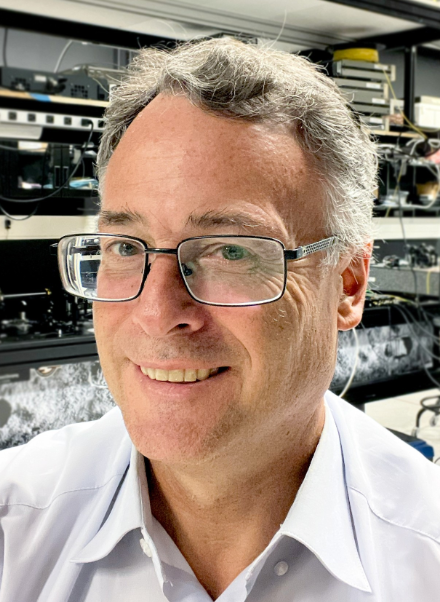 Thomas Jennewein合作论文数Department of Physics, Simon Fraser University;QEYNet;Universal Quantum Devices Inc.9Sourabh Kumar合作论文数8Erhan Saglamyurek合作论文数university of calgary8
 Gregor Weihs合作论文数Institute for Quantum Computing, University of Waterloo8
 Zachary Dutton合作论文数Naval Research Laboratory8Dik Bouwmeester合作论文数8
 Hon Wai Lau合作论文数Department of Physics Clear Water Bay, Hong Kong University of Science and Technology8Björn Lauritzen合作论文数8
 Gabriel A. Durkin合作论文数Quantum Laboratory;NASA Ames Research Center;Quantum Laboratory, NASA Ames Research Center8Youssef Kora合作论文数Univ Alberta, Dept Phys, Edmonton, AB T6G 2E1, Canada7
 Tian Wang合作论文数Institute for Quantum Science and Technology and Department of Physics and Astronomy, University of Calgary7
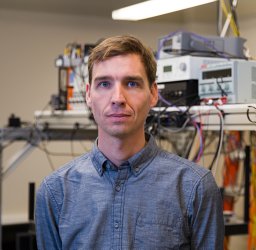 Paul E. Barclay合作论文数Department of Applied Physics;California Institute of Technology;Department of Applied Physics, California Institute of Technology7
 Sandeep Goyal合作论文数6
 Vahid Salari合作论文数Dept Phys Chem, Univ Basque Country UPV EHU6
 Jian-Wei Pan (潘建伟)合作论文数Division of Quantum Physics and Quantum Information, University of Science and Technology of China6
 Bing He合作论文数6
 Sadegh Raeisi合作论文数Department of Physics;Sharif University of Technology;Department of Physics, Sharif University of Technology6Parisa Zarkeshian合作论文数1QB Information Technologies (1QBit), Vancouver, BC, Canada. parisa.zarkeshian@ucalgary.ca.5
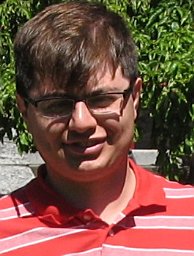 Hamidreza Kaviani合作论文数Inst Quantum Sci & Technol, Univ Calgary5
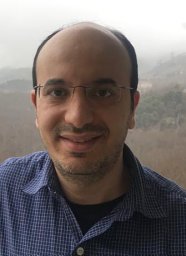 Mohammadsadegh Khazali合作论文数Inst Quantum Opt & Quantum Informat, Austrian Acad Sci5
 Nicolas Brunner合作论文数Department of Applied Physics, University of Geneva5Yang Han合作论文数5
 Alexander Lvovsky合作论文数Department of Physics, University of Oxford5
 Caslav Brukner合作论文数Faculty of Physics, Quantum Optics, Quantum Nanophysics and Quantum Information, University of Vienna;Institute for Quantum Optics and Quantum Information Vienna, Austrian Academy of Sciences5
 Omid Golami合作论文数4Kenneth Sharman合作论文数4
 Jens Eisert合作论文数Institut für Theoretische Physik, Freie Universität Berlin;Dahlem Center for Complex Quantum Systems, Freie Universität Berlin;Fraunhofer Heinrich Hertz Institute4
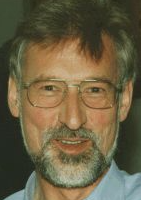 Wolfgang Sohler合作论文数Department of Physics, Faculty of Science, University of Paderborn;Department of Applied Physics, Faculty of Science, University of Paderborn4
 Jack Tuszynski合作论文数Department of Oncology, University of Alberta;Faculty of Science, University of Alberta4
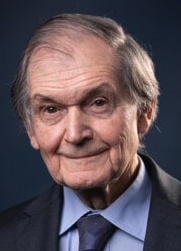 Roger Penrose合作论文数Wadham College, University of Oxford;St John's College, University of Cambridge;University College London4
 Dennis Salahub合作论文数Department of Chemistry, Faculty of Science, University of Calgary;Multiscale Computational Chemistry Lab, University of Calgary4




