Background Exploitation of the sodium iodide symporter (NIS) has potentially broad clinical application across different tumour ablative settings but often fails in aggressive cancer due to diminished transport activity. We aimed to discover whether enhancing NIS function by modulating proteostasis was targetable in vivo, as well as the clinical relevance to radioiodide (RAI) treatment of patients with cancer. Methods We used 3D modelling, iterative design, reformulation, RAI uptake, RNA-Seq, cell surface biotinylation assays and NanoBRET in transformed cell lines and primary thyroid cells from patients to identify new drugs targeted at enhancing NIS function and to uncover their respective mechanisms. Systemic drug responses were monitored via 99mTc pertechnetate gamma counting and SPECT/CT imaging in wild-type BALB/c and Tg-rtTA/tetO-BRAFV600E mice, as well as orthotopic NOD.Cg-Prkdcscid Il2rgtm1Wjl/SzJ (NSG) breast cancer. Findings Copper diethyldithiocarbamate (Cu(DDC)2), a metabolite of the FDA-approved drug disulfiram, modulated NIS function in thyroid and breast cancer cells (P < 0.05). Mechanistically, Cu(DDC)2 elicited a dual effect on NIS function, targeting valosin containing protein (VCP)—a key regulator of proteostasis—as well as inducing potent transcriptional responses (P < 0.05). In mice, the copper-bound metabolite stimulated NIS activity in normal thyroid tissue, thyroid tumours and in breast orthotopic tumours (P < 0.05), the latter augmented by the histone deacetylase inhibitor vorinostat (SAHA). Notably, there was clinical association of drug-perturbed genes in RAI-treated thyroid cancer, enabling construction of a robust dual risk score classifier for predicting recurrence (AUC >0.95; P < 0.001). Interpretation Our findings reveal a mechanistic pathway towards enhancing radionuclide uptake in vivo, with clinical relevance for RAI therapy and identifying survival indicators of recurrent disease. Funding This work was funded by the U.S. Department of Defense (BC201532P1), Medical Research Council (CiC/1001505 and MR/Z504828/1), British Thyroid Foundation (1002175). We further acknowledge support from the Wellcome Trust and EPSRC funded Centre for Medical Engineering at King’s College London (203148/Z/16/Z), the Wellcome Multiuser Equipment Radioanalytical Facility (212885/Z/18/Z), and the EPSRC programme for Next Generation Molecular Imaging and Therapy with Radionuclides (EP/S019901/1).
Full list of significantly upregulated terms (q-value<0.05) in BrafV600E+K5-Tert tumors, compared to BrafV600E, from 20-week animals, employing the GSEA (gene set enrichment analysis) hallmarks of cancer database on RNAseq data.
Differentially expressed genes from RNAseq data when comparing BrafV600E vs. BrafV600E+K5-Tert tumors from 20-week animals.
Additional insights from RNAscope analysis and telomere length evaluation. A-L. Analysis of intratumoral heterogeneity of Tert transcription via RNAscope.
Full list of KEGG (Kyoto Encyclopedia of Genes and Genomes) pathway analysis “up terms” for the BrafV600E vs. BrafV600E+K5-Tert comparison.
Sodium iodide symporter (NIS) expression in breast cancer renders radioiodide (RAI) a promising treatment modality. However, insufficient functional NIS within the plasma membrane limits RAI uptake (RAIU). We aimed to elucidate NIS regulatory mechanisms that impede RAIU in breast cancer and identify molecular targets for stimulating RAI-avidity in breast tumours. Mechanistic interaction between pituitary tumor-transforming gene-binding factor (PBF/PTTG1IP) and NIS was investigated through NanoBiT, co-immunoprecipitation, immunofluorescent microscopy, subcellular localisation and RAIU assays utilising wild-type and CRISPR-Cas9 PBF knockout breast cancer cells. In breast cancer cells, NIS:PBF interaction resulted in diminished RAIU, reversible through reduced PBF phosphorylation by the Src inhibitor dasatinib. Src overexpression diminished RAIU in a PBF-dependent manner that was mediated by Src myristoylation by N-myristoyltransferase 1 (NMT1). NMT1 inhibition significantly enhanced RAIU via Src and PBF in breast and thyroid cancer cells. Bioinformatic analyses revealed clinical associations between high Src and NMT1 expression and increased tumour recurrence in RAI-treated thyroid cancers indicating RAI-resistance. In breast cancer, high PBF and Src expression was associated with the more aggressive tumours that are most likely to benefit from targeted RAI therapy. We describe a new NIS regulatory pathway in breast cancer cells via Src myristoylation and PBF phosphorylation and show that the same pathway exists in thyroid cells, the canonical setting for the exploitation of NIS function. These findings reveal that PBF interaction with NIS may be modulated by Src, which in turn is susceptible to NMT inhibition, and suggest that targeting NMT1 may represent an innovative approach for augmenting RAI-avidity in breast cancer.
Pairwise alignment of human:mouse telomerase reverse transcriptase (TERT) gene sequences.
Additional analyses of RNA sequencing data from mouse tumors with telomerase upregulation.
Lack of co-trafficking for VCP-dsRED and NIS-GFP suggests that the site of functional interaction between VCP and NIS is distant to the plasma membrane in HeLa cells
The sodium iodide symporter NIS is endosomally trafficked in association with clathrin
Searchable abstracts of presentations at key conferences in endocrinology ISSN 1470-3947 (print) | ISSN 1479-6848 (online)
Significant co-localization and trafficking of ARF4-dsRED and NIS-GFP proteins in co-incident vesicles at the plasma membrane in HeLa cells
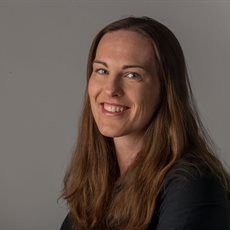 Vicki E. Smith合作论文数Institute of Metabolism and Systems Research, College of Medical and Dental Sciences, University of Birmingham30
 Chris McCabe合作论文数Institute of Metabolism and Systems Research, College of Medical and Dental Sciences, University of Birmingham27
 Martin Read合作论文数Institute of Metabolism and Systems Research, College of Medical and Dental Sciences, University of Birmingham27
 Katie Brookes合作论文数24Alice Fletcher合作论文数24
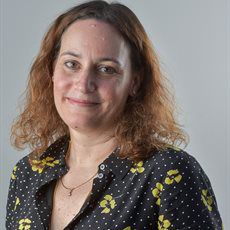 Kristien Boelaert合作论文数Institute of Applied Health Research, College of Medical and Dental Sciences, University of Birmingham24
 Inigo Landa合作论文数Hereditary Endocrine Cancer Group22
 Mohammed Merae Alshahrani合作论文数Faculty of Applied Medical Sciences, Najran University21
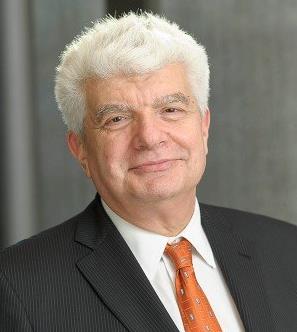 James A. Fagin合作论文数Division of Subspecialty Medicine, Memorial Sloan Kettering Cancer Center20
 Hannah R Nieto合作论文数Institute of Metabolism and Systems Research, College of Medical and Dental Sciences, University of Birmingham20Jingzhu Hao合作论文数14Zachary T Herbert合作论文数Dana-Farber Cancer Institute14
 Jacob Haase合作论文数Brigham and Women's Hospital, Harvard Medical School14
 María A. Blasco合作论文数Telomeres and Telomerase Group, Molecular Oncology Program, Spanish National Cancer Research Centre14Jeffrey A. Knauf合作论文数14Paula Martínez合作论文数Spanish Natl Canc Ctr CNIO, Mol Oncol Program, Telomeres & Telomerase Grp, E-28029 Madrid, Spain13
 Krishnamoorthy Gnana Prakasam合作论文数Dipartimento di Medicina Molecolare e Biotecnologie Mediche, University of Naples Federico II13
 Ronald A. Ghossein合作论文数Memorial Sloan Kettering Cancer Center13Ling Zha合作论文数12
 Moray J Campbell合作论文数10
 Vikki Poole合作论文数9Rebecca Thompson合作论文数9Andrew S. Turnell合作论文数7
 Bin Xu (徐斌)合作论文数7
 Gareth Lavery合作论文数Department of Biosciences, Nottingham Trent University;Department of Metabolism and Systems Science, University of Birmingham7
 Dean P Larner合作论文数7
 Merve Kocbiyik合作论文数6
 Luke Alderwick合作论文数Sch Biosci, Univ Birmingham6
 Jamie Webster合作论文数5Jana Kim合作论文数5Kavitha Sunassee合作论文数St Thomas’ Hospital, King’s College London5Kate Brookes合作论文数4Rashida Khan合作论文数4
 Phil Blower合作论文数Department of Imaging Chemistry & Biology, School of Biomedical Engineering & Imaging Sciences, Faculty of Life Sciences & Medicine, King’s College London4
 Vinodh Kannappan合作论文数Research Institute in Healthcare Science, University of Wolverhampton4Weiguang Wang合作论文数4Selvambigai Manivannan合作论文数3
 Patricia Borges de Souza合作论文数3Christine Spitzweg合作论文数2Jhiang Sissy M合作论文数2
 Matthew D Ringel合作论文数Division of Endocrinology, Diabetes and Metabolism, TheOhioStateUniversity2
 Liam Cox合作论文数School of Chemistry, College of Engineering and Physical Sciences, University of Birmingham2Adcock Holly V合作论文数2
 Giovanni Bottegoni合作论文数Department of Pharmaceutical Sciences, University of Bologna2
 Albert Nobre de Menezes合作论文数andar2
 Jean-Baptiste Cazier合作论文数The Francis Crick Institute;Higher Education Academy2
 Hisham Mehanna合作论文数Institute of Cancer and Genomic Sciences, College of Medical and Dental Sciences, University of Birmingham2




