Remote rural areas have encountered significant change and the need for renegotiation of economic and social priorities in the late 20th and early 21st century. In our broader research, we ask how have such communities been responding to this change? What role have different organisations and agencies played? And, how have they acted on the aspirations of marginalised communities? In this paper we examine these issues through a case study of Westland District on the west coast of Aotearoa New Zealand's South Island. We probe the general shift towards prioritising tourism in the District, and highlight particular experiences in regard to Indigenous endeavour in tourism. We find that those engaged in leading local development and tourism have not collaborated strategically across the sector and have not established meaningful partnerships with the community that recognise both economic and socio-cultural aspirations.
There is growing momentum in planning research, education and practice as to the commitment these fields must make to a more just and respectful relationship with Indigenous peoples. One dimension of this is the collective efforts towards defining and understanding the concepts and practices of Indigenous planning (see for example Jojola, 2008; and contributions to Walker, Jojola, & Natcher, 2013), recognising distinctive practices of planning that derive from an “indigenous world-view, which not only serves to unite [Indigenous planning] philosophically, but also to distinguish it from neighbouring non-land based communities” (Jojola, 2008, p. 42). There is relatively little opportunity, however, to actually share what it means to try and practice the principles of Indigenous planning, and for non-Indigenous planning to practice making space for Indigenous planning, on the terms of sovereign first peoples. At the Association of Collegiate Schools of Planning Conference in 2016, a group of researchers and practitioners got together to discuss what it means to practice differently in light of the principles and ethics of Indigenous planning. Our discussion, engaging both Indigenous and non-Indigenous scholars and practitioners, helped clarify some of the dimensions and dilemmas with which the field of planning might need to engage to enable a new relationship to be built with Indigenous planning. In this Interface, we bring together that discussion to think more deeply about what it means to practice the principles of Indigenous planning and the decolonising agenda it suggests. Contributions from both Indigenous and non-Indigenous people follow, bringing perspectives principally from the settler-colonial states of Aotearoa-New Zealand, Australia, Canada and the USA. The contributions cover the ethics, pedagogy and principles of Indigenous planning, the links to health, community development, housing and design, and the theoretical and pedagogical implications of Indigenous planning for mainstream Western planning.
 Michelle Thompson-Fawcett合作论文数4Hirini Matunga合作论文数2Lyana Patrick合作论文数2Dana Moraes合作论文数2
 Libby Porter合作论文数Centre for Urban and Regional Studies;University of Birmingham2
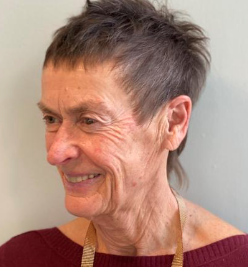 Leonie Sandercock合作论文数School of Community and Regional Planning, The University of British Columbia2
 Leela Viswanathan合作论文数Faculty of Environmental Studies;York University;Faculty of Environmental Studies, York University2Ryan Walker合作论文数2




