The precise value of the strong coupling α_s(m_Z) at the Z-boson mass m_Z is essential for high-energy phenomenology and precision tests of quantum chromodynamics (QCD). We present the status of a program targeting a ∼ 0.3% determination of α_s(m_Z) using the renormalization group β-function in the infinite volume gradient flow scheme based on lattice QCD simulations of degenerate four-flavor highly improved staggered quark (HISQ) ensembles. In particular, we analyze both tree-level cutoff effects and finite-mass effects. We also outline the next steps of the analysis, including the infinite-volume and continuum extrapolations required for a precise determination of α_s(m_Z).
Precision tests of the Standard Model (SM) currently show a deficit in first-row Cabibbo-Kobayashi-Maskawa (CKM) unitarity. In this talk, we discuss progress towards a correlated analysis of the lattice-QCD inputs needed to test this relation with kaon data using highly improved staggered quarks (HISQ) on the MILC N_f=2+1+1 configurations. We present the status of a new analysis of light-meson decay constant data where chiral-continuum fits are guided by staggered chiral perturbation theory (SChPT). The goal of SChPT is twofold: it allows us to use data not only at physical pion mass but also at unphysical masses. Moreover, it provides values of ChPT low energy constants (LECs) as well as their correlations. We also present a reanalysis of our previous kaon semileptonic form factor calculation, aiming to estimate correlations between the form factor and light-meson decay constants. We discuss the new methodology, new data included, and present some preliminary results.
The gradient-flow scale w0 in lattice QCD is determined using the mass of the Omega- baryon to set the physical scale. Nine ensembles using the highly improved staggered quark (HISQ) action with lattice spacings of 0.15 fm down to 0.04 fm are used, seven of which have nearly physical light-quark masses. Electromagnetic corrections to the Omega- mass are defined in order to compute a pure-QCD Omega mass. The final result is w0 1/4 0.17187(68) fm, corresponding to a relative uncertainty of 0.40% and a central value in good agreement with previous calculations in the literature.
We present the status of calculations of the form factors of the most relevant heavy-to-heavy and heavy-to-light decay channels. Using seven N_f = 2+1+1 HISQ ensembles, with lattice spacings ranging from 0.15 fm down to 0.06 fm, we calculate the form factors of the decays, including correlations among them. More than half of our ensembles feature physical pion masses, and the heavy quarks are simulated at their physical masses using the Wilson-clover action with the Fermilab interpretation. Even though we have recently seen huge qualitative and quantitative leaps in the characterization of heavy-to-heavy decays, these advances have failed to translate into improvements for the inclusive vs exclusive question, or the matter of the Lepton Flavor Universality ratios. In particular, in the B→ D^∗ channel, the current situation of the lattice-QCD form factors is far from clear. Further, the latest lattice-QCD results on the heavy-to-light form factors display unexplained tensions that must urgently be resolved. The work presented here is an attempt to address these issues.
We present preliminary results from a lattice-QCD study of the hadronic contributions to the running of the electromagnetic coupling, Δα(Q^2), and the electroweak mixing angle, Δsin^2θ_W(Q^2). Using N_f = 2+1+1 HISQ ensembles at physical quark masses, we discuss the challenges posed by strong statistical correlations in the time-momentum representation and propose a spectral-reconstruction strategy to obtain controlled continuum-extrapolated results across the full energy range.
We present a lattice-QCD calculation of the hadronic form factors for B-meson semileptonic decays computed using the highly improved staggered quark action for both valence and sea quarks on the MILC collaborations 2+1+1-flavor ensembles with lattice spacing ranging from 0.09 fm to 0.03 fm, many with physical pion masses On our finest ensembles, we compute the form factors directly at the physical b-quark mass. We discuss the computational setup and analysis strategies for two- and three-point correlation functions. For B_(s)→ D_(s) we present preliminary results of chiral-continuum fits for the scalar and vector form factors. The goal of this project is a percent-level determination of the scalar and vector form factors to enable high-precision determinations of |V_cb|. This work fits into a broader program of lattice-QCD studies of weak B-meson decays by the Fermilab Lattice and MILC Collaborations.
We present results from the first lattice QCD calculation of the two-pion contributions to the light-quark connected vector-current correlation function obtained from staggered-quark operators. We employ the MILC Collaboration’s gauge-field ensemble with 2 + 1 + 1 flavors of highly improved staggered sea quarks at a lattice spacing of a ≈ 0.15 fm with a light sea-quark mass at its physical value. The two-pion contributions allow for a refined determination of the noisy long-distance tail of the vector-current correlation function, which we use to compute the light-quark connected contribution to hadronic vacuum polarization (HVP) with improved statistical precision. We compare our results with traditional noise-reduction techniques used in lattice QCD calculations of the light-quark connected HVP, namely, the so-called fit and bounding methods. We observe a factor of roughly 3 improvement in the statistical precision in the determination of the HVP contribution to the muon’s anomalous magnetic moment over these approaches. We also lay the group theoretical groundwork for extending this calculation to finer lattice spacings with increased numbers of staggered two-pion taste states.
We present complete results for the hadronic vacuum polarization (HVP) contribution to the muon anomalous magnetic moment a mu in the short- and intermediate-distance window regions, which account for roughly 10% and 35% of the total HVP contribution to a mu, respectively. In particular, we perform lattice-QCD calculations for the isospin-symmetric connected and disconnected contributions, as well as corrections due to strong-isospin breaking. For the short-distance window observables, we investigate the so-called logenhancement effects as well as the significant oscillations associated with staggered quarks in this region. For the dominant, isospin-symmetric light-quark-connected contribution, we obtain all;SD 48.139(11)stat(91)syst[92]total x 10-10 and all;W mu (conn) = 206.90(14)stat(61)syst[63]total x 10-10. We use Bayesian model averaging to fully estimate the covariance matrix between the individual contributions. aW mu = 236.45(17)stat(83)syst[85]total x 10-10. This work is part of our ongoing effort to compute all contributions to HVP with an overall uncertainty at the few-permille level.
Typically, the conjugate gradient (CG) algorithm employs mixed precision and even-odd preconditioning to compute propagators for highly improved staggered quarks (HISQ). This approach suffers from critical slowing down as the light quark mass is decreased to its physical value. Multigrid is one alternative to combat critical slowing down; however, it involves setup costs that are not always easy to amortize. We consider deflation, which can also remove critical slowing down, but incurs its own setup cost to compute eigenvectors. Results using the MILC and QUDA software libraries to generate eigenvectors and to perform deflated solves on lattices up to 144^3 × 288 (with lattice spacing 0.04 fm) and with a range of quark masses from the physical strange down to the physical light quark values will be presented. We compare with CG and comment on deflation versus multigrid.
We present an update on the analysis of semileptonic B→ D^(*) decays at non-zero recoil. Our computation employs 2 + 1 + 1 FNAL-MILC ensembles with highly improved staggered quark (HISQ) action for sea and light valence quarks, while the bottom quark is treated using the clover action in the Fermilab interpretation. Simulations are performed across several lattice spacings, ranging approximately from ∼ 0.15 fm to ∼ 0.06 fm, and for various quark masses. We will present an overview of the analysis and show some preliminary results for the form factors.
We report on the ongoing effort of improving the determination of the gradient flow scale on the (2+1+1)-flavor HISQ ensembles generated by the MILC collaboration. We compute the scales $\sqrt{t_0}/a$ and $w_0/a$ with the Wilson and Symanzik flow using three discretizations for the action density: clover, Wilson and tree-level Symanzik improved. For the absolute scale setting, we intend to employ the $\Omega$-baryon mass, but are also using the pion decay constant while the $\Omega$-mass calculations are in progress.
We compute the vector, scalar, and tensor form factors for the $B\to \pi$, $B\to K$, and $B_s\to K$ amplitudes, which are needed to describe semileptonic $B$-meson decay rates for both the charged and neutral current cases. We use the highly improved staggered quark (HISQ) action for the sea and light valence quarks. The bottom quark is described by the clover action in the Fermilab interpretation. Simulations are carried out on $N_f = 2+1+1$ MILC HISQ ensembles at approximate lattice spacings from $0.15$ fm down to $0.057$ fm. We present blinded preliminary results for the form factors.
We present lattice-QCD calculations of the hadronic form factors for the semileptonic decays $D\to\pi\ell\nu$, $D\to K\ell\nu$, and $D_s\to K\ell\nu$. Our calculation uses the highly improved staggered quark (HISQ) action for all valence and sea quarks and includes $N_f=2+1+1$ MILC ensembles with lattice spacings ranging from $a\approx0.12$ fm down to $0.042$ fm. At most lattice spacings, an ensemble with physical-mass light quarks is included. The HISQ action allows all the quarks to be treated with the same relativistic light-quark action, allowing for nonperturbative renormalization using partial conservation of the vector current. We combine our results with experimental measurements of the differential decay rates to determine $|V_{cd}|^{D\to\pi}=0.2238(11)^{\rm Expt}(15)^{\rm QCD}(04)^{\rm EW}(02)^{\rm SIB}[22]^{\rm QED}$ and $|V_{cs}|^{D\to K}=0.9589(23)^{\rm Expt}(40)^{\rm QCD}(15)^{\rm EW}(05)^{\rm SIB}[95]^{\rm QED}$ This result for $|V_{cd}|$ is the most precise to date, with a lattice-QCD error that is, for the first time for the semileptonic extraction, at the same level as the experimental error. Using recent measurements from BES III, we also give the first-ever determination of $|V_{cd}|^{D_s\to K}=0.258(15)^{\rm Expt}(01)^{\rm QCD}[03]^{\rm QED}$ from $D_s\to K \ell\nu$. Our results also furnish new Standard Model calculations of the lepton flavor universality ratios $R^{D\to\pi}=0.98671(17)^{\rm QCD}[500]^{\rm QED}$, $R^{D\to K}=0.97606(16)^{\rm QCD}[500]^{\rm QED}$, and $R^{D_s\to K}=0.98099(10)^{\rm QCD}[500]^{\rm QED}$, which are consistent within $2\sigma$ with experimental measurements. Our extractions of $|V_{cd}|$ and $|V_{cs}|$, when combined with a value for $|V_{cb}|$, provide the most precise test of second-row CKM unitarity, finding agreement with unitarity at the level of one standard deviation.
We present a lattice-QCD calculation of the light-quark connected contribution to window observables associated with the leading-order hadronic vacuum polarization contribution to the anomalous magnetic moment of the muon, $a_\mu^{\mathrm{HVP,LO}}$. We employ the MILC Collaboration's isospin-symmetric QCD gauge-field ensembles, which contain four flavors of dynamical highly-improved-staggered quarks with four lattice spacings between $a\approx 0.06$-$0.15$~fm and close-to-physical quark masses. We consider several effective-field-theory-based schemes for finite-volume and other lattice corrections and combine the results via Bayesian model averaging to obtain robust estimates of the associated systematic uncertainties. After unblinding, our final results for the intermediate and ``W2'' windows are $a^{ll,{\mathrm W}}_{\mu}(\mathrm{conn.})=206.6(1.0) \times 10^{-10}$ and $a^{ll,\mathrm {W2}}_{\mu}(\mathrm{conn.}) = 100.7(3.2)\times 10^{-10}$, respectively.
Quantum Chromodynamics, the theory of quarks and gluons, whose interactions can be described by a local SU(3) gauge symmetry with charges called “color quantum numbers”, is reviewed; the goal of this review is to provide advanced Ph.D. students a comprehensive handbook, helpful for their research. When QCD was “discovered” 50 years ago, the idea that quarks could exist, but not be observed, left most physicists unconvinced. Then, with the discovery of charmonium in 1974 and the explanation of its excited states using the Cornell potential, consisting of the sum of a Coulomb-like attraction and a long range linear confining potential, the theory was suddenly widely accepted. This paradigm shift is now referred to as the November revolution. It had been anticipated by the observation of scaling in deep inelastic scattering, and was followed by the discovery of gluons in three-jet events. The parameters of QCD include the running coupling constant, α _s(Q^2) , that varies with the energy scale Q^2 characterising the interaction, and six quark masses. QCD cannot be solved analytically, at least not yet, and the large value of α _s at low momentum transfers limits perturbative calculations to the high-energy region where Q^2≫ _QCD ^2≃ (250 MeV) ^2 . Lattice QCD (LQCD), numerical calculations on a discretized space-time lattice, is discussed in detail, the dynamics of the QCD vacuum is visualized, and the expected spectra of mesons and baryons are displayed. Progress in lattice calculations of the structure of nucleons and of quantities related to the phase diagram of dense and hot (or cold) hadronic matter are reviewed. Methods and examples of how to calculate hadronic corrections to weak matrix elements on a lattice are outlined. The wide variety of analytical approximations currently in use, and the accuracy of these approximations, are reviewed. These methods range from the Bethe–Salpeter, Dyson–Schwinger coupled relativistic equations, which are formulated in both Minkowski or Euclidean spaces, to expansions of multi-quark states in a set of basis functions using light-front coordinates, to the AdS/QCD method that imbeds 4-dimensional QCD in a 5-dimensional deSitter space, allowing confinement and spontaneous chiral symmetry breaking to be described in a novel way. Models that assume the number of colors is very large, i.e. make use of the large N_c -limit, give unique insights. Many other techniques that are tailored to specific problems, such as perturbative expansions for high energy scattering or approximate calculations using the operator product expansion are discussed. The very powerful effective field theory techniques that are successful for low energy nuclear systems (chiral effective theory), or for non-relativistic systems involving heavy quarks, or the treatment of gluon exchanges between energetic, collinear partons encountered in jets, are discussed. The spectroscopy of mesons and baryons has played an important historical role in the development of QCD. The famous X,Y,Z states – and the discovery of pentaquarks – have revolutionized hadron spectroscopy; their status and interpretation are reviewed as well as recent progress in the identification of glueballs and hybrids in light-meson spectroscopy. These exotic states add to the spectrum of expected qq̅ mesons and qqq baryons. The progress in understanding excitations of light and heavy baryons is discussed. The nucleon as the lightest baryon is discussed extensively, its form factors, its partonic structure and the status of the attempt to determine a three-dimensional picture of the parton distribution. An experimental program to study the phase diagram of QCD at high temperature and density started with fixed target experiments in various laboratories in the second half of the 1980s, and then, in this century, with colliders. QCD thermodynamics at high temperature became accessible to LQCD, and numerical results on chiral and deconfinement transitions and properties of the deconfined and chirally restored form of strongly interacting matter, called the Quark–Gluon Plasma (QGP), have become very precise by now. These results can now be confronted with experimental data that are sensitive to the nature of the phase transition. There is clear evidence that the QGP phase is created. This phase of QCD matter can already be characterized by some properties that indicate, within a temperature range of a few times the pseudocritical temperature, the medium behaves like a near ideal liquid. Experimental observables are presented that demonstrate deconfinement. High and ultrahigh density QCD matter at moderate and low temperatures shows interesting features and new phases that are of astrophysical relevance. They are reviewed here and some of the astrophysical implications are discussed. Perturbative QCD and methods to describe the different aspects of scattering processes are discussed. The primary parton–parton scattering in a collision is calculated in perturbative QCD with increasing complexity. The radiation of soft gluons can spoil the perturbative convergence, this can be cured by resummation techniques, which are also described here. Realistic descriptions of QCD scattering events need to model the cascade of quark and gluon splittings until hadron formation sets in, which is done by parton showers. The full event simulation can be performed with Monte Carlo event generators, which simulate the full chain from the hard interaction to the hadronic final states, including the modelling of non-perturbative components. The contribution of the LEP experiments (and of earlier collider experiments) to the study of jets is reviewed. Correlations between jets and the shape of jets had allowed the collaborations to determine the “color factors” – invariants of the SU(3) color group governing the strength of quark–gluon and gluon–gluon interactions. The calculated jet production rates (using perturbative QCD) are shown to agree precisely with data, for jet energies spanning more than five orders of magnitude. The production of jets recoiling against a vector boson, W^± or Z, is shown to be well understood. The discovery of the Higgs boson was certainly an important milestone in the development of high-energy physics. The couplings of the Higgs boson to massive vector bosons and fermions that have been measured so far support its interpretation as mass-generating boson as predicted by the Standard Model. The study of the Higgs boson recoiling against hadronic jets (without or with heavy flavors) or against vector bosons is also highlighted. Apart from the description of hard interactions taking place at high energies, the understanding of “soft QCD” is also very important. In this respect, Pomeron – and Odderon – exchange, soft and hard diffraction are discussed. Weak decays of quarks and leptons, the quark mixing matrix and the anomalous magnetic moment of the muon are processes which are governed by weak interactions. However, corrections by strong interactions are important, and these are reviewed. As the measured values are incompatible with (most of) the predictions, the question arises: are these discrepancies first hints for New Physics beyond the Standard Model? This volume concludes with a description of future facilities or important upgrades of existing facilities which improve their luminosity by orders of magnitude. The best is yet to come!
Isospin-breaking corrections to the hadron vacuum polarization component of the anomalous magnetic moment of the muon are needed to ensure the theoretical precision of g_μ -2 is below the experimental precision. We describe the status of our work calculating, using lattice QCD, the QED correction to the light and strange connected hadronic vacuum polarization in a Dashen scheme. We report results using physical N_f=2+1+1 HISQ ensembles at three lattice spacings and three heavier-than-light valence quark masses.
Abstract We present the first unquenched lattice-QCD calculation of the form factors for the decay $$B\rightarrow D^*\ell \nu $$ B → D ∗ ℓ ν at nonzero recoil. Our analysis includes 15 MILC ensembles with $$N_f=2+1$$ N f = 2 + 1 flavors of asqtad sea quarks, with a strange quark mass close to its physical mass. The lattice spacings range from $$a\approx 0.15$$ a ≈ 0.15 fm down to 0.045 fm, while the ratio between the light- and the strange-quark masses ranges from 0.05 to 0.4. The valence b and c quarks are treated using the Wilson-clover action with the Fermilab interpretation, whereas the light sector employs asqtad staggered fermions. We extrapolate our results to the physical point in the continuum limit using rooted staggered heavy-light meson chiral perturbation theory. Then we apply a model-independent parametrization to extend the form factors to the full kinematic range. With this parametrization we perform a joint lattice-QCD/experiment fit using several experimental datasets to determine the CKM matrix element $$|V_{cb}|$$ | V cb | . We obtain $$\left| V_{cb}\right| = (38.40 \pm 0.68_{\text {th}} \pm 0.34_{\text {exp}} \pm 0.18_{\text {EM}})\times 10^{-3}$$ V cb = ( 38.40 ± 0 . 68 th ± 0 . 34 exp ± 0 . 18 EM ) × 10 - 3 . The first error is theoretical, the second comes from experiment and the last one includes electromagnetic and electroweak uncertainties, with an overall $$\chi ^2\text {/dof} = 126/84$$ χ 2 /dof = 126 / 84 , which illustrates the tensions between the experimental data sets, and between theory and experiment. This result is in agreement with previous exclusive determinations, but the tension with the inclusive determination remains. Finally, we integrate the differential decay rate obtained solely from lattice data to predict $$R(D^*) = 0.265 \pm 0.013$$ R ( D ∗ ) = 0.265 ± 0.013 , which confirms the current tension between theory and experiment.
 Steven A. Gottlieb合作论文数Department of Physics, College of Arts and Sciences, University Graduate School, Indiana University Bloomington268
 Doug Toussaint合作论文数Department of Physics, College of Science, University of Arizona261
 Urs M. Heller合作论文数American Physical Society241
 Claude Bernard合作论文数Department of Physics, Arts & Sciences at Washington University in St.Louis201
 Robert Sugar合作论文数Department of Physics, University of California, Santa Barbara176
 J. E. Hetrick合作论文数University of the Pacific138
 Andreas Kronfeld合作论文数Theoretical Physics Department, Technische Universitat Munchen;Fermi National Accelerator Laboratory, Technische Universitat Munchen;Institute for Advanced Study, Technische Universitat Munchen137
 Ludmila Levkova合作论文数The MILC Collaboration126Alexei Bazavov合作论文数112
 Aida X El-Khadra合作论文数Department of Physics, The Grainger College of Engineering, University of Illinois Urbana-Champaign108J. Laiho合作论文数106E. Gamiz合作论文数Glasgow U.98Paul B. Mackenzie合作论文数94R. S. Van de Water合作论文数87E. D. Freeland合作论文数86
 Tom DeGrand合作论文数Department of Physics, College of Arts And Sciences, University of Colorado at Boulder82
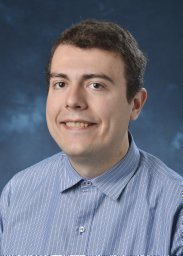 Ethan T. Neil合作论文数Department of Physics;Sloane Laboratory;Yale University;Sloane Laboratory, Yale University70Jn Simone合作论文数66Ran Zhou合作论文数RBC and UKQCD Collaborations62J. Osborn合作论文数The MILC Collaboration53Mehmet B. Oktay合作论文数51Eric B. Gregory合作论文数Department of Physics;Zhongshan University;Department of Physics, Zhongshan University49Daping Du合作论文数46
 Si-Wei Qiu合作论文数45
 Jon Bailey合作论文数43C. Aubin合作论文数Department of Physics;Washington University;Department of Physics, Washington University41J. Foley合作论文数38
 Konstantinos Orginos合作论文数Department of Physics, College of Arts and Sciences, College of William & Mary;Theory Center, Jefferson Lab, Thomas Jefferson National Accelerator Facility38
 Craig Mcneile合作论文数School of Engineering, Computing and Mathematics, Faculty of Science and Engineering, University of Plymouth37
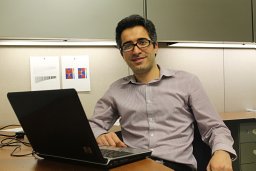 Javad Komijani合作论文数36James Osborn合作论文数34Alejandro Vaquero合作论文数Departamento de Fisica Teorica C. Pedro Cerbuna, Universidad de Zaragoza34James N. Simone合作论文数Fermi National Accelerator Laboratory34
 Kari Rummukainen合作论文数Division of Particle Physics and Astrophysics, Department of Physics, University of Helsinki33
 Yannick Meurice合作论文数Department of Physics and Astronomy;University of Iowa;Department of Physics and Astronomy, University of Iowa33R. S. Van De Water合作论文数32Jack Laiho合作论文数31
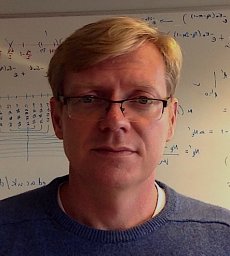 Chris Bouchard合作论文数School of Physics & Astronomy, University of Glasgow30T. Blum合作论文数30
 Matthew Bowen Wingate合作论文数Department of Applied Mathematics and Theoretical Physics, University of Cambridge29
 Massimo Di Pierro合作论文数24Tommy Burch合作论文数24
 Yuzhi Liu合作论文数Demandbase21W. Freeman合作论文数Fermi National Accelerator Laboratory20D. Du合作论文数18J. Simone合作论文数17
 Christine Davies合作论文数School of Physics & Astronomy, University of Glasgow17carole bouchard合作论文数14




