Precision tests of the Standard Model (SM) currently show a deficit in first-row Cabibbo-Kobayashi-Maskawa (CKM) unitarity. In this talk, we discuss progress towards a correlated analysis of the lattice-QCD inputs needed to test this relation with kaon data using highly improved staggered quarks (HISQ) on the MILC N_f=2+1+1 configurations. We present the status of a new analysis of light-meson decay constant data where chiral-continuum fits are guided by staggered chiral perturbation theory (SChPT). The goal of SChPT is twofold: it allows us to use data not only at physical pion mass but also at unphysical masses. Moreover, it provides values of ChPT low energy constants (LECs) as well as their correlations. We also present a reanalysis of our previous kaon semileptonic form factor calculation, aiming to estimate correlations between the form factor and light-meson decay constants. We discuss the new methodology, new data included, and present some preliminary results.
The gradient-flow scale w0 in lattice QCD is determined using the mass of the Omega- baryon to set the physical scale. Nine ensembles using the highly improved staggered quark (HISQ) action with lattice spacings of 0.15 fm down to 0.04 fm are used, seven of which have nearly physical light-quark masses. Electromagnetic corrections to the Omega- mass are defined in order to compute a pure-QCD Omega mass. The final result is w0 1/4 0.17187(68) fm, corresponding to a relative uncertainty of 0.40% and a central value in good agreement with previous calculations in the literature.
We present preliminary results from a lattice-QCD study of the hadronic contributions to the running of the electromagnetic coupling, Δα(Q^2), and the electroweak mixing angle, Δsin^2θ_W(Q^2). Using N_f = 2+1+1 HISQ ensembles at physical quark masses, we discuss the challenges posed by strong statistical correlations in the time-momentum representation and propose a spectral-reconstruction strategy to obtain controlled continuum-extrapolated results across the full energy range.
We present a lattice-QCD calculation of the hadronic form factors for B-meson semileptonic decays computed using the highly improved staggered quark action for both valence and sea quarks on the MILC collaborations 2+1+1-flavor ensembles with lattice spacing ranging from 0.09 fm to 0.03 fm, many with physical pion masses On our finest ensembles, we compute the form factors directly at the physical b-quark mass. We discuss the computational setup and analysis strategies for two- and three-point correlation functions. For B_(s)→ D_(s) we present preliminary results of chiral-continuum fits for the scalar and vector form factors. The goal of this project is a percent-level determination of the scalar and vector form factors to enable high-precision determinations of |V_cb|. This work fits into a broader program of lattice-QCD studies of weak B-meson decays by the Fermilab Lattice and MILC Collaborations.
We present complete results for the hadronic vacuum polarization (HVP) contribution to the muon anomalous magnetic moment a mu in the short- and intermediate-distance window regions, which account for roughly 10% and 35% of the total HVP contribution to a mu, respectively. In particular, we perform lattice-QCD calculations for the isospin-symmetric connected and disconnected contributions, as well as corrections due to strong-isospin breaking. For the short-distance window observables, we investigate the so-called logenhancement effects as well as the significant oscillations associated with staggered quarks in this region. For the dominant, isospin-symmetric light-quark-connected contribution, we obtain all;SD 48.139(11)stat(91)syst[92]total x 10-10 and all;W mu (conn) = 206.90(14)stat(61)syst[63]total x 10-10. We use Bayesian model averaging to fully estimate the covariance matrix between the individual contributions. aW mu = 236.45(17)stat(83)syst[85]total x 10-10. This work is part of our ongoing effort to compute all contributions to HVP with an overall uncertainty at the few-permille level.
The low-energy, finite-volume spectrum of the two-nucleon system at a quark mass corresponding to a pion mass of m pi 806 MeV is studied with lattice quantum chromodynamics (LQCD) using variational methods. The interpolating-operator sets used in [Variational study of two-nucleon systems with lattice QCD, Phys. Rev. D 107, 094508 (2023).] are extended by including a complete basis of local hexaquark operators, as well as plane-wave dibaryon operators built from products of both positive-and negative-parity nucleon operators. Results are presented for the isosinglet and isotriplet two-nucleon channels. In both channels, noticeably weaker variational bounds on the lowest few energy eigenvalues are obtained from operator sets which contain only hexaquark operators or operators constructed from the product of two negative-parity nucleons, while other operator sets produce low-energy variational bounds which are consistent within statistical uncertainties. The consequences of these studies for the LQCD understanding of the two-nucleon spectrum are investigated.
Inclusive hadronic observables are ubiquitous in particle and nuclear physics. Computation of these observables using lattice QCD is challenging due the presence of a difficult inverse problem. As a stepping stone to more complicated observables, we report on progress to compute the smeared R ratio with staggered quarks using the spectral reconstruction algorithm of Hansen, Lupo, and Tantalo. We compare staggered-quark results on two ensembles to domain-wall results on a single ensemble and to the Bernecker-Meyer parameterization. This work utilizes two ensembles generated by the MILC collaboration using highly improved staggered quarks and one ensemble generated by the RBC/UKQCD collaboration using domain-wall quarks. Possible strategies for controlling opposite-parity effects associated with staggered quarks are discussed.
Numerical analytic continuation arises frequently in lattice field theory, particularly in spectroscopy problems. This work shows the equivalence of common spectroscopic problems to certain classes of moment problems that have been studied thoroughly in the mathematical literature. Mathematical results due to Kovalishina enable rigorous bounds on smeared matrix-valued spectral functions, which are implemented numerically for the first time. The required input is a positive-definite matrix of Euclidean-time correlation functions; such matrices are routinely computed in variational spectrum studies using lattice quantum chromodynamics. This work connects the moment-problem perspective to recent developments using the Rayleigh--Ritz method and Lanczos algorithm. Possible limitations due to finite numerical precision are discussed.
We present a novel procedure for analyzing the lattice QCD spectrum via the finite-volume formalism to obtain constraints on multihadron scattering amplitudes at both real and complex energies. This approach combines a Bayesian reconstruction of the scattering amplitude on the real axis with Nevanlinna interpolation for analytic continuation to complex-valued energies. The method is nonparametric, inherently accounting for parametrization dependence within the uncertainty. We demonstrate the applicability of this approach using both toy data and real lattice QCD data in resonant systems from the Hadron Spectrum and the Baryon Scattering collaborations.
We present an update on the analysis of semileptonic B→ D^(*) decays at non-zero recoil. Our computation employs 2 + 1 + 1 FNAL-MILC ensembles with highly improved staggered quark (HISQ) action for sea and light valence quarks, while the bottom quark is treated using the clover action in the Fermilab interpretation. Simulations are performed across several lattice spacings, ranging approximately from ∼ 0.15 fm to ∼ 0.06 fm, and for various quark masses. We will present an overview of the analysis and show some preliminary results for the form factors.
We report on the ongoing effort of improving the determination of the gradient flow scale on the (2+1+1)-flavor HISQ ensembles generated by the MILC collaboration. We compute the scales $\sqrt{t_0}/a$ and $w_0/a$ with the Wilson and Symanzik flow using three discretizations for the action density: clover, Wilson and tree-level Symanzik improved. For the absolute scale setting, we intend to employ the $\Omega$-baryon mass, but are also using the pion decay constant while the $\Omega$-mass calculations are in progress.
This work summarizes recent results, both theoretical and experimental, in B-meson leptonic and semileptonic decays and metrology of V_ub and V_cb, which were presented at the CKM 2023 workshop. We place these results in context and discuss future prospects in the field.
Numerical studies of lattice quantum field theories are conducted in finite spatial volumes, typically with cubic symmetry in the spatial coordinates. Motivated by these studies, this work presents a general algorithm to construct multi-particle interpolating operators for quantum field theories with cubic symmetry. The algorithm automates the block diagonalization required to combine multiple operators of definite linear momentum into irreducible representations of the appropriate little group. Examples are given for distinguishable and indistinguishable particles including cases with both zero and non-zero spin. An implementation of the algorithm is publicly available at https://github.com/latticeqcdtools/mhi.
We compute the vector, scalar, and tensor form factors for the $B\to \pi$, $B\to K$, and $B_s\to K$ amplitudes, which are needed to describe semileptonic $B$-meson decay rates for both the charged and neutral current cases. We use the highly improved staggered quark (HISQ) action for the sea and light valence quarks. The bottom quark is described by the clover action in the Fermilab interpretation. Simulations are carried out on $N_f = 2+1+1$ MILC HISQ ensembles at approximate lattice spacings from $0.15$ fm down to $0.057$ fm. We present blinded preliminary results for the form factors.
Neutrinoless double-beta (0νββ) decay is a heretofore unobserved process which, if observed, would imply that neutrinos are Majorana particles. Interpretations of the stringent experimental constraints on 0νββ-decay half-lives require calculations of nuclear matrix elements. This work presents the first lattice quantum chromodynamics (LQCD) calculation of the matrix element for 0νββ decay in a multinucleon system, specifically the nn→ppee transition, mediated by a light left-handed Majorana neutrino propagating over nuclear-scale distances. This calculation is performed with quark masses corresponding to a pion mass of mπ=806 MeV at a single lattice spacing and volume. The statistically cleaner Σ−→Σ+ee transition is also computed in order to investigate various systematic uncertainties. The prospects for matching the results of LQCD calculations onto a nuclear effective field theory to determine a leading-order low-energy constant relevant for 0νββ decay with a light Majorana neutrino are investigated. This work, therefore, sets the stage for future calculations at physical values of the quark masses that, combined with effective field theory and nuclear many-body studies, will provide controlled theoretical inputs to experimental searches of 0νββ decay. Published by the American Physical Society 2024
We present lattice-QCD calculations of the hadronic form factors for the semileptonic decays $D\to\pi\ell\nu$, $D\to K\ell\nu$, and $D_s\to K\ell\nu$. Our calculation uses the highly improved staggered quark (HISQ) action for all valence and sea quarks and includes $N_f=2+1+1$ MILC ensembles with lattice spacings ranging from $a\approx0.12$ fm down to $0.042$ fm. At most lattice spacings, an ensemble with physical-mass light quarks is included. The HISQ action allows all the quarks to be treated with the same relativistic light-quark action, allowing for nonperturbative renormalization using partial conservation of the vector current. We combine our results with experimental measurements of the differential decay rates to determine $|V_{cd}|^{D\to\pi}=0.2238(11)^{\rm Expt}(15)^{\rm QCD}(04)^{\rm EW}(02)^{\rm SIB}[22]^{\rm QED}$ and $|V_{cs}|^{D\to K}=0.9589(23)^{\rm Expt}(40)^{\rm QCD}(15)^{\rm EW}(05)^{\rm SIB}[95]^{\rm QED}$ This result for $|V_{cd}|$ is the most precise to date, with a lattice-QCD error that is, for the first time for the semileptonic extraction, at the same level as the experimental error. Using recent measurements from BES III, we also give the first-ever determination of $|V_{cd}|^{D_s\to K}=0.258(15)^{\rm Expt}(01)^{\rm QCD}[03]^{\rm QED}$ from $D_s\to K \ell\nu$. Our results also furnish new Standard Model calculations of the lepton flavor universality ratios $R^{D\to\pi}=0.98671(17)^{\rm QCD}[500]^{\rm QED}$, $R^{D\to K}=0.97606(16)^{\rm QCD}[500]^{\rm QED}$, and $R^{D_s\to K}=0.98099(10)^{\rm QCD}[500]^{\rm QED}$, which are consistent within $2\sigma$ with experimental measurements. Our extractions of $|V_{cd}|$ and $|V_{cs}|$, when combined with a value for $|V_{cb}|$, provide the most precise test of second-row CKM unitarity, finding agreement with unitarity at the level of one standard deviation.
We present a lattice-QCD calculation of the light-quark connected contribution to window observables associated with the leading-order hadronic vacuum polarization contribution to the anomalous magnetic moment of the muon, $a_\mu^{\mathrm{HVP,LO}}$. We employ the MILC Collaboration's isospin-symmetric QCD gauge-field ensembles, which contain four flavors of dynamical highly-improved-staggered quarks with four lattice spacings between $a\approx 0.06$-$0.15$~fm and close-to-physical quark masses. We consider several effective-field-theory-based schemes for finite-volume and other lattice corrections and combine the results via Bayesian model averaging to obtain robust estimates of the associated systematic uncertainties. After unblinding, our final results for the intermediate and ``W2'' windows are $a^{ll,{\mathrm W}}_{\mu}(\mathrm{conn.})=206.6(1.0) \times 10^{-10}$ and $a^{ll,\mathrm {W2}}_{\mu}(\mathrm{conn.}) = 100.7(3.2)\times 10^{-10}$, respectively.
We present a method for analytic continuation of retarded Green functions, including Euclidean Green functions computed using lattice QCD. The method is based on conformal maps and construction of an interpolation function which is analytic in the upper half plane. A novel aspect of our method is rigorous bounding of systematic uncertainties, which are handled by constructing the full space of interpolating functions (at each point in the upper half-plane) consistent with the given Euclidean data and the constraints of analyticity. The resulting Green function in the upper half-plane has an appealing interpretation as a smeared spectral function.
We present a novel lepton-nucleus event generator: ACHILLES, A CHIcagoLand Lepton Event Simulator. The generator factorizes the primary interaction from the propagation of hadrons in the nucleus, which allows for a great deal of modularity, facilitating further improvements and interfaces with existing codes. We validate our generator against high quality electron-carbon scattering data in the quasielastic regime, including the recent CLAS/e4v reanalysis of existing data. We find good agreement in both inclusive and exclusive distributions. By varying the assumptions on the propagation of knocked out nucleons throughout the nucleus, we estimate a component of theoretical uncertainties. We also propose novel observables that will allow for further testing of lepton-nucleus scattering models. ACHILLES is readily extendable to generate neutrino-nucleus scattering events.
This work presents a determination of potential short-distance contributions to the unphysical 71-- -> 71-+e-e- decay through lattice QCD calculations. The hadronic contributions to the transition amplitude are described by the pion matrix elements of five Standard Model effective field theory operators, which are computed on five ensembles of domain-wall fermions with Nf 1/4 2 + 1 quark flavors with a range of heavier-than-physical values of the light quark masses. The matrix elements are extrapolated to the continuum, physical light-quark mass, and infinite volume limit using a functional form derived in chiral effective field theory (,yEFT). This extrapolation also yields the relevant low-energy constants of ,yEFT, which are a necessary input for ,yEFT calculations of neutrinoless double beta decay of nuclei.
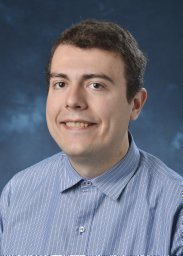 Ethan T. Neil合作论文数Department of Physics;Sloane Laboratory;Yale University;Sloane Laboratory, Yale University21
 Carleton Detar合作论文数Department of Physics and Astronomy, The University of Utah14
 Andreas Kronfeld合作论文数Theoretical Physics Department, Technische Universitat Munchen;Fermi National Accelerator Laboratory, Technische Universitat Munchen;Institute for Advanced Study, Technische Universitat Munchen12
 E. Gamiz合作论文数Glasgow U.12Alejandro Vaquero合作论文数Departamento de Fisica Teorica C. Pedro Cerbuna, Universidad de Zaragoza11
 Aida X El-Khadra合作论文数Department of Physics, The Grainger College of Engineering, University of Illinois Urbana-Champaign11
 Steven A. Gottlieb合作论文数Department of Physics, College of Arts and Sciences, University Graduate School, Indiana University Bloomington11
 Daniel Hackett合作论文数Ctr Theoret Phys, MIT10Andrew T. Lytle合作论文数Physics Department;University of Washington;Physics Department, University of Washington10
 Benjamin Svetitsky合作论文数Department of Particle Physics, School of Physics and Astronomy, Tel Aviv University9Yigal Shamir合作论文数Raymond and Beverly Sackler School of Physics and Astronomy, Tel Aviv University9James N. Simone合作论文数Fermi National Accelerator Laboratory9
 Tom DeGrand合作论文数Department of Physics, College of Arts And Sciences, University of Colorado at Boulder8R. S. Van De Water合作论文数8Jack Laiho合作论文数7
 Venkitesh Ayyar合作论文数Lawrence Berkeley Natl Lab7Alexei Bazavov合作论文数7Hwancheol Jeong合作论文数6
 Michael Wagman合作论文数6
 Phiala E. Shanahan合作论文数Department of Physics, Massachusetts Institute of Technology6
 William Detmold合作论文数Center for Theoretical Physics, Department of Physics, Massachusetts Institute of Technology;Center for Theoretical Physics, Laboratory for Nuclear Science, Massachusetts Institute of Technology6Joshua Isaacson合作论文数Fermilab Natl Accelerator Lab, Theoret Phys Dept, Batavia, IL 60510 USA5
 Noemi Rocco合作论文数5
 Lovato Alessandro合作论文数Physics Division, Argonne National Laboratory5
 Maarten Golterman合作论文数Department of Physics & Astronomy, College of Science and Engineering, San Francisco State University5
 P. A. N. Machado合作论文数Instituto de F;Universidade de S;Instituto de F, Universidade de S5Anthony V. Grebe合作论文数4Leon Hostetler合作论文数4Patrick Oare合作论文数3Yin Lin合作论文数Dept Phys, Univ Chicago3
 Zohreh Davoudi合作论文数Department of Physics, College of Computer, Mathematical, & Natural Sciences, University of Maryland3Oliver Witzel合作论文数3
 Thomas Blum合作论文数Department of Physics, College of Liberal Arts and Sciences, University of Connecticut3
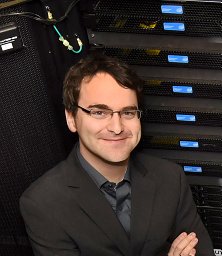 Christoph Lehner合作论文数Dept Phys, Brookhaven Natl Lab3
 Peter Boyle合作论文数University of Edinburgh3
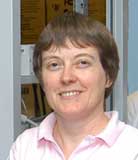 Christine Davies合作论文数School of Physics & Astronomy, University of Glasgow3
 Stefan Meinel合作论文数Department of Physics, College of Science, University of Arizona3Paul B. Mackenzie合作论文数3Shaun Lahert合作论文数2Meyer Aaron S.合作论文数2
 Tanmoy Bhattacharya (坦莫伊·巴塔查里亚)合作论文数Theoretical Division, Los Alamos National Laboratory2Gelzer Z.合作论文数2
 Curtis Peterson合作论文数Dept Phys & Astron, Purdue Univ2Luchang Jin合作论文数RIKEN BNL Res Ctr, Brookhaven Natl Lab2
 Maxwell Hansen合作论文数School of Physics and Astronomy, The University of Edinburgh2
 Christopher Monahan合作论文数Nuclear Theory Group, College of William and Mary2
 Rajan Gupta合作论文数Los Alamos National Laboratory2
 Anna Hasenfratz合作论文数Department of Physics, College of Arts and Sciences, University of Colorado Boulder2
 Vincenzo Cirigliano合作论文数Theoretical Division, Los Alamos National Laboratory;Department of Physics, College of Arts & Sciences, University of Washington2




