Aim: The purpose of this study was to determine the prevalence and risk factors of GERD in Indonesian population. Methods: An online survey was conducted using Survey Monkey (R), from August 2013 to June 2015. People who completed all questions were recruited as research subjects. The diagnosis of GERD and its impact on daily life were determined using GERD Questionnaire (GerdQ) score, and all possible factors were analyzed to determine their association with GERD. Results: 2045 subjects completed the survey; their mean was age 31.4 +/- 8.8 years and 52.8% were female. The prevalence of GERD was 57.6%; 21.9% reported a low impact and 35.7% a high impact on their daily life. GERD was significantly associated with age >50 years old (p = 0.002; odds ratio [OR] 3.179), male (p = 0.009; OR 1.268), low to middle educational level (p = 0.033; OR 1.238), and body mass index (BMI) > 30 kg/m(2) (p = 0.015; OR 1.509). Conclusions: The prevalence of GERD in Indonesia was 57.6%. Age > 50 years old, male, low to middle educational level, and obesity were risk factors for GERD.
BACKGROUND:Many studies have shown various results regarding the effects of Ramadan fasting on weight and body composition in healthy individuals.OBJECTIVES:This study aimed to evaluate the effect of Ramadan fasting on body composition in healthy Indonesian medical staff.OBJECTIVES:In this study, we examined the influence of Ramadan fasting on body composition in healthy medical staff.PATIENTS AND METHODS:The longitudinal study was performed during and after Ramadan fasting in 2013 (August to October). Fourty-three medical staff members (physicians, nurses and nutritionists) at the Internal Medicine Ward of the Dr. Cipto Mangunkusumo General Hospital were measured to compare their calorie intake, weight, body mass index, waist-to-hip ratio (WHR), and body composition, including body fat, protein, minerals and water, on the first and 28(th) days of Ramadan and also 4-5 weeks after Ramadan fasting. Measurements were obtained for all 43 subjects on the 28(th) day of Ramadan, but they were obtained for only 25 subjects 4 - 5 weeks after Ramadan.RESULTS:By the 28(th) day of Ramadan, it was found that the body weight, BMI, body fat, water and mineral measures had decreased significantly (-0.874 ± 0.859 kg, P < 0.001; -0.36 ± 0.371 kg/m(2), P < 0.001; -0.484 ± 0.597 kg, P < 0.001; -0.293 ± 0.486 kg, P = 0.001; -0.054 ± 0.059 kg, P < 0.001, respectively). Protein body mass and calorie intake did not significantly change (-0.049 ± 0.170 kg, P = 0.561; 12.94 ± 760.608 Kcal, P = 0.082 respectively). By 4 - 5 weeks after Ramadan, body weight and composition had returned to the same levels as on the first day of Ramadan.CONCLUSIONS:Ramadan fasting resulted in weight loss even it was only a temporary effect, as the weight was quickly regained within one month after fasting. The catabolism catabolic state, which is related to protein loss, was not triggered during Ramadan fasting. Further research is needed to evaluate the effects of weight loss during Ramadan fasting in healthy individuals.
Objective: To review the distribution of age, stage at presentation, and histology of cervical cancer at Dr. Cipto Mangunkusumo Hospital. Materials and methods: This cross sectional study involved 2297 subjects with cervical cancer at Dr. Cipto Mangunkusumo Hospital and registered at the Cancer Registration Information System during 5 years period from January 2006 to December 2010. Histotype was confirmed by histopathology examination. The International Federation of Gynecology and Obstetrics (FIGO) classification was used to stage the disease. Result: The mean age of cervical cancer patients was 51.42 years old (SD 9.694, range 21 - 85). The highest incidence was in 35 - 64 years (87.3%), with the peak incidence in 40 - 59 years (71.3%). There were 0.4 % patients identified at stage IA1, 0.1% at stage IA2, 7.3% at stage IB1, 4.9% at stage IB2, 10.5% at stage IIA, 17.3% at IIB, 1.7% at stage IIIA, 50.2% at stage IIIB, 4.3% at stage IVA, 3.2% at stage IVB. Of the 2297 patients, 70.2% had epidermoid carcinoma, 15.1% had adenocarcinoma, 10.2% had adenosquamous, 0.6% had clear cell, 3.9% had other types. Conclusion: A large proportion of cervical cancer (76.7%) presented in advanced stage (≥ stage IIB). The highest incidence (57.8%) was in the age range 45 - 59 years. Squamous cell carcinoma is the most frequent histopathology type (70.2%), followed by adenocarcinoma (15.1%) and adenosquamosa (10.2%). A lack of effective screening programs aimed at detecting and treating precancerous conditions is a key reason for the high incidence of cervical cancer at advanced stage. Keywords: cervical cancer, age, stage, histopathology
 Ari Fahrial Syam合作论文数University of Indonesia-dr. Cipto Mangunkusumo Hospital, University of Indonesia/Dr. Cipto Mangunkusumo Hospital8
 Makmun Dadang合作论文数Medical Faculty, University of Indonesia6
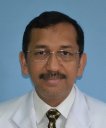 Murdani Abdullah合作论文数Department of Nutrition, Faculty of Medicine, University of Indonesia;Division of Gastroenterology, Department of Internal Medicine, Faculty of Medicine, University of Indonesia;Rumah Sakit Dr Cipto Mangunkusumo;Dr Cipto Mangunkusumo Hospital6
 Kaka Renaldi合作论文数Faculty of Medicine, Universitas Indonesia - Dr. Cipto Mangunkusumo General Hospital2Marcellus Simadibrata合作论文数2m f aziz合作论文数1Puspita Hapsari合作论文数1Florentina Carolin Puspita Hapsari合作论文数1fitri rahardja合作论文数1Amanda Pitarini Utari合作论文数Cipto Mangunkusumo Natl Cent Gen Hosp, Univ Indonesia1
 Kartiwa H Nuryanto合作论文数Faculty of Medicine, University of Indonesia1
 Andi D Putra合作论文数University of Indonesia1
 Tricia Dewi Anggraeni合作论文数Faculty of Medicine, Universitas Indonesia1Tofan W Utami合作论文数Department of Obstetrics and Gynecology1
 Rabbinu Pribadi合作论文数Indonesian Soc Digest Endoscopy1
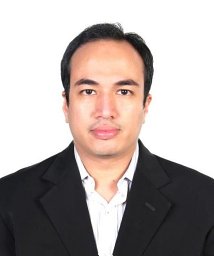 Hasan Maulahela合作论文数Faculty of Medicine, University of Indonesia-Cipto Mangunkusumo National General Hospital1
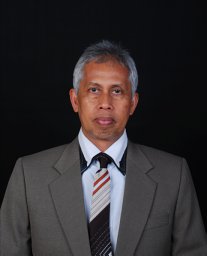 Purwoto Gatot合作论文数Faculty of Medicine, University of Indonesia1
 Andrijono Andrijono合作论文数1
 Nuranna Laila合作论文数Faculty of Medicine, University of Indonesia1
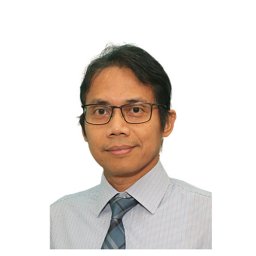 Winarto Hariyono合作论文数Faculty of Medicine, University of Indonesia1
 Purbadi Sigit合作论文数1




