Recent attempts to date batches of poorly preserved archaeological bone prompted a re-evaluation of existing protocols for bone sample preparation and ultrafilter cleaning methods at the Keck-Carbon Cycle Accelerator Mass Spectrometer (KCCAMS) facility. The emphasis of the study was to optimize decalcification time and ultrafiltration retention efficiency to improve overall collagen yields, especially for poorly preserved bone. Decalcification time and acid strength tests were done on four in-house bone standards of varying states of preservation. Through systematic testing, we found that 200 mg bone chip samples decalcified in 4 mL of 1.0 N HCl over 16 h showed increases of collagen yield across all samples relative to our existing protocol. Ultrafilters precleaned with weak acid (0.01 N HCl) showed greater retention efficiencies than those cleaned by sonication in ultrapure Milli-Q (MQ) water. Collagen produced from each sample were analyzed via AMS dating to check the quality of the collagen.
New radiocarbon calibration curves, IntCal04 and Marine04, have been constructed and internationally ratified to replace the terrestrial and marine components of IntCal98. The new calibration data sets extend an additional 2000 yr, from 0–26 cal kyr BP (Before Present, 0 cal BP = AD 1950), and provide much higher resolution, greater precision, and more detailed structure than IntCal98. For the Marine04 curve, dendrochronologically-dated tree-ring samples, converted with a box diffusion model to marine mixed-layer ages, cover the period from 0–10.5 cal kyr BP. Beyond 10.5 cal kyr BP, high-resolution marine data become available from foraminifera in varved sediments and U/Th-dated corals. The marine records are corrected with site-specific 14C reservoir age information to provide a single global marine mixed-layer calibration from 10.5–26.0 cal kyr BP. A substantial enhancement relative to IntCal98 is the introduction of a random walk model, which takes into account the uncertainty in both the calendar age and the 14C age to calculate the underlying calibration curve (Buck and Blackwell, this issue). The marine data sets and calibration curve for marine samples from the surface mixed layer (Marine04) are discussed here. The tree-ring data sets, sources of uncertainty, and regional offsets are presented in detail in a companion paper by Reimer et al. (this issue).
It has long been assumed that radiocarbon (Δ14C) content of dissolved inorganic carbon (DIC) is equal to that of particulate organic carbon (POC) in surface seawater; however, little research has been conducted to explicitly test this assumption. Here, we report Δ14C measurements of surface POC samples and compare them with contemporaneous DIC Δ14C measurements from the northeast Pacific Ocean (Hwang et al. 2004; Druffel et al. 2010). Samples were collected from surface waters at Station M off California between 1995 and 2004. The POC Δ14C values decreased 3.2% per year from 1995 to 2004, similar to the decline observed in the DIC Δ14C values during the same period. Overall, our results show no statistical difference between POC and DIC Δ14C—consistent with the assumption that DIC and POC Δ14C values can generally be considered equivalent. However, significant variability was observed for POC Δ14C values during several fall/summer events, where POC Δ14C signatures were lower than DIC Δ14C values. An evaluation of 2 sample pretreatments also suggests that non-homogenized POC samples deviated less from average POC Δ14C values and more closely matched the DIC Δ14C average for the time series. The presence of seasonal POC/DIC Δ14C disagreements, combined with sample processing effects, suggest that infrequent contributions of allochthonous, older carbon may have originated from deeper in the water column, especially during periods when upwelling in this area was prominent.
This paper describes the methods used to develop the Cariaco Basin PL07-58PC marine radiocarbon calibra- tion data set. Background measurements are provided for the period when Cariaco samples were run, as well as revisions lead- ing to the most recent version of the floating varve chronology. The floating Cariaco chronology has been anchored to an updated and expanded Preboreal pine tree-ring data set, with better estimates of uncertainty in the wiggle-match. Pending any further changes to the dendrochronology, these results represent the final Cariaco 58PC calibration data set.
An abstract is not available for this content so a preview has been provided. As you have access to this content, a full PDF is available via the ‘Save PDF’ action button.
 John R. Southon合作论文数School of Physical Sciences, University of California, Irvine4
 Brett D. Walker合作论文数3
 Konrad A. Hughen合作论文数Woods Hole Oceanographic Institution;Department of Marine Chemistry & Geochemistry;Department of Marine Chemistry & Geochemistry, Woods Hole Oceanographic Institution3Gerry McCormac合作论文数2
 George Burr合作论文数2
 Ellen R. M. Druffel合作论文数Department of Earth System Science, School of Physical Sciences, University of California Irvine2Michael Friedrich合作论文数2Richard G. Fairbanks合作论文数Columbia University in the City of New York2
 Edouard Bard合作论文数College de France;CEREGE2
 Minze Stuiver合作论文数Quaternary Research Center, University of Washington2Paul E. Damon合作论文数2
 Caitlin E. Buck合作论文数Department of Probability and Statistics;University of Sheffield;Department of Probability and Statistics, University of Sheffield2
 Christopher Bronk Ramsey合作论文数School of Archaeology, University of Oxford;Merton College, University of Oxford2
 Thomas P. Guilderson合作论文数Center for Accelerator Mass Spectrometry;Lawrence Livermore National Laboratory;Center for Accelerator Mass Spectrometry, Lawrence Livermore National Laboratory2
 Sheila Griffin合作论文数2
 Ron W Reimer合作论文数University Belfast2Kirsten B Cutler合作论文数2Sabine Remmele合作论文数2
 Paula Reimer合作论文数School of Natural and Built Environment, Queen's University Belfast2J. Warren Beck合作论文数Department of Physics;University of Arizona;Department of Physics, University of Arizona2J Beck合作论文数1Hodgins Managing合作论文数1Mark McClure合作论文数1Gregory Wl合作论文数1Paula Zermeño合作论文数1Constanze E Weyhenmeyer合作论文数1
 Hector Martinez De La Torre合作论文数1
 Sturt Manning合作论文数Department of Classics, The College of Arts Sciences, Cornell University;Cornell Tree Ring Laboratory, Cornell University1
 Hans Plicht合作论文数Leiden University;Isotope Research — Energy and Sustainability Research Institute Gron, Faculty of Science and Engineering, University of Groningen1Bernd Kromer合作论文数Klaus Tschira Laboratory of Scientific Dating1
 Sarah C Gray合作论文数1
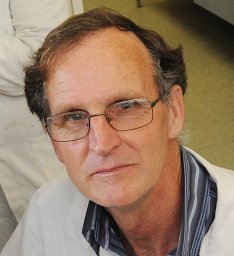 Alan G. Hogg合作论文数Radiocarbon Dating Laboratory, University of Waikato1
 Sahra Talamo合作论文数Department of Chemistry "Giacomo Ciamician", Alma Mater Studiorum University of Bologna1
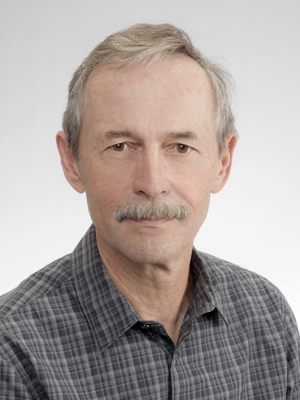 Frederick W. Taylor合作论文数Institute for Geophysics, The University of Texas at Austin1Mike G L Baillie合作论文数1Brian R. Frantz合作论文数1
 Richard Lawrence Edwards (艾思本)合作论文数Department of Geology and Geophysics,University of Minnesota1
 Paul Blackwell合作论文数School of Mathematics and Statistics, Faculty of Science, The University of Sheffield1AGNIESZKA P BAIER合作论文数1




