Background: The thyroid gland is an endocrine gland consisting of two lobes connected by an isthmus, in the neck. It is found in front of the neck below the Adams apple. Thyroid gland though a small structure on the anterior aspect of neck has many important functions to perform, failing in its duty might lead to serious consequences. Methods: A non-experimental descriptive research design was conducted to assess knowledge regarding thyroid disorders among patients attending medical OPD in a selected hospital of Dehradun at Uttarakhand. A total of 100 samples were selected through purposive sampling technique. A structured knowledge questionnaire was administered through interview technique to assess the knowledge. Results: The study showed that the mean knowledge score of patients regarding thyroid disorders was 14.04±3.755. The mean percentage was 14.04. There was significant association between social habits, suffered or suffering from thyroid disorders, family history of thyroid disorders, medical history of any medicine intake and previous knowledge regarding thyroid disorders with knowledge score. Conclusions: From the findings of the study, it was conducted that Out of 100 participants 42% had good knowledge and 7% had poor knowledge, 38% had average knowledge and 13% had very good knowledge about thyroid disorders. There is a need for educational programs to create awareness and improve knowledge regarding thyroid disorders.
Disease and nutrient deficiency disorders significantly impact the productivity of rice crops. Timely identification of these conditions is essential for effective mitigation of potential crop damage. To address this challenge, considerable research is happening in the field of rice crop monitoring and maintenance, using cutting-edge techniques like Machine learning (ML)/Deep learning (DL). This study aims to address critical aspects of the research landscape, including publication trends, data modalities, ML/DL models, pre-processing methods, segmentation techniques, and feature selection approaches in the context of rice crop's health. By presenting both research findings and existing gaps, this systematic literature review (SLR) offers valuable insights to direct future research endeavours in this domain. Our investigation involves a comprehensive review of articles sourced from Scopus, IEEE Xplore, Science Direct and Google Scholar resulting in a dataset of 91 unique articles spanning from the year 2013-2023. Following rigorous selection criteria, these 91 articles have been considered for indepth analysis. Through an extensive examination of this corpus, our study seeks to provide answers to seven key questions pertaining to the past, present, and future directions of research of ML/DL application in rice crop health monitoring and disease/disorder diagnosis. The review adheres to the agricultural science-based PRISMA systematic review methodology and incorporates statistical analysis to explore relationships among variables such as dataset sample size, experimental accuracy, and classification models employed in various studies.
This study investigates the integration of Discrete Wavelet Transform (DWT) with both machine learning (ML) and deep learning (DL) techniques to enhance the diagnosis of schizophrenia (SZ) using EEG data. Current diagnosis relies on subjective clinical assessments, presenting challenges in differentiation from other mental disorder. DWT, with its ability to capture both temporal and spectral information, serves as a valuable feature extraction method. ML models, including Support Vector Machines (SVM), Random Forest (RF), and Gradient Boosting, demonstrate improved performance with feature reduction, achieving accuracy rates up to 77.81
Nowadays, there is huge requirement of processed data that can be transmitted from one location to another. However data transmission over open channel faces various security related threats. So securing the data is first basic need for successful communication over unsecure channel. One of trusted method to secure the content is digital image watermarking. Digital watermarking secures the contents (audio, video and images) from unauthorized user by embedding secret information inside it. So, possible attacks can be detected by checking the degradation of embedded information. This work presents an optimized digital image watermarking solution using the Dragonfly optimization algorithm for an optimum scaling factor. It employs NSCT, RDWT, and MSVD transformations on the cover image, embedding watermarks in the appropriate band. Security is enhanced using the Henon Map encryption algorithm. Evaluation across diverse cover images demonstrates superior results in invisibility, security, robustness, and embedding capacity for copyright protection.
Cracks on the concrete surface are one of the early identifications of the structure deterioration, which is important for maintenance and may cause serious environmental harm if left untreated. In addition to detracting from the aesthetics of monolithic construction, cracks in concrete structures may indicate serious structural issues. Such damage can appear as minor or severe cracks that eventually develop and cause the structure to collapse or to be destroyed. Manual visual inspection of cracks is a time-consuming and error-prone process. The crack is invisible during manual visual inspection, which is time-consuming and entirely dependent on the expertise of specialists and experienced inspectors. Hence, automatic image-based crack detection is employed to replace manual inspection. Automated crack detection techniques may significantly reduce the amount of time and money spent on structural health inspection and monitoring. Inaccessible areas of a concrete structure may also be easily maintained using crack detection based on image processing. To determine how well the proposed algorithm performs and how well it overcomes the limitations of the current manual technique, it has been tested against a variety of cracks in concrete structure images. This paper presents an innovative method for detecting cracks in concrete structures using image processing.
One of the most significant problems in the fruit industry is fruit spoilage, which creates categories of losses across all fruit types. The main objective of the current study is to develop a transformer-based system for identifying spoilage of fruit and reducing waste. It employs vision transformer (ViT) to identify fresh and spoiled fruit categories among eight types of fruit. The experimental findings indicate that transformer-based fruit spoilage identification system can attain a high performance without the need for destructive analysis. With a high accuracy (99.89
Background: Immunization is one of the most impactful and cost-effective health investments globally that helps in reducing the burden of infectious diseases keeping children safe. Mothers are the major role players with regard to their children’s immunization. Methods: A descriptive cross-sectional study was conducted to assess knowledge regarding immunization among mothers of under-five children in the Doiwala block of Dehradun, Uttarakhand. A total of one hundred mothers of under-five children were conveniently selected through door-to-door survey. A structured knowledge questionnaire on under-five immunization was administered through the interview technique to assess the knowledge of the mothers. Results: Among 100 mothers of under-five children 13% had poor knowledge, 63% had average knowledge and 24% had good knowledge regarding under-five immunization. There was significant association between age, education status and socioeconomic status of mothers with knowledge score regarding under-five immunization. Conclusions: There is a strong need to increase awareness and knowledge about immunization among children; its benefits and importance. There is also a need to educate people especially mothers regarding harmful consequences of incomplete immunization of children.
Cracks indicates the real time deformity in concrete structures. It is characterized as discontinuity in terms of shape and size of the concrete structures. To ensure the structural health and safety, crack detection is an important task. The traditional methods of crack detection include visual introspection, ultrasonic and hand-held testing of crack. These methods require a high human intervention along with an experienced and skilled inspector. Moreover, these methods are subjective and time-consuming process which fails to identify the crack of the complex concrete structures properly. To overcome these issues, a GrabCut with improved Sobel has been proposed for automatic crack detection from the concrete structures. The proposed method works as a two-step model where cracks regions are segmented in the first step and a precise crack assessment is performed in the second step. Furthermore, to improve the efficacy of Sobel, the mask is modified with the aid of local variance of the image instead of using conventional mask of the filter. For the experimentation study, the images of self-prepared concrete sample have been acquired. The effectiveness of the proposed method has been compared with respect to various pre-existing methods like Sobel, Prewitt, Robert, LoG, Zero Cross, and Canny. The comparative qualitative result exhibits that the proposed method surpasses the outcomes of the other pre-existing methods. Additionally, for easy implementation and application point of view a web tool of the proposed method has been developed. The web tool can be utilised by the civil infrastructure maintenance agency and construction engineers in the task of structure maintenance.
Global climate change has seriously threatened agriculture and connected sectors, especially in developing countries like India. The Brahmaputra Valley in Assam, Northeast India, is vulnerable to climate change due to its agrarian economy, fragile geo-ecological setting, recurrent floods and droughts, and poor socioeconomic conditions of the farmers. The climate-induced hindrances faced by the rice farming community of this region and the local adaptation practices they employ have not been adequately studied. Therefore, we carried out a survey among 635 rice farmers across four agro-climatic zones of Assam, namely the Upper Brahmaputra Valley Zone, North Bank Plain Zone, Central Brahmaputra Valley Zone, and Lower Brahmaputra Valley Zone, to understand how they perceive and respond to climatic changes. The survey revealed that all the respondents have perceived an increase in ambient temperature, and 65% of the respondents have perceived a slight change in rainfall characteristics over the years. Most farmers reported adjusting the existing farming practices and livelihood choices to adapt to the changing climate. Farming adjustments were made mainly in terms of field preparation and management of water, rice variety, nutrients, and pests. Environmental variables like rainfall, flood, drought, and pest level, and socioeconomic variables like family size, education, farming experience, training, digital media exposure, and land area were found to influence farmers’ adaptation choices. The findings imply that policies to strengthen flood, drought, pest management, education, land-use planning, agricultural training, and digital media applications in agriculture are needed for effective climate change adaptation in this region.
The steep increase in acquired drug resistance in Candida isolates has posed a great challenge in the clinical management of candidiasis globally. Information of genes and codon sites that are positively selected during evolution can provide insights into the mechanisms driving antifungal resistance in Candida. This study aimed to create a manually curated list of genes of Candida spp. reported to be associated with antifungal resistance in literature, and further investigate the structure-function implications of positively selected genes and mutation sites. Sequence analysis of antifungal drug resistance associated gene sequences from various species and strains of Candida revealed that ERG11 and MRR1 of C. albicans were positively selected during evolution. Four sites in ERG11 and two sites in MRR1 of C. albicans were positively selected and associated with drug resistance. These four sites (132, 405, 450, and 464) of ERG11 are predictive markers for azole resistance and have evolved over time. A well-characterized crystal structure of sterol-14-α-demethylase (CYP51) encoded by ERG11 is available in PDB. Therefore, the stability of CYP51 in complex with fluconazole was evaluated using MD simulations and molecular docking studies for two mutations (Y132F and Y132H) reported to be associated with azole resistance in literature. These mutations induced high flexibility in functional motifs of CYP51. It was also observed that residues such as I304, G308, and I379 of CYP51 play a critical role in fluconazole binding affinity. The insights gained from this study can further guide drug design strategies addressing antimicrobial resistance.
IntroductionSubstance use disorder (SUD) poses a significant public health challenge globally, with substantial impacts on physical and social well-being. This study investigates the interplay between abstinence self-efficacy (ASE), locus of control (LOC), perceived social support (PSS), and various socio-demographic and psychosocial factors among individuals undergoing SUD rehabilitation.MethodsResearchers obtained permission from drug rehabilitation centers in Assam, India, and conducted orientation programs for prospective participants. A total of 144 participants, aged 18-65 years, predominantly from rural areas participated in the study. Data was collected through one-to-one interviews, covering socio-demographic history, drug abuse, and administering scales for ASE, LOC and PSS. Collected data underwent digitization and subsequent descriptive and inferential statistical analyses.ResultsSignificant associations were found between ASE and socio-demographic variables, family dynamics, and drug use history, highlighting the importance of considering these factors in SUD rehabilitation. Disturbed family relationships were linked to diminished ASE and higher risk of relapse, emphasizing the role of family support in recovery. Additionally, a negative correlation was observed between ASE and LOC, suggesting that individuals with higher ASE tend to have a more internal locus of control, which positively influences recovery outcomes. Moreover, positive correlations were found between ASE and PSS, particularly from family members, underscoring the importance of social support in fostering recovery. Regression analysis further elucidated the relationships between ASE, LOC, and PSS, emphasizing the predictive value of LOC and the impact of family support on ASE.ConclusionFindings of this study have several implications for developing targeted interventions aimed at strengthening ASE, promoting internal locus of control, and enhancing social support systems. Substance use disorder (SUD) is a major public health concern today, characterized by the compulsive and prolonged use of harmful psychoactive substances, leading to various physical and social dysfunctions. This study explores the relationships between abstinence self-efficacy (ASE), locus of control (LOC), perceived social support (PSS), and various socio-demographic factors in individuals undergoing SUD rehabilitation in Assam, India. The focus of the study is to find out various factors which can facilitate the process of drug rehabilitation. Data from 144 participants aged 18-65 were collected through interviews and standardized scales. Results indicate that ASE is significantly associated with socio-demographic variables, family dynamics, and drug use history. Disturbed family relationships were linked to lower ASE and higher risk of relapse, while a higher ASE was correlated with an internal LOC and greater PSS, especially from family. The study highlights the clinical significance of considering background factors like marital status, employment status, family relationship dynamics, and abstinence period in treatment planning to provide personalized care.
Cracks are irregularities in the physical form and scale of concrete constructions. Timely analysis of cracks is crucial to ensure structural health and safety. Crack assessments are traditionally done visually, non-destructively, and manually. These methods involve a significant amount of human engagement, as well as a skilled and qualified inspector. Furthermore, these procedures are biased and lengthy, usually missing to correctly identify cracks in complicated concrete structures. In response to these challenges, a hybrid approach that combines a grab-cut algorithm and an improved Sobel filter has been proposed for automatic crack recognition in concrete samples. The proposed method utilizes the image processing principle. The proposed method operates as a two-step model, utilizing a grab-cut algorithm to extract the cracks’ foreground and background regions. This advancement helps to mitigate challenges like noise and image quality. The next stage involves processing the segmented data using enhanced Soble filtering to accentuate the identified crack edges. To refine the efficacy of improved Soble filtering, the horizontal and vertical masks are advanced with the variance of the image. This modification provides a precise detection of edges as compared to a conventional mask. To judge the performance of the proposed method, images of self-prepared concrete specimens are used. We assess the performance both qualitatively and quantitatively, comparing it to established methodologies like Otu’s thresholding, Canny, Sobel, Log detector, Zero Cross detector, Robert, and Prewitt. The comparative quantitative study has been presented in terms of global consistency error, variation of information, Rand index, average Hausdorff distance, boundary F1 score, Jaccard index, and Dice coefficient. The following values are obtained: 0.2480, 0.8179, 0.9827, 25.5132, 0.9805, 0.9858, and 0.9878, respectively. The analysis exhibits that the proposed method surpasses the outcomes of the other pre-existing methods. Apart from this, a MATLAB-based graphical user interface for the proposed method has also been developed. The civil infrastructure maintenance agency and construction engineers can use the GUI for their structural maintenance tasks.
Feeble damping of inter-area oscillations presents a consequential threat to modern power systems, leading to power swings, voltage fluctuations, and potential system instability, which could result in blackouts. To tackle this issue, this article introduces a novel Multi-Functional Observer (MFO) based Wide-Area Damping Controller (WADC) design. The WADC gain and selection of feedback signals are determined using the Modified Decoupled Control (MDC) approach. As the direct input signals to the WADC are not available through phasor measurement units (PMUs), the study utilizes MFOs to estimate the chosen feedback signals based on PMU data. These estimated feedback signals are used as supplementary inputs to the High-Voltage Direct Current (HVDC) tie-line converter and exciter of selected machines to enhance system stability in a distributed manner. The proposed approach is rigorously tested and validated on a complex 25-machine, 105-bus practical system, which represents a truncated model of India's Eastern Regional (ER) Grid. Furthermore, Non-linear simulation results indicate that the proposed WADC algorithm effectively dampens multiple inter-area modes while leaving other modes almost unaffected. The proposed MFO-based WADC adopted Interacting Multiple Model (IMM) strategy to validate robust damping performance for large uncertainties in operating points.
Quantum-enhanced auxiliary field quantum Monte Carlo (QC-AFQMC) uses output from a quantum computer to increase the accuracy of its classical counterpart. The algorithm requires the estimation of overlaps between walker states and a trial wavefunction prepared on the quantum computer. We study the applicability of this algorithm in terms of the number of measurements required from the quantum computer and the classical costs of post-processing those measurements. We compare the classical post-processing costs of state-of-the-art measurement schemes using classical shadows to determine the overlaps and argue that the overall post-processing cost stemming from overlap estimations scales like $\mathcal{O}(N^9)$ per walker throughout the algorithm. With further numerical simulations, we compare the variance behavior of the classical shadows when randomizing over different ensembles, e.g., Cliffords and (particle-number restricted) matchgates beyond their respective bounds, and uncover the existence of covariances between overlap estimations of the AFQMC walkers at different imaginary time steps. Moreover, we include analyses of how the error in the overlap estimation propagates into the AFQMC energy and discuss its scaling when increasing the system size.
The rapid proliferation of digital content and the ever-growing need for precise object recognition and segmentation have driven the advancement of cutting-edge techniques in the field of object classification and segmentation. This paper introduces "Learn and Search", a novel approach for object lookup that leverages the power of contrastive learning to enhance the efficiency and effectiveness of retrieval systems. In this study, we present an elegant and innovative methodology that integrates deep learning principles and contrastive learning to tackle the challenges of object search. Our extensive experimentation reveals compelling results, with "Learn and Search" achieving superior Similarity Grid Accuracy, showcasing its efficacy in discerning regions of utmost similarity within an image relative to a cropped image. The seamless fusion of deep learning and contrastive learning to address the intricacies of object identification not only promises transformative applications in image recognition, recommendation systems, and content tagging but also revolutionizes content-based search and retrieval. The amalgamation of these techniques, as exemplified by "Learn and Search," represents a significant stride in the ongoing evolution of methodologies in the dynamic realm of object classification and segmentation.
Training image-based object detectors presents formidable challenges, as it entails not only the complexities of object detection but also the added intricacies of precisely localizing objects within potentially diverse and noisy environments. However, the collection of imagery itself can often be straightforward; for instance, cameras mounted in vehicles can effortlessly capture vast amounts of data in various real-world scenarios. In light of this, we introduce a groundbreaking method for training single-stage object detectors through unsupervised/self-supervised learning. Our state-of-the-art approach has the potential to revolutionize the labeling process, substantially reducing the time and cost associated with manual annotation. Furthermore, it paves the way for previously unattainable research opportunities, particularly for large, diverse, and challenging datasets lacking extensive labels. In contrast to prevalent unsupervised learning methods that primarily target classification tasks, our approach takes on the unique challenge of object detection. We pioneer the concept of intra-image contrastive learning alongside inter-image counterparts, enabling the acquisition of crucial location information essential for object detection. The method adeptly learns and represents this location information, yielding informative heatmaps. Our results showcase an outstanding accuracy of 89.2%, marking a significant breakthrough of approximately 15x over random initialization in the realm of unsupervised object detection within the field of computer vision.
Schizophrenia (SZ) is a complex neuropsychiatric disorder affecting approximately 1
To strengthen the existing vulnerable buildings, a variety of strategies and methods have been researched and put into practise recently. Stiffening already-existing structures and/or enhancing irregularities or discontinuities in the stiffness or strength distribution of a building are a few of them. Providing increased strength for the existing structures is the most promising job and to define a suitable strengthening technique needs a technical evaluation. RC (Reinforced Concrete) Jacketing is amongst the earliest and the most popular techniques used to retrofit or strengthen RC columns. In this paper, the seismic response of a 5 storey RC frame building before and after Reinforced concrete jacketing have been analyzed by adopting an incremental non-linear static analysis. Furthermore, change in ductility capacity and elastic stiffness has been evaluated with help of the obtained pushover curve and FEMA 356 coefficient method. The Elastic stiffness for both i.e., the original and the jacketed frame has been calculated by finding out the slope of the elastic region in the pushover curve. The capacity curve obtained from the analysis done in SAP2000, the behaviour of the frame was observed to be linear up to some initial values of the base shear post on which the frame displayed non linearity. It was also observed that after jacketing the columns of the frame, the load carrying capacity of the building has been increased tremendously. Similarly, the roof displacement also showed a significant increase.
 Susanne Boll合作论文数Department of Computing Science, University of Oldenburg13
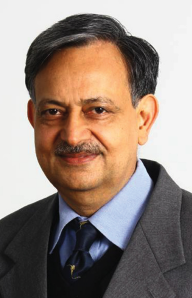 Shiv Kumar Sarin合作论文数Department of Hepatology, Institute of Liver and Biliary Sciences;Jawaharlal Nehru Center for Advanced Scientific Research12
 a rajkumar合作论文数Power System Operation Corporation Limited11
 Vivek Pandey合作论文数10
 Mayuri Sharma合作论文数Dept Comp Sci Engn, Assam Rajiv Gandhi Univ Cooperat Management10
 Wilko Heuten合作论文数OFFIS Institute for Information Technology10
 Amit Kumar Singh合作论文数Department of Computer Science and Engineering, National Institute of Technology Patna8
 Srinivas Chitturi合作论文数8
 Gartia, A.合作论文数7
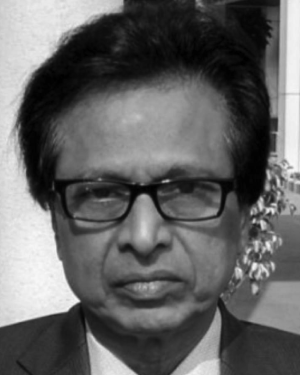 Pentayya, P.合作论文数6
 Prithwish Mukhopadhyay合作论文数6
 Seshadri, Pushpa合作论文数6
 Philips Cyriac Abby合作论文数Department of General Medicine, Nilratan Sircar Medical College6
 Ali Jannesari合作论文数University of Karlsruhe6
 Jean-Jacques Braun合作论文数Institute of Research for Development6Sunil Patil合作论文数5Gazala Tabassum合作论文数5
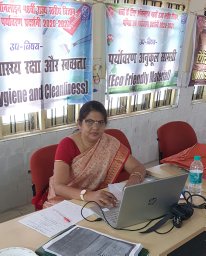 Rashmi Komal合作论文数Microbiol & Plant Pathol Lab, Univ Patna5
 Bihari Chhagan合作论文数Department of Pathology, Institute of Liver and Biliary Sciences (ILBS), D-1 Vasant Kunj, New Delhi 110070, India.5
 Ajay KUMAR Sinha合作论文数5
 Matt Darr合作论文数Department of Agricultural and Biosystems Engineering, College of Engineering, Iowa State University5
 Rastogi Vikas合作论文数Department of Mechanical Engineering, Sant LongowalInstitute of Engineering and Technology5s p uniyal合作论文数4Jansel Herrera-Gerena合作论文数4Sweta Bhadra合作论文数Dept Comp Sci & Informat Technol, Cotton Univ4
 P K Agarwal合作论文数Power Syst Operat Corp Ltd4
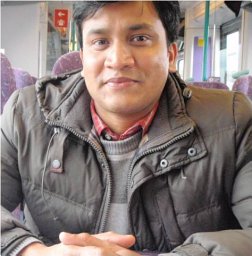 Rahul Shukla合作论文数Indus Synchrotrons Utilization Division, Raja Ramanna Centre for Advanced Technology4
 Saibal Ghosh合作论文数4
 Kalal Chetan Ramesh合作论文数Department of Hepatology, Institute of Liver and Biliary Sciences4
 Mrinal K. Sen合作论文数University of Texas at Austin,Jackson School of Geosciences4Archana Rastogi合作论文数4
 Jean Riotte合作论文数Centre de Géochimie de la Surface, Ecole et Observatoire des Sciences de la Terre4
 Dheeraj Singh合作论文数Mechanical Engineering Department, The Pennsylvania State University4John T. Etgen合作论文数4
 Laurent Ruiz合作论文数Soil Agro and hydroSystem, Agrocampus Ouest4m s kundu合作论文数3
 Pradeep Sanodiya合作论文数3Aniruddha Deka合作论文数3Anna Schroeder合作论文数3Alok Singh合作论文数3
 Seshagiri K. Rao合作论文数3Matthew Kiser合作论文数3Pardeep Kumar合作论文数3
 Namrata Pundir合作论文数3
 Praveen Anand合作论文数National Institute of Technology3
 Michael Streif合作论文数Quantum Lab, Boehringer Ingelheim GmbH & Co KG3
 R Prasad合作论文数Hansraj College, University of Delhi3
 Richa Chaudhary合作论文数Dept Humanities & Social Sci, Indian Inst Technol Patna3
 Prabir Ranjan Kasari合作论文数3




