Association between ARID1A expression level and clinicopathological characteristics in colorectal cancer patients
ARID1A deficiency provokes the derepression of endogenous satellite and retroelements to trigger innate immune responses.
The role of ARID1A on viral mimicry and immunogenicity depends on its interaction with TRIM28.
Patients with estrogen receptor + (ER + , ESR1 + ) breast cancer are most at risk of relapse, where activating mutations in ESR1 promote metastasis and therapeutic resistance. These patients are also disadvantaged in responding to immunotherapies, the mechanisms of which remain to be elucidated. Here, we engineered a transgenic mouse model carrying either Y541S or D542G mutation in ESR1 , mirroring the 2 most common mutations seen in patients. ESR1 mut tumors do not differ in the total number of immune cells yet display downregulation in immune pathways and decreased immune-modulatory cytokines, including IL-17a and IL-1β. T cells and macrophages have lower IFN-γ and antigen presentation, respectively. Mechanistically, ESR1 mut negatively regulates immune modulator expression and upregulates Stat5 to dampen cytokine expression. In concordance, validation on ESR1 mut patient tumors shows decreased IL-17a and IL-1β. Collectively, our findings reveal that ESR1 mutations contribute to an immunosuppressive tumor microenvironment by dampening cytokine secretion and immune cell activity.
TRIM28 but not SWI/SNF was essential for the effects of ARID1A on repression of satellites and retroelements.
Abstract Co-expression of the estrogen receptor (ER) and human epidermal growth factor receptor 2 (HER2) contributes to breast cancer heterogeneity and therapeutic resistance. However, the molecular mechanisms promoting ER positivity within HER2+ cancers remains largely unknown. Here we show, across HER2+ transgenic mouse models the oncogenic HER2 splice variant lacking exon 16 (HER2∆16) promotes the development of aggressive luminal tumors by facilitating an ER-mediated transcriptional program which is sensitive to endocrine therapies. HER2∆16 is detected across human HER2+ breast tumors and cell lines with higher levels correlating with increased expression of ER and downstream transcriptional targets. Notably, in human cell lines HER2∆16 expression is elevated upon acquired resistance to HER2-targeted therapy and can sensitize cells to the ER-antagonist tamoxifen. Overall, these findings offer valuable insights into the role of HER2∆16 in promoting luminal cell identity and estrogen receptor positivity in breast cancer, providing a useful platform to model HER2+/ER+ disease.
 William Muller合作论文数Rosalind and Morris Goodman Cancer Institute, Faculty of Medicine and Health Sciences, McGill University;Department of Biochemistry, School of Biomedical Sciences, McGill University16
 Zuo Dongmei合作论文数11Virginie Sanguin-Gendreau合作论文数Departments of Medicine and Biochemistry;McGill University;Departments of Medicine and Biochemistry, McGill University6
 Jonathan Boucher合作论文数Interdisciplinary Biol Sci Program, Northwestern Univ5
 A. Papavasiliou合作论文数5
 Philippe P. Roux合作论文数Institute for Research in Immunology and Cancer, Université de Montréal5Gabriella Johnson合作论文数4
 Hellen Kuasne合作论文数Biological Science Center, Londrina State University4
 Morag Park合作论文数Department of Biochemistry, School of Biomedical Sciences, Faculty of Medicine and Health Sciences, McGill University;Rosalind and Morris Goodman Cancer Institute, Faculty of Medicine and Health Sciences, McGill University4Márk Barok合作论文数4
 Heikki Joensuu合作论文数Comprehensive Cancer Center, Helsinki University Hospital4
 Logan A Walsh合作论文数Beth Israel Deaconess Medical Center, Harvard Medical School4Tongzhen Chen合作论文数2
 Alain Pacis合作论文数2
 Hua Guo (郭华)合作论文数Irving Medical Center, Columbia University2Jing Lu合作论文数2
 Bin Xue (薛斌)合作论文数2
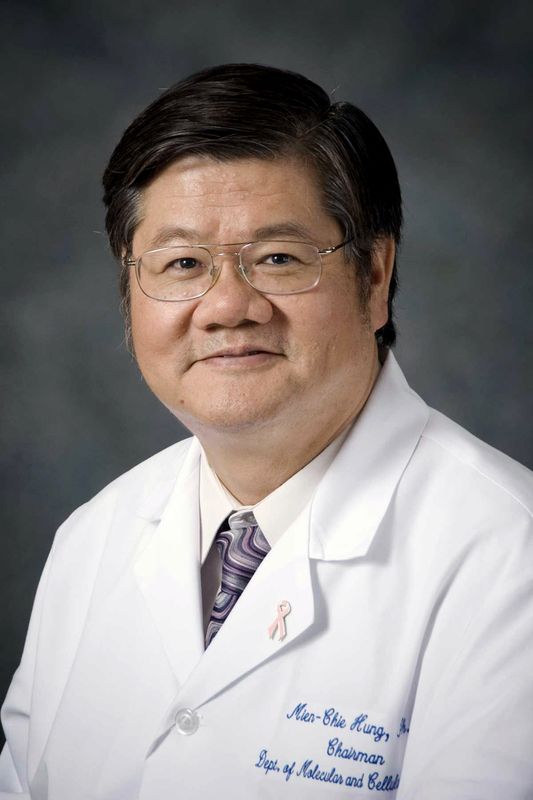 Mien-Chie Hung (洪明奇)合作论文数China Medical University;China Medical University Hospital2
 Andrechek Eran R合作论文数Dept Physiol, Michigan State Univ2
 Jian Zhang (张健)合作论文数College of Basic Medical Sciences, Shanghai Jiao Tong University2Rennhack Jonathan P合作论文数Department of Biology, Albion College2Su Vi-Minh-Tri合作论文数2
 Dihua Yu合作论文数Department of Molecular and Cellular Oncology, The University of Texas MD Anderson Cancer Center;Graduate School of Biomedical Sciences, The University of Texas Health Science Center2
 Xin-Hua Feng (冯新华)合作论文数Life Sciences Institute, Zhejiang University;Texas A&M Health Science Center;Dan L Duncan Comprehensive Cancer Center, Baylor College of Medicine2
 Gordon Mills合作论文数School of Medicine, Oregon Health Sciences University2
 Xiaoyan Zhou (周晓燕)合作论文数Fudan University Shanghai Cancer Center2
 Warapen Treekitkarnmongkol合作论文数Department of Molecular and Cellular Oncology, The University of Texas M.D. Anderson Cancer Center2Ping Li合作论文数Department of Statistical Science
Faculty of Computing and Information Science 2
Warapen Treekitkarnmongkol合作论文数Department of Molecular and Cellular Oncology, The University of Texas M.D. Anderson Cancer Center2Ping Li合作论文数Department of Statistical Science
Faculty of Computing and Information Science 2 Victoria Seewaldt合作论文数Medical Center, Duke University2Senthil K. Muthuswamy合作论文数2Hailey Proud合作论文数1Toshishiro Shioda合作论文数1Joshua Roccamo合作论文数1Alexandra M Simond合作论文数1Sherif Attalla合作论文数1Tarek Taifour合作论文数1Stephanie Mok合作论文数Department of Chemical Engineering, McGill University1Ethan Sokol合作论文数Fdn Med Inc1Dean C. Pavlick合作论文数Fdn Med Inc, Cambridge, MA USA1Tung Bui合作论文数McGill Univ, Goodman Canc Res Ctr, Montreal, PQ H3A 1A3, Canada1Erika J Crosby合作论文数1
 Zachary Conrad Hartman合作论文数Tumor Immunology and Immunotherapeutics Laboratory, Department of Surgery, Duke University School of Medicine;Department of Immunology, Duke University School of Medicine;Department of Pathology, Duke University School of Medicine;Duke Cancer Institute1
 Josie Ursini-Siegel合作论文数Department of Biochemistry, Faculty of Medicine and Health Sciences, McGill University1
 Christopher Moraes合作论文数Department of Chemical Engineering, Faculty of Engineering, McGill University1
 Harvey E. Smith合作论文数Department of Neurosurgery, Perelman School of Medicine, University of Pennsylvania1
 Lewis A. Chodosh合作论文数Department of Cancer Biology, Perelman School of Medicine, University of Pennsylvania1Hardy W Rod合作论文数1Podmore L合作论文数1
 Avizonis Daina合作论文数Goodman Cancer Research Centre, McGill University1




