Learning with noisy labels remains challenging because over-parameterized networks memorize corrupted supervision. Meta-learning-based sample reweighting mitigates this by using a small clean subset to guide training, yet its behavior and training dynamics lack theoretical understanding. We provide a rigorous theoretical analysis of meta-reweighting under label noise and show that its training trajectory unfolds in three phases: (i) an alignment phase that amplifies examples consistent with a clean subset and suppresses conflicting ones; (ii) a filtering phase driving noisy example weights toward zero until the clean subset loss plateaus; and (iii) a post-filtering phase in which noise filtration becomes perturbation-sensitive. The mechanism is a similarity-weighted coupling between training and clean subset signals together with clean subset training loss contraction; in the post-filtering regime where the clean-subset loss is sufficiently small, the coupling term vanishes and meta-reweighting loses discriminatory power. Guided by this analysis, we propose a lightweight surrogate for meta-reweighting that integrates mean-centering, row shifting, and label-signed modulation, yielding more stable performance while avoiding expensive bi-level optimization. Across synthetic and real noisy-label benchmarks, our method consistently outperforms strong reweighting/selection baselines.
We study the problem of semi-supervised learning on graphs in the regime where data labels are scarce or possibly corrupted. We propose an approach called p-conductance learning that generalizes the p-Laplace and Poisson learning methods by introducing an objective reminiscent of p-Laplacian regularization and an affine relaxation of the label constraints. This leads to a family of probability measure mincut programs that balance sparse edge removal with accurate distribution separation. Our theoretical analysis connects these programs to well-known variational and probabilistic problems on graphs (including randomized cuts, effective resistance, and Wasserstein distance) and provides motivation for robustness when labels are diffused via the heat kernel. Computationally, we develop a semismooth Newton-conjugate gradient algorithm and extend it to incorporate class-size estimates when converting the continuous solutions into label assignments. Empirical results on computer vision and citation datasets demonstrate that our approach achieves state-of-the-art accuracy in low label-rate, corrupted-label, and partial-label regimes.
We study the minimization of a quadratic over Stiefel manifolds (the set of all orthogonal $r$-frames in \IR^n), which has applications in high-dimensional semi-supervised classification tasks. To reduce the computational complexity, sequential subspace methods(SSM) are employed to convert the high-dimensional minimization problems to low-dimensional ones. In this paper, we are interested in attaining an optimal solution of good quality, i.e., a ``qualified" critical point. Qualified critical points are those critical points, at which the associated multiplier matrix meets some upper bound condition. These critical points enjoy the global optimality in special quadratic problems. For a general quadratic, SSM computes a sequence of ``qualified critical points" in its low-dimensional ``surrogate regularized models". The convergence to a qualified critical point is ensured, whenever each SSM subspace is constructed by the following vectors: (i) a set of orthogonal unit vectors associated with the current iterate, (ii) a set of vectors corresponding to the gradient of the objective, and (iii) a set of eigenvectors associated with the smallest $r$ eigenvalues of the system matrix. In addition, when Newton direction vectors are included in subspaces, the convergence of SSM can be accelerated significantly.
There is substantial interest in the use of machine learning (ML)-based techniques throughout the electronic computer-aided design (CAD) flow, particularly methods based on deep learning. However, while deep learning methods have achieved state-of-the-art performance in several applications, recent work has demonstrated that neural networks are generally vulnerable to small, carefully chosen perturbations of their input (e.g. a single pixel change in an image). In this work, we investigate robustness in the context of ML-based EDA tools -- particularly for congestion prediction. As far as we are aware, we are the first to explore this concept in the context of ML-based EDA. We first describe a novel notion of imperceptibility designed specifically for VLSI layout problems defined on netlists and cell placements. Our definition of imperceptibility is characterized by a guarantee that a perturbation to a layout will not alter its global routing. We then demonstrate that state-of-the-art CNN and GNN-based congestion models exhibit brittleness to imperceptible perturbations. Namely, we show that when a small number of cells (e.g. 1%-5% of cells) have their positions shifted such that a measure of global congestion is guaranteed to remain unaffected (e.g. 1% of the design adversarially shifted by 0.001% of the layout space results in a predicted decrease in congestion of up to 90%, while no change in congestion is implied by the perturbation). In other words, the quality of a predictor can be made arbitrarily poor (i.e. can be made to predict that a design is "congestion-free") for an arbitrary input layout. Next, we describe a simple technique to train predictors that improves robustness to these perturbations. Our work indicates that CAD engineers should be cautious when integrating neural network-based mechanisms in EDA flows to ensure robust and high-quality results.
Laplace learning algorithms for graph-based semi-supervised learning have been shown to produce degenerate predictions at low label rates and in imbalanced class regimes, particularly near class boundaries. We propose CutSSL: a framework for graph-based semi-supervised learning based on continuous nonconvex quadratic programming, which provably obtains \emph{integer} solutions. Our framework is naturally motivated by an \emph{exact} quadratic relaxation of a cardinality-constrained minimum-cut graph partitioning problem. Furthermore, we show our formulation is related to an optimization problem whose approximate solution is the mean-shifted Laplace learning heuristic, thus providing new insight into the performance of this heuristic. We demonstrate that CutSSL significantly surpasses the current state-of-the-art on k-nearest neighbor graphs and large real-world graph benchmarks across a variety of label rates, class imbalance, and label imbalance regimes. Our implementation is available on Colab\footnote{\url{https://colab.research.google.com/drive/1tGU5rxE1N5d0KGcNzlvZ0BgRc7_vob7b?usp=sharing}}.
This paper addresses the problem of detecting boundary points and estimating the sampling density of a dataset derived from a compact manifold with boundary, potentially in the presence of noise. We extend recent advances in doubly stochastic scaling of the Gaussian heat kernel via Sinkhorn iterations to this setting. Our main contributions are: (a) deriving a characterization of the scaling factors for manifolds with boundary, (b) developing a boundary direction estimator aimed at identifying boundary points followed by a boundary-corrected kernel density estimator based on doubly stochastic kernel and local principal component analysis, and (c) demonstrating through simulations that the resulting estimates of the boundary points and the sampling density outperform the standard Gaussian kernel-based approach, particularly under noisy conditions.
The objective of a leakage recovery step is to make use of positive slack and reduce power by performing appropriate standard-cell swaps such as threshold-voltage ( V th ) or channel-length reassignments. The resulting engineering change order netlist needs to be timing clean. Because this recovery step is performed several times in a physical design flow and involves long runtimes and high tool-license usage, previous works have proposed graph neural network–based frameworks that restrict feature aggregation to three-hop neighborhoods and do not fully consider the directed nature of netlist graphs. As a result, the intermediate node embeddings do not capture the complete structure of the timing graph. In this article, we propose DAGSizer , a framework that exploits the directed acyclic nature of timing graphs to predict cell reassignments in the discrete gate sizing task. Our DAGSizer (Sizer for DAGs) framework is based on a node ordering-aware recurrent message-passing scheme for generating the latent node embeddings. The generated node embeddings absorb the complete information from the fanin cone (predecessors) of the node. To capture the fanout information into the node embeddings, we enable a bidirectional message-passing mechanism. The concatenated latent node embeddings from the forward and reverse graphs are then translated to nodewise delta-delay predictions using a teacher sampling mechanism. With eight possible cell-assignments, the experimental results demonstrate that our model can accurately estimate design-level leakage recovery with an absolute relative error ε model under 5.4%. As compared to our previous work, GRA-LPO, we also demonstrate a significant improvement in the model mean squared error.
State-of-the-art analytical placement algorithms for VLSI designs rely on solving nonlinear programs to minimize wirelength and cell congestion. As a consequence, the quality of solutions produced using these algorithms crucially depends on the initial cell coordinates. In this work, we reduce the problem of finding wirelength-minimal initial layouts subject to density and fixed-macro constraints to a Quadratically Constrained Quadratic Program (QCQP). We additionally propose an efficient sequential quadratic programming algorithm to recover a block-globally optimal solution and a subspace method to reduce the complexity of problem. We extend our formulation to facilitate direct minimization of the Half-Perimeter Wirelength (HPWL) by showing that a corresponding solution can be derived by solving a sequence of reweighted quadratic programs. Critically, our method is parameter-free, i.e. involves no hyperparameters to tune. We demonstrate that incorporating initial layouts produced by our algorithm with a global analytical placer results in improvements of up to 4.76% in post-detailed-placement wirelength on the ISPD'05 benchmark suite. Our code is available on github. https://github.com/choltz95/laplacian-eigenmaps-revisited.
Motivated by the need to address the degeneracy of canonical Laplace learning algorithms in low label rates, we propose to reformulate graph-based semi-supervised learning as a nonconvex generalization of a \emph{Trust-Region Subproblem} (TRS). This reformulation is motivated by the well-posedness of Laplacian eigenvectors in the limit of infinite unlabeled data. To solve this problem, we first show that a first-order condition implies the solution of a manifold alignment problem and that solutions to the classical \emph{Orthogonal Procrustes} problem can be used to efficiently find good classifiers that are amenable to further refinement. Next, we address the criticality of selecting supervised samples at low-label rates. We characterize informative samples with a novel measure of centrality derived from the principal eigenvectors of a certain submatrix of the graph Laplacian. We demonstrate that our framework achieves lower classification error compared to recent state-of-the-art and classical semi-supervised learning methods at extremely low, medium, and high label rates. Our code is available on github\footnote{anonymized for submission}.
There has been great interest in enhancing the robustness of neural network classifiers to defend against adversarial perturbations through adversarial training, while balancing the trade-off between robust accuracy and standard accuracy. We propose a novel adversarial training framework that learns to reweight the loss associated with individual training samples based on a notion of class-conditioned margin, with the goal of improving robust generalization. We formulate weighted adversarial training as a bilevel optimization problem with the upper-level problem corresponding to learning a robust classifier, and the lower-level problem corresponding to learning a parametric function that maps from a sample's \textit{multi-class margin} to an importance weight. Extensive experiments demonstrate that our approach consistently improves both clean and robust accuracy compared to related methods and state-of-the-art baselines.
Probabilistic generative models provide a flexible and systematic framework for learning the underlying geometry of data. However, model selection in this setting is challenging, particularly when selecting for ill-defined qualities such as disentanglement or interpretability. In this work, we address this gap by introducing a method for ranking generative models based on the training dynamics exhibited during learning. Inspired by recent theoretical characterizations of disentanglement, our method does not require supervision of the underlying latent factors. We evaluate our approach by demonstrating the need for disentanglement metrics which do not require labels-the underlying generative factors. We additionally demonstrate that our approach correlates with baseline supervised methods for evaluating disentanglement. Finally, we show that our method can be used as an unsupervised indicator for downstream performance on reinforcement learning and fairness-classification problems.
Packaging has become a crucial process due to the paradigm shift of More than Moore. Addressing manufacturing and yield issues is a significant challenge for modern layout algorithms. We propose to use printed circuit board (PCB) placement as a benchmark for the packaging problem. A maximum-margin formulation is devised to improve the separation between nets. Our framework includes seed layout proposals, a coordinate descent-based procedure to optimize routability, and a mixed-integer linear programming method to legalize the layout. We perform an extensive study with 14 PCB designs and an open-source router. We show that the placements produced by NS-place improve routed wirelength by up to 25%, reduce the number of vias by up to 50%, and reduce the number of DRVs by 79% compared to manual and wirelength-minimal placements.
There has been great interest in enhancing the robustness of neural network classifiers to defend against adversarial perturbations through adversarial training, while balancing the trade-off between robust accuracy and standard accuracy. We propose a novel adversarial training framework that learns to reweight the loss associated with individual training samples based on a notion of class-conditioned margin, with the goal of improving robust generalization. Inspired by MAML-based approaches, we formulate weighted adversarial training as a bilevel optimization problem where the upper-level task corresponds to learning a robust classifier, and the lower-level task corresponds to learning a parametric function that maps from a sample's \textit{multi-class margin} to an importance weight. Extensive experiments demonstrate that our approach improves both clean and robust accuracy compared to related techniques and state-of-the-art baselines.
Canonical methods for analytical placement of VLSI designs rely on solving nonlinear programs to minimize wirelength and cell overlap. We focus on producing initial layouts such that a global analytical placer performs better compared to existing heuristics for initialization. We reduce the problem of initialization to a quadratically constrained quadratic program. Our formulation is aware of fixed macros. We propose an efficient algorithm which can quickly generate initializations for testcases with millions of cells. We show that the our method for parameter initialization results in superior performance with respect to post-detailed placement wirelength.
As technology nodes continue to advance relentlessly, geometric pitch scaling starts to slow down. In order to retain the trend of Moore’s law, design technology co-optimization (DTCO) and system technology co-optimization (STCO) are introduced together to continue scaling beyond 5 nm using pitch scaling, patterning, and novel 3-D cell structures [i.e., complementary-FET (CFET)]. However, numerous DTCO and STCO iterations are needed to continue block-level area scaling with considerations of physical layout factors: 1) various standard cell (SDC) library sets (i.e., different cell heights and conventional FET); 2) design rules (DRs); 3) back end of line (BEOL) settings; and 4) power delivery network (PDN) configurations. The growing turnaround time (TAT) among SDC design, DR optimization, and block-level area evaluation becomes one of the major bottlenecks in DTCO and STCO explorations. In this work, we develop a machine learning model that combines bootstrap aggregation and gradient boosting techniques to predict the sensitivity of minimum valid block-level area of various physical layout factors. We first demonstrate that the proposed model achieves 16.3% less mean absolute error (MAE) than the previous work for testing sets. Then, we show that the proposed model successfully captures the block-level area sensitivity of new SDC library sets, new BEOL settings, and new PDN settings with 0.013, 0.004, and 0.027 MAE, respectively. Finally, compared to the previous work, the proposed approach improves the robustness of predicting new circuit designs by up to 6.76%. The proposed framework provides more than $100\times $ speedup compared to conventional DTCO and STCO exploration flows.
Recent work has demonstrated that neural networks are vulnerable to small, adversarial perturbations of their input. In this paper, we propose an efficient regularization scheme inspired by convex geometry and barrier methods to improve the robustness of feedforward ReLU networks. Since such networks are piecewise linear, they partition the input space into polyhedral regions (polytopes). Our regularizer is designed to minimize the distance between training samples and the \textit{analytical centers} of their respective polytopes so as to push points away from the boundaries. Our regularizer \textit{provably} improves a lower bound on the necessary adversarial perturbation required to switch an example's label. The addition of a second regularizer that encourages linear decision boundaries improves robustness while avoiding over-regularization of the classifier. We demonstrate the robustness of our approach with respect to $\ell_\infty$ and $\ell_2$ adversarial perturbations on multiple datasets. Our method is competitive with state-of-the-art algorithms for learning robust networks. Moreover, applying our algorithm in conjunction with adversarial training boosts the robustness of classifiers even further.
The printed circuit board (PCB) routing problem has been studied extensively in recent years. Due to continually growing net/pin counts, extremely high pin density, and unique physical constraints, the manual routing of PCBs has become a time-consuming task to reach design closure. Previous works break down the problem into escape routing and area routing and focus on these problems separately. However, there is always a gap between these two problems requiring a massive amount of human efforts to fine-tune the algorithms back and forth. Besides, previous works of area routing mainly focus on routing between escaping routed ball-grid-array (BGA) packages. Nevertheless, in practice, many components are not in the form of BGA packages, such as passive devices, decoupling capacitors, and through-hole pin arrays. To mitigate the deficiencies of previous works, we propose a full-board routing algorithm that can handle multiple real-world complicated constraints to facilitate the printed circuit board routing and produce high-quality manufacturable layouts. Experimental results show that our algorithm is effective and efficient. Specifically, for all given test cases, our router can achieve 100% routability without any design rule violation while the other two state-of-the-art routers fail to complete the routing for some test cases and incur design rule violations.
Deep neural networks are known to be vulnerable to adversarial examples, where a perturbation in the input space leads to an amplified shift in the latent network representation. In this paper, we combine canonical supervised learning with self-supervised representation learning, and present Self-supervised Online Adversarial Purification (SOAP), a novel defense strategy that uses a self-supervised loss to purify adversarial examples at test-time. Our approach leverages the label-independent nature of self-supervised signals and counters the adversarial perturbation with respect to the self-supervised tasks. SOAP yields competitive robust accuracy against state-of-the-art adversarial training and purification methods, with considerably less training complexity. In addition, our approach is robust even when adversaries are given knowledge of the purification defense strategy. To the best of our knowledge, our paper is the first that generalizes the idea of using self-supervised signals to perform online test-time purification.
As technology nodes evolve, geometric pitch scaling starts to slow down. In order to retain the trend of the Moore's Law, Design Technology Co-Optimization (DTCO) and System Technology Co-Optimization (STCO) are introduced together to continue scaling beyond 5nm using pitch scaling, patterning, and novel 3D cell structures (i.e., Complementary-FET (CFET)). However, numerous DTCO and STCO iterations are needed to continue block-level area scaling with considerations of cost, various standard cell (SDC) heights, SDC architectures, design rules, and back end of line (BEOL) settings. The growing turnaround time (TAT) among standard cell design, design rule optimization, and block-level area evaluation becomes one of the major bottlenecks in DTCO and STCO explorations. In this work, we propose a DTCO and STCO sensitivity prediction method to improve the performance of DTCO and STCO explorations on block-level area using machine learning techniques. We study and extract the key metrics of block-level designs, SDCs, design rules, and BEOLs. We use a machine learning model to predict the sensitivity of minimum valid block-level area when tuning the design rules and BEOLs with various SDC sets (i.e., different cell heights, Conventional FET, CFET, etc.). We firstly demonstrate that the proposed model achieves 4.05 ×10⁻³ mean absolute error (MAE) for testing sets to predict block-level area sensitivity of various SDC sets, design rules, and BEOL settings. Then, we show that the proposed model successfully captures the block-level area sensitivity of new SDC sets and new BEOL settings across multiple SDC sets and designs with 3.3 ×10⁻²and 6 ×10⁻³MAEs, respectively. Lastly, the proposed modeling approach achieves 5.75 ×10⁻²MAE on average in the robustness experiment on predicting new designs. The proposed framework provides more than 100× speedups compared to conventional DTCO and STCO exploration flows.
tslearn is a general-purpose Python machine learning library for time series that offers tools for pre-processing and feature extraction as well as dedicated models for clustering, classification and regression. It follows scikit-learn's Application Programming Interface for transformers and estimators, allowing the use of standard pipelines and model selection tools on top of tslearn objects. It is distributed under the BSD-2-Clause license, and its source code is available at https://github.com/tslearn-team/tslearn.
 Chung-Kuan Cheng合作论文数Department of Computer Science and Engineering, University of California, San Diego12
 Gal Mishne合作论文数Halıcıoğlu Data Science Institute, University of California San Diego;Department of Computer Science and Engineering, University of California San Diego10
 Pengwen Chen合作论文数5
 Bill Lin合作论文数Department of Electrical and Computer Engineering, Jacobs School of Engineering, University of California, San Diego5
 Alexander Cloninger合作论文数Department of Mathematics, School of Physical Sciences, University of California San Diego;Halicioglu Data Science Institute, School of Computing, Information and Data Sciences, University of California San Diego;Geometric Data Analysis Group, University of California San Diego4
 Yucheng Wang合作论文数3
 Chia-Tung Ho合作论文数University of California at San Diego, San Diego, CA, USA3
 Daeyeal Lee合作论文数University of California at San Diego, San Diego, CA, USA3Aoxi Li合作论文数2
 Albert Chern合作论文数Department of Computer Science and Engineering, Jacobs School of Engineering, University of California, San Diego;Center of Visual Computing, Computer Science and Engineering, University of California, San Diego2
 Zhengchao Wan合作论文数2Changhao Shi合作论文数University of California, San Diego2
 Tsui-Wei (Lily) Weng合作论文数Halıcıoğlu Data Science Institute, Computer Science and Engineering Department, University of California San Diego2
 Marc Rußwurm合作论文数Laboratory of Geo-information Science and Remote Sensing, Wageningen University & Research1Ting-Chou Lin合作论文数1
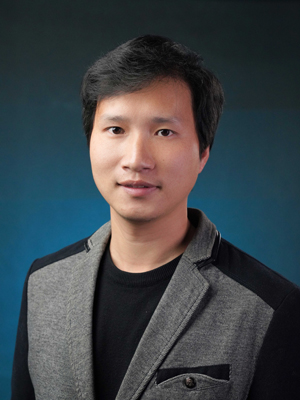 Jianbo Yuan (袁剑波)合作论文数University of Chinese Academy of Sciences;Institute of Oceanography, Chinese Academy of Sciences1
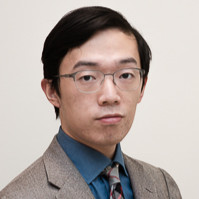 Chuyang Ke合作论文数Microsoft1Uday Mallappa合作论文数1Eli Woods合作论文数1Felix Divo合作论文数1Dhruv Kohli合作论文数Samsung R&D Inst, Bangalore, Karnataka, India1
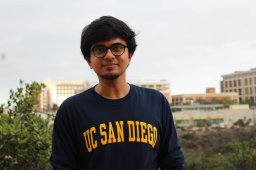 Vignesh Gokul合作论文数University of California, San Diego, San Diego, CA, USA1
 Yen-Yi Wu合作论文数1Johann Faouzi合作论文数INRIA, Aramis Lab, Paris Brain & Spine Inst, F-75013 Paris, France1
 Gilles Vandewiele合作论文数Univ Ghent, IDLab, IMEC, Technol Pk Zwijnaarde 126, Ghent, Belgium1
 Devon J Merrill合作论文数University of California San Diego1
 Sicun Gao (高思存)合作论文数Department of Computer Science and Engineering, Jacobs School of Engineering, University of California, San Diego1
 Po-Ya Hsu合作论文数Department of Computer Science Engineering, University of California1
 Tristram H. Smith合作论文数Division of Neurodevelopmental and Behavioral Pediatrics, Department of Pediatrics, University of Rochester Medical Center1Kolar Kushal合作论文数Life Sciences Institute, The University of British Columbia;and Department of Molecular Biology and Graduate School of Biomedical Sciences, Rowan University School of Medicine;The University of British Columbia, Rowan University School of Medicine1Yurchak R合作论文数CEA, UPMC1Androz G合作论文数Centre d'optique photonique et laser, Université Laval1
 Andrew B. Kahng合作论文数Department of Electrical and Computer Engineering, Jacobs School of Engineering, University of California, San Diego;Department of Computer Science & Engineering, Jacobs School of Engineering, University of California, San Diego;VLSI CAD Laboratory, University of California, San Diego1
 Jiebo Luo (罗杰波)合作论文数Department of Computer Science, Hajim School of Engineering & Applied Sciences, University of Rochester1
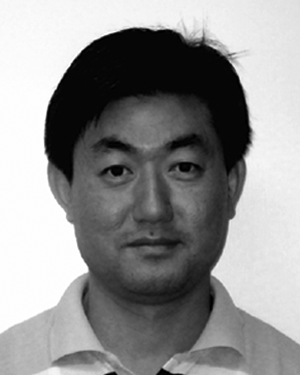 Dong Won Park合作论文数Pai Chai University1
 Romain Tavenard合作论文数Campus de Beaulieu1
 Daniel Gildea合作论文数Department of Computer Science, University of Rochester1
 Ilgweon Kang合作论文数Department of Computer Science and Engineering, University of California at San Diego1




