AMR parsing is the task that maps a sentence to an AMR semantic graph automatically. We focus on the breadth-first strategy of this task, which was proposed recently and achieved better performance than other strategies. However, current models under this strategy only encourage the model to produce the AMR graph in breadth-first order, but cannot guarantee this. To solve this problem, we propose a new architecture that guarantees that the parsing will strictly follow the breadth-first order. In each parsing step, we introduce a focused parent vertex and use this vertex to guide the generation. With the help of this new architecture and some other improvements in the sentence and graph encoder, our model obtains better performance on both the AMR 1.0 and 2.0 dataset.
A common way to combat exposure bias is by applying scores from evaluation metrics as rewards in reinforcement learning (RL). Metrics leveraging contextualized embeddings appear more flexible than their n-gram matching counterparts and thus ideal as training rewards. However, metrics such as BERTScore greedily align candidate and reference tokens, which can allow system outputs to receive excess credit relative to a reference. Furthermore, past approaches featuring semantic similarity rewards suffer from repetitive outputs and overfitting. We address these issues by proposing metrics that replace the greedy alignments in BERTScore with optimized ones. We compute them on a model’s trained token embeddings to prevent domain mismatch. Our model optimizing discrete alignment metrics consistently outperforms cross-entropy and BLEU reward baselines on AMR-to-text generation. In addition, we find that this approach enjoys stable training compared to a non-RL setting.
Utterance rewriting aims to recover coreferences and omitted information from the latest turn of a multi-turn dialogue. Recently, methods that tag rather than linearly generate sequences have proven stronger in both in- and out-of-domain rewriting settings. This is due to a tagger's smaller search space as it can only copy tokens from the dialogue context. However, these methods may suffer from low coverage when phrases that must be added to a source utterance cannot be covered by a single context span. This can occur in languages like English that introduce tokens such as prepositions into the rewrite for grammaticality. We propose a hierarchical context tagger (HCT) that mitigates this issue by predicting slotted rules (e.g., "besides _") whose slots are later filled with context spans. HCT (i) tags the source string with token-level edit actions and slotted rules and (ii) fills in the resulting rule slots with spans from the dialogue context. This rule tagging allows HCT to add out-of-context tokens and multiple spans at once; we further cluster the rules to truncate the long tail of the rule distribution. Experiments on several benchmarks show that HCT can outperform state-of-the-art rewriting systems by ~2 BLEU points.
AMR parsing is the task that maps a sentence to an AMR semantic graph automatically. The difficulty comes from generating the complex graph structure. The previous state-of-the-art method translates the AMR graph into a sequence, then directly fine-tunes a pretrained sequence-to-sequence Transformer model (BART). However, purely treating the graph as a sequence does not take advantage of structural information about the graph. In this paper, we design several strategies to add the important ancestor information into the Transformer Decoder. Our experiments show that we can improve the performance for both AMR 2.0 and AMR 3.0 dataset and achieve new state-of-the-art results.
BACKGROUND Diagnostic codes can retrospectively identify samples of febrile infants, but sensitivity is low, resulting in many febrile infants eluding detection. To ensure study samples are representative, an improved approach is needed. OBJECTIVE To derive and internally validate a natural language processing algorithm to identify febrile infants and compare its performance to diagnostic codes. METHODS This cross-sectional study consisted of infants aged 0-90 days brought to one pediatric emergency department from January 2016 to December 2017. We aimed to identify infants with fever, defined as a documented temperature ≥38°C. We used 2017 clinical notes to develop two rule-based algorithms to identify infants with fever and tested them on data from 2016. Using manual abstraction as the gold standard, we compared performance of the two rule-based algorithms (Models 1, 2) to four previously published diagnostic code groups (Models 5-8) using area under the receiver-operating characteristics curve (AUC), sensitivity, and specificity. RESULTS For the test set (n = 1190 infants), 184 infants were febrile (15.5%). The AUCs (0.92-0.95) and sensitivities (86%-92%) of Models 1 and 2 were significantly greater than Models 5-8 (0.67-0.74; 20%-74%) with similar specificities (93%-99%). In contrast to Models 5-8, samples from Models 1 and 2 demonstrated similar characteristics to the gold standard, including fever prevalence, median age, and rates of bacterial infections, hospitalizations, and severe outcomes. CONCLUSIONS Findings suggest rule-based algorithms can accurately identify febrile infants with greater sensitivity while preserving specificity compared to diagnostic codes. If externally validated, rule-based algorithms may be important tools to create representative study samples, thereby improving generalizability of findings.
Multi-hop reading comprehension focuses on one type of factoid question, where a system needs to properly integrate multiple pieces of evidence to correctly answer a question. Previous work approximates global evidence with local coreference information, encoding coreference chains with DAG-styled GRU layers within a gated-attention reader. However, coreference is limited in providing information for rich inference. We introduce a new method for better connecting global evidence, which forms more complex graphs compared to DAGs. To perform evidence integration on our graphs, we investigate two recent graph neural networks, namely graph convolutional network (GCN) and graph recurrent network (GRN). Experiments on two standard datasets show that richer global information leads to better answers. Our approach shows highly competitive performances on these datasets without deep language models (such as ELMo).
Text generation from AMR requires mapping a semantic graph to a string that it annotates. Transformer-based graph encoders, however, poorly capture vertex dependencies that may benefit sequence prediction. To impose order on an encoder, we locally constrain vertex self-attention using a graph's tree decomposition. Instead of forming a full query-key bipartite graph, we restrict attention to vertices in parent, subtree, and same-depth bags of a vertex. This hierarchical context lends both sparsity and structure to vertex state updates. We apply dynamic programming to derive a forest of tree decompositions, choosing the most structurally similar tree to the AMR. Our system outperforms a self-attentive baseline by 1.6 BLEU and 1.8 chrF++.
Graph encoders in AMR-to-text generation models often rely on neighborhood convolutions or global vertex attention. While these approaches apply to general graphs, AMRs may be amenable to encoders that target their tree-like structure. By clustering edges into a hierarchy, a tree decomposition summarizes graph structure. Our model encodes a derivation forest of tree decompositions and extracts an expected tree. From tree node embeddings, it builds graph edge features used in vertex attention of the graph encoder. Encoding TD forests instead of shortest-pairwise paths in a self-attentive baseline raises BLEU by 0.7 and chrF++ by 0.3. The forest encoder also surpasses a convolutional baseline for molecular property prediction by 1.92% ROC-AUC.
We show that a general algorithm for efficient computation of outside values under the minimum of superior functions framework proposed by Knuth (1977) would yield a sub-exponential time algorithm for SAT, violating the Strong Exponential Time Hypothesis (SETH).
Semiring parsing is an elegant framework for describing parsers by using semiring weighted logic programs. In this paper we present a generalization of this concept: latent-variable semiring parsing. With our framework, any semiring weighted logic program can be latentified by transforming weights from scalar values of a semiring to rank-n arrays, or tensors, of semiring values, allowing the modelling of latent variables within the semiring parsing framework. Semiring is too strong a notion when dealing with tensors, and we have to resort to a weaker structure: a partial semiring. We prove that this generalization preserves all the desired properties of the original semiring framework while strictly increasing its expressiveness.
Analyzing patterns in a sequence of events has applications in text analysis, computer programming, and genomics research. In this paper, we consider the all-window-length analysis model which analyzes a sequence of events with respect to windows of all lengths. We study the exact co-occurrence counting problem for the all-window-length analysis model. Our first algorithm is an offline algorithm that counts all-window-length co-occurrences by performing multiple passes over a sequence and computing single-window-length co-occurrences. This algorithm has the time complexity $O(n)$ for each window length and thus a total complexity of $O(n^2)$ and the space complexity $O(|I|)$ for a sequence of size n and an itemset of size $|I|$. We propose AWLCO, an online algorithm that computes all-window-length co-occurrences in a single pass with the expected time complexity of $O(n)$ and space complexity of $O( \sqrt{ n|I| })$. Following this, we generalize our use case to patterns in which we propose an algorithm that computes all-window-length co-occurrence with expected time complexity $O(n|I|)$ and space complexity $O( \sqrt{n|I|} + e_{max}|I|)$, where $e_{max}$ is the length of the largest pattern.
Weighted deduction systems provide a framework for describing parsing algorithms that can be used with a variety of operations for combining the values of partial derivations. For some operations, inside values can be computed efficiently, but outside values cannot. We view outside values as functions from inside values to the total value of all derivations, and we analyze outside computation in terms of function composition. This viewpoint helps explain why efficient outside computation is possible in many settings, despite the lack of a general outside algorithm for semiring operations.
For text generation from semantic graphs, past neural models encoded input structure via gated convolutions along graph edges. Although these operations provide local context, the distance messages can travel is bounded by the number of encoder propagation steps. We adopt recent efforts of applying Transformer self-attention to graphs to allow global feature propagation. Instead of feeding shortest paths to the vertex self-attention module, we train a model to learn them using generalized shortest-paths algorithms. This approach widens the receptive field of a graph encoder by exposing it to all possible graph paths. We explore how this path diversity affects performance across levels of AMR connectivity, demonstrating gains on AMRs of higher reentrancy counts and diameters. Analysis of generated sentences also supports high semantic coherence of our models for reentrant AMRs. Our best model achieves a 1.4 BLEU and 1.8 chrF++ margin over a baseline that encodes only pairwise-unique shortest paths.
Recent embedding-based methods in unsupervised bilingual lexicon induction have shown good results, but generally have not leveraged orthographic (spelling) information, which can be helpful for pairs of related languages. This work augments a state-of-the-art method with orthographic features, and extends prior work in this space by proposing methods that can learn and utilize orthographic correspondences even between languages with different scripts. We demonstrate this by experimenting on three language pairs with different scripts and varying degrees of lexical similarity.
Evaluating AMR parsing accuracy involves comparing pairs of AMR graphs. The major evaluation metric, SMATCH (Cai and Knight, 2013), searches for one-to-one mappings between the nodes of two AMRs with a greedy hill-climbing algorithm, which leads to search errors. We propose SEMBLEU, a robust metric that extends BLEU (Papineni et al., 2002) to AMRs. It does not suffer from search errors and considers non-local correspondences in addition to local ones. SEMBLEU is fully content-driven and punishes situations where a system's output does not preserve most information from the input. Preliminary experiments on both sentence and corpus levels show that SEMBLEU has slightly higher consistency with human judgments than SMATCH. Our code is available at http://github.com/ freesunshine0316/sembleu.
It is intuitive that semantic representations can be useful for machine translation, mainly because they can help in enforcing meaning preservation and handling data sparsity (many sentences correspond to one meaning) of machine translation models. On the other hand, little work has been done on leveraging semantics for neural machine translation (NMT). In this work, we study the usefulness of AMR (abstract meaning representation) on NMT. Experiments on a standard English-to-German dataset show that incorporating AMR as additional knowledge can significantly improve a strong attention-based sequence-to-sequence neural translation model.
Automated prediction of public speaking performance enables novel systems for tutoring public speaking skills. We use the largest open repository---TED Talks---to predict the ratings provided by the online viewers. The dataset contains over 2200 talk transcripts and the associated meta information including over 5.5 million ratings from spontaneous visitors to the website. We carefully removed the bias present in the dataset (e.g., the speakers' reputations, popularity gained by publicity, etc.) by modeling the data generating process using a causal diagram. We use a word sequence based recurrent architecture and a dependency tree based recursive architecture as the neural networks for predicting the TED talk ratings. Our neural network models can predict the ratings with an average F-score of 0.77 which largely outperforms the competitive baseline method.
Text generation from AMR involves emitting sentences that reflect the meaning of their AMR annotations. Neural sequence-to-sequence models have successfully been used to decode strings from flattened graphs (e.g., using depth-first or random traversal). Such models often rely on attention-based decoders to map AMR node to English token sequences. Instead of linearizing AMR, we directly encode its graph structure and delegate traversal to the decoder. To enforce a sentence-aligned graph traversal and provide local graph context, we predict transition-based parser actions in addition to English words. We present two model variants: one generates parser actions prior to words, while the other interleaves actions with words.
We present algorithms for extracting Hyperedge Replacement Grammar (HRG) rules from a graph along with a vertex order. Our algorithms are based on finding a tree decomposition of smallest width, relative to the vertex order, and then extracting one rule for each node in this structure. The assumption of a fixed order for the vertices of the input graph makes it possible to solve the problem in polynomial time, in contrast to the fact that the problem of finding optimal tree decompositions for a graph is NP-hard. We also present polynomial-time algorithms for parsing based on our HRGs, where the input is a vertex sequence and the output is a graph structure. The intended application of our algorithms is grammar extraction and parsing for semantic representation of natural language. We apply our algorithms to data annotated with Abstract Meaning Representations and report on the characteristics of the resulting grammars.
We use the largest open repository of public speaking---TED Talks---to predict the ratings of the online viewers. Our dataset contains over 2200 TED Talk transcripts (includes over 200 thousand sentences), audio features and the associated meta information including about 5.5 Million ratings from spontaneous visitors of the website. We propose three neural network architectures and compare with statistical machine learning. Our experiments reveal that it is possible to predict all the 14 different ratings with an average AUC of 0.83 using the transcripts and prosody features only. The dataset and the complete source code is available for further analysis.
 Hao Zhang合作论文数Google17
 Linfeng Song合作论文数Tencent AI Lab14
 Iftekhar Naim合作论文数13
 Tagyoung Chung合作论文数Amazon.com12
 Xiaochang Peng合作论文数Meta11
 Giorgio Satta合作论文数Department of Information Engineering, University of Padua9
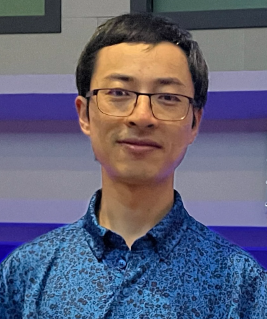 Zhiguo Wang (王志国)合作论文数Amazon Web Services AI Labs9
 Yue Zhang (张岳)合作论文数School of Engineering, Westlake University;Westlake Institute for Advanced Study;Singapore University of Technology and Design9
 Nianwen Xue合作论文数Computer Science Department, Brandeis University9
 Martha Palmer合作论文数Department of Linguistics, College of Arts and Sciences, University of Colorado Boulder;Department of Computer Science, College of Arts and Sciences, University of Colorado Boulder9
 Ding Liu合作论文数University of Rochester8
 Dan Jurafsky合作论文数Department of Computer Science, Stanford University;Department of Linguistics, Stanford University8
 Lisa Jin合作论文数Meta6
 Matt Post合作论文数Microsoft;Department of Computer Science, Whiting School of Engineering, Johns Hopkins University6Alan Bell合作论文数5
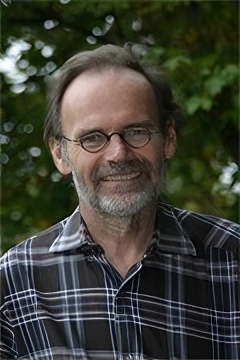 James F. Allen合作论文数Department of Computer Science, Hajim School of Engineering & Applied Sciences, University of Rochester5Cynthia Girand合作论文数5
 Kevin Knight (武凯文)合作论文数Didi Global5
 Liang Huang合作论文数College of Engineering, Oregon State University4
 Tanveer, M.I.合作论文数University of Rochester4
 Henry Kautz合作论文数Department of Computer Science, Hajim School of Engineering & Applied Sciences, University of Rochester;Department of Computer Science, School of Engineering and Applied Science, University of Virginia;AIM Intelligent Machines4
 Eric Fosler-Lussier合作论文数Department of Computer Science and Engineering, College of Engineering, The Ohio State University4
 Dragomir R. Radev合作论文数Language, Information, and Learning Lab, Department of Computer Science, Yale University;Yale Institute for Network Science, Yale University;Wu Tsai Institute for Neuroscience, Yale University4
 Kemal Oflazer合作论文数Language Technologies Institute, School of Computer Science, Carnegie Mellon University in Qatar4
 Jiebo Luo (罗杰波)合作论文数Department of Computer Science, Hajim School of Engineering & Applied Sciences, University of Rochester4David Temperley合作论文数Eastman School of Music;University of Rochester;Eastman School of Music, University of Rochester4
 Ehsan Hoque合作论文数Department of Computer Science, Hajim School of Engineering & Applied Sciences, University of Rochester4Young Chol Song合作论文数University of Rochester4
 Parker Riley合作论文数Google4Katherine Eng合作论文数4
 Michelle L. Gregory合作论文数University of Colorado at Boulder4
 Franz Och合作论文数Facebook4
 Viren Jain合作论文数1 Brain & Cognitive Sciences;Massachusetts Institute of Technology;1 Brain & Cognitive Sciences, Massachusetts Institute of Technology4
 Julia Hockenmaier合作论文数Department of Computer Science, University of Illinois Urbana-Champaign;Siebel School of Computing and Data Science, The Grainger College of Engineering, University of Illinois Urbana-Champaign4Licheng Fang合作论文数University of Rochester4
 Alexander M. Fraser合作论文数School of Computation, Information and Technology, Technical University of Munich4
 Shankar Kumar合作论文数3
 Smith David合作论文数Guy Hilton Research Centre, Keele University3
 David Chiang (蔣偉)合作论文数Department of Computer Science and Engineering, University of Notre Dame3
 Massimo Poesio合作论文数School of Electronic Engineering and Computer Science, Queen Mary University of London3
 Hermann Ney合作论文数RWTH Aachen University3
 Adam Kilgarriff合作论文数Lexical Computing Ltd3
 Sanjeev Khudanpur合作论文数Center for Language and Speech Processing, Whiting School of Engineering, Johns Hopkins University;Department of Electrical and Computer Engineering, Whiting School of Engineering, Johns Hopkins University3
 Jeffrey P. Bigham合作论文数Human-Computer Interaction Institute, Carnegie Mellon University;Language Technologies Institutes, School of Computer Science, Carnegie Mellon University;Apple3
 Claire Gardent合作论文数Lorraine Research Laboratory in Computer Science and its Applications, Centre National de la Recherche Scientifique3
 Bonnie Webber合作论文数Institute for Language, Cognition and Computation, School of Informatics, University of Edinburgh;The Human Communication Research Centre3
 Gerald Penn合作论文数Faculty of Arts and Science, University of Toronto;Department of Computer Science, University of Toronto;International Computer Science Institute, University of California at Berkeley3Zhen Jin合作论文数3
 Mirella Lapata合作论文数Institute for Language, Cognition and Computation, School of Informatics, The University of Edinburgh3




