Die Förderung der Gesundheit am Arbeitsplatz ist ein wesentlicher Faktor für die nachhaltige Sicherung der Beschäftigungsfähigkeit. Allerdings zeigt sich, dass Menschen mit Behinderungen im Vergleich zu nichtbehinderten Menschen einen deutlich höheren Krankenstand aufweisen. Dies stellt Unternehmen vor die Herausforderung, mit finanziellen Belastungen umzugehen. Seit dem 1. Januar 2018 sieht das Gesetz (§§ 215–218 SGB IX) vor, dass Inklusionsbetriebe Maßnahmen der betrieblichen Gesundheitsförderung umsetzen. In dieser narrativen Übersichtsarbeit werden die vorhandenen Forschungsergebnisse zu evidenzbasierten Programmen zur betrieblichen Gesundheitsförderung, die auf Inklusionsunternehmen zugeschnitten sind, sowie aktuelle Empfehlungen zur Förderung nachhaltiger Gesundheitsverbesserungen bei den Beschäftigten in solchen Einrichtungen dargestellt. Die Analyse stützt sich auf eine umfassende Literaturrecherche in englischen und deutschen Datenbanken, darunter PubMed/MEDLINE, Cochrane und Google Scholar. Zur Erreichung der sozialen Zielsetzungen von Inklusionsbetrieben ist es entscheidend, gesundheitsförderliche Rahmenbedingungen zu schaffen, die auf die individuellen Bedürfnisse aller Beschäftigten – unabhängig von einer Behinderung – abgestimmt sind. Allerdings sind evidenzbasierte Programme zur betrieblichen Gesundheitsförderung, die sowohl Mitarbeitende mit als auch ohne Behinderung einbeziehen, bislang kaum verbreitet. Da die Forschungslage zu solchen Projekten noch relativ begrenzt ist, sollte diese weiter ausgebaut werden, um eine fundierte Bewertung der verschiedenen Maßnahmen zu ermöglichen. Allerdings gibt es mittlerweile einige Empfehlungen, die eine nachhaltige Verbesserung der Gesundheit von Mitarbeitenden in Inklusionsbetrieben unterstützen können.
When it comes to changes in voluntary sport organisations, the members play a key role in initiating and implementing change processes. The capacity of an organisation to change depends at least partially on the individuals’ change competence, a multifaceted construct influenced by diverse personal and organisational factors. This scoping review aims to identify key positions and individuals within the organisation and the corresponding personal characteristics, skills, and competences that facilitate change processes. The findings indicate that a) to manage change processes, it is crucial to have at least one change agent guiding the process, b) each organisation identifies individuals in various positions or roles as critical to the change process, c) an organisation’s capacity for change is inextricably linked with the change competence of single members, and d) the organisational environment significantly influences the ability of individuals to develop and exercise change competence. Future research should place greater emphasis on theoretical concepts of organisational learning, as the integration of individual and organisational learning could improve our understanding of organisational change.
Mehrere Übersichtsarbeiten zeigen, dass elterliche Unterstützung in Zusammenhang mit der körperlich-sportlichen Aktivität von Kindern und Jugendlichen steht. Bemängelt wird jedoch, dass zur Erfassung des Unterstützungsverhaltens häufig psychometrisch wenig validierte Fragebögen zum Einsatz kommen, die zudem das Unterstützungsverhalten eindimensional abbilden. Daher wird im vorliegenden Beitrag die Entwicklung einer deutschsprachigen Skala vorgestellt, mit der die elterliche Unterstützung für die körperlich-sportliche Aktivität von Kindern im Grundschulalter mehrdimensional erfasst werden kann. Im Rahmen der ersten Studie (N = 489 weibliche Elternteile) wurde der initiale Itempool auf Basis eines explorativen Strukturgleichungsmodells sukzessive reduziert und die Faktorstruktur optimiert. Die ursprünglich konzipierte Subskala „informative Unterstützung“ erwies sich als nicht haltbar. Eine Kreuzvalidierung im Rahmen der zweiten Studie (N = 356) ergab konfirmatorisch akzeptable bis gute Fitwerte für eine vierfaktorielle Lösung (CFI = 0,940, RMSEA = 0,053) mit den Subskalen „Unterstützung als Vorbild“, „Unterstützung durch Partizipation“, „emotionale Unterstützung“ sowie „instrumentelle Unterstützung“. Erste Hinweise auf die Konstruktvalidität liegen in Bezug auf Zusammenhänge zwischen dem Unterstützungsverhalten und der Sportvereinsmitgliedschaft der Eltern bzw. der Kinder vor. Limitationen beziehen sich u. a. auf noch nicht geprüfte Messinvarianz zwischen männlichen und weiblichen Elternteilen sowie die Nichtberücksichtigung elterlicher Verhaltensweisen, die sich negativ auf die körperlich-sportliche Aktivität des Kindes auswirken könnten. Dennoch scheint das Instrument vielversprechend für die Bearbeitung verschiedener Fragestellungen im Kontext elterlichen Einflusses auf körperlich-sportliche Aktivität von Kindern.
In recent years, various studies have documented the regular occurrence of antisemitism in European football. At the same time, football associations publicly take a stand against discrimination, implement targeted measures and encourage big clubs to do the same. Such actions by football clubs can be interpreted either as rational 'business reasoning' in the context of Corporate Social Responsibility (CSR) or as more informal processes when considering clubs as member-run voluntary organisations. Given the heterogeneous organisational structures and resources of clubs in German football, the question of which clubs carry out which types of activities against antisemitism arises. To answer this, a quantitative document analysis of all websites of clubs in the first four divisions of German football was carried out, considering all activities and statements regarding antisemitism (N = 137). The results reveal that the reported engagement is strongly related to the resources and organisational structures, such as club size, league affiliation, CSR organisation, legal structure, and formal club purpose. Furthermore, we conducted a critical discourse analysis (CDA) of statements and measures dealing with antisemitism on the respective club websites to identify discursive practices and dominant narratives in the communication on antisemitism. Policy recommendations for German and European football authorities can be derived: On the one hand, further professionalisation in the context of CSR is needed to increase the probability of targeted measures. On the other hand, communication could be designed with more depth of content, for example by clarifying that remembrance work must be linked to the fight against current antisemitism.
Several review articles suggest that parental support is associated with physical activity in children and adolescents. However, it has been criticized that poorly validated questionnaires are often used to assess supportive behavior. Furthermore, existing instruments tend to assess parental support with a general factor. Therefore, this paper presents the development of a German-language scale that can be used to assess parental support for physical activity in primary school children in a multidimensional way. In the first study (N = 489 female parents), the initial item pool was gradually reduced based on an exploratory structural equation model, and the factor structure was optimized. The originally assumed subscale "informative support" proved to be untenable. A cross-validation using confirmatory factor analysis in the second study (N = 356) yielded acceptable to good fit indices for a four-factor solution (CFI = .940, RMSEA = .053) with the subscales "support as a role model" (modelling), "support through participation" (co-participation), "emotional support", and "instrumental support". Initial evidence of construct validity exists for the relationships between supportive behaviors and parent's and children's membership in sports clubs, respectively. Limitations include, among others, untested measurement invariance between male and female parents and the failure to take parental behaviors that could have a negative impact on the child's physical activity into account. Nevertheless, the instrument appears promising for addressing various questions related to parental influence on children's physical activity.
Zusammenfassung Ehrenamtliches Engagement im Sportverein bietet viele Lern- und Entwicklungschancen. So kann es auch die (Sozial-)Integration von Menschen mit Migrationshintergrund (MmMH) unterstützten. Diese sind allerdings in ehrenamtlichen Positionen seit Jahren unterrepräsentiert. Der vorliegende Beitrag analysiert mit Bezug auf die zugrunde liegenden Lernprozesse, welche Entwicklungs- und Integrationspotentiale für MmMH im ehrenamtlichen Engagement gesehen und von den Engagierten angestrebt werden. Die leitfadengestützten Interviews (N=10) sowie die Gruppendiskussion (N=5) weisen zwar auf Bedingungen hin, die den Weg ins Ehrenamt für MmMH erschweren und die besagte Unterrepräsentanz begründen. Sie bestätigen aber auch, dass im ehrenamtlichen Engagement viele alltagsrelevante Kompetenzen erworben werden können. Sportvereine könnten diesen Mehrwert proaktiver kommunizieren, um mehr MmMH den Zugang zum Ehrenamt und zu den damit verbundenen Möglichkeiten des Kompetenzgewinns zu eröffnen.
In wenigen Studien konnte gezeigt werden, dass Menschen mit Behinderungen oder gesundheitlichen Beeinträchtigungen eine erhöhte Prävalenz für Muskel-Skelett-Erkrankungen aufweisen. Problematisch ist in diesem Zusammenhang das Erhebungsverfahren. Aufgrund der fehlenden Übertragbarkeit war es erforderlich, durch leichte Sprache und unterstützende Kommunikation einen Fragebogen zu entwickeln, der an die Bedürfnisse von Beschäftigten mit Behinderung (die u. a. in Inklusionsbetrieben arbeiten) bzw. Menschen mit geringem Bildungsgrad oder schlechten Deutschkenntnissen angepasst ist. Dieser Fragebogen zielt auf die Erfassung möglicher subjektiver Beschwerden im Muskel-Skelett-System, deren Ursachen und der Erfassung von Arbeitsbeeinträchtigung ab. Als Vorlage des Fragebogens zu subjektiven Beschwerden im Muskel-Skelett-System bei Menschen mit Behinderung diente hauptsächlich die deutsche Version des Nordic Musculoskeletal Questionnaire der Bundesanstalt für Arbeitsschutz und Arbeitsmedizin (BAuA). Zudem wurden Elemente aus dem Deutschen Schmerzfragebogen und dem Multidimensionalen Schmerzfragebogen im professionellen Tanz ergänzend hinzugefügt. Der neue Fragebogen wurde auf Grundlage eines kognitiven Interviews mit 5 Proband*innen mit psychischer Behinderung entwickelt. Dabei wurde auf folgende kognitive Techniken zurückgegriffen: Nachfragen zum Verständnis, Nachfragen zum Besitz relevanter Informationen und Sortiertechnik. Die deutsche Version des Nordic Musculoskeletal Questionnaire wurde in leichte Sprache übersetzt und durch eine vergrößerte Darstellung sowie die Kennzeichnung der Vorder- und Rückseite der abgebildeten Menschen angepasst. Zusätzlich wurden alle Abbildungen durch einen erklärenden Satz ergänzt. Außerdem wurden Fragen über die Dauer, Ursache und den Umgang mit Beschwerden bei der Arbeit aus dem Deutschen Schmerzfragebogen und dem Multidimensionalen Schmerzfragebogen im professionellen Tanz verwendet sowie durch Reduktion von Antwortmöglichkeiten gekürzt. Der Fragebogen wurde an die Bedürfnisse von Menschen mit Behinderung (u. a. Mitarbeitende in Inklusionsbetrieben) bzw. Menschen mit geringem Bildungsgrad oder schlechten Deutschkenntnissen angepasst. Da die Vielfalt der Behinderungen und deren Grade bei Beschäftigten mit Behinderung variieren, ist demnach die allgemeine Anwendbarkeit des Fragebogens limitiert. Die gewonnenen Erkenntnisse können dazu dienen, speziell angepasst Gesundheitsfördermaßnahmen zu entwickeln und langfristig die Gesundheit zu verbessern.
Introduction. A limited number of studies have indicated that individuals with disabilities or health impairments are more prone to musculoskeletal disorders; however, the survey procedure is problematic in this context. Due to the lack of transferability, it was necessary to develop a questionnaire that is adapted to the needs of employees with disabilities (e.g., who work in inclusive companies) and people with a low level of education or poor knowledge of German, using easy to read language and supportive communication. The objective of this questionnaire is to record any subjective complaints in the musculoskeletal system as well as the causes and resulting work impairment. Methods. The German version of the Nordic Musculoskeletal Questionnaire from the Federal Institute for Occupational Safety and Health (BAuA) was employed as a template for the questionnaire on subjective musculoskeletal complaints in people with disabilities. Additionally, elements from the German Pain Questionnaire and the Multidimensional Pain Questionnaire in Professional Dance were incorporated. The new questionnaire was developed following a cognitive interview with five respondents with mental disabilities. The following cognitive techniques were employed. In order to elicit the desired responses, respondents were asked to demonstrate an understanding of the questions, to provide information that was relevant to the topic under discussion, and to employ a sorting technique. Results. The German version of the Nordic Musculoskeletal Questionnaire was translated into easy to read language and adapted by enlarging the illustrations and labelling the front and back of the people depicted. In addition, an explanatory sentence was added to all illustrations. Furthermore, questions on the duration, cause and handling of complaints at work from the German Pain Questionnaire and the Multidimensional Pain Questionnaire in Professional Dance were used and shortened by reducing the number of possible answers. Discussion. The questionnaire was adapted to the needs of people with disabilities (including employees in inclusion companies) or people with a low level of education or poor knowledge of German. As the variety of disabilities and the degrees vary among employees with disabilities, the general applicability of the questionnaire is therefore limited; however, the knowledge gained can be used to develop specially adapted health promotion measures and improve health in the long term.
Background The research project GAIN (working healthy in inclusion companies) deals with the topics of health and work in inclusive companies. Due to a great need for research on (occupational) health (e.g. physical and mental health status) and workplace design in companies employing people with disabilities, this project pursues the primary goal of generating information for the development and implementation of health-preserving measures within the framework of occupational health and safety, and risk assessment, for employees with and without impairments in inclusive companies. Methods Within the framework of the project, the employees of three inclusive companies will be examined with the help of an interdisciplinary and triangulative approach. Using quantitative and qualitative methods, specific physical workloads and hazards will be investigated by means of baseline screening methods and measurement techniques, specifically among employees with physical disabilities and impairments. In the statistical analysis, descriptive methods will be used to record the current state, while inferential statistical methods will be used to evaluate health maintenance measures. Inferential statistics for continuous data with confidence intervals based on the statistical parametric mapping (SPM) method will also be performed. The significance level will be set at 5%. Qualitative methods will be used to analyse structures and working conditions within the companies, with particular attention to the specific construction of the relationship between work, health and disability. Conclusions The structures in inclusion companies must be specifically designed to support and promote the understanding of work and health in relation to the idea of one’s own body, its positioning in space and its performance. These characteristics are to be identified in the course of the project and bundled into best-practice recommendations. Furthermore, it is the aim of the research project to derive recommendations for action at its conclusion and to present further advice for the promotion of health in inclusive companies.
Despite the undisputed existence of antisemitic incidents in sport, little is known about their exact prevalence and forms of manifestation. Also in Germany, physical and verbal attacks against Jewish sports clubs have repeatedly come to light. To estimate the prevalence of antisemitic incidents in German grassroot sports, a standardised online survey was conducted among members of Jewish sports clubs in Germany (N = 309, data collection 3 November 2020 to 24 January 2021). Results show an accumulation of cases in football: more than two-thirds (68%) of the football players have experienced an antisemitic incident at least once, while the share in other sports is only 14%. The results indicate that football offers a particularly large number of constellations that lead to the expression of antisemitic patterns. At its core, football is shaped by a clash of group identities. It is widely accepted that opponents and their supporters are devalued through aggressive and emotionalized behaviour. A tendency towards underreporting can furthermore be observed in dealing with the incidents, among other reasons due to a significant proportion of those surveyed do not trust the sanction mechanisms of the sports associations – this in turn applies to footballers and non-footballers.
Basic motor competencies (BMC) are a prerequisite for children to be physically active, participate in sports and thus develop a healthy, active lifestyle. The present study provides a broad screening of BMC and associations with age, sex, body mass index (BMI) and extracurricular physical activity (PA) in 10 different European countries. The different country and regional contexts within Europe will offer a novel view on already established BMC associations. The cross-sectional study was conducted in 11 regions in 10 European countries in 2018. The motor competence areas, object movement (OM) and self-movement (SM), were assessed using the MOBAK-1-2 test instrument in 3758 first and second graders (age: M = 6.86 ± 0.60 years; 50% girls) during Physical Education classes. Children were questioned about their extracurricular PA and age. Their body weight and height were measured in order to calculate BMI. Statistical analyses included variances and correlations. The results showed significant differences in BMC levels between countries (OM: F = 18.74, p < 0.001, η2 = 0.048; SM: F = 73.10, p < 0.001, η2 = 0.163) whereas associations between BMC and correlates were similar. Boys performed significantly better in OM while girls performed better in SM. Age was consistently positively related to OM and SM with older children reaching higher levels of BMC than younger ones. While participation rates for extracurricular PA differed widely, participation in ball sports was correlated with OM and SM. Participation in individual sports showed a significant association with SM. In summary, BMC levels of children seem to depend on where they live and are strongly related to their participation in extracurricular PA. Therefore, education and health policies, in order to enhance motor competence development and PA participation, are recommended. Further research on country-specific Physical Education frameworks and their influence on BMC will provide more insights into structural factors and cultural characteristics of BMC development. On a school level, support tools and educational materials for teachers about BMC may enable children to achieve a basic level of motor competencies through Physical Education, contributing to lifelong participation in PA.
Zusammenfassung. Wie Schülerinnen und Schüler die Qualität von Ganztagsangeboten (AGs) beurteilen, wurde bislang mithilfe von Merkmalen erfasst, die aus der empirischen Unterrichtsforschung bzw. der Sozialpädagogik abgeleitet sind. Dabei standen vornehmlich unterrichtsnahe Angebote im Mittelpunkt, wodurch die deutlich stärker nachgefragten freizeitbezogenen Angebote (z. B. aus dem Bereich Sport oder Musik) kaum berücksichtigt wurden. Im Rahmen des vorliegenden Beitrags wird mit der Skala zur Erfassung AG-spezifischer Qualitätsmerkmale (GAINS-AG-Skala) ein Instrument vorgestellt, mit dem die Qualität aller Angebotstypen im Rahmen des Ganztags erfasst werden kann. Die Ergebnisse aus insgesamt drei Studien ergeben, dass die 28 Items des Fragebogens die vier Faktoren Lernförderlichkeit, Interesse, pädagogische Unterstützung und Lerngemeinschaft abbilden, die sich auch an einer unabhängigen Stichprobe replizieren lassen. Zudem sprechen die Ergebnisse für Konstruktvalidität und Test-Retest-Reliabilität der Skala. Mit dem vorliegenden Beitrag wird nicht nur eine Anschlussfähigkeit an die aktuelle Debatte um Qualitätsmerkmale ganztägiger Angebote hergestellt, sondern mit den Subskalen Interesse und Lerngemeinschaft erfolgt auch eine Erweiterung des bisherigen Qualitätsverständnisses um zwei wesentliche Aspekte.
Motorische Basiskompetenzen (MOBAK) fokussieren auf die Bewaltigung einfacher motorischer Aufgabenstellungen. Der Beitrag zeigt anhand einer weiterfuhrenden Analyse einer MOBAK-Studie mit n=697 Kindern (M=6.83Jahre) geschlechterbezogene Befunde unter Einbezug des auserschulischen Sports. Gezeigt werden kann, dass die Teilhabe am Vereinssport einen mediierenden Effekt auf den Status der motorischen Basiskompetenzen hat. Der Befund erhartet die Annahme, dass nicht das Geschlecht, sondern die durch das Geschlecht gepragte sportbezogene Sozialisation den jeweils testbaren Status der motorischen Kompetenzen beeinflusst.
Background: A central aim of physical education is the promotion of basic motor competencies (in German: Motorische Basiskompetenzen; MOBAK), which are prerequisites for children's active participation in sports culture. This article introduces the MOBAK-1 test instrument for 6- to 8-year-old children and determines the construct validity of this test instrument. In addition, the relationship between MOBAK and motor ability (i.e., strength) as well as body mass index (BMI), sex, and age is investigated. Methods: We analyzed data of 923 first and second graders (422 girls, 501 boys, age = 6.80 +/- 0.44 years). The children's basic motor competencies were assessed by the MOBAK-1 test instrument. Besides analyses of frequency, correlation, and variance, 3 confirmatory factor analyses with covariates were performed. Results: We found 2 MOBAK factors consisting of 4 items each. The first factor, locomotion, included the items balancing, rolling, jumping, and side stepping; the second factor, object control, included the items throwing, catching, bouncing, and dribbling. The motor ability strength had a significant influence on the factors locomotion (beta= 0.60) and object control (beta= 0.50). Older pupils achieved better results than younger pupils on object control (/3= 0.29). Boys performed better on object control (beta= -0.44), whereas girls achieved better results in locomotion (beta= 0.07). Pupils with a high BMI achieved lower performance only on the factor locomotion (beta = -0.28). Conclusion: The MOBAK-1 test instrument developed for this study meets psychometric validity demands and is suitable to evaluate effects of sports and physical education. (C) 2019 Published by Elsevier B.V. on behalf of Shanghai University of Sport.
The attitude of teachers is considered important for successful inclusive physical education (PE); however, no reliable instrument has been developed to assess German PE teachers’ subject-specific attitude toward inclusive PE or to determine factors that influence it. In this paper, we reanalyze data gathered from a survey of 900 PE teachers in North Rhine–Westphalia and Hesse, Germany to assess the teachers’ subject-specific attitude toward inclusive PE and identify institution- and person-related factors that may have influenced it. We measure the factorial and convergent validity of the scale used in that survey to assess PE teachers’ attitude by conducting structural equation modelling, and we take into account the complex interdependence of institution- and person-related factors. Results indicate that both factorial and convergent validity of the scale were good. While amount of work experience, teaching conditions for (inclusive) PE, and private experience with people with disabilities had a significant influence on the PE teachers’ attitude toward inclusive PE, (inclusion-related) collaboration among PE teachers and occupational stress did not.
 Fabienne Ennigkeit合作论文数Institute of Sports Sciences, Goethe University Frankfurt13
 bernd groben合作论文数Abt. Sportwissenschaft, Universität Bielefeld8
 Anne Rischke合作论文数7
 Christian Herrmann合作论文数7Harald Seelig合作论文数7
 Christian Gaum合作论文数4Fabian Holzgreve合作论文数4
 Jan Haut合作论文数Frankfurt, Goethe University4Ohlendorf Daniela合作论文数Institute of Occupational Medicine, Social Medicine and Environmental Medicine, Goethe-University Frankfurt/Main4
 David Groneberg合作论文数Department of Public Health, Institute of Occupational, Social and Environmental Medicine, Goethe Universität Frankfurt4Robert Prohl合作论文数Arbeitsbereich Sportpädagogik am Institut für Sportwissenschaft, Goethe-Universität Frankfurt/Main4Lasse Müller合作论文数3
 Jaroslav Vrbas合作论文数3
 Petr Vlcek合作论文数Chirurg Klin 1, LF MU3
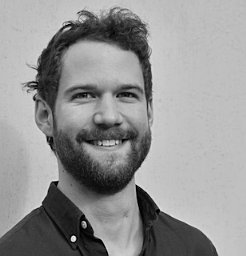 Michael Braksiek合作论文数Dept Sports Sci, Univ Vechta3
 Claude Scheuer合作论文数Department of Education and Social Work, University of Luxembourg3
 Britta Weber合作论文数3Rolf Ellegast合作论文数3
 Boris Jidovtseff合作论文数Institut Supérieur d’éducation Physique et de Kinésithérapie, Université de Liège3
 Irene Kossyva合作论文数2Dana Masaryková合作论文数2Liliane De Sousa Morgado合作论文数2Ana Quitério合作论文数2
 Elke Gramespacher合作论文数2
 Erin Gerlach合作论文数Inst Human Movement Sci, Univ Hamburg2
 Manolis Adamakis合作论文数School of Physical Education and Sport Science, National and Kapodistrian University of Athens2
 Uwe Puhse合作论文数2Marc Cloes合作论文数2
 Ulrich Frick合作论文数Department of Psychiatry and Psychotherapy, University of Regensburg2Eckhard Niebergall合作论文数2Dietmar Schmidtbleicher合作论文数2Heike Tiemann合作论文数1Heiko Meier合作论文数1
 Joao Martins合作论文数1Michaela Knoll合作论文数1manhattan mornard合作论文数1
 Jana Labudova合作论文数1
 Benjamin Niederkofler合作论文数1
 Klaus Seiberth合作论文数1Marina Wälti合作论文数1Sabine Radke合作论文数1Niehues Maike合作论文数1
 Frank Hansel合作论文数1
 Joao Costa合作论文数1
 Brigita Mieziene合作论文数Department of Physical and Social Education, Lithuanian Sports University1
 Jeffrey Sallen合作论文数Department of Educational Sciences & Didactics in Sport, University of Potsdam1Manfred Wegner合作论文数1
 Joao Mota合作论文数1
 Marcos Onofre合作论文数1




