Superconducting circuits with embedded symmetries are good candidates to robustly protect quantum information from dominant error channels. The cos(2φ) qubit, consisting of an island shunted to ground through a tunneling element that selectively transmits pairs of Cooper pairs, leverages charge-parity symmetry to protect from charge-induced errors. In this experiment, we observe a doublet of states of opposite Cooper-pair parity split by 13.6 MHz. Operating in a soft-transmon regime, this splitting is two orders of magnitude smaller than in previous implementations, pushing charge-induced losses well beyond the measured coherence times. Despite the low transition frequency, we demonstrate coherent qubit control, single-shot readout, and resolve quantum jumps. Charge protection of the qubit is evidenced by a 100-fold suppression of the island charge matrix element compared to the unprotected plasmon transition, placing dielectric loss limits above 10 ms. The measured T_1 = 70 μs and T_2^echo= 2.5 μs are instead limited by 1/f flux noise in the tunnelling element's loop. This experiment shows that pushing Cooper-pair pairing in the transmon regime sets high limits on charge-induced losses while preserving coherent control and single-shot readout of the low-frequency qubit. We identify flux noise as the dominant remaining limitation, calling for gradiometric designs or novel 4e-tunneling elements.
Superconducting quantum circuits are a natural platform for quantum simulations of a wide variety of important lattice models describing topological phenomena, spanning condensed matter and high-energy physics. One such model is the bosonic analog of the well-known fermionic Kitaev chain, a 1D tight-binding model with both nearest-neighbor hopping and pairing terms. Despite being fully Hermitian, the bosonic Kitaev chain exhibits a number of striking features associated with non-Hermitian systems, including chiral transport and a dramatic sensitivity to boundary conditions known as the non-Hermitian skin effect. Here, using a multimode superconducting parametric cavity, we implement the bosonic Kitaev chain in synthetic dimensions. The lattice sites are mapped to frequency modes of the cavity, and the in situ tunable complex hopping and pairing terms are created by parametric pumping at the mode-difference and mode-sum frequencies, respectively. We experimentally demonstrate important precursors of nontrivial topology and the non-Hermitian skin effect in the bosonic Kitaev chain, including chiral transport, quadrature wavefunction localization, and sensitivity to boundary conditions. Our experiment is an important first step towards exploring genuine many-body non-Hermitian quantum dynamics.
We propose a computationally efficient method to derive the unitary evolution that a quantum state is most sensitive to. This allows one to determine the optimal use of an entangled state for quantum sensing, even in complex systems where intuition from canonical squeezing examples breaks down. In this paper we show that the maximal obtainable sensitivity using a given quantum state is determined by the largest eigenvalue of the quantum Fisher information matrix (QFIM) and the corresponding evolution is uniquely determined by the coinciding eigenvector. Since we optimize the process of parameter encoding rather than focusing on state preparation protocols, our scheme is relevant for any quantum sensor. This procedure naturally optimizes multiparameter estimation by determining, through the eigenvectors of the QFIM, the maximal set of commuting observables with optimal sensitivity.
We propose an on-chip fiber-based quantum transducer to convert microwave photons into optical-telecommunication-band photons. The device consists of a coplanar-waveguide microwave resonator and a pair of coupled optical cavities integrated into a rare-earth-doped fiber. The microwave resonator is formed by two aluminum strips deposited onto the cladding of the fiber, whose diameter has been etched down to approximately 8 mu m. We study the conversion process using the cavity electro-optic formalism for a system operating at liquid-helium temperature (around 4 K), as well as using a three-wave mixing approach for operation at millikelvin temperatures achievable in a dilution refrigerator. Both methods predict that unity conversion efficiency could be achievable with realistically achievable experimental parameters. The proposed device acts as a quantum transducer for coherent microwave-to-optical conversion, which has great promise for application in all-fiber integrated quantum devices for quantum information processing.
Quantum-enhanced computing methods are promising candidates to solve currently intractable problems. We consider here a variational quantum eigensolver (VQE), that delegates costly state preparations and measurements to quantum hardware, while classical optimization techniques guide the quantum hardware to create a desired target state. In this work, we propose a bosonic VQE using superconducting microwave cavities, overcoming the typical restriction of a small Hilbert space when the VQE is qubit based. The considered platform allows for strong nonlinearities between photon modes, which are highly customisable and can be tuned in situ, i.e. during running experiments. Our proposal hence allows for the realization of a wide range of bosonic ansatz states, and is therefore especially useful when simulating models involving degrees of freedom that cannot be simply mapped to qubits, such as gauge theories, that include components which require infinite-dimensional Hilbert spaces. We thus propose to experimentally apply this bosonic VQE to the U(1) Higgs model including a topological term, which in general introduces a sign problem in the model, making it intractable with conventional Monte Carlo methods.
We propose a scheme for detecting single microwave photons using dipole-induced transparency (DIT) in an optical cavity resonantly coupled to a spin-selective transition of a negatively charged nitrogen-vacancy (NV−) defect in diamond crystal lattices. In this scheme, the microwave photons control the interaction of the optical cavity with the NV− center by addressing the spin state of the defect. The spin, in turn, is measured with high fidelity by counting the number of reflected photons when the cavity is probed by resonant laser light. To evaluate the performance of the proposed scheme, we derive the governing master equation and solve it through both direct integration and the Monte Carlo approach. Using these numerical simulations, we then investigate the effects of different parameters on the detection performance and find their corresponding optimized values. Our results indicate that detection efficiencies approaching 90% and fidelities exceeding 90% could be achieved when using realistic optical and microwave cavity parameters.
Engineering light-matter interactions at the quantum level has been central to the pursuit of quantum optics for decades. Traditionally, this has been done by coupling emitters, typically natural atoms and ions, to quantized electromagnetic fields in optical and microwave cavities. In these systems, the emitter is approximated as an idealized dipole, as its physical size is orders of magnitude smaller than the wavelength of light. Recently, artificial atoms made from superconducting circuits have enabled new frontiers in light-matter coupling, including the study of ``giant'' atoms which cannot be approximated as simple dipoles. Here, we explore an implementation of a giant artificial atom, formed from a transmon qubit coupled to propagating microwaves at multiple points along an open transmission line. The nature of this coupling allows the qubit radiation field to interfere with itself, leading to some striking giant-atom effects. For instance, we observe strong frequency-dependent couplings of the qubit energy levels to the electromagnetic modes of the transmission line. Combined with the ability to in situ tune the qubit energy levels, we show that we can modify the relative coupling rates of multiple qubit transitions by more than an order of magnitude. By doing so, we engineer a metastable excited state, allowing us to operate the giant transmon as an effective lambda system where we clearly demonstrate electromagnetically induced transparency.
We show that the states generated by a three-mode spontaneous parametric down-conversion (SPDC) interaction Hamiltonian possess tripartite entanglement of a different nature to other paradigmatic three-mode entangled states generated by the combination of two-mode SPDC interactions. While two-mode SPDC generates Gaussian states whose entanglement can be characterized by standard criteria based on two-mode quantum correlations, these criteria fail to capture the entanglement generated by three-mode SPDC. We use criteria built from three-mode correlation functions to show that the class of states recently generated in a superconducting-circuit implementation of three-mode SPDC ideally have tripartite entanglement, contrary to recent claims in the literature. These criteria are suitable for triple SPDC but we show that they fail to detect tripartite entanglement in other states which are known to possess it, which illustrates the existence of two fundamentally different notions of tripartite entanglement in three-mode continuous-variable systems.
Spontaneous parametric down-conversion (SPDC) has been a key enabling technology in exploring quantum phenomena and their applications for decades. For instance, traditional SPDC, which splits a high-energy pump photon into two lower-energy photons, is a common way to produce entangled photon pairs. Since the early realizations of SPDC, researchers have thought to generalize it to higher order, e.g., to produce entangled photon triplets. However, directly generating photon triplets through a single SPDC process has remained elusive. Here, using a flux-pumped superconducting parametric cavity, we demonstrate direct three-photon SPDC, with photon triplets generated in a single cavity mode or split between multiple modes. With strong pumping, the states can be quite bright, with flux densities exceeding 60 photons per second per hertz. The observed states are strongly non-Gaussian, which has important implications for potential applications. In the single-mode case, we observe a triangular star-shaped distribution of quadrature voltages, indicative of the long-predicted "star state." The observed state shows strong third-order correlations, as expected for a state generated by a cubic Hamiltonian. By pumping at the sum frequency of multiple modes, we observe strong three-body correlations between multiple modes, strikingly, in the absence of second-order correlations. We further analyze the third-order correlations under mode transformations by the symplectic symmetry group, showing that the observed transformation properties serve to "fingerprint" the specific cubic Hamiltonian that generates them. The observed non-Gaussian, third-order correlations represent an important step forward in quantum optics and may have a strong impact on quantum communication with microwave fields as well as continuous-variable quantum computation.
Quantum illumination has been suggested as a way to improve the sensitivity of remote target detection by taking advantage of quantum entanglement between a traveling electromagnetic beam of light interrogating the target, and a second beam kept in the lab. In the microwave domain, superconducting quantum circuit utilizing superconducting Josephson tunnel junctions can be used as quantum-limited amplifiers of faint microwave signals, as well as bright sources of quantum entangled signals. These Josephson parametric amplifiers (JPAs) are poised to become fundamental building block in a future quantum illumination radar operating in the microwave domain. Demonstrating a practical advantage of quantum illumination with ambient temperature signals is, however, challenging. Indeed, current quantum protocols are not practical as they require a complex receiver with stringent phase-matching conditions, which cannot be met in the field. Notably, it is also not currently known how one can transfer faint microwave signals out of cryogenic systems without destroying their fragile entanglement. In this article, we discuss the recent progress and challenges regarding the development of an all-microwave quantum illumination radar using the recently developed and implemented quantum-enhanced noise radar protocol. This quantum illumination protocol is simpler to implement and procures a quantum enhancement over its classical analog. Finally, we discuss different strategies that may resolve the issue of transmitting microwave entanglement under ambient conditions. We, thus, conclude that successful transmission of entangled microwaves can be done in the near future, with possible demonstrations of practical quantum advantage over short distances.
Broadly speaking, in quantum illumination we can say that a proposed protocol has a "quantum advantage" if it outperforms all possible classical protocols. In the optical domain of LIDAR, this is the most useful metric as lasers can routinely produce nearly ideal classical states of light at room temperature (RT). This is not the case in the microwave domain of RADAR where the photon energy is much less than the 300K thermal energy, meaning that a real RT microwave source will always be contaminated by significant thermal noise. Thus, it is not clear if it is technologically possible to produce an ideal classical microwave signal at RT. It is therefore interesting to ask if a microwave quantum illumination protocol can have a "practical advantage" compared to the best technologically feasible RT microwave source. In this paper, we look to frame this question more precisely. As a concrete example, we present experimental results showing that, contrary to recent claims in the literature [1], an entangled microwave source amplified by a cryogenic HEMT amplifier fails to obtain any performance advantage over a simply constructed RT source and, in facts, performs significantly worse. We present a simple theory which explains the experimental results and which offers guidance on how a practical advantage might be achieved.
We built and evaluated a prototype quantum radar, which we call a quantum two-mode squeezing (QTMS) radar, in the laboratory. It operates solely at microwave frequencies; there is no downconversion from optical frequencies. Because the signal generation process relies on quantum mechanical principles, the system is considered to contain a quantum-enhanced radar transmitter. This transmitter generates a pair of entangled microwave signals and transmits one of them through free space, where the signal is measured using a simple and rudimentary receiver. At the heart of the transmitter is a device called a Josephson parametric amplifier, which generates a pair of entangled signals called two-mode squeezed vacuums at 6.1445 and 7.5376 GHz. These are then sent through a chain of amplifiers. The 7.5376 GHz beam passes through 0.5 m of free space; the 6.1445 GHz signal is measured directly after amplification. The two measurement results are correlated in order to distinguish signal from noise. We compare our QTMS radar to a classical radar setup using conventional components, which we call a two-mode noise (TMN) radar, and find that there is significant gain when both systems broadcast signals at -82 dBm. This is shown via a comparison of receiver operating characteristic curves. In particular, we find that the quantum radar requires eight times fewer integrated samples compared to the TMN radar to achieve the same performance.
Quantum illumination radars rely on quantum sources of two-mode squeezing vacuum to produce signals with quantum-enhanced correlations. The recent demonstration of quantum radar transmitters in the laboratory has shown promising progress in the technology. Amplification of the faint quantum signals is however necessary in order to make quantum radars practical. Here we discuss the possibility of amplifying quantum signals while preserving a quantum advantage. We find that amplifying both signals equally cannot beat an ideal source of classically correlated signals, but does provide a quantum advantage over noisy classical sources. We also briefly discuss other amplifications scheme that may provide further enhancements.
In superconducting qubit measurements, stray infrared photons lead to damping processes that degrade quantum coherence. In this Letter, we show that a thermal blocking filter made of multiwalled carbon nanotubes diluted in stainless steel powder can significantly improve the energy relaxation time, T1, and the pure dephasing time, Tφ, of a qubit. By using two independent measurement lines, with and without the filter, and switching between them in situ, we observe that with the filter there is an increase of more than 61% in T1 and 291% in Tφ. We characterize the filter, demonstrating that the scattering parameters remain stable down to 8 mK over a wide range of frequencies, spanning from 10 MHz to 50 GHz. We also show that the cutoff frequency of the filter is easily controlled by selecting the concentration of nanotubes.
 Per Delsing合作论文数Chalmers University of Technology43
 Goran Johansson合作论文数37
 Daniel E. Prober合作论文数Department of Applied Physics, School of Engineering & Applied Science, Yale University25
 A. M. Vadiraj合作论文数20
 Luigi Frunzio合作论文数Schoelkopf Lab, Yale University;Prober Lab, Yale University20
 C. W. Sandbo Chang合作论文数18
 Martin Sandberg合作论文数Department of Microtechnology and Nanoscience;Chalmers University of Technology;Department of Microtechnology and Nanoscience, Chalmers University of Technology18Jw Dundee合作论文数14
 Tim Duty合作论文数Department of Microtechnology and Nanoscience;Chalmers University of Technology;Department of Microtechnology and Nanoscience, Chalmers University of Technology14A J McNeill合作论文数12
 Mumtaz Khan合作论文数12Janet Moore合作论文数11
 Kenneth Segall合作论文数Department of Physics and Astronomy, Colgate University11
 Steven Webb合作论文数11P. Forn-Díaz合作论文数10E. McClean合作论文数10Aaj Adgey合作论文数10GC PATTERSON合作论文数10L Li合作论文数10
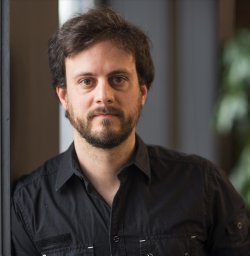 Peropadre Borja合作论文数Dept Chem & Chem Biol, Harvard Univ10Andrew E Szymkowiak合作论文数10V. Shumeiko合作论文数9
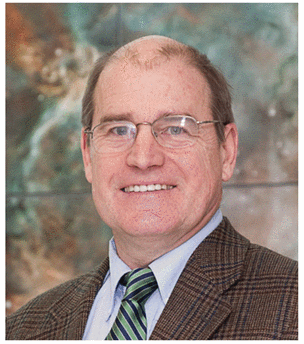 Samuel H. Moseley合作论文数Goddard Space Flight Center, National Aeronautics and Space Administration9Ibrahim Nsanzineza合作论文数9
 Lars Tornberg合作论文数Department of Microtechnology and Nanoscience;Chalmers University of Technology;Department of Microtechnology and Nanoscience, Chalmers University of Technology9NPS CAMPBELL合作论文数8
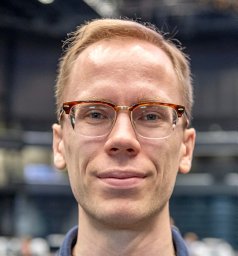 Anton Frisk Kockum合作论文数Chalmers University of Technology8RG GHALY合作论文数7Io-Chun Hoi合作论文数7Gwn Dalzell合作论文数7E. M. Thompson合作论文数7
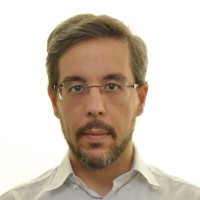 Juan Jose Garcia-Ripoll合作论文数Inspiration-Q7Tauno Palomaki合作论文数6Jf Andrews合作论文数6
 R. Vijay合作论文数Department of Condensed Matter Physics and Materials Science, Tata Institute of Fundamental Research6DJ FLANNERY合作论文数6michael metcalfe合作论文数6J. Allen合作论文数6
 Irfan Siddiqi合作论文数Quantum Nanoelectronics Laboratory, Department of Physics, University of California, Berkeley6
 Philip Krantz合作论文数Microtechnol & Nanosci, Chalmers Univ Technol6
 Io Chun Hoi (許耀銓)合作论文数Department of Physics, College of Science, City University of Hong Kong6
 Andy Hooper合作论文数School of Earth and Environment, Faculty of Environment, University of Leeds;SatSense6
 Leslie E. Daly合作论文数6Chihching Chang合作论文数6R. E. Moore合作论文数6
 Chad Rigetti合作论文数Departments of Physics and Applied Physics;Yale University6Elinor R. Arbuthnott合作论文数6
 Fredrik Persson合作论文数Department of Production Economics;Linköping Institute of Technology;Department of Production Economics, Linköping Institute of Technology6




