Plant invasions can form unique plant communities that are sometimes thought to be so different from native-dominated communities that restoration is either not possible or not logistically feasible. However, few invader removal studies have been conducted in these "novel" ecosystems on islands. To test the potential for restoration of a highly invaded ecosystem in Gal & aacute;pagos, we mechanically removed the canopy-dominant tree (Cedrela odorata) from 48 replicate plots (of 4 m x 4 m each and spread in three separated sites) and evaluated responses of seeds and seedlings, including germination, establishment, and growth, of eight total endemic, native, and invasive plant species compared to control plots where C. odorata was not removed. Invasive tree removal resulted in approximately 30% greater canopy openness compared to control plots, but did not affect the emergence of any species. However, invader removal significantly promoted seedling establishment and growth of the threatened endemic tree Scalesia pedunculata that historically occupied the site. Around 40% of S. pedunculata individuals established under the invader removal treatment while only 5% established in intact control plots. Moreover, S. pedunculata growth was, on average, 65% greater in plots where the invader was removed. Recruitment of S. pedunculata was inhibited by seedling predators (particularly invasive rats) and coverage by fast-growing secondary invaders that also benefited from C. odorata removal. Resolving both native and invasive plant species responses to invasive species removal is an important step in understanding and predicting ecosystem dynamics that determine whether restoration goals in "novel" ecosystems are achievable.
Plant nutritional properties, physical defenses, and chemical defenses impact herbivore feeding decisions. While herbivores often prefer plants enriched with nitrogen, less is known about how phosphorus impacts plant-herbivore interactions. In this study, we investigated how seagrass-herbivore interactions vary along a natural gradient in phosphorus availability, using turtle grass Thalassia testudinum collected from 3 sites in Florida (USA) along the gradient (Weeki Wachee: low phosphorus and nitrogen; Homosassa: high phosphorus and nitrogen; Crystal River: high phosphorus and low nitrogen) and 2 common herbivores, variegated sea urchin Lytechinus variegatus and emerald parrotfish Nicholsina usta . T. testudinum plants from the phosphorus-poor site (Weeki Wachee) exhibited increased physical and chemical anti-herbivore defenses. Plants in Weeki Wachee had higher leaf fiber content, lower specific leaf area, and up to 2 times higher concentrations of phenolic acids and condensed tannins. Both L. variegatus and N. usta avoided consuming the plants from Weeki Wachee, preferring plants from sites with higher nutrient availability. However, feeding preferences varied between the 2 herbivore species, with L. variegatus often consuming similar amounts of the plants from the 2 phosphorus-rich sites (Homosassa and Crystal River) and N. usta preferring the plants from Homosassa, which had the highest concentrations of both phosphorus and nitrogen. These findings suggest that plants at the phosphorus-poor site invest more resources in anti-herbivore defenses, and this higher investment in defenses, along with lower leaf tissue phosphorus concentrations, deterred multiple herbivore species.
Among options for atmospheric CO2 removal, sequestering soil organic carbon (SOC) via improved grazing management is a rare opportunity because it is scalable across millions of globally grazed acres, low cost, and has high technical potential. Decades of scientific research on grazing and SOC has failed to form a cohesive understanding of how grazing management affects SOC stocks and their distribution between particulate (POM) and mineral-associated organic matter (MAOM)-characterized by different formation and stabilization pathways-across different climatic contexts. As we increasingly look to grazing management for SOC sequestration on grazinglands to bolster our climate change mitigation efforts, we need a clear and collective understanding of grazing management's impact on pathways of SOC change to inform on-the-ground management decisions. We set out to review the effects of grazing management on SOC through a unified plant ecophysiology and soil biogeochemistry conceptual framework, where elements such as productivity, input quality, soil mineral capacity, and climate variables such as aridity co-govern SOC accumulation and distribution into POM and MAOM. To maximize applicability to grazingland managers, we discuss how common management levers that drive overall grazing pattern, including timing, intensity, duration, and frequency can be used to optimize mechanistic pathways of SOC sequestration. We discuss important research needs and measurement challenges, and highlight how our conceptual framework can inform more robust research with greater applicability for maximizing the use of grazing management to sequester SOC.
Integrating a perennial forage grass like bahiagrass (Paspalum notatum Flugge) into the traditional rotation of cotton (Gossypium hirsutum L.) and peanut (Arachis hypogaea L.) increases yields and reduces irrigation needs in the Southeast United States. However, the long-term effects of this sod-based rotation (SBR) on soil properties remain unclear. Eighteen years after establishing SBR and the traditional rotation, we collected samples to a depth of 120 cm in 30-cm increments and measured soil carbon and other soil properties (e.g., Mehlich-extractable nutrients). Soil C was 6% higher with SBR in the top 30 cm of soil after 18 years, with no impact on soil C in deeper soil layers. Similarly, there was no effect of SBR on other soil properties (soil texture, pH, and Mehlich-extractable P and Mg), except for lower soil K in SBR. Our results indicate a limited effect of SBR on soil C and other properties in this system where SBR is not grazed and where strip tillage and cover cropping were implemented in both rotations. Adding bahiagrass in a cotton-peanut rotation (sod-based rotation [SBR]) led to a modest soil C increase at 0-30 cm.Rotation systems did not affect soil C below 30 cm.SBR had no other significant effect on soil properties, except for lower soil K.
Predicting soil water status remotely is appealing due to its low cost and large-scale application. During drought, plants can disconnect from the soil, causing disequilibrium between soil and plant water potentials at pre-dawn. The impact of this disequilibrium on plant drought response and recovery is not well understood, potentially complicating soil water status predictions from plant spectral reflectance. This study aimed to quantify drought-induced disequilibrium, evaluate plant responses and recovery, and determine the potential for predicting soil water status from plant spectral reflectance. Two species were tested: sweet corn (Zea mays), which disconnected from the soil during intense drought, and peanut (Arachis hypogaea), which did not. Sweet corn's hydraulic disconnection led to an extended 'hydrated' phase, but its recovery was slower than peanut's, which remained connected to the soil even at lower water potentials (-5 MPa). Leaf hyperspectral reflectance successfully predicted the soil water status of peanut consistently, but only until disequilibrium occurred in sweet corn. Our results reveal different hydraulic strategies for plants coping with extreme drought and provide the first example of using spectral reflectance to quantify rhizosphere water status, emphasizing the need for species-specific considerations in soil water status predictions from canopy reflectance.
Growers in the United States (US) southeast are often recommended to reduce nitrogen (N) fertilization after peanut (Arachis hypogaea L.) by cooperative Extension services. However, these guidelines are not supported by the scientific literature. An experiment was conducted to quantify N contributions from peanut residues to a subsequent carinata (Brassica carinata) crop. A 3 (history: cotton [Gossypium hirsutum L.], peanut, fallow) x 5 (N rates: 0, 34, 67, 101,134 kg N ha(-1)) factorial randomized complete block split-plot design was conducted over four site-years during the 2018-2019 and 2019-2020 seasons at Jay, FL, USA. Peanut and cotton were planted under strip tillage, whereas carinata was drilled into peanut and cotton residues and weed-free fallow plots. Although peanut residues accumulated 54-78 kg N ha(-1), inorganic N content behind former peanut plots at the 0-15 cm depths, ranged from 6 to 8 and 8 to 11 kg N ha(-1) in 2018-2019 and 2019-2020 season, respectively. Cropping history differences for carinata normalized difference vegetation index (NDVI) were pronounced at lower N rates in one out of four site-years during which NDVI behind former cotton plots was lower than former peanut and fallow plots. Carinata seed yield behind former peanut plots was similar to unfertilized fallow based on four site-years of data. Nonlinear regression models predicted that N rates required to optimize carinata seed yield following peanut would exceed 134 kg N ha(-1) thereby indicating negligible peanut N credits. These results support a growing body of literature that suggests minimal N credits after peanut under humid southeastern US conditions.
As a recently introduced crop in the United States, there are limited data regarding temporal nutrient accumulation and partitioning dynamics of Brassica carinata (carinata). A four site-year study was conducted in Jay, FL and Salisbury, NC during the 2018-2019 and 2019-2020 growing seasons. Three carinata genotypes (DH-157.715, M-01, and Avanza 641) proposed by the industry to represent early-, mid-, and full-season genotypes, respectively, were sampled at multiple growth stages and partitioned into leaves, stems, reproductive parts (flowers plus pods), and seed to determine biomass and nutrient accumulation across three genotypes in Florida and one full season genotype in North Carolina. Averaged over two site-years and genotypes in Florida, accumulation (per ha) of 169 kg N, 22 kg P, 160 kg K, 58 kg S, 475 g Zn, and 218 g B was required to produce 1635 and 10,872 kg ha(-1) of seed yield and biomass, respectively. Nutrients with high harvest index values included P (60%), N (55%), S (32%), and Mg (29%). Averaged over two site-years in North Carolina, accumulation (per ha) of 178 kg N, 26 kg P, 87 kg K, 24 kg S, 416 g Zn, and 127 g B produced 2428 and 9102 kg ha(-1) of seed yield and biomass, respectively. Nutrients with greatest harvest index values were P (57%), N (50%), S (32%), and Mg (26%). Internal efficiency of N, P, and K, measured as slopes of seed yield regressions over nutrient uptake across all genotypes and locations were 16, 83, and 8 kg seed yield per kg N, P, and K uptake, respectively. These results describe temporal nutrient accumulation and partitioning in carinata and are critical to refine nutrient management strategies and guide fertilizer application decisions.
Cassava-legume intercropping is widely practiced throughout the tropics. This meta-analysis analyzed the results of 55 publications from 1979 to 2021 containing 501 cassava-legume intercropping treatments to determine the average yield benefit of the practice and to identify management practices that modulate the effect of intercropping. Overall, cassava-legume intercropping was found to be beneficial in terms of land equivalent ratio (mean LER = 1.557), particularly combinations with peanut, cowpea, or soybean. In contrast, cassava-pigeon pea intercropping was not beneficial and produced LER values below 1. The yield benefit of intercropping was significantly lower in fertilized and irrigated systems (LER = 1.131) than in unfertilized rainfed systems (LER = 1.587), likely due to increased competition from cassava that received fertilizer and irrigation. These results support the stress gradient hypothesis and underline the need for management practices and improved varieties specifically optimized for cassava-legume intercropping.
BACKGROUNDFor a significant subset of agricultural products, including coffee, wine and tea, sensory perceptions of terroir (i.e., characteristic flavors imparted by the growing environment) are tightly linked to the product's value. With increasing climate change, it is critical to understand how shifts in climate, such as changes in precipitation, may interact with management practices (e.g., cultivar selection) to impact sensory quality in terroir-driven crops, and what biochemical compounds may be associated with those impacts. Here, sensory quality and volatile profile composition were assessed for four Arabica coffee (Coffea arabica) cultivars grown in a field experiment where precipitation was reduced by rainout shelters, resulting in 14% lower soil moisture on average.RESULTSOur results indicate an overall increase in yield coincident with a moderate decrease in sensory quality in response to reduced precipitation. The presence and magnitude of the sensory quality shift varied by cultivar and sensory attribute, though the Acidity attribute was consistently negatively impacted across cultivars, albeit with a high degree of uncertainty. Additionally, 31 volatile compounds were identified across green coffee samples that were variably impacted by reduced precipitation. Hierarchical clustering analysis identified patterns in volatile clustering associated with sensory attributes suggesting that reduced precipitation effects on sensory attributes may depend on nonlinear combinations of secondary metabolites.CONCLUSIONUltimately, our results advance efforts to improve predictions of climate impacts on coffee-growing landscapes and communities and highlight the value of considering indicators of harvest value beyond yield to improve economic forecasts for agroecosystems under climate change.
Anthropogenic climate change is an urgent and pervasive challenge, yet it remains a polarizing subject. In the United States, studies have shown that rural communities tend to view climate change with less urgency than urban communities, which could delay action in response to the crisis. In rural areas that are highly dependent on agricultural production for their economies, linking climate change to agriculture could be key for improving climate change education. Here we propose a three-part framework that engages student and community knowledge of a locally relevant crop system to make local-global connections, connect the system to climate change, and analyze, critique, and design actionable solutions. The inclusion of lessons that link climate change effects to agriculture could play an important role in more effectively building understanding across cultural and regional divides.
Brassica carinata (carinata), a non‐food oilseed feedstock mainly used for biofuel, is a relatively new alternative winter crop in the southeastern (SE) United States (US). However, there are limited N rate and N application timing data available at the regional scale. These data are needed to expand production in the SE US. An N rate study was conducted during the winter–spring growing seasons during 2017–2018 and 2018–2019 in Florida, US, and at three locations during 2018–2019 in Georgia, US, to quantify the effects of N rate (0, 45, 90, 134, and 179 kg N ha −1 ) on carinata nutrient uptake, biomass, seed yield, and seed chemical composition. Seed yield showed a linear response up to 134 kg N ha −1 . Seed protein and glucosinolate concentrations decreased from 0 to 90 kg N ha −1 , then increased from 90 to 179 kg N ha −1 . Seed oil concentration was inversely related to seed protein concentration. A two‐factor N application timing study (4 N application timing: at‐plant, pre‐bolting, at‐plant + pre‐bolting, at‐plant + pre‐bolting + bolting × 4 N rates: 0, 45, 90, and 134 kg N ha −1 ) was conducted in Georgia, US, over three site‐years to quantify the effect of N application timing on yield and agronomic and economic optimum N rates (AONR and EONR, respectively). All split applications increased AONR by at least 10 kg N ha −1 compared to a single at‐plant application. A two‐split N application was more profitable than either a single N application or a three‐split N application based on marginal return. A two‐way split application (at‐plant + pre‐bolting) at 134 kg N ha −1 is recommended to optimize yield and economical production. Based on uncertainty analyses, the 50% credible interval of EONR occurred between 116 and 152 kg N ha −1 , with a median estimate at 130 kg N ha −1 .
Anthropogenic climate change is predicted to cause shifts in temperature and precipitation patterns that will be detrimental for global agriculture. Developing comprehensive strategies for building climate resilient agroecosystems is critical for maintaining future crop production. Arabica coffee (Coffea arabica) is highly sensitive to the quantity and timing of precipitation, so alterations in precipitation patterns that are predicted under climate change are likely to be a major challenge for maintaining coffee agroecosystems. We assessed cultivar selection as a potential component of more resilient coffee agroecosystems by evaluating water stress responses among five Arabica coffee cultivars (clonal hybrids H10 and H1 and seedling lines Catuai 44, Catuai, and Villa Sarchi) using a precipitation reduction experiment in the highlands of Tarrazú, Costa Rica. During the first harvest (eighteen months after planting), plants under the rainout treatment had 211 % greater total fruit weight and over 50 % greater biomass than under the control treatment, potentially due to protection from unusually high rainfall during this period of our experiment. At the second harvest (30 months after planting), after a year of more typical rainfall, plants under rainout still produced 66 % more fruit by weight than under control. The magnitude of the responses varied among cultivars where, at the first harvest, H10 and H1 had approximately 92 % and 81 % greater fruit production and 18 % and 22 % greater biomass, respectively, and at the second harvest H10 had 60 % more fruit production than the overall average. Thus, our findings suggest that the hybrid lines H10 and H1 are more resilient than the other cultivars to the stress of high soil moisture. Overall, our results indicate that stress due to higher than average rainfall could impair coffee plant growth and production, and that cultivar selection is likely to be an important tool for maintaining the viability of coffee production, and the resilience of global agroecosystems more generally, under climate change.
This study adapts the Faustmann model (1849) to include the effects of carbon-based payments for environmental services on the optimal rotation length of forest plantations. We assume payments occur at the end of the harvesting cycle and are based on the additional average carbon stock over the rotation length relative to an optimal management scenario without carbon incentives. We present numerical applications of our model based on the four most planted tree species in the world: Eucalyptus sp., Acacia sp., Pinus sp. and Tectona sp. Simulations were performed to quantify the impact of different payment levels (USD Mg CO2−1) on optimal rotation lengths and carbon stocks. We find diminishing sequestration returns to increasing carbon payments. Overall, our results suggest that targeting plantations with longer rotations, associated with slow-growing species, is a more cost-effective strategy to retain additional forest carbon stored (USD Mg CO2−1). However, such a strategy results in lower proportional increases in carbon stocks (Mg CO2 ha−1) compared to faster-growing species, which benefit the most from the carbon incentives. As a result, increasing payments for additional carbon stored could change the choice of which tree species to produce and ironically promote plantations with lower total carbon stocks.
 Luke Flory合作论文数Department of Biology, Indiana University4
 Gabriel M. Landry合作论文数3
 Emily Pappo合作论文数3
 Joseph E. Iboyi合作论文数West Florida Research and Education Center, University of Florida3
 Mahesh Bashyal合作论文数West Florida Research and Education Center, University of Florida3
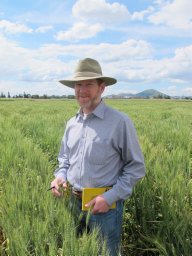 Michael J. Mulvaney合作论文数Plant and Soil Sciences, Mississippi State University3
 Kenneth J. Boote合作论文数Department of Agronomy, University of Florida3
 Ramon G. Leon合作论文数Horticulture and Crop Science Department;California Polytechnic State University;Horticulture and Crop Science Department, California Polytechnic State University3
 Yangyang Song合作论文数2
 Pratap Devkota合作论文数West Florida Research and Education Center, University of Florida2
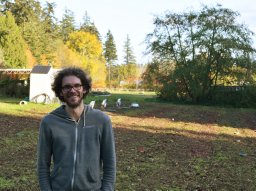 Gabriel Maltais-Landry合作论文数Institut de recherche en biologie végétale, Université de Montréal2Yuxuan Zhang合作论文数1Anna Hampton合作论文数1Greg MacDonald合作论文数1Dewey Lee合作论文数1Keola Iskandar合作论文数1Spencer Chang合作论文数1Jamila Roth合作论文数1
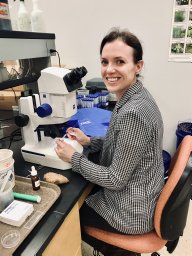 Lesley Schumacher合作论文数1Shea A Keene合作论文数1Ritesh Chowdhry合作论文数1Hunter D. Smith合作论文数1Micah Dettweiler合作论文数Dept Dermatol, Emory Univ1Maria Vrachioli合作论文数1
 Paige Stanley合作论文数Department of Environmental Science, Policy, and Management, University of California1
 sudeep s sidhu合作论文数Univ. of Florida1LaTina Steele合作论文数Department of Biology, Sacred Heart University1
 William M Hammond合作论文数University of Florida1Angela R. Post合作论文数Dept Crop & Soil Sci, North Carolina State Univ1
 Daniel Perondi合作论文数Dep. of Agricultural and Biological Engineering, Univ. of Florida1
 Kelly A. Grogan合作论文数Dept Food & Resource Econ, Univ Florida1
 Thales A.P. West合作论文数Department of Biology, University of Florida, Gainesville, FL 32641, USA1
 George Sheeja合作论文数1
 Resende Márcio F R合作论文数1
 Thomas A. Colquhoun合作论文数Department of Environmental Horticulture, University of Florida1
 Gerard Sapes合作论文数1
 Grabau Zane J合作论文数Department of Plant Pathology/Southern Research and Outreach Center, University of Minnesota;35;Department of Plant Pathology/Southern Research and Outreach Center, University of Minnesota1
 M. Francesca Cotrufo合作论文数Department of Soil and Crop Sciences, College of Agricultural Sciences, Colorado State University1Stefan Gerber合作论文数1
 C. R. Crozier合作论文数1
 Alina Zare合作论文数Department of Electrical & Computer Engineering, University of Florida;Artificial Intelligence and Informatics Research Institute, University of Florida1
 Megan Machmuller合作论文数1
 Bette Loiselle合作论文数Center for Latin American Studies, University of Florida;Department of Wildlife Ecology and Conservation, College of Agricultural and Life Sciences, University of Florida1
 Laura Reynolds合作论文数Department of Environmental Sciences, University of Virginia1Barry L. Tillman合作论文数Agronomy Department, University of Florida1
 Sanjeev J. Koppal合作论文数Department of Electrical and Computer Engineering, University of Florida;Amazon Robotics1




