The antimatter equivalent of atomic hydrogen—antihydrogen—is an outstanding testbed for precision studies of matter–antimatter symmetry. Here we report on the simultaneous observation of both accessible hyperfine components of the 1S–2S transition in trapped antihydrogen. We determine the 2S hyperfine splitting in antihydrogen and—by comparing our results with those obtained in hydrogen—constrain the charge–parity–time-reversal symmetry-violating coefficients in the standard model extension framework. Our experimental protocol allows the characterization of the relevant spectral lines in 1 day, representing a 70-fold improvement in the data-taking rate. We show that the spectroscopy is applicable to laser-cooled antihydrogen with important implications for future tests of fundamental symmetries. The ALPHA Collaboration reports measurements of the hyperfine components of the 1S–2S transition in trapped antihydrogen. They interpret the results as a test of the invariance of charge–parity–time-reversal symmetry.
This paper describes the ALPHA-2 apparatus, used at the CERN Antiproton Decelerator facility for the study of trapped antihydrogen atoms. Details of both the construction and performance are included. Prominence is given to both the new and the improved features, with respect to the original ALPHA assembly, of the apparatus including a stand-alone antiproton catching trap, the traps used to mix antiparticles to produce the anti-atoms, the magnetic atom trap used to hold some of them, and access for laser light to facilitate excitation of the antihydrogen 1S-2P and 1S-2S transitions.
We used confocal microscopy and spectrofluorescence to characterize the emission spectra in hop flowers, to follow the isomerization processes in different hop preparations, and beers, to compare with HPLC extracted samples. Flowers of different hop cultivars produced in three regions of Brazil, were quantitated by HPLC and GC-MS. The fluorescence spectra showed two characteristic emission bands evaluated from different preparations. The isomerization process leads to a gradual decrease in fluorescence intensity as the reaction progresses. This demonstrates the valuable use of confocal microscopy and fluorescence spectroscopy for analysis of the correlation between bitter acid indices with fluorescence intensity and lifetime microscopy. Such techniques can be used directly in the flowers allowing rapid monitoring of the brewing process. Twenty-nine substances were characterized in the essential oils and some cultivars presented quantities of bitter acids and essential oil levels close to those expected for plants after more than three years of cultivation.
Magnetically trapped antihydrogen atoms can be cooled by expanding the volume of the trap in which they are confined. We report a proof-of-principle experiment in which antiatoms are deliberately released from expanded and static traps. Antiatoms escape at an average trap depth of 0.08 +/- 0.01 K (statistical errors only) from the expanded trap while they escape at average depths of 0.22 +/- 0.01 and 0.17 +/- 0.01 K from two different static traps. (We employ temperature-equivalent energy units.) Detailed simulations qualitatively agree with the escape times measured in the experiment and show a decrease of 38% (statistical error < 0.2%) in the mean energy of the population after the trap expansion without significantly increasing antiatom loss compared to typical static confinement protocols. This change is bracketed by the predictions of one-dimensional and three-dimensional semianalytic adiabatic expansion models. These experimental, simulational, and model results are consistent with obtaining an adiabatically cooled population of antihydrogen atoms that partially exchanged energy between axial and transverse degrees of freedom during the trap expansion. This result is important for future antihydrogen gravitational experiments which rely on adiabatic cooling, and it will enable antihydrogen cooling beyond the fundamental limits of laser cooling.
Antiprotons created by laser ionization of antihydrogen are observed to rapidly escape the ALPHA trap. Further, positron plasmas heat more quickly after the trap is illuminated by laser light for several hours. These phenomena can be caused by patch potentials-variations in the electrical potential along metal surfaces. A simple model of the effects of patch potentials explains the particle loss, and an experimental technique using trapped electrons is developed for measuring the electric field produced by the patch potentials. The model is validated by controlled experiments and simulations.
In this work, we reported the synthesis of carbon quantum dots (CQDs) with high fluorescent quantum yield (90.7 %). These nanoparticles were applied in a turn-off/turn-on sensor able to detect cyanide ions. In this sensing strategy, Fe3+ ions were added to the aqueous suspension of CQDs to quench the fluorescence of the system, which was recovered from the presence of cyanide ions. Furthermore, a sensor array was developed using the LDA chemometric tool, to classify different species present in cookie formulations, including gluten. The turnoff/turn-on sensor proved to be sensitive and effective for detecting cyanide ions, with a detection limit of 3.77 ppm. This high sensibility and selectivity allowed quantifying the analyte in a real sample of tap water.
Abstract Cold cations, electrons and anions are ubiquitous in space, participate in star formation chemistry and are relevant to studies on the origin of molecular biology homochirality. We report on a system to generate and trap these species in the laboratory. Laser ablation of a solid target (LiH) facing a sublimating Ne matrix generates cold electrons, anions, and cations. Axial energy distributions (of $${{{{{{\rm{e}}}}}}}^{-}$$ e − , $${{{{{{\rm{H}}}}}}}^{\pm }$$ H ± and $${{{{{{\rm{Li}}}}}}}^{\pm }$$ Li ± ) peaked at 0–25 meV are obtained in a Penning trap at 90 mT and 0.5 eV barrier. Anions can be guided and neutralized with low recoil energy by near–threshold photodetachment. An immediate prospect for this $${{{{{{\rm{H}}}}}}}^{-}$$ H − source is to load hydrogen atoms into the ALPHA antihydrogen trap at CERN toward direct spectroscopic comparison of both conjugated species beyond 13 significant figures. The production is potentially scalable and adaptable to different species including deuterium and tritium, relevant for neutrino mass and fusion research.
Optical tweezers are tools made of light that enable contactless pushing, trapping, and manipulation of objects, ranging from atoms to space light sails. Since the pioneering work by Arthur Ashkin in the 1970s, optical tweezers have evolved into sophisticated instruments and have been employed in a broad range of applications in the life sciences, physics, and engineering. These include accurate force and torque measurement at the femtonewton level, microrheology of complex fluids, single micro- and nano-particle spectroscopy, single-cell analysis, and statistical-physics experiments. This roadmap provides insights into current investigations involving optical forces and optical tweezers from their theoretical foundations to designs and setups. It also offers perspectives for applications to a wide range of research fields, from biophysics to space exploration.
Multiple forms of detecting Co2+ are reported in this work to quantify these ions in real blood plasma samples. Carbon Quantum Dots (CQDs) were used as a fluorescent nanoprobe. The CQDs were obtained from a bottom-up approach using a hydrothermal method and choline chloride and branched poly(ethyleneimine) as precursor molecules. Several spectroscopic and structural characterizations were performed. The efficient fluorescence quenching of CQDs related to the Co2+ ion was used for the detection of the analyte, generating a sensing strategy with a limit of detection (LOD) of 0.98 mu mol L-1. Furthermore, the interaction between the Co2+ ion with the CQDs resulted in the color change of the solution from colorless to pale yellow. Thus, a colorimetric Co2+ sensor was also developed, since there was an absorption band at 315 nm attributed to the formation of the complex CQD + Co2+. The colorimetric method showed an excellent sensitivity to Co2+, with a LOD of 3.01 mu mol L-1. In addition, Principal Component Analysis (PCA) together with Linear Discriminant Analysis (LDA) were used successfully to distinguish different concentrations of Co2+ and different interfering ions present in the solution. Finally, a real sample of blood plasma was properly treated and doped with different concentrations of Co2+, which was successfully quantified via fluorescent method. Therefore, the CQDs obtained in this work are a powerful and versatile Co2+ detection tool.
The ALPHA Collaboration, based at the CERN Antiproton Decelerator, has recently implemented a novel beamline for low-energy ($\lesssim$ 100 eV) positron and antiproton transport between cylindrical Penning traps that have strong axial magnetic fields. Here, we describe how a combination of semianalytical and numerical calculations were used to optimise the layout and design of this beamline. Using experimental measurements taken during the initial commissioning of the instrument, we evaluate its performance and validate the models used for its development. By combining data from a range of sources, we show that the beamline has a high transfer efficiency, and estimate that the percentage of particles captured in the experiments from each bunch is (78 $\pm$ 3)% for up to $10^{5}$ antiprotons, and (71 $\pm$ 5)% for bunches of up to $10^{7}$ positrons.
Einstein's general theory of relativity from 19151 remains the most successful description of gravitation. From the 1919 solar eclipse2 to the observation of gravitational waves3, the theory has passed many crucial experimental tests. However, the evolving concepts of dark matter and dark energy illustrate that there is much to be learned about the gravitating content of the universe. Singularities in the general theory of relativity and the lack of a quantum theory of gravity suggest that our picture is incomplete. It is thus prudent to explore gravity in exotic physical systems. Antimatter was unknown to Einstein in 1915. Dirac's theory4 appeared in 1928; the positron was observed5 in 1932. There has since been much speculation about gravity and antimatter. The theoretical consensus is that any laboratory mass must be attracted6 by the Earth, although some authors have considered the cosmological consequences if antimatter should be repelled by matter7-10. In the general theory of relativity, the weak equivalence principle (WEP) requires that all masses react identically to gravity, independent of their internal structure. Here we show that antihydrogen atoms, released from magnetic confinement in the ALPHA-g apparatus, behave in a way consistent with gravitational attraction to the Earth. Repulsive 'antigravity' is ruled out in this case. This experiment paves the way for precision studies of the magnitude of the gravitational acceleration between anti-atoms and the Earth to test the WEP.
A sensor device based on doped-carbon quantum dots is proposed herein for detection of nitrite in meat products by fluorescence quenching. For the sensing platform, carbon quantum dots doped with boron and functionalized with nitrogen (B,N-Cdot) were synthesized with an excellent 44.3% quantum yield via a one-step hydrothermal route using citric acid, boric acid, and branched polyethylenimine as carbon, boron, and nitrogen sources, respectively. After investigation of their chemical structure and fluorescent properties, the B,N-Cdot at aqueous suspensions showed high selectivity for NO2- in a linear range from 20 to 50 mmol L-1 under optimum conditions at pH 7.4 and a 340 nm excitation. Furthermore, the prepared B,N-Cdots successfully detected NO2- in a real meat sample with recovery of 91.4-104% within the analyzed range. In this manner, a B,N-Cdot/PVA nanocomposite film with blue emission under excitation at 360 nm was prepared, and a first assay detection of NO2- in meat products was tested using a smartphone application. The potential application of the newly developed sensing device containing a highly fluorescent probe should aid in the development of a rapid and inexpensive strategy for NO2- detection.
ABSTRACT Purpose To evaluate the effect of fractional carbon dioxide (CO2) laser treatment using lower power associated with pulse stacking within collagen fibers, using second harmonic generation microscopy and computerized image analysis. Methods Twenty male Wistar rats aging eight weeks were used. Each treatment area received a single-pass CO2 fractional laser with different parameters. The 20 animals were divided into two groups and euthanized after 30 and 60 days. Second harmonic generation images were obtained and program ImageJ was utilized to evaluate the collagen organization within all areas. Collagen anisotropy, entropy and optical density were quantified. Results Increased anisotropy over time was observed in all four areas, but only reached statistical significance (p = 0.0305) when the mildest parameters were used (area four). Entropy decreased over time in all areas, but without significance(p = 0.1779) in area four. Density showed an overtime increase only in area four, but no statistical significance was reached (p = 0.6534). Conclusions When combined, the results obtained in this study regarding anisotropy, entropy and density tend to demonstrate that it is possible to achieve collagen remodeling with the use of lower power levels associated with stacked pulses.
We report analytical expressions for optical forces acting on particles inside waveguides. The analysis builds on our previously reported Fourier Transform method to obtain Beam Shape Coefficients for any beam. Here we develop analytical expressions for the Beam Shape Coefficients in cylindrical and rectangular metallic waveguides. The theory is valid for particle radius a ranging from the Rayleigh regime to large microparticles, such as aerosols like virus loaded droplets. The theory is used to investigate how optical forces within hollow waveguides can be used to sort particles in “optical chromatography” experiments in which particles are optically propelled along a hollow-core waveguide. For Rayleigh particles, the axial force is found to scale with a 6 , while the radial force, which prevents particles from crashing into the waveguide walls, scales with a 3 . For microparticles, narrow Mie resonances create a strong wavelength dependence of the optical force, enabling more selective sorting. Several beam parameters, such as power, wavelength, polarization state and waveguide modes can be tuned to optimize the sorting performance. The analysis focuses on cylindrical waveguides, where meter-long liquid waveguides in the form of hollow-core photonic crystal fibers are readily available. The modes of such fibers are well-approximated by the cylindrical waveguide modes considered in the theory.
Abstract Solid tumors typically contain high levels of fibrillar collagen. The increased stromal collagen deposition usually promotes cancer progression since biochemical and biophysical cues from tumor-associated collagen fibers stimulate neoplastic cells. Few studies have investigated the relationship between Merkel cell carcinoma (MCC) and the extracellular matrix (ECM), but there are no works evaluating collagen. This is an observational, analytical, retrospective study including 11 patients with MCC. Primary tumor-stained sections were evaluated by second harmonic generation microscopy and texture analysis. Peritumoral texture features (area fraction, mean gray value, entropy, and contrast) showed much lower values than normal skin (P < .0001) revealing extensively altered structure of peritumoral collagen fibers. These differences were not significant between tumors with unfavorable and favorable known prognostic factors. Profound changes in collagen fibers present in the stroma accompanying primary MCC may contribute to the aggressive behavior of this tumor. Our results indicate that whatever MCC histological subtype, size or anatomical location, MCC promotes the same type of ECM for its development. As an outlook, therapies using ECM macromolecules or fibroblasts (the architects of ECM remodeling) as target could be useful in the treatment of MCC.
The positron, the antiparticle of the electron, predicted by Dirac in 1931 and discovered by Anderson in 1933, plays a key role in many scientific and everyday endeavours. Notably, the positron is a constituent of antihydrogen, the only long-lived neutral antimatter bound state that can currently be synthesized at low energy, presenting a prominent system for testing fundamental symmetries with high precision. Here, we report on the use of laser cooled Be+ ions to sympathetically cool a large and dense plasma of positrons to directly measured temperatures below 7 K in a Penning trap for antihydrogen synthesis. This will likely herald a significant increase in the amount of antihydrogen available for experimentation, thus facilitating further improvements in studies of fundamental symmetries. Positrons are key to the production of cold antihydrogen. Here the authors report the sympathetic cooling of positrons by interacting them with laser-cooled Be+ ions resulting in a three-fold reduction of the temperature of positrons for antihydrogen synthesis.
The photon—the quantum excitation of the electromagnetic field—is massless but carries momentum. A photon can therefore exert a force on an object upon collision 1 . Slowing the translational motion of atoms and ions by application of such a force 2 , 3 , known as laser cooling, was first demonstrated 40 years ago 4 , 5 . It revolutionized atomic physics over the following decades 6 – 8 , and it is now a workhorse in many fields, including studies on quantum degenerate gases, quantum information, atomic clocks and tests of fundamental physics. However, this technique has not yet been applied to antimatter. Here we demonstrate laser cooling of antihydrogen 9 , the antimatter atom consisting of an antiproton and a positron. By exciting the 1S–2P transition in antihydrogen with pulsed, narrow-linewidth, Lyman-α laser radiation 10 , 11 , we Doppler-cool a sample of magnetically trapped antihydrogen. Although we apply laser cooling in only one dimension, the trap couples the longitudinal and transverse motions of the anti-atoms, leading to cooling in all three dimensions. We observe a reduction in the median transverse energy by more than an order of magnitude—with a substantial fraction of the anti-atoms attaining submicroelectronvolt transverse kinetic energies. We also report the observation of the laser-driven 1S–2S transition in samples of laser-cooled antihydrogen atoms. The observed spectral line is approximately four times narrower than that obtained without laser cooling. The demonstration of laser cooling and its immediate application has far-reaching implications for antimatter studies. A more localized, denser and colder sample of antihydrogen will drastically improve spectroscopic 11 – 13 and gravitational 14 studies of antihydrogen in ongoing experiments. Furthermore, the demonstrated ability to manipulate the motion of antimatter atoms by laser light will potentially provide ground-breaking opportunities for future experiments, such as anti-atomic fountains, anti-atom interferometry and the creation of antimatter molecules.
The follow up of Representative behavior after elections is imperative for a democratic Representative system, at the very least to punish betrayal with no re-election. Our goal was to show how to follow Representatives' and how to show behavior in real situations and observe trends in political crises including the onset of game changing political instabilities. We used correlation and correlation distance matrices of Brazilian Representative votes during four presidential terms. Re-ordering these matrices with Minimal Spanning Trees displays the dynamical formation of clusters for the sixteen year period, which includes one Presidential impeachment. The reordered matrices, colored by correlation strength and by the parties clearly show the origin of observed clusters and their evolution over time. When large clusters provide government support cluster breaks, political instability arises, which could lead to an impeachment, a trend we observed three years before the Brazilian President was impeached. We believe this method could be applied to foresee other political storms.
Luminescent semiconductor nanocrystals or quantum dots (QDs) emerge as important fluorescent probes for in vitro and in vivo Trypanosoma cruzi cells studies. However, to ensure applicability to living organisms, several tests still need to be done. Since several toxic events are caused by QDs, such as loss of mitochondrial membrane potential, ROS generation, DNA damage and cell death by autophagy. We performed a review of the literature on mechanisms of cellular uptake, internalization and citotoxicity of nanoparticles including our results about the evaluation of biological toxicity in T. cruzi. We evaluated the possible effects on parasite growth curves in a time - scale of control and incubated cells with different concentrations of CdTe – QDs (0.2; 2.0; 20 and 200µM) to determine the development cells changes. In addition, intracellular ROS were measured by Electron Paramagnetic Resonance Spectroscopy (EPR) technique. According our results, we can infer that the toxic effects of QDs in T. cruzi are dose-dependent and that high levels of ROS are involved in cellular toxicity promoted by higher concentrations of QDs. In summary, parasites labeled with low concentrations of nanoparticles are suitable and can be used as bioimaging tools for living parasites. However, more studies on QDs cytotoxicity need to be carried out.
 Luiz C Barbosa合作论文数110
 Niels Madsen合作论文数84
 Michael Charlton合作论文数Department of Physics, Swansea University82
 Makoto C. Fujiwara合作论文数Particle Physics Department, TRIUMF;CERN Canadian Group81D. P. Van Der Werf合作论文数81
 J.S. Hangst合作论文数Department of Physics and Astronomy, University of Aarhus81Adriana Fontes合作论文数71
 Andre Thomaz合作论文数Departamento de Eletrônica Quântica, Universidade Estadual de Campinas;Instituto de Física “Gleg Wataghin”, Universidade Estadual de Campinas71d m silveira合作论文数Univ Fed Rio de Janeiro, Inst Fis, BR-21941972 Rio De Janeiro, Brazil63e sarid合作论文数Nucl Res Ctr Negev, Dept Phys, IL-84190 Beer Sheva, Israel61William Bertsche合作论文数Department of Physics and Astronomy, School of Natural Sciences, Faculty of Science and Engineering, The University of Manchester61
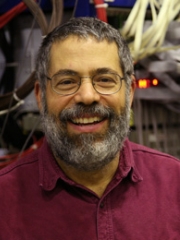 Joel Fajans合作论文数Department of Physics, University of California, Berkeley61
 r i thompson合作论文数Univ Calgary, Dept Phys & Astron, Calgary, AB T2N 1N4, Canada59k olchanski合作论文数TRIUMF, Vancouver, BC V6T 2A3, Canada58d r gill合作论文数57
 Jonathan Wurtele合作论文数Department of Physics, University of California, Berkeley57A. Olin合作论文数University of Victoria V8W57
 Francis Robicheaux合作论文数Department of Physics and Astronomy, College of Science, Purdue University57L. L. Kurchaninov合作论文数55Michael E. Hayden合作论文数55
 Ryugo Hayano合作论文数University of Tokyo53p pusa合作论文数Univ Liverpool, Dept Phys, Liverpool L69 7ZE, Merseyside, England53P. D. Bowe合作论文数51
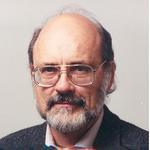 Walter N. Hardy合作论文数Department of Physics & Astronomy, The University of British Columbia50C. So合作论文数47T. Friesen合作论文数47s menary合作论文数York Univ, Dept Phys & Astron, Toronto, ON M3J 1P3, Canada47
 L. V. Jørgensen合作论文数Department of Physics;University of Wales;Department of Physics, University of Wales47
 Vitor B Pelegati合作论文数46
 Svante Jonsell合作论文数Department of Physics;Umeû a University;Department of Physics, Umeû a University46
 Eoin Butler合作论文数Sch Phys, Trinity Coll Dublin44
 Yasunori Yamazaki (山崎泰規)合作论文数Wako Institute, RIKEN;Advanced Science Institute, Riken44P. Nolan合作论文数44Diogo B. Almeida合作论文数40Eugenio Rodriguez合作论文数38Alexander Povilus合作论文数38S. Chapman合作论文数36
 S. Eriksson合作论文数Swansea Univ, Dept Phys, Swansea SA2 8PP, W Glam, Wales35
 J. W. Storey合作论文数TRIUMF34R. Funakoshi合作论文数Department of Physics, University of Tokyo34R. Hydomako合作论文数34G. B. Andresen合作论文数32
 m d ashkezari合作论文数School of Oceanography, University of Washington30A. J. Humphries合作论文数30J. T. K. McKenna合作论文数Department of Physics, University of Liverpool27Rodrigo L. Sacramento合作论文数Instituto de Física, Universidade Federal do Rio de Janeiro27
 Beate S. Santos合作论文数Research group on Nanostructures and Biological Interfaces (NIB)27
 Javier Adur合作论文数Institute for Biological Resources and Functions;National Institute of Advanced Industrial Science and Technology ( AIST );Institute for Biological Resources and Functions, National Institute of Advanced Industrial Science and Technology ( AIST )27Capra A合作论文数26




