A teacher - researcher collaborative action research study was conducted to develop a tool based on the Popper cycle to help 20 primary school teachers to formulate 'researchable' research questions in lesson study. 'researchable' means that the research questions are relevant, significant, ethical, clear and focused, answerable by data, and feasible. This requires teachers to enhance their conceptual sensitivity, that is, the ability to convey their research questions' core problems/issues through clearly defined core concepts. We identified six obstacles that characterise teachers' lack of conceptual sensitivity. We then elaborated on how a practical tool was developed to help teachers overcome their obstacles and achieve boundary crossing from practitioners to teacher-researchers.
Click to increase image sizeClick to decrease image size Notes15 https://www.tandfonline.com/doi/full/10.1080/00131857.2022.208555416 https://www.project-syndicate.org/commentary/ai-chatbots-naive-idiots-no-sense-of-irony-by-slavoj-zizek-2023-0317 https://www.nytimes.com/2023/03/08/opinion/noam-chomsky-chatgpt-ai.html
Who Leads, Who Follows? "Critical Review of the Field of Leadership Studies" by Professor Michael A. Peters, offers one of the clearest and most complete discussions of "critical leadership studies" in the twenty-first century.It deeply considers many of its most important issues, including its evolution and its path forward, its most important paradigms, and its many transformations in the hands of a variety of scholars.The perspective and vision that he brings to bear in the article and its wide ranging discussions of the many relevant contemporary issues that it concerns are deeply thought-provoking.Some of the scholars mentioned by Professor Peters in the paper in question are certainly familiar to Chinese scholars, including Max Weber, while many others will be either little known or have not as yet been examined within the framework of educational philosophy in China.As a professor of philosophy in China, I would like to express the following three comments:First, Professor Peters emphasizes three areas in the "leadership in the Twenty-First Century."The first is "Leadership, multipolarity, and the production of global public goods," the second is "Leadership in the Biodigital Future," and the third is "The Ecological-System Model of Leadership."He individually isolates these three areas because it allows him to articulate and highlight important issues and challenges that leadership education in the 21st century must be aware of and manage.In my humble opinion, no matter whether it is a question of public goods, of the biodigital future, or the ecology-system, each of these areas demands our attention precisely because they are without doubt the urgent issues of educational philosophy confronting China today, and they equally deserve to be seriously considered and discussed by Chinese scholars.Second, in his essay, Professor Peters fully displays a remarkable presentation of the Marxist philosophy of leadership.In Chinese philosophy classes, we often deal with Marxist topics concerning the relationship between the masses and the leaders, between the heroes and the masses, and between the times and the heroes, but in most cases, the discussions take place within the Beijing International Review of Education 5 (2023) 51-91 53
The doctrine of leader centrism, supported by the concept of methodological individualism, dominates contemporary accounts of leadership in education and is generally applied as the default option that explains how organizations such as schools function. We argue that methodological individualism is not defensible and that as a result, the explanatory value of leadership is an open empirical question, not a default option. Leadership, and especially problem-solving, is always exercised under a set of constraints. Making the study of these constraints the focal point for determining leadership not only requires the resources of sciences not usually employed in leadership research, but leads to a reconceptualizing how leadership ought to be studied. In this paper we identify three broad contexts that help determine the constraint sets that define problems and their solutions. A defensible theory of educational leadership, we argue, must incorporate context as sets of constraints and develop empirical procedures to investigate context. Only after investigation is it possible to determine who or what the unit of leadership was, or whether leadership occurred at all. There are no default options.
I first knew Jim Walker when I enrolled in the Diploma of Education at Sydney Teachers College in 1968. The compulsory Philosophy of Education course was taught by the wonderful Anna Hogg (1910–201...
Why Context Matters in Educational Leadership: A New Theoretical Understanding is unique in the field of educational leadership studies. This book offers a systematic account of educational leadership from the perspective that context matters. It argues that studies of leadership in education can only progress if the importance of context is understood and presents context as a set of constraints under which leadership is exercised. A theoretical book that offers at last three major challenges to dominant positions in the field in a systematic way, it provides a new, coherent, and more realistic way to think about leadership in context.The chapters offer concrete steps for complex problem-solving in schools and will help schools tailor solutions to local constraints and circumstances. Written by leading scholars Colin W. Evers and Gabriele Lakomski, this book will be essential reading for students and researchers working in the fields of education, educational administration and leadership.
The influence of cognitive science on educational administration has been patchy. It has varied over four main accounts of cognition, which are, in historical order: behaviorism, functionalism, artificial neural networks, and cognitive neuroscience. These developments, at least as they may have concerned educational administration, go from the late 1940s up to the present day. There also has been a corresponding sequence of developments in educational administration, mainly motivated by accounts of the nature of science. The goal of producing a science of educational administration was dominated by the construal of science as a positivist enterprise. For much of the field’s early development, from the 1950s to the early 1970s, varieties of behaviorism were central, with brief excursions into functionalism. When large-scale alternatives to behaviorism finally began to emerge, they were mostly alternatives to science, and thus failed to comport with much of cognitive science. However, the emergence of postpositivist accounts of science has created the possibility for studies in administrator cognition to be informed by developments in neuroscience. These developments initially included the study of artificial neural networks and more recently have involved biologically realistic mathematical models that reflect work in cognitive neuroscience.
From its beginnings in the 1940s, leadership research has been conducted as a scientific activity, with the aim of discovering the essence of leadership that, once found, would provide social–organizational benefits. However, no essence has been discovered, and research continues undeterred. Leadership theories old and new rely on the conception of science, known as logical empiricism, to support their claims. The identification of logical empiricism with science, however, is a mistake as empiricism is no longer considered valid, a mistake perpetuated in contemporary education leadership theories that present their accounts as alternatives to science. A better account of science, “naturalistic coherentism,” is able to advance the theory and practice of education leadership by growing knowledge, not by denying it.
To put Saudi's Economic Vision 2030 (or Vision 2030) into practice, Saudi Arabia has to reform its education system. To this end, King Abdullah's Education Development Project (hereafter the Tatweer project (Note: Tatweer, as it is known in Arabic)) of 2007–2013 has mandated an educational reform package, which focuses on a broad range of improvements, including enhancing schools' teaching methods and strategies. Hence, this paper argues that to diversify its economy and income away from a strictly oil-producing export country, Saudi Arabia requires an educated citizenry, trained in several disciplines, and students who have the necessary skills for progressing toward a knowledge-based economy. To achieve this, in-service and preservice teachers need to be trained in innovative ways, including listening to their voices and assessing what Saudi teachers require in order to play a positive role in contributing to the achievement the goals outlined in the Vision 2030. This research paper, hence, aims to shed some light into the implantation of Saudi 2030 vision and its direct link to in-service and preservice teachers who must be equipped with the right necessary critical teaching tools. The paper sees teacher voices, teacher training, and the development of strategies such as critical thinking as being essential for future success toward a shift in the Saudi education system vis-à-vis Saudi 2030 vision.
 Gabriele Lakomski合作论文数School Education, University of Melbourne35
 Kokila Roy Katyal合作论文数14Scott Eacott合作论文数School of Education, Faculty of Arts, Design & Architecture, The University of New South Wales5
 Stephanie Chitpin合作论文数4Hk Yuen合作论文数2rmk fox合作论文数2Wang Chengbing合作论文数2
 Marianna Papastephanou合作论文数Department of Education;University of Cyprus;Department of Education, University of Cyprus2
 Petar Jandric合作论文数Department of Informatics & Computing, Zagreb University of Applied Sciences2
 Sean Sturm合作论文数School of Critical Studies in Education, Faculty of Education and Social Work, The University of Auckland2
 Liz Jackson合作论文数University of Illinois at Urbana-Champaign2Tien -Hui Chiang合作论文数1h f lau合作论文数1ECHO H. WU合作论文数1Cathy Ping Xie合作论文数1David A. Turner合作论文数1Liwen Ma合作论文数1Xiyuan Zhang合作论文数1
 Lei Chen (陈磊)合作论文数School of Philosophy, Beijing Normal University1Nesta Devine合作论文数Auckland University of Technology1robert fox合作论文数1
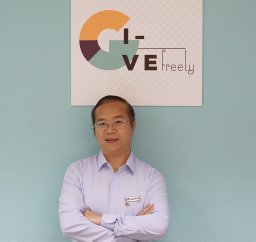 Cuong Huu Nguyen合作论文数Fac Social Sci & Humanities, Ton Duc Thang Univ1Nica Elvira合作论文数The Bucharest University of Economic Studies1
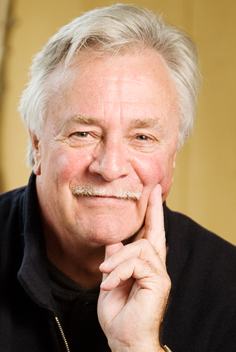 Michael A. Peters合作论文数Beijing Normal University;Faculty of Education, University of Illinois, Urbana-Champaign;University of Auckland1
 Steve Fuller合作论文数Department of Sociology, Faculty of Social Sciences, The University of Warwick1
 Kwok Kuen Tsang (曾國權)合作论文数Department of Education Policy and Leadership, Faculty of Education and Human Development, The Education University of Hong Kong1
 Baocun Liu (刘宝存)合作论文数Institute of International and Comparative Education, Faculty of Education, Beijing Normal University1
 Wei Zhao (赵炜)合作论文数School of Sociology, Beijing Normal University1
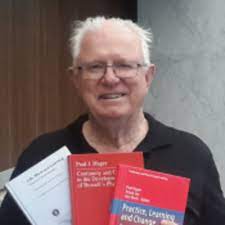 Paul Hager合作论文数Faculty of Arts and Social Sciences, University of Technology Sydney1
 Wing Chan合作论文数School of Education, Culture and Society, Faculty of Education, Monash University1
 Liping Deng合作论文数Departments of Medicinal Chemistry, Merck Research Laboratories1
 Mark Mason合作论文数Faculty of Education, The University of Hong Kong1Stephen Marshall合作论文数School of Education, Faculty of Arts, Design & Architecture, The University of New South Wales1
 Carl Mika合作论文数1
 Sharon P Rider合作论文数1
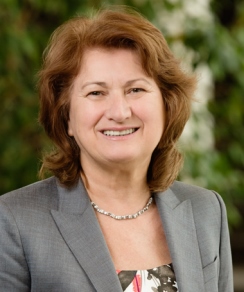 Mary Kalantzis合作论文数Department of Education Policy, Organization & Leadership, College of Education, University of Illinois at Urbana-Champaign1
 Bill Cope合作论文数University of Illinois1
 Mark King合作论文数Centre for Accident Research;Queensland University of Technology;Centre for Accident Research, Queensland University of Technology1
 Tina (A.C.) Besley合作论文数Institute of Education, Tsinghua University1
 Marek Tesar合作论文数School of Learning, Development and Professional Practice, Faculty of Education and Social Work, The University of Auckland1Fazal Rizvi合作论文数Melbourne Graduate School of Education, The University of Melbourne1Martin Barlosky合作论文数1Daniel Araya合作论文数1
 George Lăzăroiu合作论文数Spiru Haret University1
 Allan H. K. Yuen合作论文数Yew Chung College of Early Childhood Education1
 Alfonso Montuori合作论文数Transformative Inquiry Department, School of Consciousness and Transformation, California Institute of Integral Studies;Evolutionary Strategies1




