Advances in artificial intelligence (AI) are fueling a new paradigm of discoveries in natural sciences. Today, AI has started to advance natural sciences by improving, accelerating, and enabling our understanding of natural phenomena at a wide range of spatial and temporal scales, giving rise to a new area of research known as AI for science (AI4Science). Being an emerging research paradigm, AI4Science is unique in that it is an enormous and highly interdisciplinary area. Thus, a unified and technical treatment of this field is needed yet challenging. This work aims to provide a technically thorough account of a subarea of AI4Science; namely, AI for quantum, atomistic, and continuum systems. These areas aim at understanding the physical world from the subatomic (wavefunctions and electron density), atomic (molecules, proteins, materials, and interactions), to macro (fluids, climate, and subsurface) scales and form an important subarea of AI4Science. A unique advantage of focusing on these areas is that they largely share a common set of challenges, thereby allowing a unified and foundational treatment. A key common challenge is how to capture physics first principles, especially symmetries, in natural systems by deep learning methods. We provide an in-depth yet intuitive account of techniques to achieve equivariance to symmetry transformations. We also discuss other common technical challenges, including explainability, out-of-distribution generalization, knowledge transfer with foundation and large language models, and uncertainty quantification. To facilitate learning and education, we provide categorized lists of resources that we found to be useful. We strive to be thorough and unified and hope this initial effort may trigger more community interests and efforts to further advance AI4Science.
Computational quantum chemistry plays a critical role in drug discovery, chemical synthesis, and materials science. While first-principles methods, such as density functional theory (DFT), provide high accuracy in modeling electronic structures and predicting molecular properties, they are computationally expensive. Machine learning interatomic potentials (MLIPs) have emerged as promising surrogate models that aim to achieve DFT-level accuracy while enabling efficient large-scale atomistic simulations. The development of accurate and transferable MLIPs requires large-scale, high-quality datasets with both energy and force labels. Critically, MLIPs must generalize not only to stable geometries but also to intermediate, non-equilibrium conformations encountered during atomistic simulations. In this work, we introduce PubChemQCR, a large-scale dataset of molecular relaxation trajectories curated from the raw geometry optimization outputs of the PubChemQC project. PubChemQCR is the largest publicly available dataset of DFT-based relaxation trajectories for small organic molecules, comprising approximately 3.5 million trajectories and over 300 million molecular conformations computed at various levels of theory. Each conformation is labeled with both total energy and atomic forces, making the dataset suitable for training and evaluating MLIPs. To provide baselines for future developments, we benchmark nine representative MLIP models on the dataset. Our resources are publicly available at https://huggingface.co/divelab.
Accurate molecular property predictions require 3D geometries, which are typically obtained using expensive methods such as density functional theory (DFT). Here, we attempt to obtain molecular geometries by relying solely on machine learning interatomic potential (MLIP) models. To this end, we first curate a large-scale molecular relaxation dataset comprising 3.5 million molecules and 300 million snapshots. Then MLIP foundation models are trained with supervised learning to predict energy and forces given 3D molecular structures. Once trained, we show that the foundation models can be used in different ways to obtain geometries either explicitly or implicitly. First, it can be used to obtain low-energy 3D geometries via geometry optimization, providing relaxed 3D geometries for downstream molecular property predictions. To mitigate potential biases and enhance downstream predictions, we introduce geometry fine-tuning based on the relaxed 3D geometries. Second, the foundation models can be directly fine-tuned for property prediction when ground truth 3D geometries are available. Our results demonstrate that MLIP foundation models trained on relaxation data can provide valuable molecular geometries that benefit property predictions.
SO(3)-equivariant networks are the dominant models for machine learning interatomic potentials (MLIPs). The key operation of such networks is the Clebsch-Gordan (CG) tensor product, which is computationally expensive. To accelerate the computation, we develop tensor decomposition networks (TDNs) as a class of approximately equivariant networks whose CG tensor products are replaced by low-rank tensor decompositions, such as the CANDECOMP/PARAFAC (CP) decomposition. With the CP decomposition, we prove (i) a uniform bound on the induced error of SO(3)-equivariance, and (ii) the universality of approximating any equivariant bilinear map. To further reduce the number of parameters, we propose path-weight sharing that ties all multiplicity-space weights across the O(L^3) CG paths into a single path without compromising equivariance, where L is the maximum angular degree. The resulting layer acts as a plug-and-play replacement for tensor products in existing networks, and the computational complexity of tensor products is reduced from O(L^6) to O(L^4). We evaluate TDNs on PubChemQCR, a newly curated molecular relaxation dataset containing 105 million DFT-calculated snapshots. We also use existing datasets, including OC20, and OC22. Results show that TDNs achieve competitive performance with dramatic speedup in computations. Our code is publicly available as part of the AIRS library (https://github.com/divelab/AIRS/tree/main/OpenMol/TDN).
Structure-based drug design (SBDD) is crucial for developing specific and effective therapeutics against protein targets but remains challenging due to complex protein-ligand interactions and vast chemical space. Although language models (LMs) have excelled in natural language processing, their application in SBDD is underexplored. To bridge this gap, we introduce a method, known as Frag2Seq, to apply LMs to SBDD by generating molecules in a fragment-based manner in which fragments correspond to functional modules. We transform 3D molecules into fragment-informed sequences using SE(3)-equivariant molecule and fragment local frames, extracting SE(3)-invariant sequences that preserve geometric information of 3D fragments. Furthermore, we incorporate protein pocket embeddings obtained from a pre-trained inverse folding model into the LMs via cross-attention to capture protein-ligand interaction, enabling effective target-aware molecule generation. Benefiting from employing LMs with fragment-based generation and effective protein context encoding, our model achieves the best performance on binding vina score and chemical properties such as QED and Lipinski, which shows our model's efficacy in generating drug-like ligands with higher binding affinity against target proteins. Moreover, our method also exhibits higher sampling efficiency compared to atom-based autoregressive and diffusion baselines with at most ~300x speedup.
Computing has long served as a cornerstone of scientific discovery. Recently, a paradigm shift has emerged with the rise of large language models (LLMs), introducing autonomous systems, referred to as agents, that accelerate discovery across varying levels of autonomy. These language agents provide a flexible and versatile framework that orchestrates interactions with human scientists, natural language, computer language and code, and physics. This paper presents our view and vision of LLM-based scientific agents and their growing role in transforming the scientific discovery lifecycle, from hypothesis discovery, experimental design and execution, to result analysis and refinement. We critically examine current methodologies, emphasizing key innovations, practical achievements, and outstanding limitations. Additionally, we identify open research challenges and outline promising directions for building more robust, generalizable, and adaptive scientific agents. Our analysis highlights the transformative potential of autonomous agents to accelerate scientific discovery across diverse domains.
SO(3)-equivariant networks are the dominant models for machine learning interatomic potentials (MLIPs). The key operation of such networks is the Clebsch-Gordan (CG) tensor product, which is computationally expensive. To accelerate the computation, we develop tensor decomposition networks (TDNs) as a class of approximately equivariant networks whose CG tensor products are replaced by low-rank tensor decompositions, such as the CANDECOMP/PARAFAC (CP) decomposition. With the CP decomposition, we prove (i) a uniform bound on the induced error of SO(3)-equivariance, and (ii) the universality of approximating any equivariant bilinear map. To further reduce the number of parameters, we propose path-weight sharing that ties all multiplicity-space weights across the O(L^3) CG paths into a single path without compromising equivariance, where L is the maximum angular degree. The resulting layer acts as a plug-and-play replacement for tensor products in existing networks, and the computational complexity of tensor products is reduced from O(L^6) to O(L^4). We evaluate TDNs on PubChemQCR, a newly curated molecular relaxation dataset containing 105 million DFT-calculated snapshots. We also use existing datasets, including OC20, and OC22. Results show that TDNs achieve competitive performance with dramatic speedup in computations.
Crystal structures are characterized by atomic bases within a primitive unit cell that repeats along a regular lattice throughout 3D space. The periodic and infinite nature of crystals poses unique challenges for geometric graph representation learning. Specifically, constructing graphs that effectively capture the complete geometric information of crystals and handle chiral crystals remains an unsolved and challenging problem. In this paper, we introduce a novel approach that utilizes the periodic patterns of unit cells to establish the lattice-based representation for each atom, enabling efficient and expressive graph representations of crystals. Furthermore, we propose ComFormer, a SE(3) transformer designed specifically for crystalline materials. ComFormer includes two variants; namely, iComFormer that employs invariant geometric descriptors of Euclidean distances and angles, and eComFormer that utilizes equivariant vector representations. Experimental results demonstrate the state-of-the-art predictive accuracy of ComFormer variants on various tasks across three widely-used crystal benchmarks. Our code is publicly available as part of the AIRS library (https://github.com/divelab/AIRS).
Artificial Intelligence models encoding biology and chemistry are opening new routes to high-throughput and high-quality in-silico drug development. However, their training increasingly relies on computational scale, with recent protein language models (pLM) training on hundreds of graphical processing units (GPUs). We introduce the BioNeMo Framework to facilitate the training of computational biology and chemistry AI models across hundreds of GPUs. Its modular design allows the integration of individual components, such as data loaders, into existing workflows and is open to community contributions. We detail technical features of the BioNeMo Framework through use cases such as pLM pre-training and fine-tuning. On 256 NVIDIA A100s, BioNeMo Framework trains a three billion parameter BERT-based pLM on over one trillion tokens in 4.2 days. The BioNeMo Framework is open-source and free for everyone to use.
We consider using deep neural networks to solve time-dependent partial differential equations (PDEs), where multi-scale processing is crucial for modeling complex, time-evolving dynamics. While the U-Net architecture with skip connections is commonly used by prior studies to enable multi-scale processing, our analysis shows that the need for features to evolve across layers results in temporally misaligned features in skip connections, which limits the model's performance. To address this limitation, we propose SineNet, consisting of multiple sequentially connected U-shaped network blocks, referred to as waves. In SineNet, high-resolution features are evolved progressively through multiple stages, thereby reducing the amount of misalignment within each stage. We furthermore analyze the role of skip connections in enabling both parallel and sequential processing of multi-scale information. Our method is rigorously tested on multiple PDE datasets, including the Navier-Stokes equations and shallow water equations, showcasing the advantages of our proposed approach over conventional U-Nets with a comparable parameter budget. We further demonstrate that increasing the number of waves in SineNet while maintaining the same number of parameters leads to a monotonically improved performance. The results highlight the effectiveness of SineNet and the potential of our approach in advancing the state-of-the-art in neural PDE solver design. Our code is available as part of AIRS (https://github.com/divelab/AIRS).
Physical simulations of fluids are crucial for understanding fluid dynamics across many applications, such as weather prediction and engineering design. While high-resolution numerical simulations can provide substantial accuracy in analysis, it also results in prohibitive computational costs. Conversely, lower-resolution simulations are computationally less expensive but compromise the accuracy and reliability of results. In this work, we propose a cascaded fluid reconstruction framework to combine large amounts of low-resolution and limited amounts of paired high-resolution direct simulations for accurate fluid analysis. Our method can improve the accuracy of simulations while preserving the efficiency of low-resolution simulations. Our framework involves a proposal network, pre-trained with small amounts of high-resolution labels, to reconstruct an initial high-resolution flow field. The field is then refined in the frequency domain to become more physically plausible using our proposed refinement network, known as ModeFormer, which is implemented as a complex-valued transformer, with physics-informed unsupervised training. Our experimental results demonstrate the effectiveness of our approach in enhancing the overall performance of fluid flow reconstruction. The code will be made publicly available at https://github.com/divelab/AIRS/tree/main/OpenPDE/CFRF.
Deep learning methods have been shown to be effective in representing ground-state wave functions of quantum many-body systems. Existing methods use convolutional neural networks (CNNs) for square lattices due to their image-like structures. For non-square lattices, existing method uses graph neural network (GNN) in which structure information is not precisely captured, thereby requiring additional hand-crafted sublattice encoding. In this work, we propose lattice convolutions in which a set of proposed operations are used to convert non-square lattices into grid-like augmented lattices on which regular convolution can be applied. Based on the proposed lattice convolutions, we design lattice convolutional networks (LCN) that use self-gating and attention mechanisms. Experimental results show that our method achieves performance on par or better than existing methods on spin 1/2 J_1-J_2 Heisenberg model over the square, honeycomb, triangular, and kagome lattices while without using hand-crafted encoding.
We consider solving partial differential equations (PDEs) with Fourier neural operators (FNOs), which operate in the frequency domain. Since the laws of physics do not depend on the coordinate system used to describe them, it is desirable to encode such symmetries in the neural operator architecture for better performance and easier learning. While encoding symmetries in the physical domain using group theory has been studied extensively, how to capture symmetries in the frequency domain is under-explored. In this work, we extend group convolutions to the frequency domain and design Fourier layers that are equivariant to rotations, translations, and reflections by leveraging the equivariance property of the Fourier transform. The resulting G-FNO architecture generalizes well across input resolutions and performs well in settings with varying levels of symmetry. Our code is publicly available as part of the AIRS library (https://github.com/divelab/AIRS).
Proteins are complex biomolecules that perform a variety of crucial functions within living organisms. Designing and generating novel proteins can pave the way for many future synthetic biology applications, including drug discovery. However, it remains a challenging computational task due to the large modeling space of protein structures. In this study, we propose a latent diffusion model that can reduce the complexity of protein modeling while flexibly capturing the distribution of natural protein structures in a condensed latent space. Specifically, we propose an equivariant protein autoencoder that embeds proteins into a latent space and then uses an equivariant diffusion model to learn the distribution of the latent protein representations. Experimental results demonstrate that our method can effectively generate novel protein backbone structures with high designability and efficiency. The code will be made publicly available at https://github.com/divelab/AIRS/tree/main/OpenProt/LatentDiff
Although there exist several libraries for deep learning on graphs, they are aiming at implementing basic operations for graph deep learning. In the research community, implementing and benchmarking various advanced tasks are still painful and time-consuming with existing libraries. To facilitate graph deep learning research, we introduce DIG: Dive into Graphs, a turnkey library that provides a unified testbed for higher level, research-oriented graph deep learning tasks. Currently, we consider graph generation, self-supervised learning on graphs, explainability of graph neural networks, and deep learning on 3D graphs. For each direction, we provide unified implementations of data interfaces, common algorithms, and evaluation metrics. Altogether, DIG is an extensible, open-source, and turnkey library for researchers to develop new methods and effortlessly compare with common baselines using widely used datasets and evaluation metrics. Source code is available at https://github.com/divelab/DIG.
Molecular property prediction is gaining increasing attention due to its diverse applications. One task of particular interests and importance is to predict quantum chemical properties without 3D equilibrium structures. This is practically favorable since obtaining 3D equilibrium structures requires extremely expensive calculations. In this work, we design a deep graph neural network to predict quantum properties by directly learning from 2D molecular graphs. In addition, we propose a 3D graph neural network to learn from low-cost conformer sets, which can be obtained with open-source tools using an affordable budget. We employ our methods to participate in the 2021 KDD Cup on OGB Large-Scale Challenge (OGB-LSC), which aims to predict the HOMO-LUMO energy gap of molecules. Final evaluation results reveal that we are one of the winners with a mean absolute error of 0.1235 on the holdout test set. Our implementation is available as part of the MoleculeX package (https://github.com/divelab/MoleculeX).
Autonomous mobile robots need perception module to understand nearby environments, avoid obstacles and, most importantly, interact with the humans in the dynamic environments. In order to perform human robot interaction for mobile robots, face detection is an inevitable and important function. In recent years, deep learning has emerged to be the most accurate approach for face detection problems. However, deep learning models have very high computational density, therefore cannot be executed in real-time on the embedded low-end processors that most of the robot systems equip with. Switching to high-end CPU or GPU generally means much higher cost and power consumption. Meanwhile, FPGA is well suited for robot application because it provides high computing power with low cost and high power efficiency. In this paper we design an FPGA based system for the acceleration of MTCNN, which is one of the most accurate face detection neural networks. We evaluate the system using a Zynq 706 board and compare the performance with embedded CPU and popular GPU edge computing platform Jetson TX2. Our FPGA system has 40× lower latency than Jetson TX2 with 2.5 × higher power efficiency, making it a promising candidate for egde computing on mobile robot applications.
Laparo-endoscopic single-site surgery (LESS) with its unique advantages has become the focus in the minimally invasive surgery. However, the existing LESS robots are mostly given open loop control for its arm, which is difficult for the doctor to handle the surgical instruments. In this paper, A magnetic anchor robot for LESS was designed, which can be inserted into peritoneal cavity through just one incision. We use master-slave control system based on visual feedback to achieve closed-loop control for the robot arm. To extract image feature information, we used a pin-hole camera geometry and made mark points on the robotic arm and proposed a marker point coordinate algorithm to realize the real-time stability control of the robot arm. The equivalent model of robotic platform is established and the master-slave control program based on visual feedback is verified by experiment to be feasible.
This paper designs a hydraulic-actuated biped robot including the aspects of mechanical structure and gait planning. Referring to skeleton structure of human, we designed a 3D biped robot model. The robot has 12 degrees of freedom. Each freedom covers the range of motion in human walking. Based on the loaded inverted pendulum model, stable walking gait is planned. Mathematical relationship between joint trajectory and walking parameters is obtained. Finally, walking simulation is made to verify the feasibility of gait planning and rationality of mechanical design. ANSYS has been used to check stress in important parts. The force curves of hydraulic piston rodsare also obtained by simulation which provides reference to select hydraulic components and build a physical prototype.
This paper presents a multi-DOF and reconfigurable robotic gripper which has three fingers and is easy to control. Every finger of the gripper has three joints that are actuated by two motors. The mechanical gripper structure contains the same three fingers, while every finger can be driven and controlled independently. Based on the four-bar linkage, a model of reconfigurable mechanism is obtained, while input variables can determine the motion and trajectory. The gripper consists of palm, three fingers, rotating base. The first phalange and the second phalange are coupled and driven by first servo motor, while the second DC motor rotate the finger using a type of worm-and-wheel beside the third joint of finger. The third DOF of every finger is not coupled that makes the reconfiguration of the gripper can be obtained by adjusting the orientation of the fingers. Potentiometers integrated in the motors detect rotate angers of every finger in order to measure the rotation of joints for controlling the gripper to adapt to different shapes of the object and determine the final configurations. The gripper is designed to provide the ability of performing industrial tasks involving the grasping of a variety of different sizes of objects. The primary experimental exhibits a good capability to versatile grasping with reduced complexity.
 Shuiwang Ji合作论文数Department of Computer Science & Engineering, College of Engineering, Texas A&M University15
 Yuchao Lin合作论文数Data Integration, Visualization, and Exploration Lab, Texas A&M University;Lambda6
 Xuan Zhang合作论文数Department of Computer Science & Engineering, Texas A&M University5
 Xiaofeng Qian合作论文数5Yaochen Xie合作论文数4
 Haiyang Yu合作论文数Department of Computer Science and Engineering, Texas A&M University4
 Jacob Helwig合作论文数Department of Computer Science & Engineering, Texas A&M University4
 Meng Liu (刘猛)合作论文数4
 Limei Wang合作论文数Meta4
 Keqiang Yan合作论文数Department of Computer Science and Engineering, Texas A&M University4
 Xiaoning Qian合作论文数Department of Electrical & Computer Engineering, College of Engineering, Texas A&M University;Brookhaven National Laboratory4
 Maho Nakata合作论文数RIKEN4
 Hongyi Ling (凌弘毅)合作论文数Department of Computer Science & Engineering, Texas A&M University;The DIVE Lab, Texas A&M University3Xiner Li合作论文数3
 Zhao Xu合作论文数Texas A&M University, Department of Computer Science and Engineering, College Station, TX 77843, USA.3
 Shenglong Xu合作论文数Department of Physics & Astronomy, College of Arts;& Sciences, Texas A&M University3
 Youzhi Luo合作论文数Amazon Web Services3
 Heng Ji (季姮)合作论文数Siebel School of Computing and Data Science, The Grainger College of Engineering, University of Illinois at Urbana-Champaign3
 Shurui Gui合作论文数Department of Computer Science and Engineering, Texas A&M University;Data Integration, Visualization, and Exploration Lab, Texas A&M University;Amazon2Jerry Kurtin合作论文数2
 Stephan Wojtowytsch合作论文数Texas A &M University2
 Küçükbenli Emine合作论文数2
 Anima Anandkumar合作论文数Anima AI + Science Lab, California Institute of Technology;Division of Engineering and Applied Science, California Institute of Technology;Department of Computing and Mathematical Sciences, California Institute of Technology2Hao Yuan合作论文数Department of Computer Science & Engineering, Texas A&M University2
 Yi Liu (刘毅)合作论文数Department of Applied Mathematics & Statistics, Stony Brook University;Department of Computer Science, Stony Brook University2
 Marinka Zitnik合作论文数Department of Biomedical Informatics, Harvard Medical School, Harvard University;Kempner Institute for the Study of Natural and Artificial Intelligence, Harvard University2Emine Kucukbenli合作论文数1Zachary Krueger合作论文数1Jianwen Xie合作论文数1Blake Olson合作论文数1Michael McThrow合作论文数1
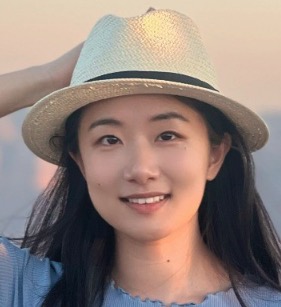 Haoran Liu (刘浩然)合作论文数Department of Computer Science & Engineering, Texas A&M University1Montgomery Bohde合作论文数1
 Ameya Daigavane合作论文数Electrical Engineering & Computer Science Department, Massachusetts Institute of Technology;Prescient Design1Danny Reidenbach合作论文数1Hassan Sirelkhatim合作论文数1Ada Fang合作论文数1
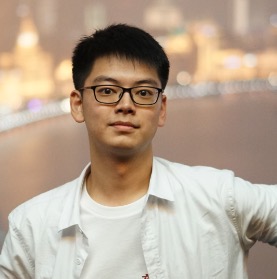 Minkai Xu (徐民凯)合作论文数Department of Computer Science, Stanford University1
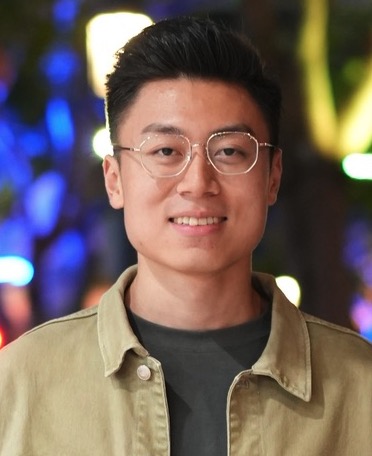 Junkai Zhang (张峻恺)合作论文数Department of Computer Science, University of California, Los Angeles1Tao Komikado合作论文数1
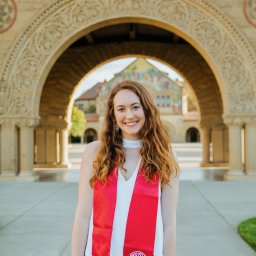 E. Hofgard合作论文数1Guozhi Li合作论文数1
 Chaitanya K. Joshi合作论文数Department of Computer Science & Technology, Clare Hall College, University of Cambridge1Kyle Hippe合作论文数Dept Comp Sci, Pacific Lutheran Univ1
 Simon Mathis合作论文数IBM Res Zurich, IBM Quantum1
 Jingtun Zhang合作论文数1
 Adriana Ladera合作论文数Dept Chem Engn, MIT1
 Alex Strasser合作论文数Artie McFerrin Dept Chem Engn, Texas A&M Univ1




