Recent experiments searching for sub-GeV/$c^2$ dark matter have observed event excesses close to their respective energy thresholds. Although specific to the individual technologies, the measured excess event rates have been consistently reported at or below event energies of a few-hundred eV, or with charges of a few electron-hole pairs. In the present work, we operated a 1-gram silicon SuperCDMS-HVeV detector at three voltages across the crystal (0 V, 60 V and 100 V). The 0 V data show an excess of events in the tens of eV region. Despite this event excess, we demonstrate the ability to set a competitive exclusion limit on the spin-independent dark matter--nucleon elastic scattering cross section for dark matter masses of $\mathcal{O}(100)$ MeV/$c^2$, enabled by operation of the detector at 0 V potential and achievement of a very low $\mathcal{O}(10)$ eV threshold for nuclear recoils. Comparing the data acquired at 0 V, 60 V and 100 V potentials across the crystal, we investigated possible sources of the unexpected events observed at low energy. The data indicate that the dominant contribution to the excess is consistent with a hypothesized luminescence from the printed circuit boards used in the detector holder.
CDMSlite Run 2 was a search for weakly interacting massive particles (WIMPs) with a cryogenic 600 g Ge detector operated in a high-voltage mode to optimize sensitivity to WIMPs of relatively low mass from 2 - 20 GeV/$c^2$. In this article, we present an effective field theory (EFT) analysis of the CDMSlite Run 2 data using an extended energy range and a comprehensive treatment of the expected background. A binned likelihood Bayesian analysis was performed on the recoil energy data, taking into account the parameters of the EFT interactions and optimizing the data selection with respect to the dominant background components. Energy regions within 5$\sigma$ of known activation peaks were removed from the analysis. The Bayesian evidences resulting from the different operator hypotheses show that the CDMSlite Run 2 data are consistent with the background-only models and do not allow for a signal interpretation assuming any additional EFT interaction. Consequently, upper limits on the WIMP mass and coupling-coefficient amplitudes and phases are presented for each EFT operator. These limits improve previous CDMSlite Run 2 bounds for WIMP masses above 5 GeV/$c^2$.
Two photo-neutron sources, (YBe)-Y-88-Be-9 and (SbBe)-Sb-124-Be-9, have been used to investigate the ionization yield of nuclear recoils in the CDMSlite germanium detectors by the SuperCDMS collaboration. This work evaluates the yield for nuclear recoil energies between 1 and 7 keV at a temperature of similar to 50 mK. We use a GEANT4 simulation to model the neutron spectrum assuming a charge yield model that is a generalization of the standard Lindhard model and consists of two energy dependent parameters. We perform a likelihood analysis using the simulated neutron spectrum, modeled background, and experimental data to obtain the best fit values of the yield model. The ionization yield between recoil energies of 1 and 7 keV is shown to be significantly lower than predicted by the standard Lindhard model for germanium. There is a general lack of agreement among different experiments using a variety of techniques studying the low energy range of the nuclear recoil yield, which is most critical for interpretation of direct dark matter searches. This suggests complexity in the physical process that many direct detection experiments use to model their primary signal detection mechanism and highlights the need for further studies to clarify underlying systematic effects that have not been well understood up to this point.
The SuperCDMS Collaboration is currently building SuperCDMS SNOLAB, a dark matter search focused on nucleon-coupled dark matter in the 1-5 GeV/c$^2$ mass range. Looking to the future, the Collaboration has developed a set of experience-based upgrade scenarios, as well as novel directions, to extend the search for dark matter using the SuperCDMS technology in the SNOLAB facility. The experienced-based scenarios are forecasted to probe many square decades of unexplored dark matter parameter space below 5 GeV/c$^2$, covering over 6 decades in mass: 1-100 eV/c$^2$ for dark photons and axion-like particles, 1-100 MeV/c$^2$ for dark-photon-coupled light dark matter, and 0.05-5 GeV/c$^2$ for nucleon-coupled dark matter. They will reach the neutrino fog in the 0.5-5 GeV/c$^2$ mass range and test a variety of benchmark models and sharp targets. The novel directions involve greater departures from current SuperCDMS technology but promise even greater reach in the long run, and their development must begin now for them to be available in a timely fashion. The experienced-based upgrade scenarios rely mainly on dramatic improvements in detector performance based on demonstrated scaling laws and reasonable extrapolations of current performance. Importantly, these improvements in detector performance obviate significant reductions in background levels beyond current expectations for the SuperCDMS SNOLAB experiment. Given that the dominant limiting backgrounds for SuperCDMS SNOLAB are cosmogenically created radioisotopes in the detectors, likely amenable only to isotopic purification and an underground detector life-cycle from before crystal growth to detector testing, the potential cost and time savings are enormous and the necessary improvements much easier to prototype.
The Cryogenic Dark Matter Search low ionization threshold experiment (CDMSlite) achieved efficient detection of very small recoil energies in its germanium target, resulting in sensitivity to lightly ionizing particles (LIPs) in a previously unexplored region of charge, mass, and velocity parameter space. We report first direct-detection limits calculated using the optimum interval method on the vertical intensity of cosmogenically produced LIPs with an electric charge smaller than e/(3×10^{5}), as well as the strongest limits for charge ≤e/160, with a minimum vertical intensity of 1.36×10^{-7} cm^{-2} s^{-1} sr^{-1} at charge e/160. These results apply over a wide range of LIP masses (5 MeV/c^{2} to 100 TeV/c^{2}) and cover a wide range of βγ values (0.1-10^{6}), thus excluding nonrelativistic LIPs with βγ as small as 0.1 for the first time.
We present limits on spin-independent dark matter-nucleon interactions using a 10.6 g Si athermal phonon detector with a baseline energy resolution of σ_{E}=3.86±0.04(stat)_{-0.00}^{+0.19}(syst) eV. This exclusion analysis sets the most stringent dark matter-nucleon scattering cross-section limits achieved by a cryogenic detector for dark matter particle masses from 93 to 140 MeV/c^{2}, with a raw exposure of 9.9 g d acquired at an above-ground facility. This work illustrates the scientific potential of detectors with athermal phonon sensors with eV-scale energy resolution for future dark matter searches.
This article presents an analysis and the resulting limits on light dark matter inelastically scattering off of electrons, and on dark photon and axion-like particle absorption, using a second-generation SuperCDMS high-voltage eV-resolution detector. The 0.93 gram Si detector achieved a 3 eV phonon energy resolution; for a detector bias of 100 V, this corresponds to a charge resolution of 3% of a single electron-hole pair. The energy spectrum is reported from a blind analysis with 1.2 gram-days of exposure acquired in an above-ground laboratory. With charge carrier trapping and impact ionization effects incorporated into the dark matter signal models, the dark matter-electron cross section $\bar{\sigma}_{e}$ is constrained for dark matter masses from 0.5--$10^{4} $MeV$/c^{2}$; in the mass range from 1.2--50 eV$/c^{2}$ the dark photon kinetic mixing parameter $\varepsilon$ and the axioelectric coupling constant $g_{ae}$ are constrained. The minimum 90% confidence-level upper limits within the above mentioned mass ranges are $\bar{\sigma}_{e}\,=\,8.7\times10^{-34}$ cm$^{2}$, $\varepsilon\,=\,3.3\times10^{-14}$, and $g_{ae}\,=\,1.0\times10^{-9}$.
This article presents a protection scheme for dc power distribution systems based on a unique rate-limited operating mode. The concept of this protection scheme is that extremely slow ramp-rate limits can be imposed on the dc network voltage and all currents drawn from the network through control of the power electronic interfaces. Meanwhile, all fast transients produced by loads and DGs can be absorbed by local energy storage-typically a battery-behind the interface converter. The removal of all transients from the distribution network enables a very effective method to differentiate the normal operation from fault conditions, including high-impedance faults, such as vegetation faults and human-body faults. In the proposed scheme, the ramp rates of the current and voltage on the network are sensed by each interfaced converter to check for compliance with the defined rate limits. It is unlikely that a given fault on the network will comply with the stringently slow rate limits, so this scheme allows the system to quickly detect the fault and deploy suitable protections. Experimental results show that the presented protection scheme is capable of detecting and interrupting a human-body-impedance fault quickly enough to prevent electrocution on a dc distribution cable operating at voltages of 1000 V and above, leading to unprecedented safety on a power distribution network of this voltage level.
We present an analysis of electron recoils in cryogenic germanium detectors operated during the SuperCDMS Soudan experiment. The data are used to set new constraints on the axioelectric coupling of axion-like particles and the kinetic mixing parameter of dark photons, assuming the respective species constitutes all of the galactic dark matter. This study covers the mass range from 40 eV/c^2 to 500 eV/c^2 for both candidates, excluding previously untested parameter space for masses below 1 keV/c^2. For the kinetic mixing of dark photons, values below 10^-15 are reached for particle masses around 100 eV/c^2; for the axioelectric coupling of axion-like particles, values below 10^-12 are reached for particles with masses in the range of a few-hundred eV/c^2.
This corrects the article DOI: 10.1103/PhysRevLett.121.051301.
The Cryogenic Dark Matter Search low ionization threshold experiment (CDMSlite) searches for interactions between dark matter particles and germanium nuclei in cryogenic detectors. The experiment has achieved a low energy threshold with improved sensitivity to low-mass (< 10 GeV/c(2)) dark matter particles. We present an analysis of the final CDMSlite dataset, taken with a different detector than was used for the two previous CDMSlite datasets. This analysis includes a data "salting" method to protect against bias, improved noise discrimination, background modeling, and the use of profile likelihood methods to search for a dark matter signal in the presence of backgrounds. We achieve an energy threshold of 70 eV and significantly improve the sensitivity for dark matter particles with masses between 2.5 and 10 GeV/c(2) compared to previous analyses. We set an upper limit on the dark matter-nucleon scattering cross section in germanium of 5.4 x 10(-42) cm(2) at 5 GeV/c(2), a factor of similar to 2.5 improvement over the previous CDMSlite result.
Future direct searches for low-mass dark matter particles with germanium detectors, such as SuperCDMS SNOLAB, are expected to be limited by backgrounds from radioactive isotopes activated by cosmogenic radiation inside the germanium. There are limited experimental data available to constrain production rates and a large spread of theoretical predictions. We examine the calculation of expected production rates, and analyze data from the second run of the CDMS low ionization threshold experiment (CDMSlite) to estimate the rates for several isotopes. We model the measured CDMSlite spectrum and fit for contributions from tritium and other isotopes. Using the knowledge of the detector history, these results are converted to cosmogenic production rates at sea level. The production rates in atoms/(kg·day) are 74±9 for ^3H, 1.5±0.7 for ^55Fe, 17±5 for ^65Zn, and 30±18 for ^68Ge.
We report the result of a blinded search for weakly interacting massive particles (WIMPs) using the majority of the SuperCDMS Soudan data set. With an exposure of 1690 kg d, a single candidate event is observed, consistent with expected backgrounds. This analysis (combined with previous Ge results) sets an upper limit on the spin-independent WIMP-nucleon cross section of 1.4×10^{-44} (1.0×10^{-44}) cm^{2} at 46 GeV/c^{2}. These results set the strongest limits for WIMP-germanium-nucleus interactions for masses >12 GeV/c^{2}.
Author(s): Agnese, R; Anderson, AJ; Aralis, T; Aramaki, T; Arnquist, IJ; Baker, W; Balakishiyeva, D; Barker, D; Basu Thakur, R; Bauer, DA; Binder, T; Bowles, MA; Brink, PL; Bunker, R; Cabrera, B; Caldwell, DO; Calkins, R; Cartaro, C; Cerdeno, DG; Chang, Y; Chagani, H; Chen, Y; Cooley, J; Cornell, B; Cushman, P; Daal, M; Di Stefano, PCF; Doughty, T; Esteban, L; Fascione, E; Figueroa-Feliciano, E; Fritts, M; Gerbier, G; Ghaith, M; Godfrey, GL; Golwala, SR; Hall, J; Harris, HR; Hong, Z; Hoppe, EW; Hsu, L; Huber, ME; Iyer, V; Jardin, D; Jastram, A; Jena, C; Kelsey, MH; Kennedy, A; Kubik, A; Kurinsky, NA; Leder, A; Loer, B; Lopez Asamar, E; Lukens, P; Macdonell, D; Mahapatra, R; Mandic, V; Mast, N; Miller, EH; Mirabolfathi, N; Moffatt, RA; Mohanty, B; Morales Mendoza, JD; Nelson, J; Orrell, JL; Oser, SM; Page, K; Page, WA; Partridge, R; Pepin, M; Penalver Martinez, M; Phipps, A; Poudel, S; Pyle, M; Qiu, H; Rau, W; Redl, P; Reisetter, A; Reynolds, T; Roberts, A; Robinson, AE; Rogers, HE; Saab, T; Sadoulet, B; Sander, J | Abstract: © 2018 American Physical Society. The SuperCDMS experiment is designed to directly detect weakly interacting massive particles (WIMPs) that may constitute the dark matter in our Galaxy. During its operation at the Soudan Underground Laboratory, germanium detectors were run in the CDMSlite mode to gather data sets with sensitivity specifically for WIMPs with masses l10 GeV/c2. In this mode, a higher detector-bias voltage is applied to amplify the phonon signals produced by drifting charges. This paper presents studies of the experimental noise and its effect on the achievable energy threshold, which is demonstrated to be as low as 56 eVee (electron equivalent energy). The detector-biasing configuration is described in detail, with analysis corrections for voltage variations to the level of a few percent. Detailed studies of the electric-field geometry, and the resulting successful development of a fiducial parameter, eliminate poorly measured events, yielding an energy resolution ranging from ∼9 eVee at 0 keV to 101 eVee at ∼10 keVee. New results are derived for astrophysical uncertainties relevant to the WIMP-search limits, specifically examining how they are affected by variations in the most probable WIMP velocity and the Galactic escape velocity. These variations become more important for WIMP masses below 10 GeV/c2. Finally, new limits on spin-dependent low-mass WIMP-nucleon interactions are derived, with new parameter space excluded for WIMP masses ≲3 GeV/c2.
The Cryogenic Dark Matter Search (CDMS II) experiment aims to detect dark matter particles that elastically scatter from nuclei in semiconductor detectors. The resulting nuclear-recoil energy depositions are detected by ionization and phonon sensors. Neutrons produce a similar spectrum of low-energy nuclear recoils in such detectors, while most other backgrounds produce electron recoils. The absolute energy scale for nuclear recoils is necessary to interpret results correctly. The energy scale can be determined in CDMS II silicon detectors using neutrons incident from a broad-spectrum Cf-252 source, taking advantage of a prominent resonance in the neutron elastic scattering cross section of silicon at a recoil (neutron) energy near 20 (182) keV. Results indicate that the phonon collection efficiency for nuclear recoils is 4.8(-0.9)(+0.7)% lower than for electron recoils of the same energy. Comparisons of the ionization signals for nuclear recoils to those measured previously by other groups at higher electric fields indicate that the ionization collection efficiency for CDMS II silicon detectors operated at similar to 4 V/cm is consistent with 100% for nuclear recoils below 20 keV and gradually decreases for larger energies to similar to 75% at 100 keV. The impact of these measurements on previously published CDMS II silicon results is small.
We present the first limits on inelastic electron-scattering dark matter and dark photon absorption using a prototype SuperCDMS detector having a charge resolution of 0.1 electron-hole pairs (CDMS HVeV, a 0.93 g CDMS high-voltage device). These electron-recoil limits significantly improve experimental constraints on dark matter particles with masses as low as 1 MeV/c^{2}. We demonstrate a sensitivity to dark photons competitive with other leading approaches but using substantially less exposure (0.49 g d). These results demonstrate the scientific potential of phonon-mediated semiconductor detectors that are sensitive to single electronic excitations.
The Super Cryogenic Dark Matter Search experiment at the Soudan Underground Laboratory studied energy loss associated with defect formation in germanium crystals at mK temperatures using in situ 210Pb sources. We examine the spectrum of 206Pb nuclear recoils near its expected 103 keV endpoint energy and determine an energy loss of (6:08 ± 0:18)%, which we attribute to defect formation. From this result and using TRIM simulations, we extract the first experimentally determined average displacement threshold energy of 19.7−0.5+0.6 eV for germanium. This has implications for the analysis thresholds of future germanium-based dark matter searches.
We report the result of a blinded search for weakly interacting massive particles (WIMPs) using the majority of the SuperCDMS Soudan data set. With an exposure of 1690 kg d, a single candidate event is observed, consistent with expected backgrounds. This analysis (combined with previous Ge results) sets an upper limit on the spin-independent WIMP–nucleon cross section of 1.4 × 10^(−44) (1.0 × 10^(−44) cm^2 at 46 GeV/c^2. These results set the strongest limits for WIMP–germanium-nucleus interactions for masses u003e 12 GeV/c^2.
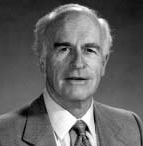 David O. Caldwell合作论文数Department of Physics, University of California, Santa Barbara76
 P.L. Brink合作论文数71T. Saab合作论文数67
 Raymond Bunker合作论文数67
 Richard Schnee合作论文数Case Western Reserve University67
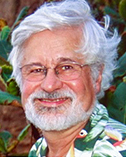 Bernard Sadoulet合作论文数Center for Particle Astrophysics, Lawrence Berkeley Laboratory, University of California, Berkeley;UC system-wide Institute for Nuclear and Particle Astrophysics and Cosmology65S. Yellin合作论文数65
 N. Mirabolfathi合作论文数63
 Blas Cabrera合作论文数SLAC Faculty, Stanford University/Physics Department, Stanford University63
 Sunil Golwala合作论文数The Division of Physics, Mathematics and Astronomy, California Institute of Technology62Joel Sander合作论文数Department of Physics, University of California61
 Ettore Majorana合作论文数Dipartimento di Fisica, Sapienza Università di Roma58
 Betty A Young合作论文数58W. Rau合作论文数57
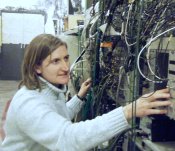 J. Cooley合作论文数Southern Methodist University56
 Bruno Serfass合作论文数Department of Physics, University of California56
 Angela Reisetter合作论文数School of Physics & Astronomy, University of Minnesota53
 Priscilla Cushman合作论文数School of Physics and Astronomy, College of Science and Engineering, University of Minnesota51
 Matt C Pyle合作论文数Department of Physics, University of California, Berkeley50L. Hsu合作论文数46M. E. Huber合作论文数44
 D. J. Holmgren合作论文数Fermi National Accelerator Laboratory44
 Joanne M Hall合作论文数Physics Department, University of Utah39M. Fritts合作论文数39
 Rabi N. Mahapatra合作论文数Department of Computer Science & Engineering, College of Engineering, Texas A&M University;Embedded System Co-Design Labs, Texas A&M University36A. Lu合作论文数35D. N. Seitz合作论文数34
 Enectali Figueroa-Feliciano合作论文数Department of Physics and Astronomy, Weinberg College of Arts and Sciences, Northwestern University34
 Michael H. Kelsey合作论文数Department of Physics, Texas A&M University34Roger M Partridge合作论文数34A. N. Villano合作论文数33R. R. Ross合作论文数33
 David G. Cerdeno合作论文数32
 Miguel Demetrius Daal合作论文数32S. Scorza合作论文数31D. Balakishiyeva合作论文数30
 Daniel Akerib合作论文数SLAC National Accelerator Laboratory, Stanford University30
 J. Filippini合作论文数Department of Physics, University of California29K. M. Sundqvist合作论文数29R Walter Ogburn合作论文数29B. Loer合作论文数29K. A. McCarthy合作论文数28E. Lopez Asamar合作论文数28
 Andrew Jastram合作论文数28
 Laura Baudis合作论文数Department of Physics, University of Zurich28H. R. Harris合作论文数27S. A. Hertel合作论文数26D. H. Wright合作论文数26L. Duong合作论文数26




