The coherent photoproduction of $\rm{J/\psi}$ and $\rm{\psi'}$ mesons was measured in ultra-peripheral Pb-Pb collisions at a center-of-mass energy $\sqrt{s_{\mathrm{NN}}}~=~5.02$ TeV with the ALICE detector. Charmonia are detected in the central rapidity region for events where the hadronic interactions are strongly suppressed. The $\rm{J/\psi}$ is reconstructed using the dilepton ($l^{+} l^{-}$) and proton-antiproton decay channels, while for the $\rm{\psi'}$, the dilepton and the $l^{+} l^{-} \pi^{+} \pi^{-}$ decay channels are studied. The analysis is based on an event sample corresponding to an integrated luminosity of about 233 ${\mu b}^{-1}$. The results are compared with theoretical models for coherent $\rm{J/\psi}$ and $\rm{\psi'}$ photoproduction. The coherent cross section is found to be in a good agreement with models incorporating moderate nuclear gluon shadowing of about 0.65 at a Bjorken-$x$ of around $6\times 10^{-4}$, such as the EPS09 parametrization, however none of the models is able to fully describe the rapidity dependence of the coherent $\rm{J/\psi}$ cross section including ALICE measurements at forward rapidity. The ratio of $\rm{\psi'}$ to $\rm{J/\psi}$ coherent photoproduction cross sections was also measured and found to be consistent with the one for photoproduction off protons.
RHIC results have shown the importance of high momentum particles as hard probes and the need for particle identification (PID) in a very large momentum range. A Very High Momentum PID (VHMPID) detector has been proposed as upgrade of ALICE to extend the track-by-track identification capabilities for charged hadrons from the present 5GeV/c limit to the momentum range 10–30GeV/c. The VHMPID detector is a focusing RICH using C4F10 gaseous radiator coupled to a CsI-based photon detector. Detector design studies, achievable Cherenkov angle resolution, expected performance and high momentum triggering will be discussed.
The High Momentum Particle Identification Detector in the ALICE experiment is based on a Ring Imaging Cherenkov (RICH) detector with a CsI photocathode. The identification of Cherenkov photons, especially in conditions of high occupancy as will be the case in Pb–Pb collisions at the Large Hadron Collider, requires efficient pattern recognition algorithms. The results of an algorithm based on the Hough transform, that maps the pad coordinate space directly to the Cherenkov angle parameter space, will be shown. The performance of the method on real events collected in the STAR experiment at the Relativistic Heavy Ion Collider (RHIC) at Brookhaven (USA), where a prototype of the RICH detector developed in the ALICE framework has been successfully operated, will also be described.
The STAR-RICH detector extends the particle identification capabilities of the STAR experiment for charged hadrons at mid-rapidity. This detector represents the first use of a proximity-focusing CsI-based RICH detector in a collider experiment. It provides identification of pions and kaons up to 3GeV/c and protons up to 5GeV/c. The characteristics and performance of the device in the inaugural RHIC run are described.
An asynchronous version of a binary pixel readabout circuit has been implemented in an array with 16 columns at 500 mu m pitch and 63 rows at 75 mu m pitch. This readabout chip has been bonded with solder bumps to a silicon detector with matching pixel elements. Event information in a pixel can be strobed into a local memory by a trigger signal and subsequently read out. Without a strobe the information is continuously cleared. The complete hybrid detector has been successfully tested with ionizing particles from a radioactive source. Three such devices have been put in the CERN heavy-ion experiment WA94 in the Omega spectrometer, where they recorded particle tracks from high-multiplicity /sup 32/S interactions. Preliminary data indicate a noise of approximately 60 e/sup -/ and a threshold spread of approximately 500 e/sup -/. The timing characteristics are adequate for a fixed-target experiment.<>
The STAR-RICH detector extends the particle identification capabilities of the STAR spectrometer for charged hadrons at mid-rapidity. It allows identification of pions and kaons up to similar to3 GeV/c and protons up to similar to5 GeV/c. The characteristics and performance of the device in the inaugural RHIC run are described.
A RICH detector with a CsI photo-cathode and liquid perfluorohexane radiator has been installed in the STAR experiment at RHIC. The liquid is continuously cleaned and distributed to a quartz containment vessel within the detector by a closed recirculation system. A VUV spectrometer is connected to the system which monitors the optical transparency of the liquid. This measurement provides one of the pieces of information necessary to model the number of Cherenkov photons which reach the pad plane. A description of the liquid recirculation system and the cleaning procedure for the liquid as well as the spectrometer is presented along with results of their performance.
Charged particle production in central S-S collisions at 200 GeV/c per nucleon has been studied by the WA94 experiment at the CERN-SPS. Particle identification has been provided by the Omega RICH, while a silicon telescope in the Omega spectrometer and an array of MultiWire Proportional Chambers have been used to trace particles through the RICH detector. Production ratios and transverse mass spectra for π±, K± and p(p) at central rapidity and pT > 1.3 GeV/c are presented.
A silicon pixel telescope, consisting of seven planes for a total of about 0.5 M sensor elements with size of 75 μm × 500 μm, was successfully employed in the WA97 experiment at CERN. We describe here the overall performance of the detector; we also report some early results from PbPb and p-Pb runs, showing the powerful capability to measure particle momenta and the effective mass of hyperons with a good resolution.
Central π+π− events produced in pp interactions are studied in terms of correlations between the outgoing protons. It is observed there is more ϱ0(770) and f2(1270) production in reactions where the outgoing protons are on opposite sides of the beam. This effect is not attributable to the trigger or the experimental acceptance, and suggests that the vertices do not factorise.
Silicon detectors with two-dimensional pad readout have been designed and constructed for the WA97 experiment at CERN, in order to solve ambiguities for track reconstruction in a silicon microstrip telescope. A high density fanouts has been developed on a glass support to allow the electrical contacts between the detector and the front end electronics. Silicon pad detectors have been successfully operated both during the proton-Pb and Pb-Pb runs of the WA97 experiment.
Results on K-s(0) production at central rapidity in sulphur-tungsten interactions are presented. The selection procedure used to identify K-s(0) particles through their decay to two charged pions is described. The m(T) spectra for K-s(0), Lambda and <(Lambda)over bar> and the relative production rates K-s(0)/Lambda and K-s(0)/<(Lambda)over bar> calculated in the kinematic region p(T) > 1 GeV/c and 2.5 less than or equal to gamma(LAB) less than or equal to 3.0, are discussed.
Preliminary results from WA97 measurements on Λ, Ξ and Ω production in lead-lead and proton-lead collisions are presented, along with a comparison of WA97 proton-lead data with previous WA85 proton-tungsten results. The ratio ΩgX seems to be enhanced in lead initiated reactions compared to proton initiated reactions.
We present preliminary results about charged particle production in SS collisions at 200 GeV/c per nucleon, obtained by WA94 experiment at CERN-SPS. The particle identification has been provided by the Omega RICH; a silicon telescope and an array of multiwire proportional chambers (MWPC) have been used to track particles to the RICH detector. Details about particle tracking and identification procedure are also reported.
The Omega3/LHC1 pixel detector readout chip comprises a matrix of 128 × 16 readout cells of 50 μm × 500 μm and peripheral functions with 4 distinct modes of initialization and operation, together more than 800 000 transistors. Each cell contains a complete chain of amplifier, discriminator with adjustable threshold and fast-OR output, a globally adjustable delay with local fine-tuning, coincidence logic and memory. Every cell can be individually addressed for electrical test and masking. First results have been obtained from electrical tests of a chip without detector as well as from source measurements. The electronic noise without detector is ∼ 100 e− rms. The lowest threshold setting is close to 2000 e− and non-uniformity has been measured to be better than 450 e− rms at 5000 e− threshold. A timewalk of < 10 ns and a precision of < 6 ns rms on a delay of 2 μs have been measured. The results may be improved by further optimization.
Four silicon pixel detector planes are combined to form a tracking telescope in the lead ion experiment WA97 at CERN with 290 304 sensitive elements each of 75 μm by 500 μm area. An electronic pulse processing circuit is associated with each individual sensing element and the response for ionizing particles is binary with an adjustable threshold. The noise rate for a threshold of 6000e− has been measured to be less than 10−10. The inefficient area due to malfunctioning pixels is 2.8% of the 120 cm2. Detector overlaps within one plane have been used to determine the alignment of the components of the plane itself, without need for track reconstruction using external detectors. It is the first time that such a big surface covered with active pixels has been used in a physics experiment. Some aspects concerning inclined particle tracks and time walk have been measured separately in a beam test at the CERN SPS H6 beam.
WA97 is designed to study strange and multi-strange baryon and anti-baryon production in 160 A GeVc PbPb collisions at the SPS with a telescope of silicon microdetectors. Four planes of silicon pixel detectors were successfully employed during the 1994 Pb run. A total of 60M central PbPb events were collected. We describe the experimental setup and report on some preliminary results from the off-line analysis.
We report results on the production of strange baryons/antibaryons with 1, 2, and 3 units of strangeness (Λ, Ξ and Ω) and mesons (Ks0, K+ and K−) in WA85 experiment at the CERN SPS. This experiment was designed to study the production of strange particles in central SW collisions at 200 GeV/c per nucleon, in the central rapidity region with medium to high pt. We have measured the inverse slopes of the mt distributions of such particles and the production ratios Λ/Λ, Ξ+/Ξ−, Ξ−/Λ, Ξ+/Λ, Ks0/Λ, Ks0/Λ, (Ω− + Ω+)(Ξ− + Ξ+) and K+K−. Preliminary results on the production ratios Ξ−/Λ and Ξ+/Λ in pW collisions at 200 GeV/c are also presented.
A multi-chip, large area hybrid silicon pixel detector has been integrated in a particle physics experiment for the first time. The plane had 72K 75 μm × 500 μm sensor elements, covering a total area of about 30 cm2. It was constructed and characterized in a collaboration between heavy-ion experiment WA97 and R&D project RD19. Several such planes will be incorporated in a hyperon telescope, in order to improve tracking in the high multiplicity environment of central lead-lead collisions at the SPS. Results on the characterization of this detector in a proton beam at the Omega spectrometer at CERN are presented and discussed.
 V. Lenti合作论文数42
 Emanuele Quercigh合作论文数39Werner Beusch合作论文数39
 Adam Jacholkowski合作论文数Physics Department, CERN38Vittorio Manzari合作论文数36B. Ghidini合作论文数34F. Navach合作论文数33K Knudson合作论文数32R. Sene合作论文数31g vassiliadis合作论文数31M. Sene合作论文数31b r french合作论文数30
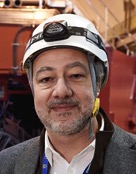 Federico Antinori合作论文数Padua Section, National Institute for Nuclear Physics30Jb Kinson合作论文数30k safařik合作论文数Faculty of Nuclear Sciences and Physical Engineering, Czech Technical University in Prague30
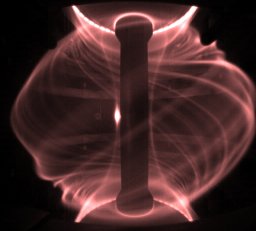 a kirk合作论文数Culham Sci Ctr, CCFE30
 Domenico Elia合作论文数Istituto Nazionale di Fisica Nucleare30Jn Carney合作论文数29
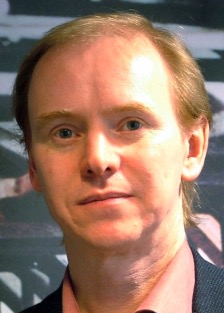 David Evans合作论文数School of Physics and Astronomy, University of Birmingham29
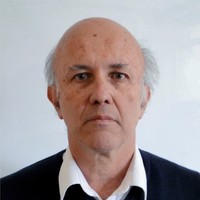 O Villalobos-Baillie合作论文数School of Physics and Astronomy, University of Birmingham29Mf Votruba合作论文数28Benayoun Maurice合作论文数Laboratoire de Physique Nucléaire et de Hautes Energies, Institut National de Physique Nucléaire et de Physique des Particules27
 Håvard Helstrup合作论文数Department of Computer Science, Electrical Engineering and Mathematical Sciences, Western Norway University of Applied Sciences;University of Bergen26R. Fini合作论文数26Jc Lassalle合作论文数24A. Volte合作论文数24Ph. Leruste合作论文数23Jl Narjoux合作论文数22Rp Barnes合作论文数22J Kahane合作论文数21Ak Holme合作论文数20Jp Davies合作论文数19Gianfranco F. Segato合作论文数19Mariana Morando合作论文数19B. De La Cruz合作论文数Centro de Investigaciones Energéticas Medioambientales y Tecnológicas (CIEMAT), Madrid, Spain18
 Lucio Rossi合作论文数CERN18S Abatzis合作论文数18
 Alberto Andrighetto合作论文数Dipartimento di Fisica, Università Padova17F. Pellegrini合作论文数17A Bayes合作论文数17Ra Loconsole合作论文数16Paolo Martinengo合作论文数CERN16Jp Dufey合作论文数14Saverio Simone合作论文数Dipartimento di Fisica, Università degli Studi di Bari Aldo Moro14E. Chesi合作论文数13D. Barberis合作论文数13Ehm Heijne合作论文数13
 Myron Campbell合作论文数Physics, College of Literature, Science, and the Arts, University of Michigan-Ann Arbor13M.G. Catanesi合作论文数Laboratoire de Physique des Particules (LAPP),, IN2P3-CNRS13




