We report a Dalitz plot analysis of charmless hadronic decays of charged $B$ mesons to the final state $K_{\rm S}^{0}\pi^{+}\pi^{0}$ using the full BaBar dataset of $470.9\pm2.8$ million $B\bar{B}$ events collected at the $\Upsilon(4S)$ resonance. We measure the overall branching fraction and $CP$ asymmetry to be ${\cal B}\left(B^{+}\to K^{0}\pi^{+}\pi^{0}\right) = \left(45.9 \pm 2.6 \pm 3.0^{+8.6}_{-0.0}\right)\times10^{-6}$ and $A_{CP}\left(B^{+}\to K^{0}\pi^{+}\pi^{0}\right) = 0.07 \pm 0.05 \pm 0.03^{+0.02}_{-0.03}$, where the uncertainties are statistical, systematic, and due to the signal model, respectively. This is the first measurement of the branching fraction for $B^{+} \to K^{0}\pi^{+}\pi^{0}$. We find first evidence of a $CP$ asymmetry in $B^{+}\to K^{*}(892)^{+}\pi^{0}$ decays: $A_{CP}\left(B^{+}\to K^{*}(892)^{+}\pi^{0}\right)=-0.52 \pm 0.14 \pm 0.04^{+0.04}_{-0.02}$. The significance of this asymmetry, including systematic and model uncertainties, is $3.4$ standard deviations. We also measure the branching fractions and $CP$ asymmetries for three other intermediate decay modes.
We report on measurements of the decays of $\overline{B}$ mesons into the semileptonic final states $\overline{B} \to D^{(*)} \pi^+\pi^- \ell^-\overline{\nu}$, where $D^{(*)}$ represents a $D$ or $D^*$ meson and $\ell^-$ is an electron or a muon. These measurements are based on $471\times 10^6$ $B\overline{B}$ pairs recorded with the $BABAR$ detector at the SLAC asymmetric $B$ Factory PEP-II. We determine the branching fraction ratios $R^{(*)}_{\pi^+\pi^-} = \mathcal{B}(\overline{B} \to D^{(*)} \pi^+\pi^- \ell^- \overline{\nu})/\mathcal{B}(\overline{B} \to D^{(*)} \ell^-\overline{\nu})$ using events in which the second $B$ meson is fully reconstructed. We find $R_{\pi^+\pi^-} = 0.067 \pm 0.010 \pm 0.008$ and $R^*_{\pi^+\pi^-} = 0.019 \pm 0.005 \pm 0.004$, where the first uncertainty is statistical and the second is systematic. Based on these results, we estimate that $\overline{B} \to D^{(*)}\pi\pi\ell^-\overline{\nu}$ decays, where $\pi$ denotes both a $\pi^\pm$ and $\pi^0$ meson, account for up to half the difference between the measured inclusive semileptonic branching fraction to charm hadrons and the corresponding sum of previously measured exclusive branching fractions.
We study the lepton forward-backward asymmetry AFB and the longitudinal K* polarization FL, as well as an observable P2 derived from them, in the rare decays B->K*l+l-, where l+l- is either e+e- or mu+mu-, using the full sample of 471 million BBbar events collected at the Upsilon(4S) resonance with the Babar detector at the PEP-II e+e- collider. We separately fit and report results for the B+->K*+l+l- and B0->K*0l+l- final states, as well as their combination B->K*l+l-, in five disjoint dilepton mass-squared bins. An angular analysis of B+->K*+l+l- decays is presented here for the first time.
We measure the time-dependent CP asymmetry in the radiative-penguin decay B 0 → K 0 S π − π þ γ , using a sample of 471 × 10 6 ϒ ð 4 S Þ → B ¯ B events recorded with the BABAR detector at the PEP-II e þ e − storage ring at SLAC. Using events with m K ππ < 1 . 8 GeV =c 2 , we measure the branching fractions of B þ → K þ π − π þ γ and B 0 → K 0 π − π þ γ , the branching fractions of the kaonic resonances decaying to K þ π − π þ , as well as the overall branching fractions of the B þ → ρ 0 K þ γ , B þ → K (cid:2) 0 π þ γ and S -wave B þ → ð K π Þ (cid:2) 00 π þ γ components. For events from the ρ mass band, we measure the CP -violating parameters S K 0 S π þ π − γ ¼ 0 . 14 (cid:3) 0 . 25 (cid:3) 0 . 03 and C K 0 S π þ π − γ ¼ − 0 . 39 (cid:3) 0 . 20 þ 0 . 03 − 0 . 02 , where the first uncertainties are statistical and the second are systematic. We extract from this measurement the time-dependent CP asymmetry related to the CP eigenstate ρ 0 K 0 S and obtain S K 0 S ργ ¼ − 0 . 18 (cid:3) 0 . 32 þ 0 . 06 − 0 . 05 , which provides information on the photon polarization in the underlying b → s γ transition.
We describe in detail a previously published measurement of CP violation induced by B0-anti B0 oscillations, based on an integrated luminosity of 425.7 fb-1 collected by the BABAR experiment at the PEPII collider. We apply a novel technique to a sample of about 6 million B0bar -> D*+ l- nubar decays selected with partial reconstruction of the D*+ meson. The charged lepton identifies the flavor of one B meson at its decay time, the flavor of the other B is determined by kaon tagging. We determine a CP violating asymmetry ACP = (0.0006 +- 0.0017 + 0.0038 - 0.0032). This measurement is consistent and competitive with those obtained at the B factories with dilepton events.
Citation Del Amo Sanchez, P., J. P. Lees, V. Poireau, V. Tisserand, E. Grauges, A. Palano, G. Eigen, et al. “Time-Dependent Analysis of B[superscript 0] K[0 over S][superscript ][superscript +] Decays and Studies of the K[superscript +][superscript ][superscript +] System in B[superscript +] K[superscript +][superscript ][superscript +] decays.” Phys. Rev. D 93, no. 5 (March 29, 2016). © 2016 American Physical Society
Charge asymmetry in the processes e(+)e(-) -> mu(+)mu(-)gamma and e(+)e(-) -> pi(+)pi(-)gamma is measured using 232 fb(-1) of data collected with the BABAR detector at e(+)e(-) center-of-mass energies near 10.58 GeV. An observable is introduced and shown to be very robust against detector asymmetries while keeping a large sensitivity to the physical charge asymmetry that results from the interference between initial-and final-state radiation (FSR). The asymmetry is determined as a function of the invariant mass of the final-state tracks from production threshold to a few GeV/c(2). It is compared to the expectation from QED for e(+)e(-) -> mu(+)mu(-)gamma, and from theoretical models for e(+)e(-) -> pi(+)pi(-)gamma. A clear interference pattern is observed in e(+)e(-) -> pi(+)pi(-)gamma, particularly in the vicinity of the f(2)(1270) resonance. The inferred rate of lowest-order FSR production is consistent with the QED expectation for e(+)e(-) -> mu(+)mu(-)gamma, and is negligibly small for e(+)e(-) -> pi(+)pi(-)gamma.
We report a measurement of the time-dependent CP asymmetry of B[over ¯]^{0}→D_{CP}^{(*)}h^{0} decays, where the light neutral hadron h^{0} is a π^{0}, η, or ω meson, and the neutral D meson is reconstructed in the CP eigenstates K^{+}K^{-}, K_{S}^{0}π^{0}, or K_{S}^{0}ω. The measurement is performed combining the final data samples collected at the ϒ(4S) resonance by the BABAR and Belle experiments at the asymmetric-energy B factories PEP-II at SLAC and KEKB at KEK, respectively. The data samples contain (471±3)×10^{6} BB[over ¯] pairs recorded by the BABAR detector and (772±11)×10^{6} BB[over ¯] pairs recorded by the Belle detector. We measure the CP asymmetry parameters -η_{f}S=+0.66±0.10(stat)±0.06(syst) and C=-0.02±0.07(stat)±0.03(syst). These results correspond to the first observation of CP violation in B[over ¯]^{0}→D_{CP}^{(*)}h^{0} decays. The hypothesis of no mixing-induced CP violation is excluded in these decays at the level of 5.4 standard deviations.
A search is presented for the decay Υ(1S)→ γA^0, A^0 → cc[bar], where A^0 is a candidate for the CP-odd Higgs boson of the next-to-minimal supersymmetric standard model. The search is based on data collected with the BABAR detector at the Υ(2S) resonance. A sample of Υ(1S) mesons is selected via the decay Υ(2S)→π + π − Υ(1S). The A^0 → cc[bar] decay is identified through the reconstruction of hadronic D^0, D^+, and D^∗ (2010)^+ meson decays. No significant signal is observed. The measured 90% confidence-level upper limits on the product branching fraction B(Υ(1S) → γA^0 ) × B(A^0 → cc[bar] ) range from 7.4×10^(−5) to 2.4×10^(−3) for A^0 masses from 4.00 to 8.95 GeV/c^2 and 9.10 to 9.25 GeV/c^2, where the region between 8.95 and 9.10 GeV/c^2 is excluded because of background from Υ(2S) → γχ_(bJ) (1P), χ_(bJ) (1P) → γΥ(1S) decays.
J. P. Lees, V. Poireau, V. Tisserand, E. Grauges, A. Palano, G. Eigen, B. Stugu, D. N. Brown, L. T. Kerth, Yu. G. Kolomensky, M. J. Lee, G. Lynch, H. Koch, T. Schroeder, C. Hearty, T. S. Mattison, J. A. McKenna, R. Y. So, A. Khan, V. E. Blinov, A. R. Buzykaev, V. P. Druzhinin, V. B. Golubev, E. A. Kravchenko, A. P. Onuchin, S. I. Serednyakov, Yu. I. Skovpen, E. P. Solodov, K. Yu. Todyshev, A. J. Lankford, M. Mandelkern, B. Dey, J. W. Gary, O. Long, C. Campagnari, M. Franco Sevilla, T. M. Hong, D. Kovalskyi, J. D. Richman, C. A. West, A. M. Eisner, W. S. Lockman, W. Panduro Vazquez, B. A. Schumm, A. Seiden, D. S. Chao, C. H. Cheng, B. Echenard, K. T. Flood, D. G. Hitlin, T. S. Miyashita, P. Ongmongkolkul, F. C. Porter, R. Andreassen, Z. Huard, B. T. Meadows, B. G. Pushpawela, M. D. Sokoloff, L. Sun, P. C. Bloom, W. T. Ford, A. Gaz, J. G. Smith, S. R. Wagner, R. Ayad, W.H. Toki, B. Spaan, D. Bernard, M. Verderi, S. Playfer, D. Bettoni, C. Bozzi, R. Calabrese, G. Cibinetto, E. Fioravanti, I. Garzia, E. Luppi, L. Piemontese, V. Santoro, A. Calcaterra, R. de Sangro, G. Finocchiaro, S. Martellotti, P. Patteri, I. M. Peruzzi, M. Piccolo, M. Rama, A. Zallo, R. Contri, M. Lo Vetere, M. R. Monge, S. Passaggio, C. Patrignani, E. Robutti, B. Bhuyan, V. Prasad, A. Adametz, U. Uwer, H. M. Lacker, P. D. Dauncey, U. Mallik, C. Chen, J. Cochran, S. Prell, H. Ahmed, A. V. Gritsan, N. Arnaud, M. Davier, D. Derkach, G. Grosdidier, F. Le Diberder, A. M. Lutz, B. Malaescu, P. Roudeau, A. Stocchi, G. Wormser, D. J. Lange, D. M. Wright, J. P. Coleman, J. R. Fry, E. Gabathuler, D. E. Hutchcroft, D. J. Payne, C. Touramanis, A. J. Bevan, F. Di Lodovico, R. Sacco, G. Cowan, J. Bougher, D. N. Brown, C. L. Davis, A. G. Denig, M. Fritsch, W. Gradl, K. Griessinger, A. Hafner, K. R. Schubert, R. J. Barlow,39,∥ G. D. Lafferty, R. Cenci, B. Hamilton, A. Jawahery, D. A. Roberts, R. Cowan, G. Sciolla, R. Cheaib, P. M. Patel, S. H. Robertson, N. Neri, F. Palombo, L. Cremaldi, R. Godang, P. Sonnek, D. J. Summers, M. Simard, P. Taras, G. De Nardo, G. Onorato, C. Sciacca, M. Martinelli, G. Raven, C. P. Jessop, J. M. LoSecco, K. Honscheid, R. Kass, E. Feltresi, M. Margoni, M. Morandin, M. Posocco, M. Rotondo, G. Simi, F. Simonetto, R. Stroili, S. Akar, E. Ben-Haim, M. Bomben, G. R. Bonneaud, H. Briand, G. Calderini, J. Chauveau, Ph. Leruste, G. Marchiori, J. Ocariz, M. Biasini, E. Manoni, S. Pacetti, A. Rossi, C. Angelini, G. Batignani, S. Bettarini, M. Carpinelli, G. Casarosa, A. Cervelli, M. Chrzaszcz, F. Forti, M. A. Giorgi, A. Lusiani, B. Oberhof, E. Paoloni, A. Perez, G. Rizzo, J. J. Walsh, D. Lopes Pegna, J. Olsen, A. J. S. Smith, R. Faccini, F. Ferrarotto, F. Ferroni, M. Gaspero, L. Li Gioi, A. Pilloni, G. Piredda, C. Bünger, S. Dittrich, O. Grünberg, M. Hess, T. Leddig, C. Voß, R. Waldi, T. Adye, E. O. Olaiya, F. F. Wilson, S. Emery, G. Vasseur, F. Anulli, D. Aston, D. J. Bard, C. Cartaro, M. R. Convery, J. Dorfan, G. P. Dubois-Felsmann, W. Dunwoodie, M. Ebert, R. C. Field, B. G. Fulsom, M. T. Graham, C. Hast, W. R. Innes, P. Kim, D.W. G. S. Leith, P. Lewis, D. Lindemann, S. Luitz, V. Luth, H. L. Lynch, D. B. MacFarlane, D. R. Muller, H. Neal, M. Perl, T. Pulliam, B. N. Ratcliff, A. Roodman, A. A. Salnikov, R. H. Schindler, A. Snyder, D. Su, M. K. Sullivan, J. Va’vra, W. J. Wisniewski, H.W. Wulsin, M. V. Purohit, R. M. White, J. R. Wilson, A. Randle-Conde, S. J. Sekula, M. Bellis, P. R. Burchat, E. M. T. Puccio, M. S. Alam, J. A. Ernst, R. Gorodeisky, N. Guttman, D. R. Peimer, A. Soffer, S. M. Spanier, J. L. Ritchie, A. M. Ruland, R. F. Schwitters, B. C. Wray, J. M. Izen, X. C. Lou, F. Bianchi, F. De Mori, A. Filippi, D. Gamba, L. Lanceri, L. Vitale, F. Martinez-Vidal, A. Oyanguren, P. Villanueva-Perez, J. Albert, Sw. Banerjee, A. Beaulieu, F. U. Bernlochner, H. H. F. Choi, G. J. King, R. Kowalewski, M. J. Lewczuk, T. Lueck, I. M. Nugent, J. M. Roney, R. J. Sobie, N. Tasneem, T. J. Gershon, P. F. Harrison, T. E. Latham, H. R. Band, S. Dasu, Y. Pan, R. Prepost, and S. L. Wu
We present a search for a neutral, long-lived particle L that is produced in e+ e- collisions and decays at a significant distance from the e+ e- interaction point into various flavor combinations of two oppositely charged tracks. The analysis uses an e+ e- data sample with a luminosity of 489.1 fb(-1) collected by the BABAR detector at the ϒ(4S), ϒ(3S), and ϒ(2S) resonances and just below the ϒ(4S). Fitting the two-track mass distribution in search of a signal peak, we do not observe a significant signal, and set 90% confidence level upper limits on the product of the L production cross section, branching fraction, and reconstruction efficiency for six possible two-body L decay modes as a function of the L mass. The efficiency is given for each final state as a function of the mass, lifetime, and transverse momentum of the candidate, allowing application of the upper limits to any production model. In addition, upper limits are provided on the branching fraction B(B→XsL), where Xs is a strange hadronic system.
We present a measurement of the asymmetry A_{CP} between same-sign inclusive dilepton samples ℓ^{+}ℓ^{+} and ℓ^{-}ℓ^{-} (ℓ=e, μ) from semileptonic B decays in ϒ(4S)→BB[over ¯] events, using the complete data set recorded by the BABAR experiment near the ϒ(4S) resonance, corresponding to 471×10^{6} BB[over ¯] pairs. The asymmetry A_{CP} allows comparison between the mixing probabilities P(B[over ¯]^{0}→B^{0}) and P(B^{0}→B[over ¯]^{0}), and therefore probes CP and T violation. The result, A_{CP}=[-3.9±3.5(stat)±1.9(syst)]×10^{-3}, is consistent with the standard model expectation.
plot analyses of B[superscript 0] D[superscript ]D[superscript 0]K[superscript +] and B[superscript +] [bar over D][superscript 0]D[superscript 0]K[superscript Citation Lees, J. P., et al. "Dalitz plot analyses of B[superscript 0] D[superscript ]D[superscript 0]K[superscript +] and B[superscript +] [bar over D][superscript 0]D[superscript 0]K[superscript +] decays. Article is made available in accordance with the publisher's policy and may be subject to US copyright law. Please refer to the publisher's site for terms of use.
We perform a measurement of the τ → lγνν¯ (l = e,μ) branching fractions for a minimum photon energy of 10 MeV in the τ rest frame, using 431 fb–1 of e+e– collisions collected at the center-of-mass energy of the Υ(4S) resonance with the BABAR detector at the PEP-II storage rings. We find B(τ → μγνν¯) = (3.69±0.03±0.10)×10–3 and B(τ → eγνν¯)=(1.847±0.015±0.052)×10–2, where the first quoted error is statistical and the second is systematic. In addition, these results are substantially more precise than previous measurements.
 J. Chauveau合作论文数775
 Lucien Cremaldi合作论文数Department of Physics and Astronomy, University of Mississippi774M. Verderi合作论文数772Serednyakov Sergey Ivanovich合作论文数Budker Institute of Nuclear Physics, Siberian Division, Russian Academy of Sciences771George Lafferty合作论文数School of Physics and Astronomy, The University of Manchester770
 Gr Bonneaud合作论文数University of Paris769Erwin Gabathuler合作论文数University of Liverpool768
 Heiko Lacker合作论文数Institut für Physik, Mathematisch-Naturwissenschaftliche Fakultät, Humboldt-Universität zu Berlin;Department of Physics, Humboldt-Universität zu Berlin767Gilbert Grosdidier合作论文数Laboratoire de l'Accélérateur Linéaire, Institut National de Physique Nucléaire et de Physique des Particules766
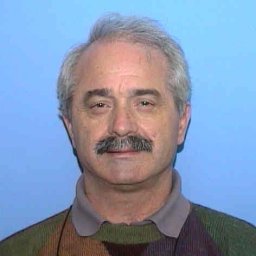 Fernando Palombo合作论文数Department of Physics, University of Milan766F. Simonetto合作论文数765J. Ocariz合作论文数765G. Finocchiaro合作论文数765Martino Margoni合作论文数Department of Physics and Astronomy, Università degli Studi di Padova763S. Passaggio合作论文数762T. S. Mattison合作论文数761
 Glen Cowan合作论文数Centre for Particle Physics and Astronomy, Department of Physics, Royal Holloway, University of London760G. Lynch合作论文数Lawrence Berkeley National Laboratory760Pierpaolo Patteri合作论文数759R. Contri合作论文数759
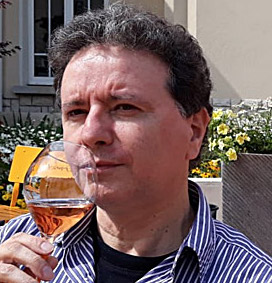 Fabio Anulli合作论文数Istituto Nazionale di Fisica Nucleare757
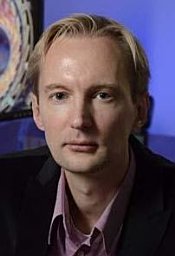 A. V. Gritsan合作论文数Johns Hopkins University757Stefano Bettarini合作论文数Dipartimento di Fisica, Università di Pisa757
 James Cochran合作论文数Department of Physics and Astronomy, College of Liberal Arts and Sciences, Iowa State University753M. Rama合作论文数753
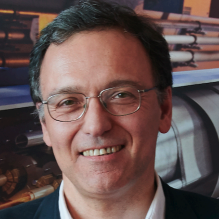 Francesco Forti合作论文数Department of Physics, University of Pisa;Istituto Nazionale di Fisica Nucleare753F. Le Diberder合作论文数750
 Alberto Lusiani合作论文数Science Department, Scuola Normale Superiore;INFN Sezione di Pisa749
 Roger Barlow合作论文数School of Computing and Engineering, University of Huddersfield749L. Piemontese合作论文数749H. Briand合作论文数749
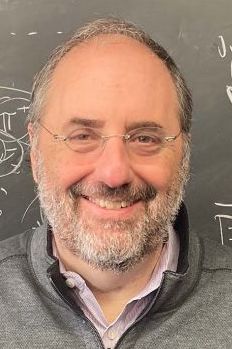 Claudio Campagnari合作论文数Physics Department, University of California Santa Barbara;CERN748
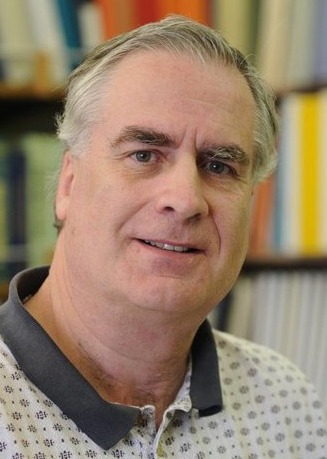 Frank C. Porter合作论文数The Division of Physics, Mathematics and Astronomy, California Institute of Technology748
 Francesca Di Lodovico合作论文数Department of Physics, Faculty of Natural, Mathematical & Engineering Sciences, King’s College London748E. Robutti合作论文数746
 Steve Playfer合作论文数School of Physics and Astronomy, University of Edinburgh;Institute for Particle and Nuclear Physics, University of Edinburgh745
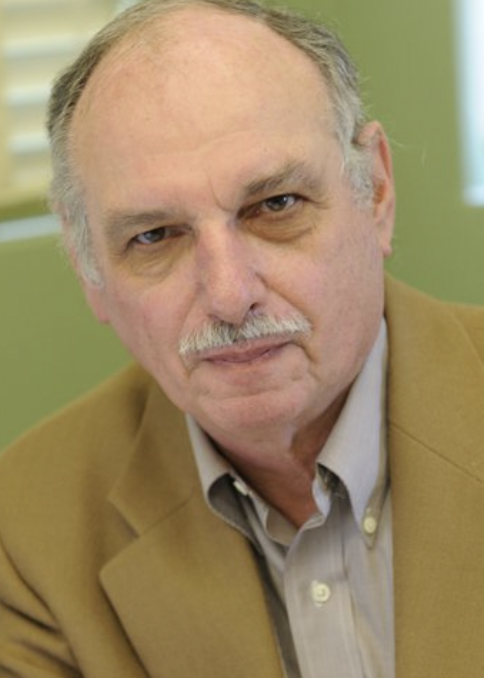 David Hitlin合作论文数Division of Physics Mathematics and Astronomy, California Institute of Technology744
 Gerald Eigen合作论文数Department of Physics and Technology, University of Bergen744
 Bjarne Sandvik Stugu合作论文数Department of Physics and Technology University of Bergen742
 Terry L. Schalk合作论文数Division of Physical & Biological Sciences, Department of Physics, University of California, Santa Cruz;Santa Cruz Institute for Particle Physics, University of California, Santa Cruz741
 Antimo Palano合作论文数University of Bari740
 Michel Davier合作论文数Université Paris-Saclay737D. Bernard合作论文数735
 Concezio Bozzi合作论文数Istituto Nazionale di Fisica Nucleare Sezione di Ferrara734
 Masahiro Morii合作论文数Department of Physics, Harvard University730
 Eugenio Paoloni合作论文数Dipartimento di Fisica, Universitá di Pisa;INFN729
 Mark A. Mandelkern合作论文数Department of Physics & Astronomy, School of Physical Sciences, University of California, Irvine723O. Long合作论文数721
 Jeffrey D. Richman合作论文数Physics Department, University of California, Santa Barbara720




