After completion of the robot installation on the International Space Station (ISS) in early March 2017 as an external hosted science payload, the Stratospheric Aerosol and Gas Experiment (SAGE) III became the newest member to the family of space-based solar occultation instruments operated by NASA to investigate the Earth’s upper atmosphere since the late 1970s. One of three identical instruments, the SAGE III/ISS mission was revived in the early 2010s with a primary objective to monitor the vertical distribution of aerosol, ozone and other trace gases to enhance understanding of ozone recovery and climate change processes in the upper atmosphere. The 51.6-degree inclined orbit of the ISS is well-suited for solar occultation and provides near-global observations on a monthly basis with coverage of low and mid-latitudes similar to that of the SAGE II mission, which operated over two decades – outliving its platform. International commitment to continuing ISS as a science outpost throughout this decade enables SAGE III to serve as a bridge to future stratospheric composition missions.The nominal science products, derived from sampling spectra covering 290nm to 1030nm and a photo-diode near 1550 nm, include high resolution vertical profiles of ozone, nitrogen dioxide and water vapor, along with multi-wavelength aerosol extinction. Although in the visible portion of the spectrum the brightness of the Sun is a million times that of the full Moon, the SAGE III instrument design covers this large dynamic range, performing lunar occultations on a routine basis to augment the solar products. The standard lunar products include ozone and nitrogen trioxide. Routine observations began June 2017 and continue to the present. This has enabled observations of significant perturbations of the stratosphere induced by multiple episodic terrestrial events - wildfires (two of which were record setting) and volcanic eruptions - and dynamical forcings such as phase changes of the Quasi-Biennial Oscillation (QBO). Here is presented stratospheric variability as represented in the standard SAGE III/ISS data products since 2017. The stability of observations afforded by the solar occultation technique is superb for quantifying long-term changes in stratospheric composition. Thus, comparisons with variability recorded by previous SAGE missions are also shown.
The Stratospheric Aerosol and Gas Experiment III (SAGE III) instrument installed on the International Space Station (ISS) has completed almost half of a decade of data collection and production of science data products. The SAGE III/ISS is a solar and lunar occultation instrument that scans the light from the Sun and Moon through the limb of the Earth’s atmosphere to produce vertical profiles of aerosol, ozone, water vapor, and other trace gases. It continues the legacy of previous SAGE instruments dating back to the 1970s to provide data continuity of stratospheric constituents critical for assessing trends in the ozone layer. This presentation shows how SAGE III/ISS aerosol and gas vertical profiles continue to benefit a worldwide database of in situ and satellite data for climate observation.
Various measurement techniques have been deployed for the monitoring of ozone and aerosols vertical distribution at Haute-Provence Observatory (OHP 44◦N, 6◦E) within the Network for the Detection of Atmospheric Composition Changes (NDACC) since the 1980s. These techniques include two Differential Absorption (DIAL) lidars and balloon soundings for the measurements of tropospheric and stratospheric ozone profiles, and a backscatter lidar for the measurement of aerosols and temperature profiles. Aerosol extinction profiles are obtained at 532 nm. They can also be retrieved from the DIAL lidar signals at 355 nm. These measurements have been widely used in the past for trend studies and validation of satellite measurements, e.g. Hubert et al. (2016) and Khaykin et al. (2017). They are used in this study to evaluate the various ozone and aerosol extinction products of SAGEIII/ISS obtained in the vicinity of OHP since the beginning of instrument operation.
 Robert Damadeo合作论文数Sci Directorate, NASA Langley Res Ctr15
 Leavor Kevin R合作论文数7
 Marilee M. Roell合作论文数7Larry W Thomason合作论文数4Ghassan Taha合作论文数4Charles Hill合作论文数3
 Pawan K. Bhartia合作论文数Goddard Space Flight Center Greenbelt, NASA3Scott Janz合作论文数3Dale F Hurst合作论文数3Benjamin M Herman合作论文数3
 Nickolay A Krotkov合作论文数Atmospheric Chemistry and Dynamics Laboratory, NASA Goddard Space Flight Center3Susan Kizer合作论文数2K. Chance合作论文数2Benjamin Herman合作论文数2Allen F. Jordan合作论文数2
 Adam Bourassa合作论文数College of Arts and Science, University of Saskatchewan2
 Mian Chin合作论文数National Aeronautics and Space Administration2Richard R. Querel合作论文数Department of Physics and Astronomy, University of Lethbridge2
 Jay Herman合作论文数Joint Center for Earth Systems Technology, University of Maryland, Baltimore County2
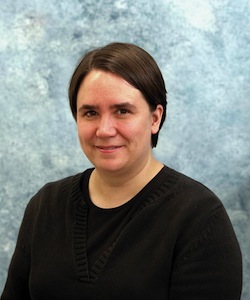 Kaley Walker合作论文数Department of Physics, University of Toronto2
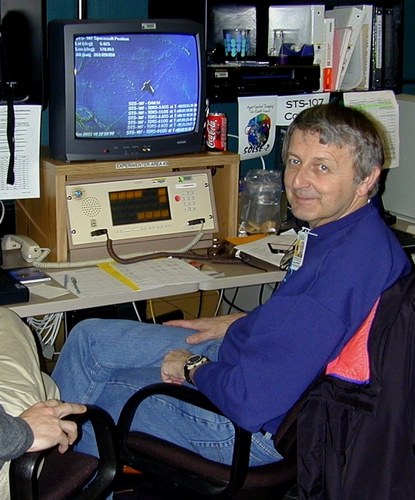 Richard D. Mcpeters合作论文数Goddard Space Flight Center2
 Omar Torres合作论文数NASA Langley Research Center2
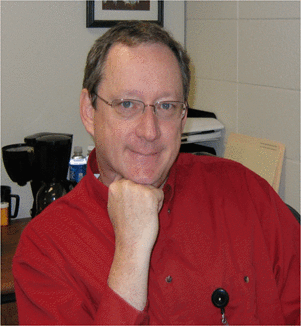 Joseph M. Zawodny合作论文数NASA Langley Research Center2
 R. M. Suleiman合作论文数Harvard-Smithsonian Center for Astrophysics2
 Oleg Dubovik合作论文数Centre National de la Recherche Scientifique, French National Centre for Scientific Research, University of Lille;Laboratoire d'optique Atmosphérique2
 Joanna Joiner合作论文数Laboratory for Atmospheric Chemistry and Dynamics, NASA Goddard Space Flight Center2
 Robert Paul Loughman合作论文数2
 Ernest Hilsenrath合作论文数2LE Flynn合作论文数1Emiel Hall合作论文数1a f bathgate合作论文数1N. D. Lloyd合作论文数1s m davis合作论文数1
 Sophie Godin-Beekmann合作论文数Laboratoire Atmosphères Milieux Observations Spatiales, French National Centre for Scientific Research;Observatoire de Versailles Saint-Quentin-en-Yvelines, Université de Versailles Saint-Quentin1G. J. Labow合作论文数1Patrick E. Sheese合作论文数1Doug A. Degenstein合作论文数1Patrick D. Cullis合作论文数1
 T. Knepp合作论文数Langley Res Ctr, NASA1
 Guanyu Huang合作论文数Spelman Coll, Dept Environm & Hlth Sci, Atlanta, GA 30314 USA1
 Ryan M. Stauffer合作论文数NASA, Goddard Space Flight Ctr1
 Ronald C. Cohen合作论文数Department of Chemistry, College of Chemistry, University of California, Berkeley;Department of Earth & Planetary Science, University of California, Berkeley;Energy and Environment Technologies Division, LBNL1
 Kang Sun合作论文数1Cisewski, M.S.合作论文数1Peter Zoogman合作论文数Harvard University, Harvard University1
 Jack Fishman合作论文数Center for Environmental Sciences, Saint Louis University;Department of Earth and Atmospheric Sciences, School of Science and Engineering, Saint Louis University1
 Gonzalo Gonzalez Abad合作论文数Atomic and Molecular Physics Division, Harvard-Smithsonian Center for Astrophysics1
 William M. R. Simpson合作论文数Von Hügel Institute, St Edmund's College, University of Cambridge;Faculty of Philosophy, University of Oxford;University of Texas at Austin;Durham University1
 Paul Ginoux合作论文数National Oceanic and Atmospheric Administration, Biogeochemistry, Atmospheric Chemistry, and Ecosystems Division, Geophysical Fluid Dynamics Laboratory, Princeton University1




