The mononuclear rhodium(I) complex trans-RhCl(CO){HP(t-Bu)2}2 (1) was used to form multinuclear complexes with P(t-Bu)2 bridges. Reaction of 1 with n-BuLi in THF yields yellow-orange crystalline [Rh(CO){HP(t-Bu)2}]2(mu-H){mu-P(t-Bu)2} (2) (74%). Reaction of a mixture of 1 and [Rh(COD)Cl]2 (COD = 1,5-cyclooctadiene) with n-BuLi in THF produces orange [Rh(COD)](mu-H){mu-P(t-Bu)2}[Rh(CO){HP(t-Bu)2}] (3) (46%) and dark red Rh3H(COD)2(mu-CO)2{mu-P(t-Bu)2}2 (4) (25%). Reaction of 1 with Fe(CO)5 in refluxing toluene yields orange crystalline [Fe(CO)3](mu-CO){mu-P(t-Bu)2}[Rh(CO){HP(t-Bu)2}] (5) (85%). The structures of 4 and 5 have been determined by X-ray crystallography. Complex 2 has been described elsewhere. The proposed structure of 3 has a planar core with a P(t-Bu)2 unit and a hydride bridging a metal-metal bond. One rhodium atom is further coordinated by a COD (1,5-cyclooctadiene) ligand, while the other rhodium atom bears a CO group and an HP(t-Bu)2 ligand. The molecular structure of 4 consists of a linear arrangement of three rhodium atoms with single metal-metal bonds bridged by P(t-Bu)2 and CO groups. The terminal rhodium atoms are coordinated by COD ligands. The molecular structure of 5 consists of a mixed metal dinuclear complex with a single Fe-Rh bond bridged by a P(t-Bu)2 unit and a CO group in a butterfly configuration. The rhodium atom is further coordinated by a CO and an HP(t-Bu)2 ligand. The iron atom bears three terminal CO groups.
The mononuclear rhodium(I) complex trans-RhCl(CO){HP(t-Bu)2}2 (1) was used to form multinuclear complexes with P(t-Bu)2 bridges. Reaction of 1 with n-BuLi in THF yields yellow-orange crystalline [Rh(CO){HP(t-Bu)2}]2(μ-H){μ-P(t-Bu)2} (2) (74%). Reaction of a mixture of 1 and [Rh(COD)Cl]2 (COD = 1,5-cyclooctadiene) with n-BuLi in THF produces orange [Rh(COD)](μ-H){μ-P(t-Bu)2}[Rh(CO){HP(t-Bu)2}] (3) (46%) and dark red Rh3H(COD)2(μ-CO)2{μ-P(t-Bu)2}2 (4) (25%). Reaction of 1 with Fe(CO)5 in refluxing toluene yields orange crystalline [Fe(CO)3](μ-CO){μ-P(t-Bu)2}[Rh(CO){HP(t-Bu)2}] (5) (85%). The structures of 4 and 5 have been determined by X-ray crystallography. Complex 2 has been described elsewhere. The proposed structure of 3 has a planar core with a P(t-Bu)2 unit and a hydride bridging a metal-metal bond. One rhodium atom is further coordinated by a COD (1,5-cyclooctadiene) ligand, while the other rhodium atom bears a CO group and an HP(t-Bu)2 ligand. The molecular structure of 4 consists of a linear arrangement of three rhodium atoms with single metal-metal bonds bridged by P(t-Bu)2 and CO groups. The terminal rhodium atoms are coordinated by COD ligands. The molecular structure of 5 consists of a mixed metal dinuclear complex with a single Fe—Rh bond bridged by a P(t-Bu)2 unit and a CO group in a butterfly configuration. The rhodium atom is further coordinated by a CO and an HP(t-Bu)2 ligand. The iron atom bears three terminal CO groups.
Photolysis of Os3(CO)12 and t-Bu2PH in toluene yields the trisubstituted phosphine cluster Os3(CO)9(t-Bu2PH)3 (1) (63%). Reaction of t-Bu2PH with Os3(CO)12 by heating in toluene (12 h) yields the disubstituted phosphine complex Os3(CO)10(t-Bu2PH)2 (2) (24%) and the bis-phosphido complex Os3(CO)8(μ-H)2(μ-t-Bu2P)2 (3) (50%). Compound 3 may be converted into the 46-electron complex Os3(CO)6(t-Bu2PH)(μ-H)2(μ-t-Bu2P)2 (4) by further heating in refluxing toluene with t-Bu2PH. Refluxing 1, 2, 3 or 4 in di-n-butylether (143°C) affords the phosphinidene complex Os3(CO)7(t-Bu2PH)2(μ3-t-BuP) (5) (68%). The reaction of dicyclohexylphosphine (Cy2PH) with Os3(CO)12 in refluxing toluene yields the tris-phosphido-bridged complex Os3(CO)7(μ-H)(Cy2P)3 (6) (60%). The structures of 1–6 have been determined via single-crystal X-ray diffraction studies. The molecular structure of 1 is based on that of Os3(CO)12 with the three t-Bu2PH ligands occupying equatorial sites on each osmium in order to minimize steric interactions. The structure of 2 has two t-Bu2PH ligands in equatorial positions arranged trans to each other across an OsOs bond. Complex 3 contains two bridging t-Bu2P− groups which lie above and below the Os3 plane. Two bridging hydrides occupy positions trans to these groups. The coordination geometry of each metal is roughly octahedral if one ignores the OsOs bonds. The structure of 4 is similar to that of 3 except that one CO groups has been replaced by an OS(CO)3 unit and the adjacent Os(CO)3 group now bears only two CO units. Complex 5 contains a μ3-capping phosphinidene group (t-BuP2−) in addition to two terminal phosphines (t-Bu2PH) on adjacent metal atoms. The structure of 6 features three bridging Cy2P− groups which lie above, in and below the Os3 plane.
AbstractThe title complexes (I) and (II) are prepared according to the scheme and characterized by X‐ray structure analysis.
AbstractReaction of the Pd complex (I) with the lithium phosphide (II) produces a mixture of compounds from which the trinuclear phosphido‐bridged complex (III) can be isolated in low yield.
AbstractThe title complexes (III), (VI), (VIII), (X), and (IX) are synthesized according to the scheme and characterized by X‐ray structure analysis ((III): space group Pnnm, Z=2; (VI): C2/m, Z=2; (VIII): P212121: Z=4; (X) and (IX): P21/c, Z=4).
Reaction of GaCl3 with t-BuLi (2 equiv.)and Li-(C5H9)PH in THF at −78°C gives colourless crystalline [t-Bu2Ga(μ-(C5H9)PH)]2 (1) in 80% yield (C5H9 = cyclopentyl). Reaction of Et3Al with t-Bu2AsH at 220°C gives the aluminium arsenide dimer, [Et2Al(μ-t-Bu2As)]2 (2) (63%). The X-ray structures of both (1) and (2) have been determined. They are both dimeric with bridging phosphido or arsenido groups and terminal alkyls. The coordination geometry of the Ga or Al atoms is roughly tetrahedral in each case. For compound (1) 31P NMR data indicate the presence of both the syn and anti isomers in solution (relative ratios 1:2.5). In the solid state only the anti isomer is observed. Crystal data for (1): C26H56Ga2P2, M = 570.12, monoclinic, C2/m (No. 12), a = 16.736(3), b = 11.586(1), c = 8.413(2) Å, β = 104.62(1)°, U = 1578.6(5) Å3, Dc = 1.20 g cm−3, Z = 2, μ(Mo-Kα) = 18.11 cm−1. Refinement of 1054 reflections (I 3σ(I)) out of 1447 unique observed reflections (3° ⩽ 2θ ⩽ 50°) gave RRw values of 0.0503 and 0.0565, respectively. Data/parameter ratio = 12.85, highest peak in final difference Fourier = 0.604 e Å−3. Crystal data for (2): C24H56Al2As2, M = 434.29, monoclinic, P21/n (No. 14), a = 8.907(1), b = 11.691(1), c = 14.735(3) Å, β = 90.25(1)°, U = 1534.4(5) Å3, Dc = 1.88 g cm−3, Z = 4, μ(Mo-Kα) = 44.47 cm−1. Refinement of 1165 reflections (I > 3σ(I)) out of 2700 unique observed reflections (3° ⩽ 2θ; ⩽ 50°) gave R and Rw values of 0.0523 and 0.0600, respectively. Data/parameter ratio = 9.173, highest peak in the final difference Fourier = 0.439 e Å−3.
ADVERTISEMENT RETURN TO ISSUEPREVArticleNEXTTetra- and octanuclear .mu.4-phosphinidene complexes of rhodium: synthesis and x-ray structures of Rh4(CO)4(.mu.-P(C6H11)2)4(.mu.4-P(C6H11)) and Rh8(CO)9(.mu.4-P(C5H9))6 (C6H11 = cyclohexyl, C5H9 = cyclopentyl)Atta M. Arif, Richard A. Jones, Duane E. Heaton, Christine M. Nunn, and Stuart T. SchwabCite this: Inorg. Chem. 1988, 27, 2, 254–259Publication Date (Print):January 1, 1988Publication History Published online1 May 2002Published inissue 1 January 1988https://pubs.acs.org/doi/10.1021/ic00275a008https://doi.org/10.1021/ic00275a008research-articleACS PublicationsRequest reuse permissionsArticle Views50Altmetric-Citations8LEARN ABOUT THESE METRICSArticle Views are the COUNTER-compliant sum of full text article downloads since November 2008 (both PDF and HTML) across all institutions and individuals. These metrics are regularly updated to reflect usage leading up to the last few days.Citations are the number of other articles citing this article, calculated by Crossref and updated daily. Find more information about Crossref citation counts.The Altmetric Attention Score is a quantitative measure of the attention that a research article has received online. Clicking on the donut icon will load a page at altmetric.com with additional details about the score and the social media presence for the given article. Find more information on the Altmetric Attention Score and how the score is calculated. Share Add toView InAdd Full Text with ReferenceAdd Description ExportRISCitationCitation and abstractCitation and referencesMore Options Share onFacebookTwitterWechatLinked InRedditEmail Other access optionsGet e-AlertscloseSupporting Info (1)»Supporting Information Supporting Information Get e-Alerts
ADVERTISEMENT RETURN TO ISSUEPREVArticleNEXTSynthesis and structures of di- and trinuclear di-tert-butylphosphido and di-tert-butylarsenido complexes of iridium. X-ray crystal structures of [Ir(.mu.-tert-Bu2E)(CO)2]2 (E = P, As), [Ir(tert-Bu2PH)(CO)]2(.mu.-H)(.mu.-tert-Bu2P), [Ir(tert-Bu2PH)(CO)(.mu.-H)]2(H)(.mu.-tert-Bu2P), and Ir3(.mu.-tert-Bu2P)3(CO)5Atta M. Arif, Duane E. Heaton, Richard A. Jones, Kenneth B. Kidd, Thomas C. Wright, Bruce R. Whittlesey, Jerry L. Atwood, William E. Hunter, and Hongming ZhangCite this: Inorg. Chem. 1987, 26, 24, 4065–4073Publication Date (Print):December 1, 1987Publication History Published online1 May 2002Published inissue 1 December 1987https://pubs.acs.org/doi/10.1021/ic00271a020https://doi.org/10.1021/ic00271a020research-articleACS PublicationsRequest reuse permissionsArticle Views106Altmetric-Citations31LEARN ABOUT THESE METRICSArticle Views are the COUNTER-compliant sum of full text article downloads since November 2008 (both PDF and HTML) across all institutions and individuals. These metrics are regularly updated to reflect usage leading up to the last few days.Citations are the number of other articles citing this article, calculated by Crossref and updated daily. Find more information about Crossref citation counts.The Altmetric Attention Score is a quantitative measure of the attention that a research article has received online. Clicking on the donut icon will load a page at altmetric.com with additional details about the score and the social media presence for the given article. Find more information on the Altmetric Attention Score and how the score is calculated. Share Add toView InAdd Full Text with ReferenceAdd Description ExportRISCitationCitation and abstractCitation and referencesMore Options Share onFacebookTwitterWechatLinked InRedditEmail Other access optionsGet e-AlertscloseSupporting Info (1)»Supporting Information Supporting Information Get e-Alerts
ADVERTISEMENT RETURN TO ISSUEPREVArticleNEXTDi- and trinuclear di-tert-butylphosphido-bridged complexes of palladium. Synthesis and x-ray structures of [Pd(.mu.-tert-Bu2P)(PMe3)]2(Pd-Pd) and mixed-valence Pd3(.mu.-tert-Bu2P)(CO)2ClAtta M. Arif, Duane E. Heaton, Richard A. Jones, and Christine M. NunnCite this: Inorg. Chem. 1987, 26, 25, 4228–4231Publication Date (Print):December 1, 1987Publication History Published online1 May 2002Published inissue 1 December 1987https://pubs.acs.org/doi/10.1021/ic00272a017https://doi.org/10.1021/ic00272a017research-articleACS PublicationsRequest reuse permissionsArticle Views165Altmetric-Citations39LEARN ABOUT THESE METRICSArticle Views are the COUNTER-compliant sum of full text article downloads since November 2008 (both PDF and HTML) across all institutions and individuals. These metrics are regularly updated to reflect usage leading up to the last few days.Citations are the number of other articles citing this article, calculated by Crossref and updated daily. Find more information about Crossref citation counts.The Altmetric Attention Score is a quantitative measure of the attention that a research article has received online. Clicking on the donut icon will load a page at altmetric.com with additional details about the score and the social media presence for the given article. Find more information on the Altmetric Attention Score and how the score is calculated. Share Add toView InAdd Full Text with ReferenceAdd Description ExportRISCitationCitation and abstractCitation and referencesMore Options Share onFacebookTwitterWechatLinked InRedditEmail Other access optionsGet e-AlertscloseSupporting Info (1)»Supporting Information Supporting Information Get e-Alerts
Reaction of Rh4(CO)12 with But2PH (Rh : P = 3:2) in toluene under reflux yields the Rh6 phosphido-bridged cluster Rh6(µ-But2P)4(CO)6(µ-CO)2(µ-H)2(60%) which has an unusual Rh6 core geometry consisting of a Rh4 tetrahedron bridged on opposite edges by two more Rh atoms.
 Richard A Jones合作论文数Center for Electrochemistry, Department of Chemistry, College of Natural Sciences, The University of Texas at Austin14
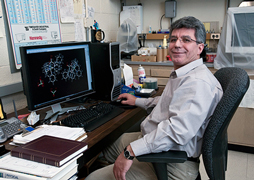 Atta M. Arif合作论文数Department of Chemistry, University of Utah11
 Cm Nunn合作论文数7Kenneth B. Kidd合作论文数3C Supplee合作论文数2We Hunter合作论文数2St Schwab合作论文数2
 Jerry L. Atwood合作论文数Department of Chemistry, College of Arts and Science, University of Missouri2
 Tom Wright合作论文数University of Texas at Arlington2Bruce R. Whittlesey合作论文数Department of Chemistry and Biochemistry, Texas Tech University2Ta Bright合作论文数1Dw Meek合作论文数1
 Alan Cowley合作论文数Department of Chemistry, College of Natural Sciences, The University of Texas at Austin1Devon W. Meek合作论文数1Hongming Zhang合作论文数1
 Thomas C. Wright合作论文数Research Pathology Associates;Department of Pathology and Cell Biology, Medical Center, Columbia University1




