Crown rust of cultivated oat (Avena sativa L.) caused byPuccinia coronata Corda f. sp.avenae Eriks, causes yield loss, reduction in test weight, and increased lodging. Genetic resistance is the most desirable method to control the disease. ‘TAM O‐301’, a cultivar released by the Texas A&M oat‐breeding program in 1973, has crown rust resistance, subsequently namedPc58. The main objectives of this study were to characterizePc58 in TAM O‐301 using an F6:7 recombinant inbred (RI) population of the ‘Ogle’ × TAM O‐301 cross and to map thePc58 resistance. Six crown rust isolates, avirulent on TAM O‐301 and virulent on Ogle, were used to test the parents and RI population. Genetic analyses of the segregation data to each of the six isolates indicated that the resistance was conditioned by three genes within a 41.0‐cM region. The resistance genes were mapped to linkage groups OT32 and OT33 in the published molecular linkage map of Ogle × TAM O‐301. This research has provided new information on thePc58 resistance gene complex that should facilitate new marker and germplasm development.
Simultaneous improvement of forage traits and seed yield in orchardgrass (Dactylis glomerata L.) has been problematic because of geographic separation of forage and seed production locations. Previous work has shown that a complex multilocation selection program in forage production environments can increase forage yield as well as seed yield in Oregon. The objective of this experiment was to compare target-environment (TE) and nontarget-environment (NTE) selection approaches for increasing seed yield of orchardgrass in Oregon. Two cycles of recurrent phenotypic selection for panicle seed mass (PSM) and agronomic traits were conducted on four populationsin four eastern USA locations (NTE) and one Oregon location (TE). Seed yield was increased in three of four orchardgrass populations by TE selection, averaging 5.1% cycle(-1), but was improved by NTE selection in only one of four populations. Conversely, TE selection for PSM and agronomic traits resulted in no changes to forage yield in the eastern USA and Canada, while NTE selection for PSM and agronomic traits increased forage yield in two of four populations, confirming results of a previous study. It appears that the most efficient system for simultaneously improving forage and seed traits of orchardgrass would be to practice selection for forage traits in forage production environments and seed traits in seed production environments, with sufficiently large populations to allow multitrait selection.
Festulolium [Festulolium loliaceum (Hudson) P.V. Fournier] is a hybrid between meadow fescue (Festuca pratensis Huds.) and Italian ryegrass (Lolium multiflorum Lam.) or perennial ryegrass (L. perenne L.). The ryegrass parentage gives festulolium cultivars marginal winterhardiness in regions with severely cold winters. The objective of this research was to determine if natural selection for field survival resulted in a genetic improvement in freezing tolerance, forage yield, or persistence in northcentral and northeastern USA environments. The component strains of 'Spring Green' festulolium were compared with their unselected parents in a controlled-environment freezing test. The component strains of Spring Green had 186% greater plant survival and 34% greater tiller survival than their unselected parents. Spring Green was compared with its two commercially available parents in a 13-location field test. Spring Green averaged 5.0% higher in 2-yr forage yield than 'Kemal', but was similar in forage yield to 'Tandem' in a 13-location test ranging from Minnesota to Virginia. Spring Green averaged 30% more ground cover than its unselected parents at the six locations within USDA hardiness zones 2 through 4, but was generally similar to its parents outside of these severe hardiness zones. The increased freezing tolerance of Spring Green, obtained by phenotypic selection for field survival at several locations, appears to have resulted in increased adaptation to northern USA forage production environments.
Genetic variation for forage yield of orchardgrass is abundant, but there are few reports of progress from selection for increased forage yield. The objective of this study was to estimate direct effects of selection from one cycle of half-sib family selection for forage yield in orchardgrass, Eleven selected populations were compared with their parent populations within three maturity groups. Populations were evaluated under hay management at three locations and management-intensive rotational grazing at two locations. Nine of the I I selected populations differed, by an average of 7.4%, from their parent population in forage yield. Nine of the selected populations also showed changes in Drechslera leafspot reaction, all indicating a negative genetic correlation with forage yield. Selection for high forage yield tended to result in greater ground cover and later relative maturity. However, changes in net herbage accumulation (NHA) under rotational grazing were generally not significant and were uncorrelated with changes in forage yield, indicating that forage yield of hay plots is not correlated with the NHA of grazed plots. Although genetic gains in forage yield measured under hay management were very favourable relative to other reports from the literature, the lack of correlated progress under grazing management indicates that directed selection for NHA of orchardgrass should be conducted under grazing management.
A cultivated oat linkage map was developed using a recombinant inbred population of 136 F-6:7 lines from the cross 'Ogle' x 'TAM O-301'. A total of 441 marker loci, including 355 restriction fragment length polymorphism (RFLP) markers, 40 amplified fragment length polymorphisms (AFLPs), 22 random amplified polymorphic DNAs (RAPDs), 7 sequence-tagged sites (STSs), 1 simple sequence repeat (SSR), 12 isozyme loci, and 4 discrete morphological traits, was mapped. Fifteen loci remained unlinked, and 426 loci produced 34 linkage groups (with 2-43 loci each) spanning 2049 cM of the oat genome (from 4.2 to 174.0 cM per group). Comparisons with other Avena maps revealed 35 genome regions syntenic between hexaploid maps and 16-34 regions conserved between diploid and hexaploid maps. Those portions of hexaploid oat maps that could be compared were completely conserved. Considerable conservation of diploid genome regions on the hexaploid map also was observed (89-95%); however, at the whole-chromosome level, colinearity was much lower. Comparisons among linkage groups, both within and among Avena mapping populations, revealed several putative homoeologous linkage group sets as well as some linkage groups composed of segments from different homoeologous groups. The relationships between many Avena linkage groups remain uncertain, however, due to incomplete coverage by comparative markers and to complications introduced by genomic duplications and rearrangements.
There has been considerable activity in breeding orchardgrass (Dactylis glomerata L.) cultivars in North America during the latter half of the 20th century, but little effort devoted to quantification of breeding progress. The objectives of this study were to quantify changes in mean cultivar performance for that time compared with the progress achieved from one cycle of half-sib progeny selection within the USDA population of orchardgrass accessions. Forty-two cultivars (32 North American cultivars and 10 European cultivars) were tested at three locations (Arlington, WI and Rock Springs, PA, and Ottawa, Ontario, Canada) in 1995 through 1997. Cultivars were grouped into three experiments by maturity class: early, medium, and late. North American cultivars averaged 3,9, and 12 % higher in forage yield than European cultivars for early, medium, and late maturity groups, respectively. Between 1955 and 1997, forage yield and ground cover of early-maturity cultivars increased by 2.5 Mg ha -1 decade -1 and 4.0% decade -1 , respectively. Forage nutritional value of medium-maturity cultivars increased during that time, although this was probably not due to direct selection. Significant gains were made in forage yield and Drechslera spp. leafspot reaction of cultivars derived from two individual breeding programs, although the majority of orchardgrass cultivars lack improvements in forage traits.
This study was conducted to investigate whether DNA extracted from a single barley embryo is suitable for conducting polymerase chain reaction (PCR) amplification. We extracted DNA from one-seed and five-seed samples of four barley cultivars, ‘Bowman’, ‘Colter’, ‘Crystal’, and ‘Russell’. Six random-amplified polymorphic DNA (RAPD) primers and one sequence-tagged-site (STS) primer pair were tested for DNA amplification using both Taq DNA polymerase and the Stoffel fragment, which is a modified form of recombinant Taq DNA polymerase. DNA polymorphism was found with the STS primer and five of the RAPD primers. The banding patterns of DNA from one-seed samples were almost identical to those of the five-seed samples. Additional testing of nine barley cultivars was conducted to compare embryo and leaf tissue DNA PCR amplification results. Our tests indicated that DNA extracted from a single embryo is practical for PCR analysis. The technique we utilized is simple, fast, and can be applied to the identification of barley cultivars.
Molecular markers have been used in barley to locate genes and quantitative trait loci. Only a few RAPD markers have been located on barley marker maps. The objectives of this study were (i) to place RAPD markers in specific intervals on the barley linkage map developed from the cross Steptoe (S) x Morex (M), (ii) to examine the distribution of RAPD markers, and (iii) to compare markers amplified by Taq DNA polymerase with those amplified by the Stoffel fragment of Taq DNA polymerase. Screening of DNA from S and M with 362 decamer primers identified 85 that amplified 127 reliable RAPDs. A subset of 15 doubled-haploid (DH) lines from the 150 DH line mapping population was used to place these RAPD markers in intervals on the SM map. This subset can be used for rapid placement of any new markers on the SM linkage map. Most of the RAPD markers were dominant but four codominant RAPDs were identified. The RAPDs were not evenly distributed, with many clustered around the centromeric region of each chromosome. Two of these clusters were located in intervals larger than 15 cM. Testing of 38 to 42 additional DH lines provided more precise placement of eight of the markers in these clusters. Reliable RAPDs were detected with 44% of the primers tested with the Stoffel fragment, but with only 17% of the primers tested with Taq DNA polymerase. These RAPDs provide additional markers for use in barley improvement.
Confidently selecting alfalfa (Medicago sativa L.) cultivars can be difficult for producers because data, often collected from a number of individual evaluation trials, are not presented in concise or easily understandable formats. Since analysis of data from evaluation trials has been restricted to a single trial (cultivars seeded at the same time) at a single location, an individual table is necessary to present the data from each trial at a given location. Consequently, it is necessary for producers to study numerous tables before they can confidently select an alfalfa cultivar. This process is cumbersome and difficult. Our objectives were to combine yield data from numerous alfalfa cultivar evaluation trials and present the data as intervals so that producers can rapidly detect the confidence to be placed on the yield for each cultivar. The Best Linear Unbiased Prediction (BLUP) model was used to combine data. Yield intervals were determined at a 95% level of confidence based on the standard error (SE) of the least squares means (LSMEANS). Combining data from numerous trials at a single location allows the presentation of information in a more user friendly manner than having a separate table for each trial at a location. Of the producers surveyed, 64% preferred having yield data from several trials in a single table. Providing yield intervals, which contain information about both the location from which the yield originated and the uncertainty of that yield, would aid in the comparison of cultivars and assess confidence associated with selection of a particular cultivar. However, only 46% of those surveyed preferred the yield interval format compared with having the yield presented as a single value. This response highlights the need for continued educational programs addressing cultivar selection and interpreting evaluation data. We recommend that, in the future, more cultivar evaluation data for perennial crops, such as alfalfa, from a single location be combined and presented with yield intervals to improve cultivar comparison.
Seeds from the 5th, 6th, 12th and 18th generation of enforced outcrossing in CCXXXXI-B, a barley (Hordeum vulgare L.) population containing genetic male sterility, were assayed for genotypic distribution of Est 1 and Hor C alleles. The result suggest that natural selection was effective in altering allelic frequencies at both loci and that genotypic frequencies were often different from what would be expected if allelic frequencies solely determined genotypic frequencies. Departures of actual from expected genotypic frequencies occurred in that shifts in allelic frequencies were detected.
 Michael Casler合作论文数Wisconsin Energy Institute, College of Agricultural & Life Sciences, University of Wisconsin-Madison;U.S. Department of Agriculture-Agricultural Research Service4
 Marvin H Hall合作论文数3
 Charlie Brummer合作论文数Center for Plant Breeding, Department of Plant Sciences, University of California, Davis2K. T. Leath合作论文数2S. L. Fales合作论文数2A. R. McElroy合作论文数2
 Dan Undersander合作论文数2Va Portyanko合作论文数1y a papadopolous合作论文数1C. S. Burton合作论文数1J. L. Hansen合作论文数1B. L. Jones合作论文数1Chong J合作论文数1
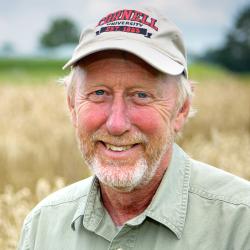 Mark Sorrells合作论文数Department of Plant Breeding & Genetics, School of Integrative Plant Science, Cornell University;College of Agriculture and Life Sciences, Cornell University1
 Jim Holland合作论文数Department of Crop and Soil Sciences, North Carolina State University1R. E. Barker合作论文数1O'Donoughue Louise S合作论文数1Darrell M. Wesenberg合作论文数1
 Michael Lee合作论文数Department of Agronomy, Iowa State University1Lynn S. Dahleen合作论文数1
 James L. Rosenberger合作论文数Departments of Anaesthesia and Surgery Harvard Medical School, Massachusetts General Hospital1W. L. Alexander合作论文数1P. G. Pitts合作论文数1
 R. Mark Sulc合作论文数1P. C. Bilkey合作论文数1Wilawan Siripoonwiwat合作论文数1Don E. Obert合作论文数1E. A. Hockett合作论文数1C. A. Rose-Fricker合作论文数1Hang An (安航)合作论文数1Eric W Jackson合作论文数1T. K. Blake合作论文数1Nancy Jo J Ehlke合作论文数1




