Pt°-NPs, prepared by the reduction of Pt(IV) salts with borohydride, do not catalyse the reduction of water in the presence of the strongly-reducing ˙C(CH3)2OH radicals. However, supporting the same metal nanoparticles (M°-NPs) with SiO2 alters the catalytic properties enabling the reaction. This effect depends both on the nature of M° and concentration of the composite nanoparticles. At low nanocomposite concentration: for M = Au nearly no effect is observed; for M = Ag the support decreases the catalytic reduction of water and for M = Pt the support initiates the catalytic process. At high nanocomposite concentration: for M = Au the reactivity is considerably lower and for M = Ag or Pt no catalysis is observed. Furthermore, for M = Ag or Pt H2 reduces the ˙C(CH3)2OH radicals.
We describe the synthesis of gold nanoparticles upon reduction of Au2O3 by molecular hydrogen. The reaction generates particles that contain no foreign stabilizer other than gold or water species. The reaction readily proceeds at slightly elevated temperatures and somewhat higher than atmospheric pressure of H-2, and these two parameters control the size of the particles produced. The suspensions of particles were analyzed for particle size, size distribution, residual ions, and metal-atom concentrations using TEM, dynamic light scattering, electrophoretic mobility, pH, conductivity, ICP, and UV-vis spectra. The particles were shown to be highly active redox catalysts in the conversion of strongly reducing radicals to hydrogen from water in basic solutions. Surface-enhanced Raman scattering (SERS) spectra of a probe molecule, p-aminothiphenol, adsorbed on the particles surface was determined, and the effects of pH, electron injection, and Au(III) ions on the SERS spectra were measured. These effects are compared with similar results from previously prepared silver particles in an analogous procedure.
Employing silver nanoparticles from a recently developed synthesis [Evanoff, D. D.; Chumanov, G. J. Phys. Chem. B 2004, 108, 13948) and a well-studied probe molecule, p-aminothiophenol, we follow changes at the surface of the particles during the conditioning and eventually the catalytic production of hydrogen from water using strongly reducing radicals. Injection of electrons into the particles causes pronounced variations in the intensity of the surface enhanced Raman scattering (SERS) spectrum of the probe molecule. These spectral changes are caused by changes in the Fermi-level energy that are in turn caused by changes in the silver ion concentrations or in the pH, or by changes in electron density in the particle. This correlation highlights the effect of the chemical potential on the SERS enhancement at the end of the particles synthesis. The intensity of the SERS spectra increases in the presence of the silver ions when excitation at 514 nm is utilized. When the Ag+ ions in the colloidal suspension are completely reduced by the radicals and the particles operate in the catalytic mode, the SERS spectrum is too weak to record, but it can reversibly be recovered upon the addition of Ag+. The effect of pH on the SERS intensity is similar in nature to that of the silver ions but is complicated by the pK(a) of the aminothiol and the point of zero charge (pzc) of the particles. It is hypothesized that as the particles cross the pzc (around neutral pH) the electrostatic interaction between the protonated amine headgroup of the probe and the positively charged surface increases the density of probe molecules in the perpendicular orientation at the expense of a competing species. This conversion results in enhanced SERS signals and is observable during the preconditioning stage of the particles. Indeed, adsorption isotherms of the probe indicate the presence of two species. In analogous previous observations these two species have been attributed to perpendicular and flat adsorption orientations of the deprotonated probe molecule relative to the particle surface. However, preliminary density functional calculations on relevant prototypes raise the possibility that the two species may be the probe molecule and a cationic form produced by charge transfer in the ground state from the chemisorbed probe to the metal. These two forms of the probe have differing electronic structures and vibrational frequencies, with perhaps differing orientations relative to the surface. Whichever is the correct interpretation, a neutral molecule in a flat orientation or a radical cation, this species is easier to replace than the other in competitive adsorption by ethanethiol.
Polyaniline (PANi) was electrodeposited in gold-coated nanoporous alumina membranes (NAMs) by anodic polymerization of aniline. PANi deposition was followed by cathodic deposition of Ag or Cu, to form a layer of PANi-metal segmented nanowires in the NAM. The compact PANi nanowires fill the entire pore volume, providing a sharp transition from the polymer to the metal segment. The deposited metal layer enables SEM visualization of the PANi nanowire length in the membrane. Deposition of Cu on PANi nanowires occurs at potentials where the PANi is in its reduced leucoemeraldine state, with no evidence for penetration of the metal into the polymer matrix. The mechanism of metal ion reduction on the non- conducting polymer wires is not yet clear. Free-standing segmented PANi-Ag and PANi-Cu nanowires obtained by membrane dissolution show a sharp heterojunction between the polymer and metal phases and are mechanically stable. Aniline electropolymerization in the insulating NAM under a lateral potential gradient generated a thickness gradient of the PANi deposit, revealed by subsequent Cu deposition. The potential-dependent length of the PANi nanowires follows the PANi conductivity pattern, reaching a maximum in the region of stability of the conducting emeraldine phase. The results demonstrate the possibility of obtaining nonlinear graded materials using electrochemical systems showing a complex cur- rent-voltage behavior.
Silver nanoparticles in aqueous suspensions were synthesized by reduction of silver oxide by H-2 following recently published procedures.(12) These particles contain no foreign stabilizers or any ions other than those from silver and water. The particles were characterized by their UV-vis absorption spectra, by transmission electron microscopy, by dynamic light-scattering-zeta potential determination, and by the pH dependence of the potential. The nanoparticles are stabilized by adsorption of hydroxide anions at the particles surface. Their zeta potential is similar to 35 mV at pH 9; it is pH dependent and the point of zero charge is near neutral. The negative potential, the hydrophilic surface that is created by the adsorbed hydroxide ions, which resembles an oxide interface, and the low ionic strength of the solution due to the small salt concentrations in this synthetic approach all contribute to the unusual stability of the colloidal suspension. The amount of molecular hydrogen formed was determined following gamma-irradiation of the silver suspensions in the presence of 2-propanol and acetone. In these suspensions, all of the radiolytically generated radicals are converted to reducing radicals capable of reducing water to H-2. At low doses, however, the amount is very small but after a "conditioning" period the yield substantially increases. The conditioning stage is explored in detail, and it is shown that the main reaction responsible for the conditioning is reduction of residual silver ions in the solution. The steady-state concentration of residual Ag+ ions that remains in the solution is determined by the relative rates of silver oxide dissolution and silver ions reduction during the synthesis. Analysis of the chemical composition of the suspensions at the end of the synthesis also indicates that a few percent of Ag+ ions remain unreduced. Most of the unreduced ions are free in the bulk solution while a minority adsorbs at the particle surface. Once the conditioning stage is complete, essentially all reducing radicals generated by the irradiation can catalytically produce hydrogen. For the presently studied silver particles of 30 nm, competition between radical-radical recombination and hydrogen evolution is suppressed at > 2 mM silver concentrations. Little is to be gained by increasing the catalyst concentration above this level.
Metal nanoparticles (NPs) are used to catalyze the formation of molecular multielectron transfer products, for example, H(2), from single-electron reductants, such as radicals. Noble metals, like silver and gold, were very instrumental in unraveling the mechanism of this interfacial process. In this study, we explore the effect of the support, silica nanoparticles, on the catalytic production of H(2) on silver from radiolytically produced (center dot)C(CH(3))(2)OH radicals and water. We obtain very high concentrations of stable silica-supported silver nanoparticles that remain suspended in solution for long periods of time. The presence of metallic silver particles on the silica surface further induces a very effective deposition of silver particles on the same silica particle leading to cooperative deposition of the silver. The silica support changes appreciably the reactivity of the silver NPs, reducing the yield of the molecular hydrogen produced at the high concentrations of the supported NPs to that of the primary molecular hydrogen G(H(2)) = 0.45 molecules/100 eV from water radiolysis indicating that H(2) production at the surface of the silver is inhibited. A possible explanation is that the catalyst (Ag on SiO(2)) catalyzes the disproportionation of the reducing radicals or the reduction of acetone at the expense of the H(2) evolution catalysis.
Radiolytic reduction of BiOClO4 in aqueous solutions leads to the formation of bismuth clusters and larger nanoparticles. The mechanisms of redox reactions of the polycationic Bi(III) species that exist in the solution were investigated with pulse radiolysis. The kinetic and spectral properties of the transients formed by the reaction of these species with the primary radicals from water radiolysis are reported. The single-electron reduction product, Bi9(OH)224+, absorbs at lambdamax = 273 nm, while the OH adduct, Bi9(OH)235+, has a broad absorption spectrum with a maximum at 280 nm and a shoulder at 420 nm. Several rate constants were measured: k (e-aq + Bi9(OH)225+) = 1.2 x 10¹⁰ M-1 s-1 and k (OH + Bi9(OH)225+) = 1.5 x 10⁹ M-1 s-1. The reduced species, Bi9(OH)224+ further reacts with (CH3)2COH radicals, but not with CH2C(CH3)2OH radicals from t-butanol, to produce a doubly reduced polynuclear species. A few reactions of the reduction of the Bi salt in the presence of poly(acrylic acid) are also described. In the presence of the polymer, a metal-polymer complex is formed prior to the irradiation, and the reduction reactions are significantly slowed down.
A novel technique to monitor the synthesis process of encapsulated acetylacetonatocarbonyl triphenylphosphinerhodium within a microsilica nanoshell has been studied using inductively coupled plasma (ICP) techniques. Nanospheres sized around 50-100 nm were obtained and ICP was used to quantify the exact composition of rhodium, phosphorous, and silicon with differing digestion solvents. In addition, ICP was used to detect rhodium and phosphorous in the nano core-shell catalysts as a quality control procedure
The effect of high concentrations of large gold particles, in the hundreds of nanometer size regime, on the yields of molecular hydrogen, G(H(2)), produced in the radiolysis of several aqueous solutions was determined. In particular we look for direct effect of radiation absorbed by the solid particles on the yield of water products. These particles, however, are catalytically active in the conversion of reducing radicals to molecular hydrogen as well. A very small increase in G(H(2)) observed in bromide solutions upon addition of 50 wt % of gold particles indicates that the radiolysis of the solid particles does not affect the yields in the aqueous phase. Very little exchange of charge carriers or energy between the two phases occurs in these large particle suspensions. On the other hand, efficient catalytic conversion of (CH(3))(2)C(*)OH radicals to H(2) is shown to occur. The efficiency of the presently studied suspensions in the redox-catalytic process is similar to that of suspensions of small particles of similar total surface area. In the presence of radicals from hydrogen atom abstraction from tert-butyl alcohol the yield decreases significantly, again similar to the behavior in suspensions of small particles. We conclude that the redox catalysis does not depend on the size of the particles when their size exceeds a few nanometers.
Significant progress has been made on ASDEX Upgrade during the last two years in the basic understanding of transport, in the extension of the improved H-mode in parameter space and towards an integrated operating scenario and in the development of control methods for major performance limiting instabilities. The important features were the understanding of particle transport and the control of impurity accumulation based on it, the satisfactory operation with predominantly tungsten-clad walls, the improved H-mode operation over density ranges and for temperature ratios covering (non-simultaneously) the ITER requirements on ν*, n/nGW and Te/Ti, the ELM frequency control by pellet injection and the optimization of NTM suppression by DC-ECCD through variation of the launching angle. From these experiments an integrated scenario has emerged which extrapolates to a 50% improvement in n T τ or a 30% reduction of the required current when compared with the ITER base-line assumptions, with moderately peaked electron and controllable high-Z density profiles.
ADVERTISEMENT RETURN TO ISSUEPREVarticleRole of Water in Electron-Initiated Processes and Radical Chemistry: Issues and Scientific AdvancesBruce C. Garrett*Bruce C. GarrettChemical Science Division, Pacific Northwest National Laboratory, P.O. Box 999, Richland, Washington 99352; Department of Chemistry, Shelby Hall, University of Alabama, Box 870336, Tuscaloosa, Alabama 35487-0336; Notre Dame Radiation Laboratory, University of Notre Dame, Notre Dame, Indiana 46556; Department of Chemistry, Yale University, P.O. Box 208107, New Haven, Connecticut 0520-8107; Argonne National Laboratory, 9700 South Cass Avenue, Argonne, Illinois 60439; Department of Computer Science and Department of Physics, 2710 University Drive, Washington State University, Richland, Washington 99352-1671; Lawrence Berkeley National Laboratory, 1 Cyclotron Road Mailstop 1-0472, Berkeley, California 94720; Department of Chemistry and Biochemistry, University of Texas at Austin, 1 University Station A5300, Austin, Texas 78712; Office of Basic Energy Sciences, U.S. Department of Energy, SC-141/Germantown Building, 1000 Independence Avenue, S.W., Washington, D.C. 20585-1290; Department of Physics and Engineering Physics, Stevens Institute of Technology, Castle Point on Hudson, Hoboken, New Jersey 07030; Department of Chemistry, Johns Hopkins University, 34th and Charles Streets, Baltimore, Maryland 21218; Department of Chemistry, University of Southern California, Los Angeles, California 90089-1062; Department of Chemistry, The Ohio State University, 100 West 18th Avenue, Columbus, Ohio 43210-1185; Department of Chemistry, Columbia University, Box 3107, Havemeyer Hall, New York, New York 10027; Department of Chemistry, University of Pittsburgh, Parkman Avenue and University Drive, Pittsburgh, Pennsylvania 15260; Chemistry Department, Brookhaven National Laboratory, Upton, New York 11973-5000; Department of Physics and Astronomy, Rutgers, The State University of New Jersey, 136 Frelinghuysen Road, Piscataway, New Jersey 08854-8019; Department of Chemistry, 516 Rowland Hall, University of California, Irvine, Irvine, California 92697-2025; Stanford Synchrotron Radiation Laboratory, Stanford Linear Accelerator Center, 2575 Sand Hill Road, Mail Stop 69, Menlo Park, California 94025; School of Chemistry and Biochemistry, Georgia Institute of Technology, 770 State Street, Atlanta, Georgia 30332-0400; Geology Department, University of California, Davis, One Shields Avenue, Davis, California 95616-8605; Department of Chemistry, Massachusetts Institute of Technology, 77 Massachusetts Avenue, Cambridge, Massachusetts 02139-4307; Department of Chemistry, Purdue University, 560 Oval Drive, West Lafayette, Indiana 47907-2084 Authors to whom correspondence should be addressed (e-mail [email protected] or [email protected]).More by Bruce C. Garrett, David A. Dixon*David A. DixonChemical Science Division, Pacific Northwest National Laboratory, P.O. Box 999, Richland, Washington 99352; Department of Chemistry, Shelby Hall, University of Alabama, Box 870336, Tuscaloosa, Alabama 35487-0336; Notre Dame Radiation Laboratory, University of Notre Dame, Notre Dame, Indiana 46556; Department of Chemistry, Yale University, P.O. Box 208107, New Haven, Connecticut 0520-8107; Argonne National Laboratory, 9700 South Cass Avenue, Argonne, Illinois 60439; Department of Computer Science and Department of Physics, 2710 University Drive, Washington State University, Richland, Washington 99352-1671; Lawrence Berkeley National Laboratory, 1 Cyclotron Road Mailstop 1-0472, Berkeley, California 94720; Department of Chemistry and Biochemistry, University of Texas at Austin, 1 University Station A5300, Austin, Texas 78712; Office of Basic Energy Sciences, U.S. Department of Energy, SC-141/Germantown Building, 1000 Independence Avenue, S.W., Washington, D.C. 20585-1290; Department of Physics and Engineering Physics, Stevens Institute of Technology, Castle Point on Hudson, Hoboken, New Jersey 07030; Department of Chemistry, Johns Hopkins University, 34th and Charles Streets, Baltimore, Maryland 21218; Department of Chemistry, University of Southern California, Los Angeles, California 90089-1062; Department of Chemistry, The Ohio State University, 100 West 18th Avenue, Columbus, Ohio 43210-1185; Department of Chemistry, Columbia University, Box 3107, Havemeyer Hall, New York, New York 10027; Department of Chemistry, University of Pittsburgh, Parkman Avenue and University Drive, Pittsburgh, Pennsylvania 15260; Chemistry Department, Brookhaven National Laboratory, Upton, New York 11973-5000; Department of Physics and Astronomy, Rutgers, The State University of New Jersey, 136 Frelinghuysen Road, Piscataway, New Jersey 08854-8019; Department of Chemistry, 516 Rowland Hall, University of California, Irvine, Irvine, California 92697-2025; Stanford Synchrotron Radiation Laboratory, Stanford Linear Accelerator Center, 2575 Sand Hill Road, Mail Stop 69, Menlo Park, California 94025; School of Chemistry and Biochemistry, Georgia Institute of Technology, 770 State Street, Atlanta, Georgia 30332-0400; Geology Department, University of California, Davis, One Shields Avenue, Davis, California 95616-8605; Department of Chemistry, Massachusetts Institute of Technology, 77 Massachusetts Avenue, Cambridge, Massachusetts 02139-4307; Department of Chemistry, Purdue University, 560 Oval Drive, West Lafayette, Indiana 47907-2084 Authors to whom correspondence should be addressed (e-mail [email protected] or [email protected]).More by David A. Dixon, Donald M. CamaioniDonald M. CamaioniChemical Science Division, Pacific Northwest National Laboratory, P.O. Box 999, Richland, Washington 99352; Department of Chemistry, Shelby Hall, University of Alabama, Box 870336, Tuscaloosa, Alabama 35487-0336; Notre Dame Radiation Laboratory, University of Notre Dame, Notre Dame, Indiana 46556; Department of Chemistry, Yale University, P.O. Box 208107, New Haven, Connecticut 0520-8107; Argonne National Laboratory, 9700 South Cass Avenue, Argonne, Illinois 60439; Department of Computer Science and Department of Physics, 2710 University Drive, Washington State University, Richland, Washington 99352-1671; Lawrence Berkeley National Laboratory, 1 Cyclotron Road Mailstop 1-0472, Berkeley, California 94720; Department of Chemistry and Biochemistry, University of Texas at Austin, 1 University Station A5300, Austin, Texas 78712; Office of Basic Energy Sciences, U.S. Department of Energy, SC-141/Germantown Building, 1000 Independence Avenue, S.W., Washington, D.C. 20585-1290; Department of Physics and Engineering Physics, Stevens Institute of Technology, Castle Point on Hudson, Hoboken, New Jersey 07030; Department of Chemistry, Johns Hopkins University, 34th and Charles Streets, Baltimore, Maryland 21218; Department of Chemistry, University of Southern California, Los Angeles, California 90089-1062; Department of Chemistry, The Ohio State University, 100 West 18th Avenue, Columbus, Ohio 43210-1185; Department of Chemistry, Columbia University, Box 3107, Havemeyer Hall, New York, New York 10027; Department of Chemistry, University of Pittsburgh, Parkman Avenue and University Drive, Pittsburgh, Pennsylvania 15260; Chemistry Department, Brookhaven National Laboratory, Upton, New York 11973-5000; Department of Physics and Astronomy, Rutgers, The State University of New Jersey, 136 Frelinghuysen Road, Piscataway, New Jersey 08854-8019; Department of Chemistry, 516 Rowland Hall, University of California, Irvine, Irvine, California 92697-2025; Stanford Synchrotron Radiation Laboratory, Stanford Linear Accelerator Center, 2575 Sand Hill Road, Mail Stop 69, Menlo Park, California 94025; School of Chemistry and Biochemistry, Georgia Institute of Technology, 770 State Street, Atlanta, Georgia 30332-0400; Geology Department, University of California, Davis, One Shields Avenue, Davis, California 95616-8605; Department of Chemistry, Massachusetts Institute of Technology, 77 Massachusetts Avenue, Cambridge, Massachusetts 02139-4307; Department of Chemistry, Purdue University, 560 Oval Drive, West Lafayette, Indiana 47907-2084 More by Donald M. Camaioni, Daniel M. ChipmanDaniel M. ChipmanChemical Science Division, Pacific Northwest National Laboratory, P.O. Box 999, Richland, Washington 99352; Department of Chemistry, Shelby Hall, University of Alabama, Box 870336, Tuscaloosa, Alabama 35487-0336; Notre Dame Radiation Laboratory, University of Notre Dame, Notre Dame, Indiana 46556; Department of Chemistry, Yale University, P.O. Box 208107, New Haven, Connecticut 0520-8107; Argonne National Laboratory, 9700 South Cass Avenue, Argonne, Illinois 60439; Department of Computer Science and Department of Physics, 2710 University Drive, Washington State University, Richland, Washington 99352-1671; Lawrence Berkeley National Laboratory, 1 Cyclotron Road Mailstop 1-0472, Berkeley, California 94720; Department of Chemistry and Biochemistry, University of Texas at Austin, 1 University Station A5300, Austin, Texas 78712; Office of Basic Energy Sciences, U.S. Department of Energy, SC-141/Germantown Building, 1000 Independence Avenue, S.W., Washington, D.C. 20585-1290; Department of Physics and Engineering Physics, Stevens Institute of Technology, Castle Point on Hudson, Hoboken, New Jersey 07030; Department of Chemistry, Johns Hopkins University, 34th and Charles Streets, Baltimore, Maryland 21218; Department of Chemistry, University of Southern California, Los Angeles, California 90089-1062; Department of Chemistry, The Ohio State University, 100 West 18th Avenue, Columbus, Ohio 43210-1185; Department of Chemistry, Columbia University, Box 3107, Havemeyer Hall, New York, New York 10027; Department of Chemistry, University of Pittsburgh, Parkman Avenue and University Drive, Pittsburgh, Pennsylvania 15260; Chemistry Department, Brookhaven National Laboratory, Upton, New York 11973-5000; Department of Physics and Astronomy, Rutgers, The State University of New Jersey, 136 Frelinghuysen Road, Piscataway, New Jersey 08854-8019; Department of Chemistry, 516 Rowland Hall, University of California, Irvine, Irvine, California 92697-2025; Stanford Synchrotron Radiation Laboratory, Stanford Linear Accelerator Center, 2575 Sand Hill Road, Mail Stop 69, Menlo Park, California 94025; School of Chemistry and Biochemistry, Georgia Institute of Technology, 770 State Street, Atlanta, Georgia 30332-0400; Geology Department, University of California, Davis, One Shields Avenue, Davis, California 95616-8605; Department of Chemistry, Massachusetts Institute of Technology, 77 Massachusetts Avenue, Cambridge, Massachusetts 02139-4307; Department of Chemistry, Purdue University, 560 Oval Drive, West Lafayette, Indiana 47907-2084 More by Daniel M. Chipman, Mark A. JohnsonMark A. JohnsonChemical Science Division, Pacific Northwest National Laboratory, P.O. Box 999, Richland, Washington 99352; Department of Chemistry, Shelby Hall, University of Alabama, Box 870336, Tuscaloosa, Alabama 35487-0336; Notre Dame Radiation Laboratory, University of Notre Dame, Notre Dame, Indiana 46556; Department of Chemistry, Yale University, P.O. Box 208107, New Haven, Connecticut 0520-8107; Argonne National Laboratory, 9700 South Cass Avenue, Argonne, Illinois 60439; Department of Computer Science and Department of Physics, 2710 University Drive, Washington State University, Richland, Washington 99352-1671; Lawrence Berkeley National Laboratory, 1 Cyclotron Road Mailstop 1-0472, Berkeley, California 94720; Department of Chemistry and Biochemistry, University of Texas at Austin, 1 University Station A5300, Austin, Texas 78712; Office of Basic Energy Sciences, U.S. Department of Energy, SC-141/Germantown Building, 1000 Independence Avenue, S.W., Washington, D.C. 20585-1290; Department of Physics and Engineering Physics, Stevens Institute of Technology, Castle Point on Hudson, Hoboken, New Jersey 07030; Department of Chemistry, Johns Hopkins University, 34th and Charles Streets, Baltimore, Maryland 21218; Department of Chemistry, University of Southern California, Los Angeles, California 90089-1062; Department of Chemistry, The Ohio State University, 100 West 18th Avenue, Columbus, Ohio 43210-1185; Department of Chemistry, Columbia University, Box 3107, Havemeyer Hall, New York, New York 10027; Department of Chemistry, University of Pittsburgh, Parkman Avenue and University Drive, Pittsburgh, Pennsylvania 15260; Chemistry Department, Brookhaven National Laboratory, Upton, New York 11973-5000; Department of Physics and Astronomy, Rutgers, The State University of New Jersey, 136 Frelinghuysen Road, Piscataway, New Jersey 08854-8019; Department of Chemistry, 516 Rowland Hall, University of California, Irvine, Irvine, California 92697-2025; Stanford Synchrotron Radiation Laboratory, Stanford Linear Accelerator Center, 2575 Sand Hill Road, Mail Stop 69, Menlo Park, California 94025; School of Chemistry and Biochemistry, Georgia Institute of Technology, 770 State Street, Atlanta, Georgia 30332-0400; Geology Department, University of California, Davis, One Shields Avenue, Davis, California 95616-8605; Department of Chemistry, Massachusetts Institute of Technology, 77 Massachusetts Avenue, Cambridge, Massachusetts 02139-4307; Department of Chemistry, Purdue University, 560 Oval Drive, West Lafayette, Indiana 47907-2084 More by Mark A. Johnson, Charles D. JonahCharles D. JonahChemical Science Division, Pacific Northwest National Laboratory, P.O. Box 999, Richland, Washington 99352; Department of Chemistry, Shelby Hall, University of Alabama, Box 870336, Tuscaloosa, Alabama 35487-0336; Notre Dame Radiation Laboratory, University of Notre Dame, Notre Dame, Indiana 46556; Department of Chemistry, Yale University, P.O. Box 208107, New Haven, Connecticut 0520-8107; Argonne National Laboratory, 9700 South Cass Avenue, Argonne, Illinois 60439; Department of Computer Science and Department of Physics, 2710 University Drive, Washington State University, Richland, Washington 99352-1671; Lawrence Berkeley National Laboratory, 1 Cyclotron Road Mailstop 1-0472, Berkeley, California 94720; Department of Chemistry and Biochemistry, University of Texas at Austin, 1 University Station A5300, Austin, Texas 78712; Office of Basic Energy Sciences, U.S. Department of Energy, SC-141/Germantown Building, 1000 Independence Avenue, S.W., Washington, D.C. 20585-1290; Department of Physics and Engineering Physics, Stevens Institute of Technology, Castle Point on Hudson, Hoboken, New Jersey 07030; Department of Chemistry, Johns Hopkins University, 34th and Charles Streets, Baltimore, Maryland 21218; Department of Chemistry, University of Southern California, Los Angeles, California 90089-1062; Department of Chemistry, The Ohio State University, 100 West 18th Avenue, Columbus, Ohio 43210-1185; Department of Chemistry, Columbia University, Box 3107, Havemeyer Hall, New York, New York 10027; Department of Chemistry, University of Pittsburgh, Parkman Avenue and University Drive, Pittsburgh, Pennsylvania 15260; Chemistry Department, Brookhaven National Laboratory, Upton, New York 11973-5000; Department of Physics and Astronomy, Rutgers, The State University of New Jersey, 136 Frelinghuysen Road, Piscataway, New Jersey 08854-8019; Department of Chemistry, 516 Rowland Hall, University of California, Irvine, Irvine, California 92697-2025; Stanford Synchrotron Radiation Laboratory, Stanford Linear Accelerator Center, 2575 Sand Hill Road, Mail Stop 69, Menlo Park, California 94025; School of Chemistry and Biochemistry, Georgia Institute of Technology, 770 State Street, Atlanta, Georgia 30332-0400; Geology Department, University of California, Davis, One Shields Avenue, Davis, California 95616-8605; Department of Chemistry, Massachusetts Institute of Technology, 77 Massachusetts Avenue, Cambridge, Massachusetts 02139-4307; Department of Chemistry, Purdue University, 560 Oval Drive, West Lafayette, Indiana 47907-2084 More by Charles D. Jonah, Gregory A. KimmelGregory A. KimmelChemical Science Division, Pacific Northwest National Laboratory, P.O. Box 999, Richland, Washington 99352; Department of Chemistry, Shelby Hall, University of Alabama, Box 870336, Tuscaloosa, Alabama 35487-0336; Notre Dame Radiation Laboratory, University of Notre Dame, Notre Dame, Indiana 46556; Department of Chemistry, Yale University, P.O. Box 208107, New Haven, Connecticut 0520-8107; Argonne National Laboratory, 9700 South Cass Avenue, Argonne, Illinois 60439; Department of Computer Science and Department of Physics, 2710 University Drive, Washington State University, Richland, Washington 99352-1671; Lawrence Berkeley National Laboratory, 1 Cyclotron Road Mailstop 1-0472, Berkeley, California 94720; Department of Chemistry and Biochemistry, University of Texas at Austin, 1 University Station A5300, Austin, Texas 78712; Office of Basic Energy Sciences, U.S. Department of Energy, SC-141/Germantown Building, 1000 Independence Avenue, S.W., Washington, D.C. 20585-1290; Department of Physics and Engineering Physics, Stevens Institute of Technology, Castle Point on Hudson, Hoboken, New Jersey 07030; Department of Chemistry, Johns Hopkins University, 34th and Charles Streets, Baltimore, Maryland 21218; Department of Chemistry, University of Southern California, Los Angeles, California 90089-1062; Department of Chemistry, The Ohio State University, 100 West 18th Avenue, Columbus, Ohio 43210-1185; Department of Chemistry, Columbia University, Box 3107, Havemeyer Hall, New York, New York 10027; Department of Chemistry, University of Pittsburgh, Parkman Avenue and University Drive, Pittsburgh, Pennsylvania 15260; Chemistry Department, Brookhaven National Laboratory, Upton, New York 11973-5000; Department of Physics and Astronomy, Rutgers, The State University of New Jersey, 136 Frelinghuysen Road, Piscataway, New Jersey 08854-8019; Department of Chemistry, 516 Rowland Hall, University of California, Irvine, Irvine, California 92697-2025; Stanford Synchrotron Radiation Laboratory, Stanford Linear Accelerator Center, 2575 Sand Hill Road, Mail Stop 69, Menlo Park, California 94025; School of Chemistry and Biochemistry, Georgia Institute of Technology, 770 State Street, Atlanta, Georgia 30332-0400; Geology Department, University of California, Davis, One Shields Avenue, Davis, California 95616-8605; Department of Chemistry, Massachusetts Institute of Technology, 77 Massachusetts Avenue, Cambridge, Massachusetts 02139-4307; Department of Chemistry, Purdue University, 560 Oval Drive, West Lafayette, Indiana 47907-2084 More by Gregory A. Kimmel, John H. MillerJohn H. MillerChemical Science Division, Pacific Northwest National Laboratory, P.O. Box 999, Richland, Washington 99352; Department of Chemistry, Shelby Hall, University of Alabama, Box 870336, Tuscaloosa, Alabama 35487-0336; Notre Dame Radiation Laboratory, University of Notre Dame, Notre Dame, Indiana 46556; Department of Chemistry, Yale University, P.O. Box 208107, New Haven, Connecticut 0520-8107; Argonne National Laboratory, 9700 South Cass Avenue, Argonne, Illinois 60439; Department of Computer Science and Department of Physics, 2710 University Drive, Washington State University, Richland, Washington 99352-1671; Lawrence Berkeley National Laboratory, 1 Cyclotron Road Mailstop 1-0472, Berkeley, California 94720; Department of Chemistry and Biochemistry, University of Texas at Austin, 1 University Station A5300, Austin, Texas 78712; Office of Basic Energy Sciences, U.S. Department of Energy, SC-141/Germantown Building, 1000 Independence Avenue, S.W., Washington, D.C. 20585-1290; Department of Physics and Engineering Physics, Stevens Institute of Technology, Castle Point on Hudson, Hoboken, New Jersey 07030; Department of Chemistry, Johns Hopkins University, 34th and Charles Streets, Baltimore, Maryland 21218; Department of Chemistry, University of Southern California, Los Angeles, California 90089-1062; Department of Chemistry, The Ohio State University, 100 West 18th Avenue, Columbus, Ohio 43210-1185; Department of Chemistry, Columbia University, Box 3107, Havemeyer Hall, New York, New York 10027; Department of Chemistry, University of Pittsburgh, Parkman Avenue and University Drive, Pittsburgh, Pennsylvania 15260; Chemistry Department, Brookhaven National Laboratory, Upton, New York 11973-5000; Department of Physics and Astronomy, Rutgers, The State University of New Jersey, 136 Frelinghuysen Road, Piscataway, New Jersey 08854-8019; Department of Chemistry, 516 Rowland Hall, University of California, Irvine, Irvine, California 92697-2025; Stanford Synchrotron Radiation Laboratory, Stanford Linear Accelerator Center, 2575 Sand Hill Road, Mail Stop 69, Menlo Park, California 94025; School of Chemistry and Biochemistry, Georgia Institute of Technology, 770 State Street, Atlanta, Georgia 30332-0400; Geology Department, University of California, Davis, One Shields Avenue, Davis, California 95616-8605; Department of Chemistry, Massachusetts Institute of Technology, 77 Massachusetts Avenue, Cambridge, Massachusetts 02139-4307; Department of Chemistry, Purdue University, 560 Oval Drive, West Lafayette, Indiana 47907-2084 More by John H. Miller, Thomas N. RescignoThomas N. RescignoChemical Science Division, Pacific Northwest National Laboratory, P.O. Box 999, Richland, Washington 99352; Department of Chemistry, Shelby Hall, University of Alabama, Box 870336, Tuscaloosa, Alabama 35487-0336; Notre Dame Radiation Laboratory, University of Notre Dame, Notre Dame, Indiana 46556; Department of Chemistry, Yale University, P.O. Box 208107, New Haven, Connecticut 0520-8107; Argonne National Laboratory, 9700 South Cass Avenue, Argonne, Illinois 60439; Department of Computer Science and Department of Physics, 2710 University Drive, Washington State University, Richland, Washington 99352-1671; Lawrence Berkeley National Laboratory, 1 Cyclotron Road Mailstop 1-0472, Berkeley, California 94720; Department of Chemistry and Biochemistry, University of Texas at Austin, 1 University Station A5300, Austin, Texas 78712; Office of Basic Energy Sciences, U.S. Department of Energy, SC-141/Germantown Building, 1000 Independence Avenue, S.W., Washington, D.C. 20585-1290; Department of Physics and Engineering Physics, Stevens Institute of Technology, Castle Point on Hudson, Hoboken, New Jersey 07030; Department of Chemistry, Johns Hopkins University, 34th and Charles Streets, Baltimore, Maryland 21218; Department of Chemistry, University of Southern California, Los Angeles, California 90089-1062; Department of Chemistry, The Ohio State University, 100 West 18th Avenue, Columbus, Ohio 43210-1185; Department of Chemistry, Columbia University, Box 3107, Havemeyer Hall, New York, New York 10027; Department of Chemistry, University of Pittsburgh, Parkman Avenue and University Drive, Pittsburgh, Pennsylvania 15260; Chemistry Department, Brookhaven National Laboratory, Upton, New York 11973-5000; Department of Physics and Astronomy, Rutgers, The State University of New Jersey, 136 Frelinghuysen Road, Piscataway, New Jersey 08854-8019; Department of Chemistry, 516 Rowland Hall, University of California, Irvine, Irvine, California 92697-2025; Stanford Synchrotron Radiation Laboratory, Stanford Linear Accelerator Center, 2575 Sand Hill Road, Mail Stop 69, Menlo Park, California 94025; School of Chemistry and Biochemistry, Georgia Institute of Technology, 770 State Street, Atlanta, Georgia 30332-0400; Geology Department, University of California, Davis, One Shields Avenue, Davis, California 95616-8605; Department of Chemistry, Massachusetts Institute of Technology, 77 Massachusetts Avenue, Cambridge, Massachusetts 02139-4307; Department of Chemistry, Purdue University, 560 Oval Drive, West Lafayette, Indiana 47907-2084 More by Thomas N. Rescigno, Peter J. RosskyPeter J. RosskyChemical Science Division, Pacific Northwest National Laboratory, P.O. Box 999, Richland, Washington 99352; Department of Chemistry, Shelby Hall, University of Alabama, Box 870336, Tuscaloosa, Alabama 35487-0336; Notre Dame Radiation Laboratory, University of Notre Dame, Notre Dame, Indiana 46556; Department of Chemistry, Yale University, P.O. Box 208107, New Haven, Connecticut 0520-8107; Argonne National Laboratory, 9700 South Cass Avenue, Argonne, Illinois 60439; Department of Computer Science and Department of Physics, 2710 University Drive, Washington State University, Richland, Washington 99352-1671; Lawrence Berkeley National Laboratory, 1 Cyclotron Road Mailstop 1-0472, Berkeley, California 94720; Department of Chemistry and Biochemistry, University of Texas at Austin, 1 University Station A5300, Austin, Texas 78712; Office of Basic Energy Sciences, U.S. Department of Energy, SC-141/Germantown Building, 1000 Independence Avenue, S.W., Washington, D.C. 20585-1290; Department of Physics and Engineering Physics, Stevens Institute of Technology, Castle Point on Hudson, Hoboken, New Jersey 07030; Department of Chemistry, Johns Hopkins University, 34th and Charles Streets, Baltimore, Maryland 21218; Department of Chemistry, University of Southern California, Los Angeles, California 90089-1062; Department of Chemistry, The Ohio State University, 100 West 18th Avenue, Columbus, Ohio 43210-1185; Department of Chemistry, Columbia University, Box 3107, Havemeyer Hall, New York, New York 10027; Department of Chemistry, University of Pittsburgh, Parkman Avenue and University Drive, Pittsburgh, Pennsylvania 15260; Chemistry Department, Brookhaven National Laboratory, Upton, New York 11973-5000; Department of Physics and Astronomy, Rutgers, The State University of New Jersey, 136 Frelinghuysen Road, Piscataway, New Jersey 08854-8019; Department of Chemistry, 516 Rowland Hall, University of California, Irvine, Irvine, California 92697-2025; Stanford Synchrotron Radiation Laboratory, Stanford Linear Accelerator Center, 2575 Sand Hill Road, Mail Stop 69, Menlo Park, California 94025; School of Chemistry and Biochemistry, Georgia Institute of Technology, 770 State Street, Atlanta, Georgia 30332-0400; Geology Department, University of California, Davis, One Shields Avenue, Davis, California 95616-8605; Department of Chemistry, Massachusetts Institute of Technology, 77 Massachusetts Avenue, Cambridge, Massachusetts 02139-4307; Department of Chemistry, Purdue University, 560 Oval Drive, West Lafayette, Indiana 47907-2084 More by Peter J. Rossky, Sotiris S. XantheasSotiris S. XantheasChemical Science Division, Pacific Northwest National Laboratory, P.O. Box 999, Richland, Washington 99352; Department of Chemistry, Shelby Hall, University of Alabama, Box 870336, Tuscaloosa, Alabama 35487-0336; Notre Dame Radiation Laboratory, University of Notre Dame, Notre Dame, Indiana 46556; Department of Chemistry, Yale University, P.O. Box 208107, New Haven, Connecticut 0520-8107; Argonne National Laboratory, 9700 South Cass Avenue, Argonne, Illinois 60439; Department of Computer Science and Department of Physics, 2710 University Drive, Washington State University, Richland, Washington 99352-1671; Lawrence Berkeley National Laboratory, 1 Cyclotron Road Mailstop 1-0472, Berkeley, California 94720; Department of Chemistry and Biochemistry, University of Texas at Austin, 1 University Station A5300, Austin, Texas 78712; Office of Basic Energy Sciences, U.S. Department of Energy, SC-141/Germantown Building, 1000 Independence Avenue, S.W., Washington, D.C. 20585-1290; Department of Physics and Engineering Physics, Stevens Institute of Technology, Castle Point on Hudson, Hoboken, New Jersey 07030; Department of Chemistry, Johns Hopkins University, 34th and Charles Streets, Baltimore, Maryland 21218; Department of Chemistry, University of Southern California, Los Angeles, California 90089-1062; Department of Chemistry, The Ohio State University, 100 West 18th Avenue, Columbus, Ohio 43210-1185; Department of Chemistry, Columbia University, Box 3107, Havemeyer Hall, New York, New York 10027; Department of Chemistry, University of Pittsburgh, Parkman Avenue and University Drive, Pittsburgh, Pennsylvania 15260; Chemistry Department, Brookhaven National Laboratory, Upton, New York 11973-5000; Department of Physics and Astronomy, Rutgers, The State University of New Jersey, 136 Frelinghuysen Road, Piscataway, New Jersey 08854-8019; Department of Chemistry, 516 Rowland Hall, University of California, Irvine, Irvine, California 92697-2025; Stanford Synchrotron Radiation Laboratory, Stanford Linear Accelerator Center, 2575 Sand Hill Road, Mail Stop 69, Menlo Park, California 94025; School of Chemistry and Biochemistry, Georgia Institute of Technology, 770 State Street, Atlanta, Georgia 30332-0400; Geology Department, University of California, Davis, One Shields Avenue, Davis, California 95616-8605; Department of Chemistry, Massachusetts Institute of Technology, 77 Massachusetts Avenue, Cambridge, Massachusetts 02139-4307; Department of Chemistry, Purdue University, 560 Oval Drive, West Lafayette, Indiana 47907-2084 More by Sotiris S. Xantheas, Steven D. ColsonSteven D. ColsonChemical Science Division, Pacific Northwest National Laboratory, P.O. Box 999, Richland, Washington 99352; Department of Chemistry, Shelby Hall, University of Alabama, Box 870336, Tuscaloosa, Alabama 35487-0336; Notre Dame Radiation Laboratory, University of Notre Dame, Notre Dame, Indiana 46556; Department of Chemistry, Yale University, P.O. Box 208107, New Haven, Connecticut 0520-8107; Argonne National Laboratory, 9700 South Cass Avenue, Argonne, Illinois 60439; Department of Computer Science and Department of Physics, 2710 University Drive, Washington State University, Richland, Washington 99352-1671; Lawrence Berkeley National Laboratory, 1 Cyclotron Road Mailstop 1-0472, Berkeley, California 94720; Department of Chemistry and Biochemistry, University of Texas at Austin, 1 University Station A5300, Austin, Texas 78712; Office of Basic Energy Sciences, U.S. Department of Energy, SC-14
THE NOx SYSTEM IN HOMOGENEOUS AND HETEROGENEOUS NUCLEAR WASTE DE-FG07-99ER14938 PI: Dan Meisel, Radiation Laboratory, University of Notre Dame, Notre Dame IN 46556. Tel: (574) 631-5457; Fax (574) 631-3646; email: dani@nd.edu Co-PIs: John Bentley, Ian Carmichael, Daniel M. Chipman, Gordon Hug, Radiation Laboratory, University of Notre Dame, Notre Dame IN 46556 and PI: Donald M. Camaioni, Pacific Northwest National Laboratory, P.O. Box 999, Richland, WA 99352. Tel: (509) 375-2739 Co-PIs: Wendy J. Shaw, M. Dupuis, S. T. Autrey, W. D. Shaw, Pacific Northwest National Laboratory, P.O. Box 999, Richland, WA 99352.
We report studies of bimetallic nanoparticles with 15%–16% atomic crystal parameters size mismatch. The degree of alloying was probed in a 2-nm Pt core (smallest attainable core size) of Pt–Ag nanoparticles (completely immiscible in bulk) and 20-nm-diameter Pd–Ag nanowires (completely miscible in bulk). Particles were synthesized radiolytically, and depending on the initial parameters, they assume spherical or cylindrical (nanowire) morphologies. In all cases, the metals are seen to follow their bulk alloying characteristics. Pt and Ag segregate in both spherical and wire forms, which indicates that strain due to crystallographic mismatch overcomes the excess surface free energy in the small particles. The Pd–Ag nanowires alloy similar to previously reported spherical Pd–Ag particles of similar diameter and composition.
 J. Gernhardt合作论文数81H. Murmann合作论文数80O. Gehre合作论文数77Werner Poschenrieder合作论文数76Günter Haas合作论文数74K.-H. Steuer合作论文数72H.M. Mayer合作论文数70
 Gerd Fußmann合作论文数69G. Lisitano合作论文数69Asdexteam M Kornherr合作论文数67F. Karger合作论文数66F. Wagner合作论文数65Dr. A. Eberhagen合作论文数65
 Karl Lackner合作论文数61Helmut Niedermeyer合作论文数60O. Gruber合作论文数60G. Siller合作论文数60E. Glock合作论文数59H. Rapp合作论文数57V. Mertens合作论文数57Eckehart Speth合作论文数57Kathleen a Mccormick合作论文数57G. Becker合作论文数55O Kluber合作论文数55M. Keilhacker合作论文数54O. Vollmer合作论文数54F. Schneider合作论文数52Francois Ryter合作论文数Max Planck Institute for Plasma Physics48
 H.-S. Bosch合作论文数47h rohr合作论文数45Guenter Janeschitz合作论文数45D. Zasche合作论文数40
 Paul Smeulders合作论文数35Mariapia Lenoci合作论文数34Karen L Steinmetz合作论文数30w engelhardt合作论文数29Frank Soldner合作论文数29K. Behringer合作论文数28J Neuhauser合作论文数27J. Hofmann合作论文数27F. Wesner合作论文数27f mast合作论文数26Axel Stabler合作论文数26G Von Gierke合作论文数26Hjp Brocken合作论文数26
 Karl Krieger合作论文数max planck society25
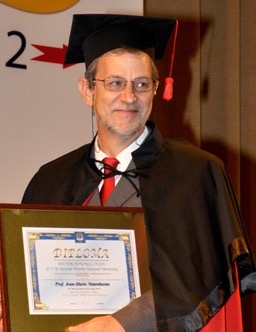 Jean-Marie Noterdaeme合作论文数vakgroep Elektrische Energie, Systemen en Automatisering, faculteit Ingenieurswetenschappen en Architectuur, Ghent University;vakgroep Toegepaste Fysica, faculteit Ingenieurswetenschappen en Architectuur, Ghent University25A. Carlson合作论文数24H.-U. Fahrbach合作论文数23




