BACKGROUND Coronavirus disease 2019 (COVID-19) was declared a pandemic by the WHO on 11 March 2020 and global surgical practice was compromised. This Commission aimed to document and reflect on the changes seen in the surgical environment during the pandemic, by reviewing colleagues' experiences and published evidence. METHODS In late 2020, BJS contacted colleagues across the global surgical community and asked them to describe how severe acute respiratory syndrome coronavirus 2 (SARS-CoV-2) had affected their practice. In addition to this, the Commission undertook a literature review on the impact of COVID-19 on surgery and perioperative care. A thematic analysis was performed to identify the issues most frequently encountered by the correspondents, as well as the solutions and ideas suggested to address them. RESULTS BJS received communications for this Commission from leading clinicians and academics across a variety of surgical specialties in every inhabited continent. The responses from all over the world provided insights into multiple facets of surgical practice from a governmental level to individual clinical practice and training. CONCLUSION The COVID-19 pandemic has uncovered a variety of problems in healthcare systems, including negative impacts on surgical practice. Global surgical multidisciplinary teams are working collaboratively to address research questions about the future of surgery in the post-COVID-19 era. The COVID-19 pandemic is severely damaging surgical training. The establishment of a multidisciplinary ethics committee should be encouraged at all surgical oncology centres. Innovative leadership and collaboration is vital in the post-COVID-19 era.Members of the BJS Commission Team are co-authors of this study and are listed under the heading Collaborators.
The first measurement of longitudinal decorrelations of harmonic flow amplitudes v_{n} for n=2-4 in Xe+Xe collisions at sqrt[s_{NN}]=5.44 TeV is obtained using 3 μb^{-1} of data with the ATLAS detector at the LHC. The decorrelation signal for v_{3} and v_{4} is found to be nearly independent of collision centrality and transverse momentum (p_{T}) requirements on final-state particles, but for v_{2} a strong centrality and p_{T} dependence is seen. When compared with the results from Pb+Pb collisions at sqrt[s_{NN}]=5.02 TeV, the longitudinal decorrelation signal in midcentral Xe+Xe collisions is found to be larger for v_{2}, but smaller for v_{3}. Current hydrodynamic models reproduce the ratios of the v_{n} measured in Xe+Xe collisions to those in Pb+Pb collisions but fail to describe the magnitudes and trends of the ratios of longitudinal flow decorrelations between Xe+Xe and Pb+Pb. The results on the system-size dependence provide new insights and an important lever arm to separate effects of the longitudinal structure of the initial state from other early and late time effects in heavy-ion collisions.
This paper presents results on in situ measurements of radiation damage for the on-detector optoelectronics for the ATLAS SemiConductor Tracker. The results come from proton-proton collisions in LHC during operation in 2016, 2017 and 2018. The results for both p-i-n diodes and VCSELs are given and compared to expectations from beam tests of devices from the same wafer, before the start of LHC operation. The VCSELs show evidence for some radiation damage as expected from earlier studies. The magnitude of the damage is compared with simple extrapolations from test beam data. The p-i-n diodes do show significant radiation damage as expected from test beam studies.
The production cross-sections for W +/- and Z bosons are measured using ATLAS data corresponding to an integrated luminosity of 4.0 pb-1 collected at a centre-ofmass energy v s = 2.76 TeV. The deca ...
Objective The aim of this study was to assess the nutritional status of patients presenting with small bowel obstruction (SBO), along with associated nutritional interventions and clinical outcomes. Design Prospective cohort study. Setting 131 UK hospitals with acute surgical services. Participants 2069 adult patients with a diagnosis of SBO were included in this study. The mean age was 67.0 years and 54.7% were female. Primary and secondary outcome measures Primary outcome was in-hospital mortality. Secondary outcomes recorded included: major complications (composite of in-hospital mortality, reoperation, unplanned intensive care admission and 30-day readmission), complications arising from surgery (anastomotic leak, wound dehiscence), infection (pneumonia, surgical site infection, intra-abdominal infection, urinary tract infection, venous catheter infection), cardiac complications, venous thromboembolism and delirium. Results Postoperative adhesions were the most common cause of SBO (49.1%). Early surgery (<24 hours postadmission) took place in 30.0% of patients, 22.0% underwent delayed operation and 47.9% were managed non-operatively. Malnutrition as stratified by Nutritional Risk Index was common, with 35.7% at moderate risk and 5.7% at severe risk of malnutrition. Dietitian review occurred in just 36.4% and 55.9% of the moderate and severe risk groups. In the low risk group, 30.3% received nutritional intervention compared with 40.7% in moderate risk group and 62.7% in severe risk group. In comparison to the low risk group, patients who were at severe or moderate risk of malnutrition had 4.2 and 2.4 times higher unadjusted risk of in-hospital mortality, respectively. Propensity-matched analysis found no difference in outcomes based on use or timing of parenteral nutrition. Conclusions Malnutrition on admission is associated with worse outcomes in patients with SBO, and marked variation in management of malnutrition was observed. Future trials should focus on identifying effective and cost-effective nutritional interventions in SBO.
This change does not have any impact on the measured helicity fractions, but it changes the obtained limits on the anomalous couplings.
We have developed ultrasonic instrumentation to simultaneously monitor flow and composition in a variety of gas mixtures. Flow and mixture composition are respectively derived from measurements of the difference and average of sound transit times in two opposite directions in a flowing process gas blend. Gas composition is then determined from an automated comparison of the measured sound velocities with a velocity/composition database. Continuous, real-time precision measurements of binary gas mixtures are required in many applications. While the most natural application of this instrumentation is in the analysis of such mixtures, analysis of mixtures with additional components is also possible, as discussed in this paper. In the ATLAS experiment at CERN, several instruments are presently used in the Detector Control System. Three instruments monitor octafluoropropane (C3F8, R218) and carbon dioxide (CO2, R744) coolant leaks into the nitrogen-purged envelopes surrounding elements of the inner silicon tracker. Precision in molar concentration of better than 2.10-5 is routinely seen in mixtures of C3F8 in nitrogen in the presence of known concentrations of the third party gas CO2. Two further instruments are used to monitor the new 60 kW thermosiphon C3F8 evaporative coolant recirculator which exploits the 90m depth of the ATLAS pit to circulate coolant without the need for pumps or compressors in the primary loop. These instruments are used to verify the absence of air leaks in the thermosiphon cooling circuit and to measure the vapour-phase coolant flow in real-time. This instrumentation is also used to measure zeotropic fluorocarbon blends containing C3F8 and up to 25% hexafluoroethane (C2F6, R116), achieving a precision around 0.16% in the range 0-25% C2F6. We also report on measurements of heat transfer coefficient in these blends: our experimental data were compared to several empirical correlations, with typical differences less than 10%. This analysis technique, targeting binary pairs of gases of dissimilar molecular weight, is particularly promising for mixtures of anesthetic gases, including in the developing area of anesthesia using xenon. The instrument and its various applications will be discussed.
A search for new charged massive gauge bosons, W′, is performed with the ATLAS detector at the LHC. Data were collected in proton–proton collisions at a center-of-mass energy of s=13 TeV and correspond to an integrated luminosity of 36.1 fb−1. This analysis searches for W′ bosons in the W′→tb¯ decay channel in final states with an electron or muon plus jets. The search covers resonance masses between 0.5 and 5.0 TeV and considers right-handed W′ bosons. No significant deviation from the Standard Model (SM) expectation is observed and upper limits are set on the W′→tb¯ cross section times branching ratio and the W′ boson effective couplings as a function of the W′ boson mass. For right-handed W′ bosons with coupling to the SM particles equal to the SM weak coupling constant, masses below 3.15 TeV are excluded at the 95% confidence level. This search is also combined with a previously published ATLAS result for W′→tb¯ in the fully hadronic final state. Using the combined searches, right-handed W′ bosons with masses below 3.25 TeV are excluded at the 95% confidence level. © 2018 The Author(s)
Abstract Inclusive jet and dijet cross-sections are measured in proton-proton collisions at a centre-of-mass energy of 13 TeV. The measurement uses a dataset with an integrated luminosity of 3.2 fb−1 recorded in 2015 with the ATLAS detector at the Large Hadron Collider. Jets are identified using the anti-k t algorithm with a radius parameter value of R = 0.4. The inclusive jet cross-sections are measured double-differentially as a function of the jet transverse momentum, covering the range from 100 GeV to 3.5 TeV, and the absolute jet rapidity up to |y| = 3. The double-differential dijet production cross-sections are presented as a function of the dijet mass, covering the range from 300 GeV to 9 TeV, and the half absolute rapidity separation between the two leading jets within |y| < 3, y ∗, up to y ∗ = 3. Next-to-leading-order, and next-to-next-to-leading-order for the inclusive jet measurement, perturbative QCD calculations corrected for non-perturbative and electroweak effects are compared to the measured cross-sections.
AbstractAn angular analysis of the decayBd0 → K∗μ+μ−is presented, based on proton-proton collision data recorded by the ATLAS experiment at the LHC. The study is using 20.3 fb−1of integrated luminosity collected during 2012 at centre-of-mass energy of$$ \sqrt{s}=8 $$s=8TeV. Measurements of theK*longitudinal polarisation fraction and a set of angular parameters obtained for this decay are presented. The results are compatible with the Standard Model predictions.
A search for pair production of the supersymmetric partners of the Higgs boson (higgsinos ˜H) in gauge-mediated scenarios is reported. Each higgsino is assumed to decay to a Higgs boson and a gravitino. Two complementary analyses, targeting high- and low-mass signals, are performed to maximize sensitivity. The two analyses utilize LHC pp collision data at a center-of-mass energy √s=13 TeV, the former with an integrated luminosity of 36.1 fb−1 and the latter with 24.3 fb−1, collected with the ATLAS detector in 2015 and 2016. The search is performed in events containing missing transverse momentum and several energetic jets, at least three of which must be identified as b-quark jets. No significant excess is found above the predicted background. Limits on the cross section are set as a function of the mass of the ˜H in simplified models assuming production via mass-degenerate higgsinos decaying to a Higgs boson and a gravitino. Higgsinos with masses between 130 and 230 GeV and between 290 and 880 GeV are excluded at the 95% confidence level. Interpretations of the limits in terms of the branching ratio of the higgsino to a Z boson or a Higgs boson are also presented, and a 45% branching ratio to a Higgs boson is excluded for m˜H≈400 GeV.
We have measured the flow boiling heat transfer coefficient (HTC) of saturated fluorocarbon blends in a horizontal copper-nickel tube with a diameter of 4 mm. Direct (Joule) heating of the tube wall was used to obtain heat fluxes from 5 to 13.7 kW m(-2). Two different injection capillaries were used, permitting measurements at mass fluxes varying between 94 and 164 kg m(-2) s(-1). The evaporation pressure was approximately 0.2 MPa for the mass fluxes close to 164 kg m(-2) s(-1) and 0.15 MPa for the lower mass fluxes. The same tube dimensions and material are used in the on-detector cooling channels of the silicon micro-strip charged particle tracker ("SCT") of the ATLAS experiment at the CERN Large Hadron Collider. The range of heat flux and mass flow studied encompasses the operating conditions of the tracker. When operating in the high radiation environment near to the proton beam collisions radiation tolerant coolants are essential. Saturated fluorocarbons (CnF(2n+2)) are radiation resistant and allow thermodynamic "tailoring" by blending saturated molecules of different orders. Measurements were made with pure C3F8 (R218) and zeotropic blends containing 5, 10, 15, 20 and 25% (molar) C2F6 (R116). This work is a continuation of a previous study which showed that the operating temperature of the ATLAS SCT could be reduced by around 10 degrees C with the admixture of 25% (molar) C2F6, with no changes needed to the existing on-detector and circulatory pipework. The data analysis revealed multiple flow boiling regimes of the two-phase flow that varied as a function of coolant flow rate, heat flux, vapour quality and mixture composition. As expected, the HTC in pure C3F8 was higher than in blends with increasing C2F6 content. Nevertheless, the study confirmed that the ATLAS SCT could be operated at full power dissipation with cooling tube temperatures up to 10 degrees C colder than in pure C3F8 with C3F8/C2F6 blends having relatively modest values of HTCs in the range 1500-4000 W m(-2) K-1. (C) 2017 Elsevier Ltd. All rights reserved.
A bstract A measurement of b -hadron pair production is presented, based on a data set corresponding to an integrated luminosity of 11.4 fb −1 of proton-proton collisions recorded at $$ \sqrt{s}=8 $$ s = 8 TeV with the ATLAS detector at the LHC. Events are selected in which a b -hadron is reconstructed in a decay channel containing J/ψ → μμ , and a second b -hadron is reconstructed in a decay channel containing a muon. Results are presented in a fiducial volume defined by kinematic requirements on three muons based on those used in the analysis. The fiducial cross section is measured to be 17.7 ± 0.1(stat.) ± 2.0(syst.) nb. A number of normalised differential cross sections are also measured, and compared to predictions from the P ythia 8, H erwig ++, M ad G raph 5_ a MC@NLO+P ythia 8 and S herpa event generators, providing new constraints on heavy flavour production.
A search for pair production of a scalar partner of the top quark in events with four or more jets plus missing transverse momentum is presented. An analysis of 36.1 fb −1 of √(s)=13 TeV proton-proton collisions collected using the ATLAS detector at the LHC yields no significant excess over the expected Standard Model background. To interpret the results a simplified supersymmetric model is used where the top squark is assumed to decay via t̃_1→t^(∗)_1^0 and t̃_1→ b_1^±→ bW^(∗)_1^0 , where χ 1 0 (χ 1 ± ) denotes the lightest neutralino (chargino). Exclusion limits are placed in terms of the top-squark and neutralino masses. Assuming a branching ratio of 100
 R. Keeler合作论文数163D. G. Charlton合作论文数159G. Mikenberg合作论文数155P. Sherwood合作论文数155
 Richard Batley合作论文数The Cavendish Laboratory, Department of Physics, University of Cambridge155P. M. Watkins合作论文数154
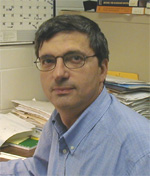 Georges Azuelos合作论文数Department of Physics, Faculty of Arts and Science, Université de Montréal;TRIUMF154
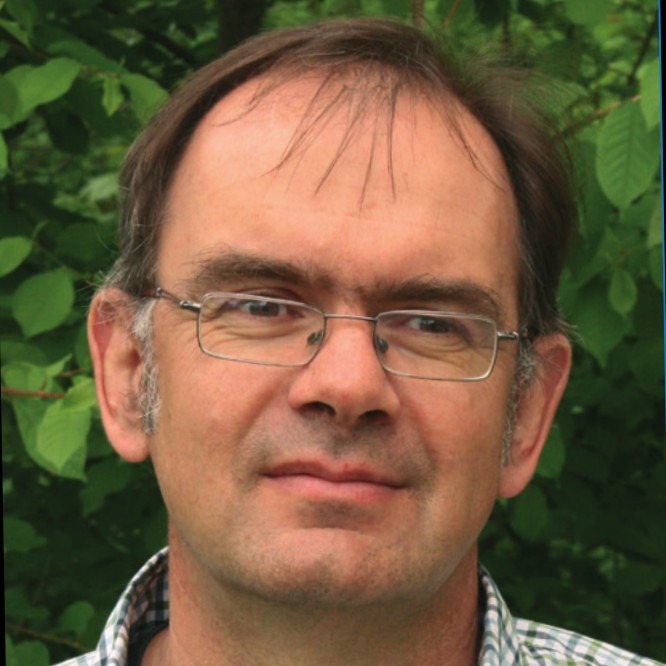 Günter Duckeck合作论文数Faculty of Physics, Ludwig Maximilian University of Munich153
 Bob Kowalewski合作论文数Victoria Subatomic Physics & Accelerator Research Centre, Department of Physics and Astronomy, Faculty of Science, University of Victoria153
 Shlomit Tarem合作论文数Department of Physics, Technion–Israel Institute of Technology;The Center of Research Excellence in The Quantum Universe153
 Erez Etzion合作论文数School of Physics and Astronomy, Tel Aviv University;European Organization for Nuclear Research153r so合作论文数152
 Claude Leroy合作论文数Département de Physique, Faculté Des Arts et Des sciences, Université de Montréal152
 Steve Lloyd合作论文数School of Physical and Chemical Sciences, Queen Mary University of London;Institute of Physics, Queen Mary University of London151R. P. Middleton合作论文数151F. K. Loebinger合作论文数149
 Gideon Alexander合作论文数School of Physics and Astronomy, Tel-Aviv University149
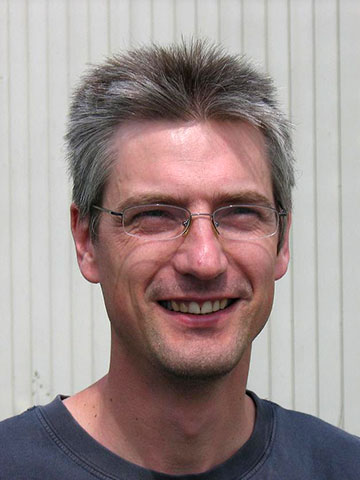 S J Hillier合作论文数School of Physics and Astronomy, University of Birmingham149
 Pippa Wells合作论文数CERN148D. Lellouch合作论文数148
 Gerald Oakham合作论文数Department of Physics, Carleton University148
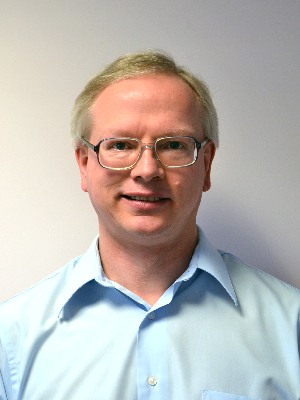 Chris Hawkes合作论文数School of Physics and Astronomy, University of Birmingham147
 J. Colin Hill合作论文数Department of Physics, Columbia University146F. S. Merritt合作论文数145
 Pedro Teixeira-Dias合作论文数Centre for Particle Physics and Astronomy, Department of Physics, Royal Holloway, University of London144M. Fincke-Keeler合作论文数143
 Roger William Lewis Jones合作论文数Department of Physics, Lancaster University143
 Paul de Jong合作论文数Institute of Physics, Faculty of Science, Universiteit van Amsterdam;Nikhef142
 Peter Mättig合作论文数University of Wuppertal142Gabor Bella合作论文数Department of Physics and Astronomy Tel Aviv University 69978 Tel Aviv Israel142
 James Pinfold合作论文数Department of Physics, Faculty of Science, University of Alberta142Antony A. Carter合作论文数Queen Mary University of London141
 Mark J. Oreglia合作论文数Department of Physics, The University of Chicago;Enrico Fermi Institute, The University of Chicago139T. Kawamoto合作论文数138M.J. Losty合作论文数138H. J. Burckhart合作论文数European Organisation for Particle Physics CERN CH-1211 Geneva 23 Switzerland138M. Hauschild合作论文数European Organisation for Particle Physics CERN CH-1211 Geneva 23 Switzerland137
 David Axen合作论文数Department of Physics & Astronomy, The University of British Columbia136C. J. Oram合作论文数136
 Roger Barlow合作论文数School of Computing and Engineering, University of Huddersfield136
 Carla Sbarra合作论文数Istituto Nazionale di Fisica Nucleare136Annette Wilson合作论文数136W.G. Scott合作论文数136
 Fabrizio Fabbri合作论文数Istituto Nazionale di Fisica Nucleare Sezione di Bologna135L. Levinson合作论文数135M. Jimack合作论文数134T. R. Wyatt合作论文数133C. P. Ward合作论文数132
 Stefan Kluth合作论文数Max Planck Institute for Physics131




