The field of climate services is based on the premise that relevant climate information and tools for decision-makers can be provided by authoritative experts and transferred to societal users of information who will then use the information to make decisions that lead to climate-compatible urban development (Vaughan and Dessai, 2014; Brasseau and Gallardo, 2016; Nagy et al., 2020). This stems from the deficit model that assumes that poor decisions are made because of a lack of scientific knowledge (Cook and Melo Zurita, 2019). Yet there is a growing body of knowledge suggesting that people learn and shift their perspectives and values through affective experiences, rather than being given information, no matter how tailored. This chapter explores how transdisciplinary collaborative processes can be designed to provide a space for thoughtful and critical dialogue between diverse urban stakeholders to engender an enhanced understanding of and receptivity to creating more resilient cities through the inclusion of climate information in decision-making. The Future Resilience for African Cities and Lands (FRACTAL)1 project proposed from the outset to use a transdisciplinary approach to knowledge production and application, as literature over the last two decades has critiqued the conventional disciplinary academic system and its conceptualisation of science and society as a binary set of categories (Hessels and van Lente, 2008; Klein, 2013; Swilling, 2014; Polk, 2015; Vogel et al., 2016).2 As transdisciplinary research aims to produce knowledge to address real-world social problems, it requires a “messy engagement” of diverse participants who bring different types of knowledge to the engagement process (Davies et al., 2008, quoted from Nagy et al., 2020, 149). This chapter presents one of the critical outcomes of the FRACTAL project, namely, the emergence of the concept of receptivity as an alternative way to understand the shift to a more sustainable way of thinking about future development decision-making in Southern African cities. Receptivity is argued here to be a subjective, non-material process associated with values, identity, ethics, and emotions operating at individual and social group or community scales (LotzSisitka et al., 2015; Gosnell et al., 2019, 58). This notion of receptivity echoes Dianne Scott and Anna Taylor
Although historical developments have differently shaped urban growth trajectories of Indian and South African cities, informal settlements continue to present urgent concerns for city governments in both countries. This research explores urban governance and political bargaining of households residing in informal settlements of Chennai, India and eThekwini, South Africa across institutional and geographic scales. The article analyses two relations in a comparative framework of Chennai and eThekwini- 1) between city governments and informal settlements; and 2) livelihoods building strategy of households in relations to the informal settlements. City and settlement relations are explored by discussing the dominant planning discourses, as illustrated in policy-related documents produced by the two city governments. The article reveals that political bargaining utilising different methods forms a crucial strategy to build livelihoods. The multi-scalar analysis of households within their situated contexts reveals how their distinct trajectories of development are closely associated with the urban and settlement histories of which they are a part. The different mandates within which the settlements exist are influential in allowing households to build up their livelihoods over one or two generations.
Chennai (Tamil Nadu, India) and Durban (Kwazulu-Natal, South Africa) have both used growth corridors to support their dominant political and economic roles within their state or province and consolidate their position as regional hubs. These corridors are particular types of space that are ‘produced’ in order to drive economic growth and urban development. Giving expression to broader urban development strategies, they result from the coming together of actor networks, discourses, knowledge and materialities within a particular space. This chapter uses economic growth corridors as a lens to explore the coming together of interconnections that produce the city, which are interesting precisely because they are not representative of the entire city. More broadly, we focus on the urban governance configurations of growth corridors in both Chennai and Durban and compare the processes of megaproject development as a conceptual entrypoint to reflect on the ways in which fast growing, port-industrial cities are being (re-)invented. This chapter explores the very different configurations within the two cities that are nonetheless producing broadly similar outcomes with similar genealogies.
Hybrid science-society approaches for knowledge production are often framed by a transdisciplinary approach. Most forms of "linear" progression of science informing policy or the "production" of knowledge as a one-way process are increasingly being challenged. This is also true for coastal and marine sciences informing decision-making to support sustainable development of coastal areas. From the early 2010s, South Africa had one of the most progressive and well-structured frameworks for the establishment of integrated coastal management (ICM) in order to achieve societal objectives for its valuable coastal area. Even so, the implementation of the legislation, policies and guidelines remain a challenge, especially at the local level in municipalities. This paper reports on a social experiment that was intended to examine the possibility for a new knowledge negotiation process to unsettle the highly structured, nested and regular policy process, which forms the basis of ICM in South Africa. This paper reflects on an experimental application of a participatory methodology known as a "competency group(") to co-produce knowledge for coastal and marine management. The group members, a combination of codified, tacit and embedded knowledge holders, agreed to serve on a competency group and met on six occasions over a 12-month period in 2013. This group "negotiated" amongst themselves to achieve a common understanding of knowledge useful for the management of beach water quality on the Golden Mile, the prime beachfront of Durban, a South African city. The paper provides a novel lens into a potentially distinctive, challenging and imminently useful approach of co-producing knowledge for coastal governance, especially in a middle-income country where the social and political context is complex.
This article proposes a conceptual framework for analysing and comparing urban governance configurations and their dynamics in the context of sustainability transitions. Our contribution to the debates consists of drawing on a literature review to develop a conceptual framework with the dimensions necessary for understanding urban governance processes and their dynamics; an urban governance configuration framework. We argue that this framework allows us to combine important dimensions (discourses, actor networks, knowledge and material processes) shaping urban development decision-making and outcomes in their social, economic and environmental domains, in a complex world. The main advantages of this approach are: first, it enables the analysis how complex decision-making is combined in a particular time and space, generating decisions and outcomes based on a variety of knowledge; second, it allows a comparative analysis of governance configurations across different places within the same city and between cities; and third, provides lessons on how urban governance could shift to more inclusive, sustainable forms of urban development.
PurposeThe purpose of this paper is to reflect on the author’s research experiences in northern Mozambique in order explore the multiplicity of gatekeeper relations that arose while seeking to arrange access to both “the field” and respondents, as well as the impacts that these relationships had on the research process. Although this dynamic has been thoroughly described within methodological literature, there exists a tendency to presume research–gatekeeper relations as static; once established, there is little discussion on how the relationships develop or can be managed, once access has (or has not) been achieved.Design/methodology/approachThe paper draws upon qualitative fieldwork conducted predominantly in rural communities in northern Mozambique. The study analysed the development of the Nacala Development Corridor programme and the N13 Highway Rehabilitation Project in northern Mozambique in order to examine the impacts of the development on local citizens and examine the relationship between citizen and state within development processes. Fieldwork consisted of three different phases of semi-structured and open-ended interviews with key stakeholders and affected persons, spanning five different interview schedules, and a total of 77 individual interviews and 27 community focus groups conducted along the N13.FindingsThe study found that duality of Mozambican governance which includes both local officials and traditional leadership contributed to a multiplicity of local gatekeepers which impacted the research process in a multitude of ways. As a result, researcher–gatekeeper relations were not static, but had to be managed throughout the duration of the study.Originality/valueThis discussion provides a more dynamic representation of the challenges involved with establishing and managing gatekeeper relations in rural, developing, and in particular, southern African, contexts, while offering cautious practical advice to researchers working within rural or southern African contexts.
Cape Town’s drought crisis grabbed global headlines in 2018 and its causes and solutions were – and continue to be – hotly debated. But managing water shortages and other climate change impacts have been integrated into the city’s urban policy-making for some time, in response to rapid urbanisation and uncertainty about the exact nature, timing and magnitude of city-scale climatic changes. This book presents initiatives at the local government level, across a range of departments, from environmental resource management to housing, stormwater management, water management, energy management and spatial planning. In addition, it records the progress made and challenges faced in mainstreaming climate change into urban policies, processes, programmes and practices, a problem facing most urban areas around the world. The text was co-produced by academics and municipal officials, including economists, engineers, ecologists, geographers and planners, who worked collaboratively in a process of mutual learning. This hybrid process, where practitioner experience is coupled with an academic and research perspective, has produced an ‘insider’ view of urban development and climate change governance through the lens of theory. The result provides new practice-based knowledge for policy-making in the transition towards more sustainable cities in the face of climate change, particularly those in the global South.
Citizens of authoritarian, single-party, or post-socialist states rarely demonstrate excessive trust in government. A 2013 study by Mattes and Shenga, however, suggests that Mozambique is different, with a citizenry that appears remarkably deferential and trusting of the state, without displaying the criticism or cynicism which Mozambique’s history would suggest would be common. They argue that Mozambicans instead demonstrate an ‘uncritical citizenship’, which can be partially explained as a function of living in a low-information society. The purpose of this article is to assess Mattes and Shenga’s notion of ‘uncritical’ Mozambican citizenship using qualitative data gathered within rural communities in northern Mozambique. The analysis partially reflects Mattes and Shenga’s conclusions, describing a population overly deferential or resigned towards state power, where an individual’s ability to deliver a complaint or levy criticism appears to be strongly tied to their positionality. However, it finds that their concept of ‘uncritical citizenship’ is problematic, as it ignores the heavy and oppressive paternalism exerted by the Mozambican state in rural communities where it positions its population more as subjects than citizens and often resorts to fear and intimidation to mute dissent.
Despite the remarkable ART coverage and associated benefits, people living with HIV and AIDS (PLWH) require home care at the stage IV of HIV progression. Thus, home-based care (HBC) remains an important component of caregiving to PLWH in rural communities, but research on its social aspects is declining. This study explored experiences of households that care for PLWH in the ART era using a case study of Nyamakate resettlement area, Zimbabwe. Data were gathered using household interviews, key informant in-depth interviews, observations and focus group discussions. Most of the households had extended families and the highest number of household members was 13 people. Three family typologies cared for PLWH and these are nuclear, extended and "grandparent" households. Caregivers struggled to offer adequate care due to a number of challenges including lack of income, food shortage, transport problems and burden of care. ARVs were provided free of charge by government and an NGO seldom supported PLWH with food handouts. In conclusion, the HBC across the household structures continue to be stressed by the challenges associated with caring for PLWH even though they are on ART.
The planning horizon for water infrastructure such as bulk water supply, dams, stormwater and hydraulic structures is typically 25-100 years. It is therefore critical that climate change information is incorporated into the planning and design of these important urban assets. This is particularly relevant for cities in Africa which have a backlog in critical water infrastructure and are experiencing significant growth that in many cases is exceeding the capacity of existing infrastructure. This paper discusses the current practice of assimilating climate information in the infrastructure design process for water related infrastructure describing current design standards and typically used datasets. The city of Windhoek in Namibia is used as a case study to demonstrate how the process of co-exploration of climate change risks can result in research that will be of use to decision makers. This study outlines appropriate parameters and temporal and spatial scales necessary to support the integration of climate change into long term infrastructure planning and design that is applicable to all cites. An example is presented of potential changes in extreme rainfall at the local level to illustrate consequences of not updating design standards with future climate change information.
Contemporary urban theory raises many questions about how ‘the urban’ is being conceptualized in a fast changing world that is approaching an urban epoch. Evolving debates about what it means to be urban, including the similarities and differences between so-called northern and southern cities, the future of cities, the way to manage and sustain cities, and cities’ relationships to the new Urban Agenda and the Sustainable Development Goals, reveal the need for urban theory that can explain and provide insights into contemporary urban governance, processes, and outcomes. This special issue uses Durban as a lens to provide insight into the changing nature of cities in the Global South and Africa in particular, which encapsulate and reflect both formality and informality; tradition and modernity; uneven and unequal growth and social transformation; environmental crises and ‘resilience and sustainability’. This paper reflects on the dominant processes shaping the development of the city, revealing the challenges, tensions, and opportunities that emerge as the city assembles new ways of being urban, through the rationalities, knowledge, experiences, practices and actions of the state, citizens, and the private sector.
This paper responds to the call by Wise et al. (2014) to improve our understanding of decisions related to urban climate adaptation by situating policy interventions in a broader governance context. To develop this argument we use a qualitative case study from Cape Town, South Africa of a local government intervention in an informal settlement suffering from annual flooding. The intervention took the form of gravel platforms raising the ground on which residential dwellings were located. We argue that the meaning and purpose of this intervention have been shaped by multiple social agendas promoted by various actors, producing a contested result and arguably impacting on the potential of the intervention to serve as a pathway to increased adaptive capacity. In addition to the notion of adaptive pathways, we draw on the notions of governance configuration and local policy subversion to explain the case in question.
The aim of the paper is to present a story about the 2015 to early 2017Windhoek drought in the context of climate change while using the narrative approach. The story that is presented here is derived from the engagement of participants in a transdisciplinary, co-productive workshop, theWindhoek Learning Lab 1 (March 2017), as part of the FRACTAL Research Programme. The results show that the story starts with the 'complication' where the drought had reached crisis levels where the water demand increasingly exceeded the supply in the face of the drought. The City ofWindhoek (CoW) was unable to address the problem, particularly the recharging of the Windhoek aquifer due to lack of funding. Phase 2 then shows four reactions to the drought: water conservation by water demand management; a Water Saving campaign; the Windhoek Managed Aquifer Recharge Scheme; and, the setting up of the Cabinet Technical Committee of Supply Security. The resolution of the story, Phase 4, is when the national government instructs NamWater to provide the funds for CoW to complete the recharging of the aquifer, which supplied water to the city at the last minute at the end of 2016. The final situation of the story is that ongoing collaborative work by CoW with FRACTAL on the city's burning issues is planned to integrate climate change into future decision making for the longer term. The main actors in the story are the Ministry of Agriculture and NamWater as hero and villain, and CoW a hero, with the victims of the story, the residents of informal settlements. The main learnings from this story are that the lack of decentralization of power and resources serve to exacerbate water crises at the local level and hamper climate adaptation, despite a proactive and innovative local municipality. The paper also shows that the narrative approach provides the thread of the story to simplify a very complex set of arrangements and contradictions.
Urban tourism in contemporary Durban has expanded beyond the turbulence of the 1990s, when grime and avoidance by white tourists were linked to racial constructions in the media and elsewhere. Rumblings of discontent expressed by media reports and letters complaining of beachfront, grime and threats to personal safety, coupled with declining domestic tourism and tourism revenue, have prompted extensive research funded by the KwaZulu-Natal Tourism Authority. This means taking a critical look at the principal tourism drivers that authors identify as the natural and built environment, globalization, tourist demand, policy-driven imperatives, and public-private partnerships. The nature and success of existing and emergent destinations in the city then needs to be assessed. The chapter discusses certain types of tourism spaces. These are, initially, urban tourism sites that have been planned, developed, or orchestrated into spaces that are ordered and controlled, finally, potential tourism spaces that are avoided by tourists because of dysfunctional social conditions and perceptions of insecurity.
Resilience building has become a growing policy agenda, particularly for urban risk management. While much of the resilience agenda has been shaped by policies and discourses from the global North, its applicability for cities of the global South, particularly African cities, has not been sufficiently assessed. Focusing on rights of urban citizens as the object to be made resilient, rather than physical and ecological infrastructures, may help to address many of the root causes that characterize the unacceptable risks that urban residents face on a daily basis. Linked to this idea, we discuss four entry points for grounding a rights and justice orientation for urban resilience. First, notions of resilience must move away from narrow, financially oriented risk analyses. Second, opportunities must be created for “negotiated resilience”, to allow for attention to processes that support these goals, as well as for the integration of diverse interests. Third, achieving resilience in ways that do justice to the local realities of diverse urban contexts necessitates taking into account endogenous, locally situated processes, knowledges and norms. And finally, urban resilience needs to be placed within the context of global systems, providing an opportunity for African contributions to help reimagine the role that cities might play in these global financial, political and science processes.
Fair processes and just outcomes are recognised globally as an important part of climate change adaptation and water resource management in particular. Achieving this is challenging, particularly in a developing country context where there is a myriad of pressing needs and conflicting ideas of what is needed across scales. This study takes a qualitative approach to exploring issues of justice and fairness in implementing water management technologies in low-income households. Water management devices (WMDs) are employed as part of the City of Cape Town’s water conservation and water demand management strategy. Through applying an environmental justice approach, this study shows that the WMDs have impacted on justice at the local level. The justice implications relate to the following: limited participation by households and a lack of procedural justice, distributional impacts and rights infringement, and the failure of the policy to fully recognise the diverse needs and vulnerabilities experienced by households. The perspectives of City officials and representatives of households with WMDs installed reveal that there is a mismatch between the City’s stated benefits of WMDs and the growing dissatisfaction of households with their devices. This dissatisfaction stems, in particular, from the inability of households to fulfil their needs with a limited water allocation, and personal convictions that water access is and should remain their unrestricted right. This research suggests that for water resource management and adaptation measures to be effective at the local and city scale, policies will require the inclusion of local communities’ understandings and experiences in order to uphold principles of social justice.
 Isa Baud合作论文数Department of Geography, Planning and International Development Studies, University of Amsterdam13
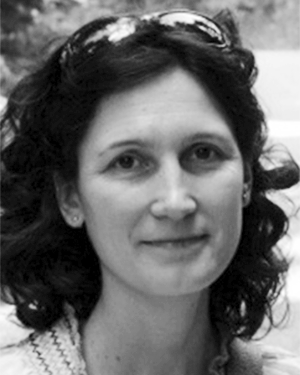 Karin Pfeffer合作论文数12
 Catherine Grace Sutherland合作论文数Sch Built Environm Dev Studies, Univ KwaZulu Natal9
 John Sydenstricker-Neto合作论文数6
 Éric Ogier–Denis合作论文数Centre de Recherche Biomédicale Bichat Beaujon CRB3, Université Paris 7-Denis-Diderot6
 Linda Godfrey合作论文数Council for Scientific and Industrial Research5
 Gina Ziervogel合作论文数Department of Environmental & Geographical Science, Faculty of Science, University of Cape Town4
 Cristina Trois合作论文数School of Civil Engineering, Surveying and Construction, University of KwaZulu-Natal4
 Catherine Oelofse合作论文数3s jameson合作论文数3
 Marc Kalina合作论文数Sch Engn, Univ KwaZulu Natal3
 Mark Difford合作论文数3
 Clive Barnett合作论文数College of Life and Environmental Sciences, University of Exeter3
 Elisabeth Peyroux合作论文数3
 Michaela Hordijk合作论文数Department of Geography, Planning and International Development Studies, University of Amsterdam3Robert Preston-Whyte合作论文数2shirley brooks合作论文数Geog & Environm Studies, Univ Western Cape2
 Anna Taylor合作论文数2
 Alexio Mbereko合作论文数2Vicky Sim合作论文数2
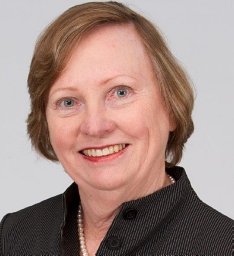 Roseanne Diab合作论文数University of KwaZulu-Natal;GenderInSITE2
 Merle Sowman合作论文数Environmental Evaluation Unit (EEU),, UCT University of Cape Town2Kornelia Iipinge合作论文数1Robyn Pharoah合作论文数1john charles stallmeyer合作论文数1
 James Cullis合作论文数1Olavi Makuti合作论文数1Kaunda Jean合作论文数1nerosha govender合作论文数1
 N.J. Walker合作论文数1
 Patricia Jane Zweig合作论文数Res Alliance Disaster & Risk Reduct RADAR, Stellenbosch Univ1
 Hellen Venganai合作论文数Fac Social & Gender Transformat Sci, Womens Univ Africa1
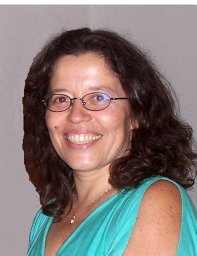 Liliana Miranda Sara合作论文数Foro Ciudades Vida1
 Kavya Michael合作论文数Earth Sci & Climate Change Div, Energy & Resources Inst1Tanvi Deshpande合作论文数1Kelly L Kirsten合作论文数University of Cape Town Faculty of Science1Tara Saharan合作论文数1
 Lucy Rodina合作论文数Inst Resources Environm & Sustainabil, Univ British Columbia1
 Davison Muchadenyika合作论文数Inst Social Dev, Univ Western Cape1Adrian Nel合作论文数Discipline Geog, Univ Kwazulu Natal1
 Louis Celliers合作论文数Climate Serv Ctr Germany GERICS, Helmholtz Zentrum Hereon1
 Piotr Wolski合作论文数Climate Syst Anal Grp, Univ Cape Town1
 Leila M. Harris合作论文数Institute for Resources, Environment and Sustainability, Faculty of Science, The University of British Columbia;Institute for Gender, Race, Sexuality and Social Justice, Faculty of Science, The University of British Columbia1
 Mark New合作论文数University of Cape Town1Javier Martinez合作论文数1Mfune J K E合作论文数1
 David O’Sullivan合作论文数Department of Geography, University of California, Berkeley1
 Kenneth Jones合作论文数Center for Better Beginnings, University of California, San Diego1
 Jennifer Houghton合作论文数Department of Geography, University of the Free State1




