This study contributes to a growing line of research in comparing LLM-generated texts with human-authored text, in this case, English news text. We focus in particular on the evaluation of syntactic properties through formal grammar frameworks. Our analysis compares two generations of LLMs in the context of two human-authored English news datasets from two different years. Employing the Head-Driven Phrase Structure Grammar (HPSG) formalism, we investigate the distributions of syntactic structures and lexical types of AI-generated texts and contrast them with the corresponding distributions in the human-authored New Your Times (NYT) articles. We use diversity metrics from ecology and information theory to quantify variation in grammatical constructions and lexical types. Our results show that, while English news text has changed little in the given time frame, newer, instruction-tuned LLMs display reduced syntactic and, especially, lexical diversity compared to older, non-instruction-tuned models. These findings point to future work in studying effects of instruction tuning, which, while enhancing coherence and adherence to prompts, may narrow the expressive range of model output.
This study provides the first comprehensive comparison of New York Times-style text generated by six large language models against real, human-authored NYT writing. The comparison is based on a formal syntactic theory. We use Head-driven Phrase Structure Grammar (HPSG) to analyze the grammatical structure of the texts. We then investigate and illustrate the differences in the distributions of HPSG grammar types, revealing systematic distinctions between human and LLM-generated writing. These findings contribute to a deeper understanding of the syntactic behavior of LLMs as well as humans, within the NYT genre.
The English auxiliary system exhibits many lexical exceptions and subregularities, and considerable dialectal variation, all of which are frequently omitted from generative analyses and discussions. This paper presents a detailed, movement-free account of the English Auxiliary System within Sign-Based Construction Grammar (Sag 2010, Michaelis 2011, Boas & Sag 2012) that utilizes techniques of lexicalist and construction-based analysis. The resulting conception of linguistic knowledge involves constraints that license hierarchical structures directly (as in context-free grammar), rather than by appeal to mappings over such structures. This allows English auxiliaries to be modeled as a class of verbs whose behavior is governed by general and class-specific constraints. Central to this account is a novel use of the feature aux , which is set both constructionally and lexically, allowing for a complex interplay between various grammatical constraints that captures a wide range of exceptional patterns, most notably the vexing distribution of unstressed do , and the fact that Ellipsis can interact with other aspects of the analysis to produce the feeding and blocking relations that are needed to generate the complex facts of EAS. The present approach, superior both descriptively and theoretically to existing transformational approaches, also serves to undermine views of the biology of language and acquisition such as Berwick et al. (2011), which are centered on mappings that manipulate hierarchical phrase structures in a structure-dependent fashion.
The English Resource Grammar (ERG) is a broad-coverage computational grammar of English that derives underspecified logicalform representations of meaning.Elementary Dependency Structures (EDS) and DELPH-IN MRS Bi-Lexical Dependencies (DM) are graph-based simplifications of ERG meaning representations.As a point of reference outside the official competition of the 2019 Shared Task on Cross-Framework Meaning Representation Parsing, we evaluate ERGderived EDS and DM graphs.These graphs yield higher accuracy scores than the purely data-driven parsers in the shared task, suggesting that the general-purpose grammatical knowledge encoded in the ERG aids parsing into these meaning representations.
Natural language grammar implementations that are constructed manually can grow over time to become large, complex resources covering an ever wider range of language phenomena. It would be useful both for the grammarian and for the users of a grammar to have a good understanding of how a later version of that grammar behaves in contrast to an earlier version, particularly in terms of the treatment of linguistic phenomena. This paper presents a case study of the evolution of an implemented grammar, comparing two versions of the same grammar by measuring several properties of the analyses recorded using that grammar in two corresponding versions of an associated dynamic treebank.
This paper concerns the form-meaning mapping of communicative actions consisting of speech and improvised co-speech gestures. Based on the findings of previous cognitive and computational approaches, we advance a new theory in which this form-meaning mapping is analysed in a constraint-based grammar. Motivated by observations in naturally occurring examples, we propose several construction rules, which use linguistic form, gesture form and their relative timing to constrain the derivation of a single speech-gesture syntax tree, from which a meaning representation can be composed via standard methods for semantic composition. The paper further reports on implementing these speech-gesture construction rules within the English Resource Grammar (Copestake and Flickinger 2000). Since gestural form often underspecifies its meaning, the logical formulae that are composed via syntax are underspecified so that current models of the semantics/pragmatics interface support the range of possible interpretations of the speech-gesture act in its context of use.
HPSG was developed to express insights from theoretical linguistics in a precise formalism that was computationally tractable. It drew ideas from a wide variety of traditions in linguistics, logic, and computer science. Its chief architects were Carl Pollard and Ivan Sag, and its most direct precursors were Generalized Phrase Structure Grammar and Head Grammar. The theory has been applied in the construction of computational systems for the analysis of a variety of languages; a few of these systems have been used in practical applications. This chapter sketches the history of the development and application of the theory.
This is a report on the methods used and results obtained by the UW-Stanford team for the Automated Evaluation of Scientific Writing (AESW) Shared Task 2016 on grammatical error detection.This team developed a symbolic grammar-based system augmented with manually defined mal-rules to accommodate and identify instances of highfrequency grammatical errors.System results were entered both for the probabilistic estimation track, where we ranked second, and for the Boolean decision track, where we ranked fourth.
Recent years have seen a dramatic increase in interest in semanticallyinformed natural language processing, including parsing into semantic representations, grounded language processing that connects linguistic structures to world representations, proposals to integrate compositional and distributional approaches to semantics, and approaches to semanticallysensitive tasks including sentiment analysis, summarization, generation, machine translation, and information extraction which take into account linguistic structure beyond ngrams.The semantic inputs to this work include a wide range of representations, from word embeddings, to syntactic dependencies used as a proxy for semantic dependencies, to sentencelevel semantic representations either partial (e.g.semantic role labels) or fully articulated.lexical representation, the syntaxsemantics interface, methodology for evaluation of semantically precise grammars, and practical applications of 'deep' processing.Applied and industrial experience includes cofounding the software company YY Technologies, which from 20002002 sold automated consumer email response technology incorporating the ERG; and since 2009 developing
We announce a new language resource for research on semantic parsing, a large, carefully curated collection of semantic dependency graphs representing multiple linguistic traditions. This resource is called SDP 2016 and provides an update and extension to previous versions used as Semantic Dependency Parsing target representations in the 2014 and 2015 Semantic Evaluation Exercises (SemEval). For a common core of English text, this third edition comprises semantic dependency graphs from four distinct frameworks, packaged in a unified abstract format and aligned at the sentence and token levels. SDP 2016 is the first general release of this resource and available for licensing from the Linguistic Data Consortium from May 2016. The data is accompanied by an open-source SDP utility toolkit and system results from previous contrastive parsing evaluations against these target representations.
This paper describes an analysis for possessive idioms in English (e.g. ˋI twiddle my thumbs' ˋˋI am idle''). The analysis relies on matching at the semantic level, to allow for syntactic variation. It has been implemented in the English Resource Grammar, and tested by parsing a subset of the British National Corpus. In addition to the syntactic analysis, we have linked the idioms to entries in the Princeton Wordnet, to allow for further lexical semantic analysis.
With the recent resurgence of interest in semantic annotation of corpora for improved semantic parsing, we observe a tendency which we view as ill-advised, to conflate sentence meaning and speaker meaning into a single mapping, whether done by annotators or by a parser. We argue instead for the more traditional hypothesis that sentence meaning, but not speaker meaning, is compositional, and accordingly that NLP systems would benefit from reusable, automatically derivable, taskindependent semantic representations which target sentence meaning, in order to capture exactly the information in the linguistic signal itself. We further argue that compositional construction of such sentence meaning representations affords better consistency, more comprehensiveness, greater scalability, and less duplication of effort for each new NLP application. For concreteness, we describe one well-tested grammar-based method for producing sentence meaning representations which is efficient for annotators, and which exhibits many of the above benefits. We then report on a small inter-annotator agreement study to quantify the consistency of semantic representations produced via this grammar-based method.
We motivate and describe the design and development of an emerging encyclopedia of compositional semantics, pursuing three objectives. We first seek to compile a comprehensive catalogue of interoperable semantic analyses-i.e. a precise characterization of meaning representations for a broad range of common semantic phenomena. Second, we operationalize the discovery of semantic phenomena and their definition in terms of what we call their semantic fingerprint, a formal account of the building blocks of meaning representation involved and their configuration. Third, we ground our work in a carefully constructed semantic test suite of minimal exemplars for each phenomenon, along with a 'target' fingerprint that enables automated regression testing. We work towards these objectives by codifying and documenting the body of knowledge that has been constructed in a long-term collaborative effort, the development of the LinGO English Resource Grammar. Documentation of its semantic interface is a prerequisite to use by non-experts of the grammar and the analyses it produces, but this effort also advances our own understanding of relevant interactions among phenomena, as well as of areas for future work in the grammar.
[目的]开发面向深层语言处理的汉语普通话在线语法(简称汉构).[应用背景]汉构是在DELPH-IN环境内,基于语法母体,在LKB平台上开发的可计算汉语语法.它的句法和语义分析的理论框架分别是中心语驱动的短语结构语法和最简递归语义.汉构为进一步开发资源型语法和商用奠定良好基础.[方法]根据系统的语言学本体研究对语言知识进行形式化描写;汉构的计算实现经历语法定制、汉语MRS测试套件、词库建设、语法规则定义和MRS描写等环节.[结果]汉构覆盖汉语基本词类和主要语言现象,完全覆盖MRS测试套件.[结论]汉构是最早的中型可计算汉语语法之一,是形式语法理论和计算语言学领域间开展合作研究的桥梁和有效载体.
Task 8 at SemEval 2014 defines BroadCoverage Semantic Dependency Parsing (SDP) as the problem of recovering sentence-internal predicate‐argument relationships for all content words, i.e. the semantic structure constituting the relational core of sentence meaning. In this task description, we position the problem in comparison to other sub-tasks in computational language analysis, introduce the semantic dependency target representations used, reflect on high-level commonalities and differences between these representations, and summarize the task setup, participating systems, and main results.
In the larger context of parsing for semantic interpretation, we present and evaluate a novel approach to corpus-driven approximation of linguistically rich, constraint-based grammars. We obtain an unlexicalized probabilistic context-free grammar (PCFG) from a very large corpus that is automatically annotated with the fine-grained syntacto-semantic analyses of a broad-coverage Head-Driven Phrase Structure Grammar (HPSG). PCFG parsing with the resulting approximation greatly improves robustness, while also increasing formal and computational simplicity. Different ways of encoding relevant syntactic context in the approximating PCFG are proposed and compared empirically, and a comparison to state-of-the-art latent-variable PCFG techniques suggests that our approach is more suitable for grammar approximation with massive amounts of training data. To recover logical-form meaning representations from the analyses of the robust PCFG parser, we develop a technique for robust semantic composition based on default unification. For evaluation of the semantic accuracy of the resulting robust analysis system, we propose a method of reducing the logical forms in the representation language predominant in computational HPSG to semantic dependency triples. Under various evaluation perspectives, parsing with the approximated grammar delivers competitive analysis quality.
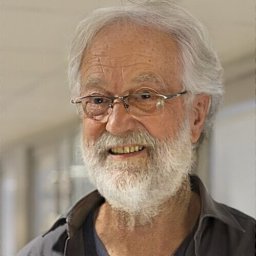 Stephan Oepen合作论文数University of Oslo53
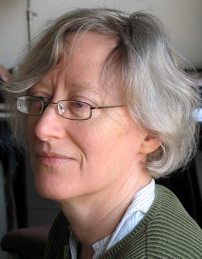 Ann Copestake合作论文数Centre for Research in Arts, Social Sciences and Humanities, University of Cambridge;Department of Computer Science and Technology, University of Cambridge21
 Francis Bond合作论文数Department of Asian Studies, Palacký University Olomouc18
 Emily M. Bender合作论文数Department of Linguistics, University of Washington17
 Ivan Sag合作论文数Stanford University15
 Tim Baldwin合作论文数Mohamed bin Zayed University of Artificial Intelligence;School of Computing and Information Systems, The University of Melbourne11
 Christopher Manning合作论文数Department of Linguistics, Stanford University;Department of Computer Science, Stanford University;AIX Ventures8
 Kristina Toutanova合作论文数Google Research8
 Jan Tore Lønning合作论文数8
 Yi Zhang合作论文数7Angelina Ivanova合作论文数7
 Yusuke Miyao (宮尾祐介)合作论文数Department of Information Science, Graduate School of Information Science and Technology, University of Tokyo;Department of Computer Science, Graduate School of Information Science and Technology, University of Tokyo6Paul Meurer合作论文数6
 Erik Velldal合作论文数Department of Informatics,University of Oslo6
 John A. Carroll合作论文数Department of Computational Linguistics and Informatics, School of Engineering and Informatics, University of Sussex6
 Helge Julius Jakhelln Dyvik合作论文数Department of Linguistic, Literary and Aesthetic Studies, University of Bergen5John T. Beavers合作论文数5Rebecca Dridan合作论文数University of Melbourne5Victoria Rosén合作论文数5
 Stuart M. Shieber合作论文数Department of Linguistics, Harvard University;Department of Philosophy, Harvard University;Maxwell-Dworkin Laboratory, Harvard University4
 Marco Kuhlmann合作论文数Department of Computer and Information Science (IDA) ; Human-Centered Systems (HCS)4
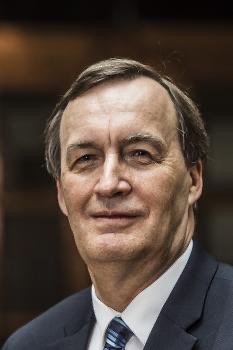 Jan Hajič合作论文数Institute of Formal and Applied Linguistics, Faculty of Mathematics and Physics, Charles University4
 Daniel Zeman合作论文数Center for Computational Linguistics, Institute of Formal and Applied Linguistics, Faculty of Mathematics and Physics, Charles University4Ara Kim合作论文数4
 Lilja Øvrelid合作论文数University of Oslo4Carl J. Pollard合作论文数Professor of Linguistics at The Ohio State University4Gisle Ytrestøl合作论文数3Woodley Packard合作论文数Dept Linguist, Univ Washington3
 Janne Johannessen合作论文数University of Oslo3
 Thomas Wasow合作论文数Department of Linguistics, School of Humanities and Sciences, Stanford University;Department of Philosophy, School of Humanities and Sciences, Stanford University3
 Dorothee Beermann合作论文数Norwegian University of Science and Technology3
 Melanie Siegel合作论文数Computational Linguist at Acrolinx3
 Eric Nichols合作论文数Nara Advanced Institute of Science and Technology3
 Lars Hellan合作论文数3Torbjørn Nordgard合作论文数3
 Olga Zamaraeva合作论文数Facultade de Informática, University of A Coruña;Department of Computer Science, University of A Coruña2
 Stefan Müller合作论文数Institut für deutsche Sprache und Linguistik, Sprach- und literaturwissenschaftliche Fakultät, Humboldt Universität zu Berlin;Department of German Studies and Linguistics, Faculty of Language Sciences, Humboldt Universität zu Berlin2
 Geoffrey K. Pullum (溥哲夫)合作论文数School of Philosophy, Psychology, and Language Sciences, University of Edinburgh;Department of English, George Mason University2
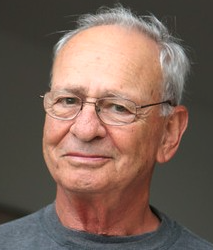 Paul Kay合作论文数Department of Linguistics, Stanford University;Department of Linguistics, University of California, Berkeley2
 Carlos Gómez Rodríguez合作论文数FASTPARSE Lab, Department of Computer Science, University of A Coruña;CITIC Research Center, University of A Coruña2
 Bruno Estigarribia合作论文数Department of Linguistics, College of Arts and Sciences, The University of North Carolina at Chapel Hil2
 Joakim Nivre合作论文数Department of Linguistics and Philology, Faculty of Languages, Uppsala University;Research Institutes of Sweden2
 Philipp Koehn合作论文数Department of Computer Science, Johns Hopkins University;Omniscien Technologies2
 Dekang Lin (林德康)合作论文数Amazon2
 Valia Kordoni合作论文数Dept . of Computational Linguistics;University of Saarland;Dept . of Computational Linguistics, University of Saarland2Thorsten Brants合作论文数Google2
 Frank Van Eynde合作论文数University of Leuven2
 Ted Pedersen合作论文数Department of Computer Science, Swenson College of Science and Engineering, University of Minnesota2Andrew Mackinlay合作论文数Department of Computer Science and Software Engineering;University of Melbourne;Department of Computer Science and Software Engineering, University of Melbourne2




