Tabletop role-playing games provide a unique environment for interaction with artificial intelligence (AI) due to their complex and collaborative nature. We analyze Adventure AI, a podcast featuring human-AI interactions in Dungeons & Dragons play, to examine how AI is and can be used in tabletop role-playing gaming and how players perceive this use. We complete a qualitative analysis of three seasons of this podcast, from 2023 to 2025, reporting on the overarching themes of roles of AI, roles of humans, the evaluations and failures of AI, and its treatment as a person and character at the table. There are many aspects of the game where artificial intelligence succeeds, while there are others where it is less appropriate. This analysis gives a basis for future work on where artificial intelligence should and should not be used in gaming spaces.
We present a mixed-methods study of professional fiction writers' experiences with generative AI (genAI), primarily focused on queer and disabled writers. Queer and disabled writers are markedly more pessimistic than others about the impact of genAI on their industry, although pessimism is the majority attitude for all groups. We explore how genAI exacerbates existing causes of precarity for writers, reasons why writers are opposed to its use, and strategies used by marginalized fiction writers to safeguard their industry.
Large Language Model (LLM) evaluation is currently one of the most important areas of research, with existing benchmarks proving to be insufficient and not completely representative of LLMs' various capabilities. We present a curated collection of challenging statements on sensitive topics for LLM benchmarking called TruthEval. These statements were curated by hand and contain known truth values. The categories were chosen to distinguish LLMs' abilities from their stochastic nature. We perform some initial analyses using this dataset and find several instances of LLMs failing in simple tasks showing their inability to understand simple questions.
The use of Large Language Models (LLMs) has become ubiquitous, with abundant applications in computational creativity. One such application is fictional story generation. Fiction is a narrative that occurs in a story world that is slightly different than ours. With LLMs becoming writing partners, we question how suitable they are to generate fiction. This study investigates the ability of LLMs to maintain a state of world essential to generate fiction. Through a series of questions to nine LLMs, we find that only two models exhibit consistent worldview, while the rest are self-conflicting. Subsequent analysis of stories generated by four models revealed a strikingly uniform narrative pattern. This uniformity across models further suggests a lack of `state' necessary for fiction. We highlight the limitations of current LLMs in fiction writing and advocate for future research to test and create story worlds for LLMs to reside in. All code, dataset, and the generated responses can be found in https://github.com/tanny411/llm-reliability-and-consistency-evaluation.
The widespread adoption of Large Language Models (LLMs) has become commonplace, particularly with the emergence of open-source models. More importantly, smaller models are well-suited for integration into consumer devices and are frequently employed either as standalone solutions or as subroutines in various AI tasks. Despite their ubiquitous use, there is no systematic analysis of their specific capabilities and limitations. In this study, we tackle one of the most widely used tasks - answering Multiple Choice Question (MCQ). We analyze 26 small open-source models and find that 65% of the models do not understand the task, only 4 models properly select an answer from the given choices, and only 5 of these models are choice order independent. These results are rather alarming given the extensive use of MCQ tests with these models. We recommend exercising caution and testing task understanding before using MCQ to evaluate LLMs in any field whatsoever.
Popular musicians often learn music by ear. It is unclear what role technology plays for those with experience at this task. In search of opportunities for the development of novel human-recording interactions, we analyze 18 YouTube videos depicting real-world examples of by-ear learning, and discuss why, during this preliminary phase of research, online videos are appropriate data. From our observations we generate hypotheses that can inform future work. For example, a musician's scope of learning may influence what technological interactions would help them, they could benefit from tools that accommodate their working memory, and transcription does not appear to play a key role in ear learning. Based on these findings, we pose a number of research questions, and discuss their methodological considerations to guide future study.
Seal finger (sealer's finger, spekk finger), an extremely painful hand infection contracted by individuals handling seals, has previously been associated with Mycoplasma phocacerebrale. From 2000 to 2014, six independent strains of a novel Mycoplasma species were isolated at Statens Serum Institut, Denmark, from Scandinavian patients with seal finger (M5725T, M6447, M6620, M6642 and M6879) or septic arthritis (M6921). Prior to the onset of infection, all patients had reported contact with unspeciated seals. All isolates grew within 2-5 days in Friis' modified broth and metabolized glucose and arginine but not urea. Strains M5725T, M6447, M6642 and M6921 also grew in Hayflick-type media. Colonies on agar media were large (0.5-1.0 mm) and had a typical 'fried egg' appearance, reduced tetrazolium, and were digitonin sensitive. Growth occurred at 32 °C but not at 42 °C. Strains were susceptible to doxycycline and moxifloxacin but resistant to azithromycin and erythromycin. The genomes of the six strains were sequenced and relatedness to all known Mycoplasma species was inferred. Phylogenetic analyses using 16S rRNA gene sequences and core genome single nucleotide polymorphisms showed that the isolated strains were highly similar and phylogenetically distinct from all other species within the genus Mycoplasma. The sizes of the genome sequences of the strains ranged from 744 321 to 772409 bp, with a G+C content of 25.0-25.2 mol%. Based on these analyses, we propose a novel species of the genus Mycoplasma with the name Mycoplasma phocimorsus sp. nov. with the first isolate M5725T (NCTC 14922T=DSM 116188T) as the proposed type strain and representative strains M6447, M6620, M6642, M6879 and M6921.
We apply Context-free Grammars (CFG) to measure the structural information content of a symbolic music string. CFGs are appropriate to this domain because they highlight hierarchical patterns, and their dictionary of rules can be used for compression. We adapt this approach to estimate the conditional Kolmogorov complexity of a string with a concise CFG of another string. Thus, a related string may be compressed with the production rules for the first string. We then define an information distance between two symbolic music strings, and show that this measure can separate genres, composers and musical styles. Next, we adapt our approach to a model-selection problem, expressing the model as a CFG with restricted size, generated from a set of representative strings. We show that a well-generated CFG for a composer identifies characteristic patterns that can significantly compress other pieces from the same composer, while not being useful on pieces from different composers. We identify further opportunities of this approach, including using CFGs for generating new music in the style of a composer.
Large language models (LLMs) have become mainstream technology with their versatile use cases and impressive performance. Despite the countless out-of-the-box applications, LLMs are still not reliable. A lot of work is being done to improve the factual accuracy, consistency, and ethical standards of these models through fine-tuning, prompting, and Reinforcement Learning with Human Feedback (RLHF), but no systematic analysis of the responses of these models to different categories of statements, or on their potential vulnerabilities to simple prompting changes is available. In this work, we analyze what confuses GPT-3: how the model responds to certain sensitive topics and what effects the prompt wording has on the model response. We find that GPT-3 correctly disagrees with obvious Conspiracies and Stereotypes but makes mistakes with common Misconceptions and Controversies. The model responses are inconsistent across prompts and settings, highlighting GPT-3's unreliability. Dataset and code of our analysis is available in https://github.com/tanny411/GPT3-Reliability-Check.
Is style reproduction a valid computational creativity task? Does producing output ‘in the style of’ an existing creator contribute to computational creativity re- search? Where is the creativity in imitation or replica-tion of an existing style, and where does style reproduc- tion fall into what has been criticised as ‘pastiche’ rather than credible creative activity? This paper tackles these debates, which have been under-addressed in computational creativity literature. We review the presentaiton of past work in style reproduction, and consider the fit of such work into evolving definitions of computational creativity research. As part of this, we consider style reproduction itself as a creative task, both within and outside computational forms. We discuss various points of interest that emerge in the analysis, such as control in the creative process, intentionality and effort. Our work gives a more objective understanding of the level of cre- ativity present in style generation, and specifically what value it brings to computational creativity research.
This paper presents the Crowd Score, a novel method to assess the funniness of jokes using large language models (LLMs) as AI judges. Our method relies on inducing different personalities into the LLM and aggregating the votes of the AI judges into a single score to rate jokes. We validate the votes using an auditing technique that checks if the explanation for a particular vote is reasonable using the LLM. We tested our methodology on 52 jokes in a crowd of four AI voters with different humour types: affiliative, self-enhancing, aggressive and self-defeating. Our results show that few-shot prompting leads to better results than zero-shot for the voting question. Personality induction showed that aggressive and self-defeating voters are significantly more inclined to find more jokes funny of a set of aggressive/self-defeating jokes than the affiliative and self-enhancing voters. The Crowd Score follows the same trend as human judges by assigning higher scores to jokes that are also considered funnier by human judges. We believe that our methodology could be applied to other creative domains such as story, poetry, slogans, etc. It could both help the adoption of a flexible and accurate standard approach to compare different work in the CC community under a common metric and by minimizing human participation in assessing creative artefacts, it could accelerate the prototyping of creative artefacts and reduce the cost of hiring human participants to rate creative artefacts.
Poetry generation within style constraints has many cre- ative challenges, despite the recent advances in Transformer models for text generation. We study 1) how overfitting of various versions of GPT-2 models affects the quality of the generated text, and 2) which model is better at generating text in a specific style. For that purpose, we propose a novel setup for text evaluation with neural networks. Our GPT-2 models are trained on datasets of collected works of the two Romantic-era po- ets: Byron and Shelley. With some models, overfitting manifests by producing malformed samples, with oth- ers, the samples are always well-formed, but contain increasingly higher levels of n-grams duplicated from the original corpus. This behaviour can lead to incor-rect evaluations of generated text because the plagia- rised output can deceive neural network classifiers and even human judges. To determine which model is better at preserving style before it becomes overfitted, we conduct two series of experiments with BERT-based classi- fiers. Overall, our results provide a novel way of select-ing the right models for fine-tuning on a specific dataset, while highlighting the pitfalls that come with overfitting, like reordering and replicating text, towards more credible creative text generation.
Historic industrial pollution of the Elizabeth River, Virginia resulted in polycyclic aromatic hydrocarbon (PAH) contamination in sediments. Atlantic killifish (Fundulus heteroclitus) inhabiting the Atlantic Wood (AW) industrial site adapted to complex PAH mixture at this Superfund site. Their embryos have proved highly resistant to cardiac abnormalities indicative of PAH toxicity. In this study, embryos spawned from adults collected at AW and King’s Creek (KC), a reference site, were exposed at 24 h post fertilization (hpf) to Elizabeth River Sediment Extract (ERSE), a complex PAH mixture, in a range of concentrations (0, 5.04, 50.45, 100.90, 151.35, or 252.25 µg/L total PAHs). Embryos were processed for histology at 144 hpf to enable evaluations of hearts at tissue and cellular levels. Morphometry and severity scoring were used to evaluate the extent of alterations. Unexposed embryos were similar in both populations. ERSE exposure resulted in multiple changes to hearts of KC embryos but not AW. Alterations were particularly evident in KC embryos exposed to concentrations above 1% ERSE (50.45 µg/L), which had thinner ventricular walls and larger pericardial edema. Individuals with moderate pericardial edema maintained arrangement and proximity of heart chambers, but changes were seen in ventricular myocytes. Severe pericardial edema was prevalent in exposed KC embryos and typically resulted in tube heart formation. Ventricles of tube hearts had very thin walls composed of small, basophilic cells and lacked trabeculae. Edematous pericardial fluid contained small amounts of proteinaceous material, as did controls, and was free of cells. This fluid was primarily unstained, suggesting water influx due to increased permeability. The use of histological approaches provided more specific detail for tissue and cellular effects in hearts of embryos exposed to PAHs and enabled understanding of potential links to later life effects of early life exposure.
We consider the use of large corpora for training computationally creative systems, particularly those that write new text based on the style of an existing author or genre. Under Canadian copyright law, a key concern for whether this is “fair dealing” is whether this usage will result in new creations that compete with those in the corpus. While recent law review articles in the United States suggest that training models on such corpora would be “fair use” in the United States, we argue that Canadian law may, in fact, forbid this use when the new products compete with works in the original corpus.
We discuss how to assess computationally the aesthetic value of “small” objects, namely those that have short digital descriptions. Such small objects still matter: they include headlines, poems, song lyrics, short musical scripts and other culturally crucial items. Yet, small objects are a confounding case for our recent work adapting ideas from algorithmic information theory (AIT) to the domain of computational creativity, as they cannot be either logically deep or sophisticated following the traditional definitions of AIT. We show how restricting the class of models under analysis can make it the case that we can still separate high-quality small objects from ordinary ones, and discuss the strengths and limitations of our adaptation.
We build an analysis based on the Algorithmic Information Theory of computational creativity and extend it to revisit computational aesthetics, thereby, improving on the existing efforts of its formulation. We discuss Kolmogorov complexity, models and randomness deficiency (which is a measure of how much a model falls short of capturing the regularities in an artifact) and show that the notions of typicality and novelty of a creative artifact follow naturally from such definitions. Other exciting formalizations of aesthetic measures include logical depth and sophistication with which we can define, respectively, the value and creator's artistry present in a creative work. We then look at some related research that combines information theory and creativity and analyze them with the algorithmic tools that we develop throughout the paper. Finally, we assemble the ideas and their algorithmic counterparts to complete an algorithmic information theoretic recipe for computational creativity and aesthetics.
We describe the use of the Fréchet mean and variance in the Billera-Holmes-Vogtmann (BHV) treespace to summarize and explore the diversity of a set of phylogenetic trees. We show that the Fréchet mean is comparable to other summary methods, and, despite its stickiness property, is more likely to be binary than the majority-rule consensus tree. We show that the Fréchet variance is faster and more precise than commonly used variance measures. The Fréchet mean and variance are more theoretically justified, and more robust, than previous estimates of this type and can be estimated reasonably efficiently, providing a foundation for building more advanced statistical methods and leading to applications such as mean hypothesis testing and outlier detection.
Equifinality—a situation in which multiple plausible explanations exist for a single outcome—presents a challenge for socio-environmental systems modeling. When equifinality is ignored in model calibration, subsequent policy analyses may mis-estimate the range of potential policy effects. In this paper, we present and demonstrate an approach—called DMC-RPA—for generating a set of diverse model calibrations (DMC) to enable more robust policy analysis (RPA). The optimization-based approach maximizes diversity in the model parameters and/or structural configurations to efficiently represent any equifinality in the model set. We demonstrate the approach for an agent-based model that is used to compare resilience-enhancing strategies in a smallholder farming system. Results over the set of diverse model calibrations demonstrate consistent policy effects, enabling stronger conclusions than a single model analysis. Going forward, this approach can be applied in the development of socio-environmental systems models to facilitate more robust policy analysis and inference.
The Mycoplasma phocicerebrale genome was analyzed to better understand this opportunistic pathogen. Amplification with ϕ29 polymerase was used to generate enough genomic DNA for large-insert library construction. Like other mycoplasmas from seals, M. phocicerebrale encodes an immunosuppressor that may predispose susceptibility to infection or influence intercurrent diseases of affected hosts.
 Broňa Brejová合作论文数Department of Computer Science, Faculty of Mathematics, Physics and Informatics, Comenius University in Bratislava15
 Meghan May合作论文数14
 Derek T. Robinson合作论文数School of Natural Resources and Environment, University of Michigan13
 Bradley C. Reed合作论文数11
 Nancy H. F. French合作论文数Michigan Tech Research Institute, Michigan Technological University11Carolyn Lamb合作论文数queen s university8Tomás Vinar合作论文数Siepel Computational Genomics Lab,;Dept. of Biological Statistics and Computational Biology8Dina L Michaels合作论文数7
 Jakub Truszkowski合作论文数Laboratoire d'Informatique, de Robotique et de Microélectronique de Montpellier7
 Charlie Clarke合作论文数David R. Cheriton School of Computer Science, University of Waterloo;Waterloo Institute for Sustainable Aeronautics, University of Waterloo;Faculty of Mathematics, University of Waterloo7Paul A. Klein合作论文数7
 Kathleen Bergen合作论文数School for Environment and Sustainability, University of Michigan-Ann Arbor6
 Ming Li合作论文数David R. Cheriton School of Computer Science, University of Waterloo5
 Ian M. Harrower合作论文数5
 Todd J. Vision合作论文数Dept Biol, Univ N Carolina5Lori D. Wendland合作论文数5
 Aisha Khatun合作论文数4Gerald F. Kutish合作论文数4
 Richard T. Di Giulio合作论文数Department of Civil & Environmental Engineering, Pratt School of Engineering, Duke University4
 Stephen J. Walsh合作论文数Carolina Population Center, University of North Carolina at Chapel Hill;Department of Geography, College of Arts and Sciences, University of North Carolina at Chapel Hill4
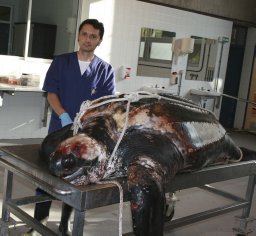 Jorge Orós合作论文数Faculty of Veterinary Medicine, Las Palmas de Gran Canaria University4Salvatore Frasca合作论文数4Mary B. Brown合作论文数College of Veterinary Medicine, University of Florida4
 Alexander K Hudek合作论文数3
 Tiasa Mondol合作论文数3
 Eric Gustafson合作论文数Institute for Applied Ecosystem Studies, United States Forest Service Forest Service3Demcovitz Dina合作论文数3
 Yan Zhou (周雁)合作论文数School of Life Sciences, Fudan University3
 Bin Ma合作论文数David R. Cheriton School of Computer Science, University of Waterloo3Richa Agarwala合作论文数National Center for Biotechnology Information3
 Tingting Zhao合作论文数School of Natural Resources and Environment;University of Michigan;School of Natural Resources and Environment, University of Michigan3Lawrence H. Herbst合作论文数3
 Tomáš Vinař合作论文数Siepel Computational Genomics Lab,
Dept. of Biological Statistics and Computational Biology3Janet M Bradbury合作论文数3
Tomáš Vinař合作论文数Siepel Computational Genomics Lab,
Dept. of Biological Statistics and Computational Biology3Janet M Bradbury合作论文数3 Hussein Hirjee合作论文数3
 Christina Boucher合作论文数David R. Cheriton School of Computer Science, University of Waterloo3Elliott R. Jacobson合作论文数3
 Steven D. Tanksley合作论文数Nature Source Improved Plants, LLC.;School of Integrative Plant Science Plant, College of Agriculture and Life Sciences, Cornell University3Joel K. Lackovich合作论文数3Paul Kitts合作论文数3Yangyi Chen合作论文数3Jessy Castellanos Gell合作论文数2Robert S. Potts合作论文数2Piotr Sawicki合作论文数2Craig G. Moneypenny合作论文数2Richard McVeigh合作论文数2Avi Kimchi合作论文数2
 John Glass合作论文数2Daniel Dexter合作论文数2




