An in-depth understanding of local plant community assembly is critical to direct conservation efforts to promising areas and increase the efficiency of management strategies. This, however, remains elusive due to the sheer complexity of ecological processes. The maximum entropy-based Community Assembly via Trait Selection (CATS) model was designed to quantify the relative contributions of trait-based filtering, dispersal mass effects, and stochastic processes on community assembly. As a maximum entropy model, it does so without introducing additional bias or assumptions. Despite its increasing use, questions regarding its robustness and potential limitations remain. Here, we compared model predictions using either local or database-derived trait values, across different levels of species richness and between different taxonomic levels. A total of 19 datasets and 790 plots were analysed, spanning multiple habitat types (n = 18) and biomes (n = 7). Results indicate trait value origin does indeed influence model outcomes, warranting caution in selecting the method for obtaining trait data. We hypothesise that, for example, intraspecific trait variation combined with trait-based filtering or stochastic processes causes local and database trait values to deviate, potentially even further exacerbated by imputing missing trait data. Furthermore, trait-related information obtained from the model decreased with increasing species richness. We further hypothesise this could signal that stochastic processes are more dominant within species-rich systems, for example, due to functional redundancy or the existence of multiple fitness strategies. This general pattern was conserved across biomes, although with varying strength, showing CATS’ robustness despite these challenges.
Ticks and tick-borne diseases have negative impacts on the health of wild animals including endangered and vulnerable species. The giant panda (Ailuropoda melanoleuca), a vulnerable and iconic flagship species, is threatened by tick infestation as well. Not only can ticks cause anemia and immunosuppression in the giant panda, but also bacterial and viral diseases. However, previous studies regarding tick infestation on giant pandas were limited in scope as case reports from sick or dead animals. In this study, an investigation focusing on the tick infestation of a reintroduced giant panda at the Daxiangling Reintroduction Base in Sichuan, China was conducted. Ticks were routinely collected and identified from the ears of the giant panda from March to September in 2021. A linear model was used to test the correlation between tick abundance and climate factors. All ticks were identified as Ixodes ovatus. Tick abundance was significantly different among months. Results from the linear model showed temperature positively correlated to tick abundance, while air pressure had a negative correlation with tick abundance. To the best of our knowledge, this study is the first reported investigation of tick species and abundance on a healthy giant panda living in the natural environment, and provides important information for the conservation of giant pandas and other species sharing the same habitat.
German cockroaches (Blattella germanica L.) harbor and disperse medically important pathogens and are a source of allergens that impact human health and wellbeing. Management of this pest requires an understanding of their distribution and dispersal. In this study, we collected German cockroaches from three apartment buildings in New Jersey, USA. We identified single-nucleotide polymorphisms (SNPs) from DNA extractions using next generation sequencing. We analyzed the SNPs and characterized cockroach population genetic structure using F-st, principal component, phylogenetic, and STRUCTURE analyses. We found significant differences in German cockroach population structure among the buildings. Within buildings, we found variable population structure that may be evidence for multiple colonization events. This study shows that SNPs derived from next generation sequencing provide a powerful tool for analyzing the genetic population structure of these medically important pests.
Plant traits-the morphological, anatomical, physiological, biochemical and phenological characteristics of plants-determine how plants respond to environmental factors, affect other trophic levels, and influence ecosystem properties and their benefits and detriments to people. Plant trait data thus represent the basis for a vast area of research spanning from evolutionary biology, community and functional ecology, to biodiversity conservation, ecosystem and landscape management, restoration, biogeography and earth system modelling. Since its foundation in 2007, the TRY database of plant traits has grown continuously. It now provides unprecedented data coverage under an open access data policy and is the main plant trait database used by the research community worldwide. Increasingly, the TRY database also supports new frontiers of trait-based plant research, including the identification of data gaps and the subsequent mobilization or measurement of new data. To support this development, in this article we evaluate the extent of the trait data compiled in TRY and analyse emerging patterns of data coverage and representativeness. Best species coverage is achieved for categorical traits-almost complete coverage for 'plant growth form'. However, most traits relevant for ecology and vegetation modelling are characterized by continuous intraspecific variation and trait-environmental relationships. These traits have to be measured on individual plants in their respective environment. Despite unprecedented data coverage, we observe a humbling lack of completeness and representativeness of these continuous traits in many aspects. We, therefore, conclude that reducing data gaps and biases in the TRY database remains a key challenge and requires a coordinated approach to data mobilization and trait measurements. This can only be achieved in collaboration with other initiatives.
Summary Ecological research produces a tremendous amount of data, but the diversity in scales and topics covered and the ways in which studies are carried out result in large numbers of small, idiosyncratic data sets using heterogeneous terminologies. Such heterogeneity can be attributed, in part, to a lack of standards for acquiring, organizing and describing data. Here, we propose a terminological resource, a T hesaurus O f P lant characteristics ( TOP ), whose aim is to harmonize and formalize concepts for plant characteristics widely used in ecology. TOP concentrates on two types of plant characteristics: traits and environmental associations. It builds on previous initiatives for several aspects: (i) characteristics are designed following the entity‐quality (EQ) model (a characteristic is modelled as the ‘Quality’ " of an ‘Entity’ ") used in the context of Open Biological Ontologies; (ii) whenever possible, the Entities and Qualities are taken from existing terminology standards, mainly the Plant Ontology ( PO ) and Phenotypic Quality Ontology ( PATO ) ontologies; and (iii) whenever a characteristic already has a definition, if appropriate, it is reused and referenced. The development of TOP , which complies with semantic web principles, was carried out through the involvement of experts from both the ecology and the semantics research communities. Regular updates of TOP are planned, based on community feedback and involvement. TOP provides names, definitions, units, synonyms and related terms for about 850 plant characteristics. TOP is available online ( www.top-thesaurus.org ), and can be browsed using an alphabetical list of characteristics, a hierarchical tree of characteristics, a faceted and a free‐text search, and through an Application Programming Interface. Synthesis . Harmonizing definitions of concepts, as proposed by TOP , forms the basis for better integration of data across heterogeneous data sets and terminologies, thereby increasing the potential for data reuse. It also allows enhanced scientific synthesis. TOP therefore has the potential to improve research and communication not only within the field of ecology, but also in related fields with interest in plant functioning and distribution.
The aim of this work is to understand the physics underlying the mechanisms of two-dimensional aquatic pollen dispersal, known as hydrophily, that have evolved in several genera of aquatic plants, including Halodule, Halophila, Lepilaena, and Ruppia. We selected Ruppia maritima, which is native to salt and brackish waters circumglobally, for this study. We observed two mechanisms by which the pollen released from male inflorescences of Ruppia is adsorbed on a water surface: 1) inflorescences rise above the water surface and after they mature their pollen mass falls onto the surface as clumps and disperses as it comes in contact with the surface; 2) inflorescences remain below the surface and produce air bubbles which carry pollen mass to the surface where it disperses. In both cases dispersed pollen masses combined with others under the action of lateral capillary forces to form pollen rafts. The formation of porous pollen rafts increases the probability of pollination since the attractive capillary force on a pollen raft toward a stigma is much larger than on a single pollen grain. The presence of a trace amount of surfactant can disrupt the pollination process as the pollen is not captured or transported on the water surface.
Understanding the interplay between environmental conditions and phenotypes is a fundamental goal of biology.Unfortunately, data that include observations on phenotype and environment are highly heterogeneous and thus difficult to find and integrate.One approach that is likely to improve the status quo involves the use of ontologies to standardize and link data about phenotypes and environments.Specifying and linking data through ontologies will allow researchers to increase the scope and flexibility of large-scale analyses aided by modern computing methods.Investments in this area would advance diverse fields such as ecology, phylogenetics, and conservation biology.While several biological ontologies are well-developed, using them to link phenotypes and environments is rare because of gaps in ontological coverage and limits to interoperability among ontologies and disciplines.In this manuscript, we present 1) use cases from diverse disciplines to illustrate questions that could be answered more efficiently using a robust linkage between phenotypes and environments, 2) two proof-of-concept analyses that show the value of linking phenotypes to environments in fishes and amphibians, and 3) two proposed example data models for linking phenotypes and environments using the extensible observation ontology (OBOE) and the Biological Collections Ontology (BCO); these provide a starting point for the development of a data model linking phenotypes and environments.
Understanding the interplay between environmental conditions and phenotypes is a fundamental goal of biology. Unfortunately, data that include observations on phenotype and environment are highly heterogeneous and thus difficult to find and integrate. One approach that is likely to improve the status quo involves the use of ontologies to standardize and link data about phenotypes and environments. Specifying and linking data through ontologies will allow researchers to increase the scope and flexibility of large-scale analyses aided by modern computing methods. Investments in this area would advance diverse fields such as ecology, phylogenetics, and conservation biology. While several biological ontologies are well-developed, using them to link phenotypes and environments is rare because of gaps in ontological coverage and limits to interoperability among ontologies and disciplines. In this manuscript, we present (1) use cases from diverse disciplines to illustrate questions that could be answered more efficiently using a robust linkage between phenotypes and environments, (2) two proof-of-concept analyses that show the value of linking phenotypes to environments in fishes and amphibians, and (3) two proposed example data models for linking phenotypes and environments using the extensible observation ontology (OBOE) and the Biological Collections Ontology (BCO); these provide a starting point for the development of a data model linking phenotypes and environments.
Accurate measurement of canopy structure is fundamental to the fields of ecological modeling and restoration. A large number of methods exist for estimating the structure of forest canopies, with widely varying costs and effectiveness. Hemispherical photography has been in use for several decades, and the rise of lower-cost consumer grade digital SLR cameras has expanded the availability of this technique. We examine two improvements to the hemispherical photography technique for estimating canopy closure: computer-based blue channel analysis and under-exposing images. Photographs taken in the field (without a filter) showed much lower variation in the blue channel than in red or green channel of the same images. We found a higher variance in canopy closure measurements due to over-exposure of images, while images with automatic light metering and under-exposed images remained consistent. We conclude that under- or normal exposure combined with blue channel analysis together minimize variability and maximize the precision of canopy closure estimates. Results from hemispherical photography were comparable to the widely used LAI-2200, supporting hemispherical photography as a viable, low-cost alternative. (C) 2014 Elsevier B.V. All rights reserved.
The majority of species in ecosystems are rare, but the ecosystem consequences of losing rare species are poorly known. To understand how rare species may influence ecosystem functioning, this study quantifies the contribution of species based on their relative level of rarity to community functional diversity using a trait-based approach. Given that rarity can be defined in several different ways, we use four different definitions of rarity: abundance (mean and maximum), geographic range, and habitat specificity. We find that rarer species contribute to functional diversity when rarity is defined by maximum abundance, geographic range, and habitat specificity. However, rarer species are functionally redundant when rarity is defined by mean abundance. Furthermore, when using abundance-weighted analyses, we find that rare species typically contribute significantly less to functional diversity than common species due to their low abundances. These results suggest that rare species have the potential to play an important role in ecosystem functioning, either by offering novel contributions to functional diversity or via functional redundancy depending on how rare species are defined. Yet, these contributions are likely to be greatest if the abundance of rare species increases due to environmental change. We argue that given the paucity of data on rare species, understanding the contribution of rare species to community functional diversity is an important first step to understanding the potential role of rare species in ecosystem functioning.
Comparative analyses that link information on species' traits, environmental change, and organism response have rarely identified unambiguous trait correlates of vulnerability. We tested if species' traits could predict local-scale changes in dung beetle population response to three levels of forest conversion intensity within and across two biogeographic regions (the Neotropics and Afro-Eurasian tropics). We combined biodiversity surveys, a global molecular phylogeny, and information on three species' traits hypothesized to influence vulnerability to forest conversion to examine (1) the consistency of beetle population response across regions, (2) if species' traits could predict this response, and (3) the cross-regional consistency of trait-response relationships. Most beetle populations declined following any degree of forest conversion; these declines were strongest for Neotropical species. The relationship between traits and population trend was greatly influenced by local and biogeographic context. We discuss the ability of species' traits to explain population trends and suggest several ways to strengthen trait-response models.
After the collective failure to achieve the Convention on Biological Diversity's (CBD's) 2010 target to substantially reduce biodiversity losses, the CBD adopted a plan composed of five strategic goals and 20 “SMART” (Specific, Measurable, Ambitious, Realistic, and Time‐bound) targets, to be achieved by 2020. Here, an interdisciplinary group of scientists from DIVERSITAS – an international program that focuses on biodiversity science – evaluates these targets and considers the implications of an ecosystem‐services‐based approach for their implementation. We describe the functional differences between the targets corresponding to distinct strategic goals and identify the interdependency between targets. We then discuss the implications for supporting research and target indicators, and make several specific suggestions for target implementation.
P>1. Given that approximately one-quarter of grasslands worldwide have been converted to agriculture, understanding the consequences of agricultural conversion for ecosystem functioning can provide insight into potential changes in the world's most intensively managed biomes. The Great Plains of the United States represents a major grassland region that has experienced substantial conversion of prairie grassland ecosystems to agriculture, leading to widespread changes in plant species composition and functional trait diversity. While the converted system dramatically improves food, fuel and fibre production, changes in plant trait diversity may alter the capacity of these ecosystems to provide sustaining and regulating services to society.2. Using three key plant functional traits, we illustrate how the trait composition and trait diversity of the Great Plains plant communities has been dramatically altered when visualized in multidimensional trait space, showing strong displacement and a 10-fold reduction in trait space volumes, as systems have shifted from grassland to agricultural regimes. However, individual case studies demonstrate large variation in the direction and magnitude of trait diversity change during conversion, with some case studies exhibiting much larger reductions in trait diversity from the average on conversion, largely a consequence of the changes in species richness accompanying agricultural conversion.3. Synthesis and applications. The conversion of grassland to agriculture does not necessarily lead to a loss of functional trait diversity, as crop choice and diversity can ameliorate the functional trait differences between native-dominated and agricultural communities. In this study, regardless of the sign and magnitude of change in trait space, a shift in trait range was observed, reflecting the dramatically different selection that agricultural plant functional traits experience compared with their native counterparts. Historical agricultural policy and modern land-use patterns have led to a landscape with decreasing plant diversity and functional capacity. However, initiatives to increase agricultural diversity on-farm and at the landscape level through the implementation of cover crops of the perennialization of cropping systems may allow ecosystems to recover and maintain greater functional capacity.
Plant traits - the morphological, anatomical, physiological, biochemical and phenological characteristics of plants and their organs - determine how primary producers respond to environmental factors, affect other trophic levels, influence ecosystem processes and services and provide a link from species richness to ecosystem functional diversity. Trait data thus represent the raw material for a wide range of research from evolutionary biology, community and functional ecology to biogeography. Here we present the global database initiative named TRY, which has united a wide range of the plant trait research community worldwide and gained an unprecedented buy-in of trait data: so far 93 trait databases have been contributed. The data repository currently contains almost three million trait entries for 69 000 out of the world's 300 000 plant species, with a focus on 52 groups of traits characterizing the vegetative and regeneration stages of the plant life cycle, including growth, dispersal, establishment and persistence. A first data analysis shows that most plant traits are approximately log-normally distributed, with widely differing ranges of variation across traits. Most trait variation is between species (interspecific), but significant intraspecific variation is also documented, up to 40% of the overall variation. Plant functional types (PFTs), as commonly used in vegetation models, capture a substantial fraction of the observed variation - but for several traits most variation occurs within PFTs, up to 75% of the overall variation. In the context of vegetation models these traits would better be represented by state variables rather than fixed parameter values. The improved availability of plant trait data in the unified global database is expected to support a paradigm shift from species to trait-based ecology, offer new opportunities for synthetic plant trait research and enable a more realistic and empirically grounded representation of terrestrial vegetation in Earth system models.
 Shahid Naeem合作论文数Earth Institute Center for Environmental Sustainability, Columbia University;Department of Ecology, Evolution, and Environmental Biology, Columbia University;School of Professional Studies, Columbia University15
 Charles Perrings合作论文数School of Life Sciences, Arizona State University11
 Michel Loreau合作论文数Theoretical and Experimental Ecology Station, National Centre for Scientific Research;Peking University;Institute for Advanced Study in Toulouse7
 Farshid S. Ahrestani合作论文数Resource Ecology Group, Wageningen University7
 Sandra Díaz合作论文数School of Geography and the Environment, University of Oxford;Instituto Multidisciplinario de Biologia Vegetal, Universidad Nacional de Córdoba6
 Andy Hector合作论文数Department of Plant Sciences, University of Oxford6
 Dan F. B. Flynn合作论文数Department of Ecology, Peking University5
 Ian Wright合作论文数School of Natural Sciences, Macquarie University;Hawkesbury Institute for the Environment, Western Sydney University4
 Thomas Elmqvist合作论文数Stockholm Resilience Centre, Stockholm University4
 Ann Kinzig合作论文数School of Life Sciences, Arizona State University;Center for Biosocial Complex Systems, Arizona State University;Water Institute, Arizona State University4
 Eric Garnier合作论文数Centre d’Ecologie Fonctionnelle and Evolutive, Centre National de la Recherche Scientifique4
 Evan Weiher合作论文数Department of Biology, University of Wisconsin-Eau Claire College of Arts and Sciences4
 Hendrik Poorter合作论文数Forschungszentrum Julich;Macquarie University4
 Sandra Lavorel合作论文数Laboratoire d'Ecologie Alpine, Centre National de la Recherche Scientifique;Institut écologie Et Environnement, Centre National de la Recherche Scientifique4
 S. Joseph Wright合作论文数Smithsonian Tropical Research Institute4
 Christian Wirth合作论文数Institute of Biology, Department of Systematic Botany and Functional Biodiversity, University of Leipzig;German Centre for Integrative Biodiversity Research Halle-Jena-Leipzig, German Research Foundation4
 Michael Kleyer合作论文数Institute of Biology and Environmental Science, University of Oldenburg4
 Jens Kattge合作论文数Max Planck Institute for Biogeochemistry4
 Stefan Klotz合作论文数Centre for Environmental Research;Department of Community Ecology;Department of Community Ecology, Centre for Environmental Research4
 Cyrille Violle合作论文数Univ Montpellier, Univ Paul Valery Montpellier4
 Kaoru Kitajima (北島薫)合作论文数Division of Forest and Biomaterials Science, Graduate School of Agriculture, Kyoto University4
 John William (Bill) Shipley合作论文数Département de biologie, Université de Sherbrooke4John Tschirhart合作论文数Department of Economics and Finance;University of Wyoming;Department of Economics and Finance, University of Wyoming4
 Hans Cornelissen合作论文数Department of Ecological Science, Faculty of Earth and Life Sciences, Vrije Universiteit Amsterdam4
 Fabrice DeClerck合作论文数EAT;Bioversity International4
 Peter Reich合作论文数Department of Forest Resources, College of Food, Agricultural and Natural Resources Sciences, University of Minnesota4Gerhard Bönisch合作论文数3m kanninen合作论文数3Sophie Gachet合作论文数3
 Nathan Kraft合作论文数Department of Ecology and Evolutionary Biology, College of Life Sciences, University of California, Los Angeles3
 Oliver Phillips合作论文数Earth and Biosphere Institute, University of Leeds;School of Geography, University of Leeds3
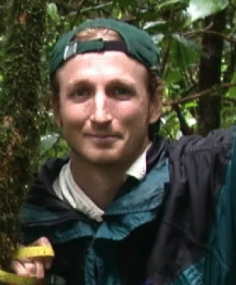 Brian Enquist合作论文数Department of Ecology and Evolutionary Biology, College of Science, University of Arizona;The Santa Fe Institute;Oxford University;Rocky Mountain Biological Laboratory3
 Harold Mooney合作论文数Department of Biology, School of Humanities and Sciences, Stanford University;Stanford Woods Institute for the Environment, Stanford University;Freeman Spogli Institute for International Studies, Stanford University3
 Wolfgang W. Weisser合作论文数Department for Life Science Systems, TUM School of Life Sciences, Technische Universitat Munchen3
 Josep Peñuelas Reixach合作论文数Global Ecology Unit, Centre de Recerca Ecològica i d'Aplicacions Forestals, Universitat Autònoma de Barcelona3
 Peter H Burkill合作论文数Plymouth Marine Laboratory3
 Johannes MH Knops合作论文数Department Health and Environmental Sciences, School of Science, Xi'an Jiaotong-Liverpool University3
 Peter Poschlod合作论文数Department of Ecology and Conservation Biology, University of Regensburg3
 Graciela Ana Canziani合作论文数Mathematical Ecology Group, Universidad Nacional del Centro de la Provincia de Buenos Aires3
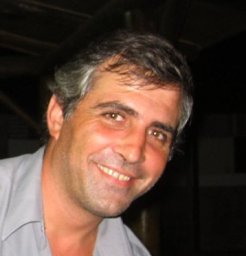 Fernando Casanoves合作论文数Biostatistics Unit;Tropical Agricultural Centre for Research and Higher Education;Biostatistics Unit, Tropical Agricultural Centre for Research and Higher Education3
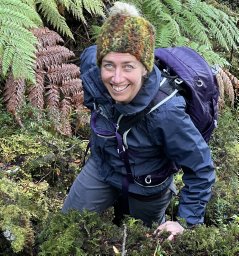 Amy E. Zanne合作论文数Department of Zoology;University of Florida;Department of Zoology, University of Florida3
 Bernard Amiaud合作论文数UMR Nancy-Université-INRA Agronomie et Environnement Nancy-Colmar3
 Jed Fuhrman合作论文数Department of Biological Sciences, Dana and David Dornsife College of Letters, Arts and Sciences, University of Southern California3d f karnosky合作论文数2p ten brink合作论文数2c schroterschlaack合作论文数2j o sawyer合作论文数2c nesshover合作论文数2Z Kawabata合作论文数2




