When we observe someone performing an action, do our brains simulate making that action? Acquired motor skills offer a unique way to test this question, since people differ widely in the actions they have learned to perform. We used functional magnetic resonance imaging to study differences in brain activity between watching an action that one has learned to do and an action that one has not, in order to assess whether the brain processes of action observation are modulated by the expertise and motor repertoire of the observer. Experts in classical ballet, experts in capoeira and inexpert control subjects viewed videos of ballet or capoeira actions. Comparing the brain activity when dancers watched their own dance style versus the other style therefore reveals the influence of motor expertise on action observation. We found greater bilateral activations in premotor cortex and intraparietal sulcus, right superior parietal lobe and left posterior superior temporal sulcus when expert dancers viewed movements that they had been trained to perform compared to movements they had not. Our results show that this 'mirror system' integrates observed actions of others with an individual's personal motor repertoire, and suggest that the human brain understands actions by motor simulation.
In neuroimaging, data are often modeled using general linear models. Here, we focus on GLMs with error covariances which are modeled as a linear combination of multiple variance/covariance components. Each of these components is weighted by one variance parameter. In many analyses variance parameters are estimated using restricted maximum likelihood (ReML). Most classical approaches assume the error covariance matrix can be factorized into a single variance parameter and a nonspherical correlation matrix. In this context, the F test based on a single variance parameter, with a suitable correction to the degrees of freedom, is the standard inference tool. This correction can also be adapted to models with multiple variance parameters. However, this extension overlooks the uncertainty about the variance parameter estimates and P values tend to be underestimated. Here, we show how one can overcome this problem to render the F test more exact. This issue is important, because serial correlations in fMRI time series are generally modeled using multiple variance parameters. Another application is to hierarchical linear models, which are used for modeling multisubject data. To illustrate our approach, we apply it to some typical modeling scenarios in fMRI data analysis.
Statistical Paramemetric Mapping (SPM) is a method for detecting regional, task-related changes in brain activity from neuroimaging data. In this paper we provide a guide to the methodological literature on SPM, highlighting key papers and those of historical interest. Complementary approaches, which look at distributed task-related changes, such as multivariate analysis and effective connectivity, are also covered.
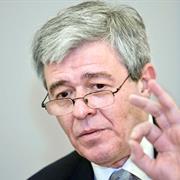 Karl Friston合作论文数Institute of Neurology, University College London;The National Hospital for Neurology and Neurosurgery4
 Will D. Penny合作论文数3
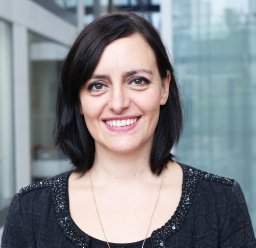 Calvo-Merino Beatriz合作论文数Department of Psychology, City University London London;Department of Psychology, Universidad Complutense de Madrid Madrid;City University London London, Universidad Complutense de Madrid Madrid2
 Patrick Haggard合作论文数Institute of Cognitive Neuroscience, University College London2
 Stefan J. Kiebel合作论文数max planck society2
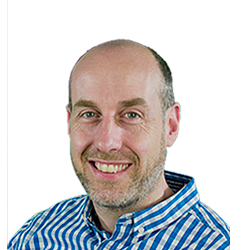 Rik Henson合作论文数Medical Research Council Cognition and Brain Sciences Unit, University of Cambridge;Department of Psychiatry, University of Cambridge2
 Julie Grezes合作论文数Laboratoire de Neurosciences Cognitives, Ecole Normale Supérieure2
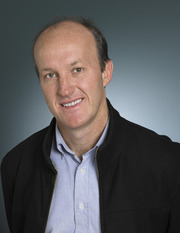 Craig Phillips合作论文数Faculty of Medicine and Health, The University of Sydney1
 Michael Rugg合作论文数Functional Neuroimaging of Memory Laboratory, Center for Vital Longevity, The University of Texas at Dallas;School of Behavioral and Brain Sciences, The University of Texas at Dallas;Department of Psychiatry, University of Texas Southwestern Medical Center;School of Psychology, University of East Anglia1
 John Ashburner合作论文数Functional Imaging Laboratory, Wellcome Centre for Human Neuroimaging, University College London;Institute of Neurology, University College London1
 Richard Passingham合作论文数Wadham College, University of Oxford1




