This paper investigates models of working memory in which memory traces evolve according to stochastic attractor dynamics. These models have previously been shown to account for response-biases that are manifest across multiple trials of a visual working memory task. Here we adapt this approach by making the stable fixed points correspond to the multiple items to be remembered within a single-trial, in accordance with standard dynamical perspectives of memory, and find evidence that this multi-item model can provide a better account of behavioural data from continuous-report tasks. Additionally, the multi-item model proposes a simple mechanism by which swap-errors arise: memory traces diffuse away from their initial state and are captured by the attractors of other items. Swap-error curves reveal the evolution of this process as a continuous function of time throughout the maintenance interval and can be inferred from experimental data. Consistent with previous findings, we find that empirical memory performance is not well characterised by a purely-diffusive process but rather by a stochastic process that also embodies error-correcting dynamics.
Introduction Psychological disorders including depression and anxiety are significant public health concerns. A Mediterranean-style dietary pattern (MDP) has been associated with improved mental well-being in observational studies. Evidence of the acute (defined as postprandial to 1 week) effects of an MDP on brain function, mood, cognition and important modulators, including sleep and the gut microbiota is limited. The current intervention aims to examine whether an MDP, compared with a Western diet (WD), improves mood, cognition and anxiety symptoms, postprandially, at 24-hour and after 5 days in adults with mild to moderate anxiety and depression.Methods and analysis Twenty-five UK adults (aged 18 or over) with mild to moderate anxiety and/or depression and low adherence to an MDP were recruited to a cross-over randomised controlled trial. Each participant undergoes a 5 day MDP and a 5 day WD in a randomised order with all meals provided. The co-primary outcomes are mood and anxiety, with secondary outcomes including cognitive function, brain perfusion (as assessed by MRI), sleep quality, blood pressure, plasma glucose, insulin, lipids, C-reactive protein, cortisol, brain-derived neurotrophic factor, gut microbiota speciation and microbial metabolites including short chain fatty acids. A linear mixed model and/or paired analysis will be used to compare the effects of treatments over time.Ethics and dissemination The study has received a favourable ethics opinion from the National Health Service London Queen Square Research Ethics Committee (22/LO/0796). The results will be disseminated through scientific journals and conferences.Trial registration number NCT05927376.
Dementias and mental health disorders (i.e. depression, anxiety) are significant public health challenges. Chronic consumption of a Mediterranean diet (MD) has been associated with lower incident dementia, improved cognitive performance, and reduced brain atrophy. Yet, short-term studies and randomised clinical trials (RCT) are lacking. Our systematic review of RCTs showed that in only four available studies, a MD can improve attention, alertness and contentment in up to 10 days (1). In a controlled efficacy study with all foods provided, we aim to explore postprandial, 24-h and 5 days impacts of a MD and a Western diet (WD) on mood, anxiety and cognition, cerebral blood flow as assessed by MRI. MediMood is an efficacy crossover RCT. Individuals (n = 25) over 18 years with mild to moderate anxiety and/or depression will complete a 5-day MD and a 5-day WD intervention with a 4-week wash-out period, with foods, meal plans and instructions provided. Biological samples (blood, urine, faeces) will be collected. The primary outcomes are mood and anxiety assessed using Bond-Lader and POMS questionnaires. Secondary outcomes include cognitive outcomes assessed through computerised neuropsychology tests, brain perfusion assessed by MRI, select cardiometabolic and inflammatory biomarkers, ketones, brain-derived neurotrophic factor, several hormones (e.g. serotonin, dopamine), gut microbiome speciation, sleep quality and behaviour change. The assessment time points during each arm are baseline (day 1 morning), postprandial (post day 1 lunch), 24-h (day 2 morning) and day 6 morning. NA This will be the first well-controlled RCT examining the acute and short-term impacts of a MD and a WD on mental health and cognition in a targeted risk group. MediMood considers interfaces between sleep quality and the gut-brain axis as modifiable determinants of mental health. We expect the findings to provide novel insights in efficacy of a MD on daily and short-term well-being in those with existing mild-moderate mental health difficulties and to provide an initial mechanistic understanding of any observed benefits. Funding : Medical Research Council (MRC, UK), NuBrain Consortium (MR/T001852/1); Turkish Government personal PhD scholarship References : 1. Esgunoglu L, Jennings A, Connole ES et al. (2021) Br J Nutr
This paper describes the relationship between performance in a decision-making task and the emergence of task-relevant representations. Participants learnt two tasks in which the appropriate response depended on multiple relevant stimuli and the underlying stimulus-outcome associations were governed by a latent feature that participants could discover. We divided participants into good and bad performers based on their overall classification rate and computed behavioural accuracy for each feature value. We found that participants with better performance had a better representation of the latent feature space. We then used representation similarity analysis on Electroencephalographic (EEG) data to identify when these representations emerge. We were able to decode task-relevant representations in a time window emerging 700ms after stimulus presentation, but only for participants with good task performance. Our findings suggest that, in order to make good decisions, it is necessary to create and extract a low-dimensional representation of the task at hand.
This paper proposes a model of hippocampal-based category learning using a cluster-based inference framework which produces two systems (i) an extendable cluster-based memory module (CMM) that provides representations of learning episodes with strong pattern separation, and supports online decision making during that learning, (ii) cluster-based task modules (CTMs) which consolidate clusters learnt by CMM to support higher-accuracy decision making in the mid-term. Learning in CMMs optimises the joint probability of stimuli and category labels, whereas learning in CTMs optimises the probability of categories given stimuli. The latter system learns from the former via a process of “cluster consolidation”. We apply the model to data from a behavioral learning task and find that, as well as improving categorisation performance, cluster consolidation decreases recognition scores for old cues but increases them for novel cues. This model-based perspective explains forgetting and false memory effects as serving future categorisation performance. The paper also expresses a view that models of memorybased cognition should provide human-level performance on complex categorisation tasks, and do so with minimal labelled data. In working toward this goal we therefore compared the accuracy of CMM- and CTM-based decision making to standard Softmax Regression approaches on benchmark machine learning datasets. This produced mixed results. We found some significant improvements of CMM over Softmax Regression and of CTM over CMM. Overall, our framework reconciles complementary learning systems theory with more recent findings from cognitive neuroscience of generative replay and hippocampal-based generalisation.
Learning about the statistics of one’s environment is a fundamental requirement of adaptive behaviour. In this experiment we probe whether pupil dilation in response to brief auditory stimuli reflects automatic statistical learning about the underlying stimulus distributions. Specifically, we consider whether pupil dilation reflects automatic (task-irrelevant) learning about the precision of Gaussian distributions of pitch in a sequence of tones. We provide clear evidence, both by comparing responses to perceptually identical probe tones in low and high precision blocks, and using a novel model-based analysis, that subjects did indeed track the precision of the stimulus distribution. This extends previous work looking at electrophysiological effects of precision (or, equivalently, variance) learning, and provides new evidence that the putatively noradrenergic processes underlying pupil dilation reflect rapidly updated information about distributions of sensory stimuli. In addition, our study represents a validation of our model-based approach to analysing pupillometry data, which we believe has considerable promise for future studies.
In their 2007b Psychological Review paper, Xu and Tenenbaum found that early word learning follows the classic logic of the "suspicious coincidence effect:" when presented with a novel name ('fep') and three identical exemplars (three Labradors), word learners generalized novel names more narrowly than when presented with a single exemplar (one Labrador). Xu and Tenenbaum predicted the suspicious coincidence effect based on a Bayesian model of word learning and demonstrated that no other theory captured this effect. Recent empirical studies have revealed, however, that the effect is influenced by factors seemingly outside the purview of the Bayesian account. A process-based perspective correctly predicted that when exemplars are shown sequentially, the effect is eliminated or reversed (Spencer, Perone, Smith, & Samuelson, 2011). Here, we present a new, formal account of the suspicious coincidence effect using a generalization of a Dynamic Neural Field (DNF) model of word learning. The DNF model captures both the original finding and its reversal with sequential presentation. We compare the DNF model's performance with that of a more flexible version of the Bayesian model that allows both strong and weak sampling assumptions. Model comparison results show that the dynamic field account provides a better fit to the empirical data. We discuss the implications of the DNF model with respect to broader contrasts between Bayesian and process-level models.
There is consensus that activation within distributed functional brain networks underlies human thought. The impact of this consensus is limited, however, by a gap that exists between data-driven correlational analyses that specify where functional brain activity is localized using functional magnetic resonance imaging (fMRI), and neural process accounts that specify how neural activity unfolds through time to give rise to behavior. Here, we show how an integrative cognitive neuroscience approach may bridge this gap. In an exemplary study of visual working memory, we use multilevel Bayesian statistics to demonstrate that a neural dynamic model simultaneously explains behavioral data and predicts localized patterns of brain activity, outperforming standard analytic approaches to fMRI. The model explains performance on both correct trials and incorrect trials where errors in change detection emerge from neural fluctuations amplified by neural interaction. Critically, predictions of the model run counter to cognitive theories of the origin of errors in change detection. Results reveal neural patterns predicted by the model within regions of the dorsal attention network that have been the focus of much debate. The model-based analysis suggests that key areas in the dorsal attention network such as the intraparietal sulcus play a central role in change detection rather than working memory maintenance, counter to previous interpretations of fMRI studies. More generally, the integrative cognitive neuroscience approach used here establishes a framework for directly testing theories of cognitive and brain function using the combined power of behavioral and fMRI data. (PsycInfo Database Record (c) 2021 APA, all rights reserved).
This paper uses constructs from machine learning to define pairs of learning tasks that either shared or did not share a common subspace. Human subjects then learnt these tasks using a feedback-based approach and we hypothesised that learning would be boosted for shared subspaces. Our findings broadly supported this hypothesis with either better performance on the second task if it shared the same subspace as the first, or positive correlations over task performance for shared subspaces. These empirical findings were compared to the behaviour of a Neural Network model trained using sequential Bayesian learning and human performance was found to be consistent with a minimal capacity variant of this model. Networks with an increased representational capacity, and networks without Bayesian learning, did not show these transfer effects. We propose that the concept of shared subspaces provides a useful framework for the experimental study of human multitask and transfer learning.
In generative modeling of neuroimaging data, such as dynamic causal modeling (DCM), one typically considers several alternative models, either to determine the most plausible explanation for observed data (Bayesian model selection) or to account for model uncertainty (Bayesian model averaging). Both procedures rest on estimates of the model evidence, a principled trade-off between model accuracy and complexity. In the context of DCM, the log evidence is usually approximated using variational Bayes. Although this approach is highly efficient, it makes distributional assumptions and is vulnerable to local extrema. This paper introduces the use of thermodynamic integration (TI) for Bayesian model selection and averaging in the context of DCM. TI is based on Markov chain Monte Carlo sampling which is asymptotically exact but orders of magnitude slower than variational Bayes. In this paper, we explain the theoretical foundations of TI, covering key concepts such as the free energy and its origins in statistical physics. Our aim is to convey an in-depth understanding of the method starting from its historical origin in statistical physics. In addition, we demonstrate the practical application of TI via a series of examples which serve to guide the user in applying this method. Furthermore, these examples demonstrate that, given an efficient implementation and hardware capable of parallel processing, the challenge of high computational demand can be overcome successfully. The TI implementation presented in this paper is freely available as part of the open source software TAPAS.
Probabilistic models of cognition typically assume that agents make inferences about current states by combining new sensory information with fixed beliefs about the past, an approach known as Bayesian filtering. This is computationally parsimonious, but, in general, leads to suboptimal beliefs about past states, since it ignores the fact that new observations typically contain information about the past as well as the present. This is disadvantageous both because knowledge of past states may be intrinsically valuable, and because it impairs learning about fixed or slowly changing parameters of the environment. For these reasons, in offline data analysis it is usual to infer on every set of states using the entire time series of observations, an approach known as (fixed-interval) Bayesian smoothing. Unfortunately, however, this is impractical for real agents, since it requires the maintenance and updating of beliefs about an ever-growing set of states. We propose an intermediate approach, finite retrospective inference (FRI), in which agents perform update beliefs about a limited number of past states. (Formally, this represents online fixed-lag smoothing with a sliding window.) This can be seen as a form of bounded rationality in which agents seek to optimise the accuracy of their beliefs subject to computational and other resource costs. We show through simulation that this approach has the capacity to significantly increase the accuracy of both inference and learning, using a simple variational scheme applied to both randomly generated Hidden Markov models (HMMs), and a specific application of the HMM, in the form of the widely used probabilistic reversal task. Our proposal thus constitutes a theoretical contribution to normative accounts of bounded rationality, which makes testable empirical predictions that can be explored in future work.
BACKGROUND:Characterizing changing brain structure in neurodegeneration is fundamental to understanding long-term effects of pathology and ultimately providing therapeutic targets. It is well established that Huntington's disease (HD) gene carriers undergo progressive brain changes during the course of disease, yet the long-term trajectory of cortical atrophy is not well defined. Given that genetic therapies currently tested in HD are primarily expected to target the cortex, understanding atrophy across this region is essential.METHODS:Capitalizing on a unique longitudinal dataset with a minimum of 3 and maximum of 7 brain scans from 49 HD gene carriers and 49 age-matched control subjects, we implemented a novel dynamical systems approach to infer patterns of regional neurodegeneration over 10 years. We use Bayesian hierarchical modeling to map participant- and group-level trajectories of atrophy spatially and temporally, additionally relating atrophy to the genetic marker of HD (CAG-repeat length) and motor and cognitive symptoms.RESULTS:We show, for the first time, that neurodegenerative changes exhibit complex temporal dynamics with substantial regional variation around the point of clinical diagnosis. Although widespread group differences were seen across the cortex, the occipital and parietal regions undergo the greatest rate of cortical atrophy. We have established links between atrophy and genetic markers of HD while demonstrating that specific cortical changes predict decline in motor and cognitive performance.CONCLUSIONS:HD gene carriers display regional variability in the spatial pattern of cortical atrophy, which relates to genetic factors and motor and cognitive symptoms. Our findings indicate a complex pattern of neuronal loss, which enables greater characterization of HD progression.
Central to the concept of the “cognitive map” is that it confers behavioral flexibility, allowing animals to take efficient detours, exploit shortcuts, and avoid alluring, but unhelpful, paths. The neural underpinnings of such naturalistic and flexible behavior remain unclear. In two neuroimaging experiments, we tested human participants on their ability to navigate to a set of goal locations in a virtual desert island riven by lava, which occasionally spread to block selected paths (necessitating detours) or receded to open new paths (affording real shortcuts or false shortcuts to be avoided). Detours activated a network of frontal regions compared with shortcuts. Activity in the right dorsolateral PFC specifically increased when participants encountered tempting false shortcuts that led along suboptimal paths that needed to be differentiated from real shortcuts. We also report modulation in event-related fields and theta power in these situations, providing insight to the temporal evolution of response to encountering detours and shortcuts. These results help inform current models as to how the brain supports navigation and planning in dynamic environments.
This paper describes a set of associative learning experiments in which the appropriate response depends on multiple relevant stimuli. We vary both the complexity of the stimulus-response mapping (task) and the temporal structure of the stimuli that are presented. We find that both of these manipulations affect the accuracy with which the task can be learnt, and that task complexity affects the proportion of subjects who correctly provide declarative knowledge of the underlying association. Computational modelling of subjects’ behaviour, based on Dynamic Logistic Regression models, allowed us to probe the strategies that subjects employed during learning. We found that the majority of subjects employed a configural learning strategy during the complex task and a mixed configural/rule-based strategy during the simpler task. Computational modelling also provided an entropybased index of strategy exploration with greater exploration observed during the complex task.
Central alexia (CA) is an acquired reading disorder co-occurring with a generalized language deficit (aphasia). The roles of perilesional and ipsilesional tissue in recovery from poststroke aphasia are unclear. We investigated the impact of reading training (using iReadMore, a therapy app) on the connections within and between the right and left hemisphere of the reading network of patients with CA. In patients with pure alexia, iReadMore increased feedback from left inferior frontal gyrus (IFG) region to the left occipital (OCC) region. We aimed to identify whether iReadMore therapy was effective through a similar mechanism in patients with CA. Participants with chronic poststroke CA (n = 23) completed 35 h of iReadMore training over 4 weeks. Reading accuracy for trained and untrained words was assessed before and after therapy. The neural response to reading trained and untrained words in the left and right OCC, ventral occipitotemporal, and IFG regions was examined using event-related magnetoencephalography. The training-related modulation in effective connectivity between regions was modeled at the group level with dynamic causal modeling. iReadMore training improved participants' reading accuracy by an average of 8.4% (range, −2.77 to 31.66) while accuracy for untrained words was stable. Training increased regional sensitivity in bilateral frontal and occipital regions, and strengthened feedforward connections within the left hemisphere. Our data suggest that iReadMore training in these patients modulates lower-order visual representations, as opposed to higher-order, more abstract representations, to improve word-reading accuracy. SIGNIFICANCE STATEMENT This is the first study to conduct a network-level analysis of therapy effects in participants with poststroke central alexia. When patients trained with iReadMore (a multimodal, behavioral, mass practice, computer-based therapy), reading accuracy improved by an average 8.4% on trained items. A network analysis of the magnetoencephalography data associated with this improvement revealed an increase in regional sensitivity in bilateral frontal and occipital regions and strengthening of feedforward connections within the left hemisphere. This indicates that in patients with CA iReadMore engages lower-order, intact resources within the left hemisphere (posterior to their lesion locations) to improve word reading. This provides a foundation for future research to investigate reading network modulation in different CA subtypes, or for sentence-level therapy.
Determining the best model or models for a particular data set, a process known as Bayesian model comparison, is a critical part of probabilistic inference. Typically, this process assumes a fixed model-space (that is, a fixed set of candidate models). However, it is also possible to perform Bayesian inference over model-spaces themselves, thus determining which spaces provide the best explanation for observed data. Model-space inference (MSI) allows the effective exclusion of poorly performing models (a process analogous to Automatic Relevance Detection), and thus mitigates against the well-known phenomenon of model dilution, resulting in posterior probability estimates that are, on average, more accurate than those produced when using a fixed model-space. We focus on model comparison in the context of multiple independent data sets (as produced, for example, by multi-subject behavioural or neuroimaging studies), and cast our proposal as a development of random-effects Bayesian Model Selection, the current state-of-the-art in the field. We demonstrate the increased accuracy of MSI using simulated behavioural and neuroimaging data, as well as by assessing predictive performance in previously-acquired empirical data. Additionally, we explore other applications of MSI, including formal testing for a diversity of models within a population, and comparison of model-spaces between populations. Our approach thus provides an important new tool for model comparison.
Successful navigation can require realizing the current path choice was a mistake and the best strategy is to retreat along the recent path: 'back-track'. Despite the wealth of studies on the neural correlates of navigation little is known about backtracking. To explore the neural underpinnings of backtracking we tested humans during functional magnetic resonance imaging on their ability to navigate to a set of goal locations in a virtual desert island riven by lava which constrained the paths that could be taken. We found that on a subset of trials, participants spontaneously chose to backtrack and that the majority of these choices were optimal. During backtracking, activity increased in frontal regions and the dorsal anterior cingulate cortex, while activity was suppressed in regions associated with the core default-mode network. Using the same task, magnetoencephalography and a separate group of participants, we found that power in the alpha band was significantly decreased immediately prior to such backtracking events. These results highlight the importance for navigation of brain networks previously identified in processing internally-generated errors and that such error-detection responses may involve shifting the brain from default-mode states to aid successful spatial orientation.
Learning about the uncertainty of environmental stimuli is a fundamental requirement of adaptive behaviour. In this experiment we probe whether pupil dilation in response to brief auditory stimuli reflects statistical learning about the underlying stimulus distributions. Specifically, we consider whether pupil dilation reflects automatic (task-irrelevant) learning about the precision of Gaussian distributions of tones. By comparing responses to perceptually identical outlier and standard tones in low and high precision blocks, we provide clear evidence that subjects do indeed learn about precision, as reflected by increased responses to surprising (outlier) tones during high precision blocks. This extends previous work looking at electrophysiological effects of precision learning, and provides new evidence that the putatively noradrenergic processes underlying pupil dilation reflect learning about the uncertainty of stimulus distributions. In addition, we use our data to test a new convolution-based approach for analysing pupillometry data, which we believe has considerable promise for this and future studies.
Dynamic causal modeling (DCM) is a framework for making inferences about changes in brain connectivity using neuroimaging data. We fitted DCMs to high-density EEG data from subjects performing a semantic picture matching task. The subjects are carriers of the PSEN1 mutation, which leads to early onset Alzheimer's disease, but at the time of EEG acquisition in 1999, these subjects were cognitively unimpaired. We asked 1) what is the optimal model architecture for explaining the event-related potentials in this population, 2) which connections are different between this Presymptomatic Carrier (PreC) group and a Non-Carrier (NonC) group performing the same task, and 3) which network connections are predictive of subsequent Mini-Mental State Exam (MMSE) trajectories. We found 1) a model with hierarchical rather than lateral connections between hemispheres to be optimal, 2) that a pathway from right inferotemporal cortex (IT) to left medial temporal lobe (MTL) was preferentially activated by incongruent items for subjects in the PreC group but not the NonC group, and 3) that increased effective connectivity among left MTL, right IT, and right MTL was predictive of subsequent MMSE scores.
 Karl Friston合作论文数Institute of Neurology, University College London;The National Hospital for Neurology and Neurosurgery33
 Stephen Roberts合作论文数University of Oxford;Mind Foundry25
 Gareth Barnes合作论文数Institute of Neurology, University College London16
 Klaas Stephan合作论文数Department of Information Technology and Electrical Engineering, ETH Zurich;Institute for Biomedical Engineering, University of Zurich15
 Emrah Duzel合作论文数Institute of Cognitive Neurology and Dementia Research, Medizinische Fakultät, Otto-von-Guericke-Universität Magdeburg;Neotiv GmbH;German Center for Neurodegenerative Diseases;Institute of Cognitive Neuroscience, University College London13
 G Flandin合作论文数Wellcome Centre for Human Neuroimaging, Institute of Neurology, University College London13
 Alex Leff合作论文数Institute of Cognitive Neuroscience, Faculty of Brain Sciences, University College London10
 Mattout Jérémie合作论文数Lyon Neuroscience Research Center, Inserm10
 Stefan J. Kiebel合作论文数max planck society10
 Vladimir Litvak合作论文数Evoked Potentials Laboratory, and9
 James Kilner合作论文数Institute of Neurology, University College London;Brain Body and Behaviour Lab, Institute of Cognitive Neuroscience, University College London8
 John Ashburner合作论文数Functional Imaging Laboratory, Wellcome Centre for Human Neuroimaging, University College London;Institute of Neurology, University College London8
 Rik Henson合作论文数Medical Research Council Cognition and Brain Sciences Unit, University of Cambridge;Department of Psychiatry, University of Cambridge8
 Jean Daunizeau合作论文数U494 INSERM, Paris, France7
 Javadi Amir Homayoun合作论文数Sch Psychol, Univ Kent6
 Cathy Price合作论文数Wellcome Trust Centre for Neuroimaging, University College London6
 Marko Nardini合作论文数5
 Woodhead Zoe合作论文数5
 Fuentemilla Lluís合作论文数Cognit & Brain Plast Grp, Bellvitge Biomed Res Inst IDIBELL5Eva Zita Patai合作论文数Division of Psychology and Language Sciences, Faculty of Brain Sciences, University College London5T. John Stonham合作论文数5
 Jafarpour Anna合作论文数Institute of Cognitive Neuroscience, University College London;Institute of Cognitive Neurology and Dementia Research, Medizinische Fakultät, 39120 Magdeburg Otto-von-Guericke, Germany;Hospital Duran i Reynals, Institute of Biomedicine Research of Bellvitge;Department of Basic Psychology, University of Barcelona;and Institute of Neurology and Wellcome Trust Centre for Neuroimaging, University College London;University College London, University College London5
 Robert Oostenveld合作论文数Donders Institute for Brain, Cognition, and Behaviour, Radboud University5
 Gerard R. Ridgway合作论文数Institute of Neurology, London, United Kingdom5
 José David López Hincapié合作论文数Universidad de Antioquia5
 Sungho Tak合作论文数Bio Imaging & Signal Proc Lab, Korea Adv Inst Sci & Technol5
 Hugo Spiers合作论文数Division of Psychology and Language Sciences, Faculty of Brain Sciences, University College London5
 Biswa Sengupta合作论文数University of York5Heng-Ru May Tan合作论文数Department of Neuroscience, University of Minnesota Medical School5
 Peter Dayan合作论文数Department Computational Neuroscience, Max Planck Institute for Biological Cybernetics;University of Tübingen5Aaron Margois合作论文数4Thomas FitzGerald合作论文数UCL, The Wellcome Trust Centre for Neuroimaging4
 Dirk Husmeier合作论文数School of Mathematics & Statistics, University of Glasgow4
 Christophe Phillips合作论文数Cyclotron Research Center, University of Liège4
 Dharshan Kumaran合作论文数Institute of Neurology, University College London4
 Nelson J. Trujillo-Barreto合作论文数Cuban Neuroscience Center4Daniel E. Glaser合作论文数3Eugenia Marin-Garcia合作论文数3
 Sara L Bengtsson合作论文数3
 Nicholas Menghi合作论文数University of East Anglia3
 Gabriel Ziegler合作论文数German Ctr Neurodegenerat Dis DZNE3
 Darren Ross Gitelman合作论文数Feinberg School of Medicine, Northwestern University/Advocate Lutheran General Hospital3
 Sundeep Teki合作论文数UCL, Wellcome Trust Ctr Neuroimaging3
 S. Bestmann合作论文数Human Decision Making and Action Selection Lab, Sobell Department of Motor Neuroscience, Queen Square Institute of Neurology, University College London;Young Academy of Europe3
 Peter Brown合作论文数Nuffield Department of Clinical Neurosciences, University of Oxford;MRC Brain Network Dynamics Unit, University of Oxford3
 Robert Thomas Knight合作论文数Department of Psychology, University of California, Berkeley3
 Sudhir Raman合作论文数University of Basel3
 Maria Joao Rosa合作论文数Universidade de Aveiro, Universidade de Aveiro & CIPES3
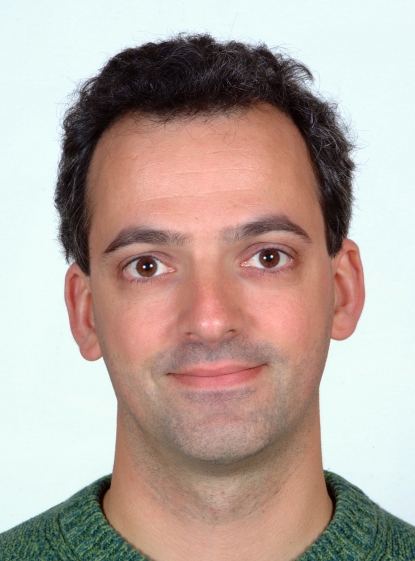 Iead Rezek合作论文数Clinical Neuroscience Department
Division of Neuroscience and Mental Health
Imperial College London Hammersmith Campus3
Iead Rezek合作论文数Clinical Neuroscience Department
Division of Neuroscience and Mental Health
Imperial College London Hammersmith Campus3




