Ontology engineering (OE) is a complex task in knowledge representation that relies heavily on domain experts to accurately define concepts and precise relationships in a domain of interest, as well as to maintain logical consistency throughout the resultant ontology. Recent advances in large language models (LLMs) have created new opportunities to automate and enhance various stages of ontology development. This article presents a systematic literature review on the use of LLMs in OE, focusing on their roles in core development activities, input-output characteristics, evaluation methods, and application domains. We analyze 36 papers covering 49 task-level studies to identify common tasks where LLMs have been applied, spanning ontology requirements specification, implementation, publication, and maintenance. Our findings indicate that LLMs primarily act as ontology engineers, domain experts, and evaluators, using models such as Generative Pretrained Transformer, Large Language Model Meta AI, and Text-to-Text Transfer Transformer. Different approaches rely on zero-shot and few-shot prompting to process heterogeneous inputs (e.g., Web Ontology Language ontologies, natural language text, and competency questions) and generate task-specific outputs (e.g., axioms, mappings, and documentation). Our review also reveals a lack of homogenization in task definitions, dataset selection, evaluation metrics, and experimental workflows. In addition, several studies do not release their complete evaluation protocols or code, making their results difficult to reproduce and their methods insufficiently transparent. Addressing these gaps through standardized benchmarks and hybrid workflows that integrate LLM automation with human expertise represents an important challenge for future research.
DOI: 10.59350/4j56z-awf56 By Rebecca Ringuette (1,2), Daniel Garijo (3), Jonathan Starr (4), Maria Gould (5), Alex Ioannidis (6). 1 Heliophysics Data and Model Consortium 2 University of Maryland, Baltimore County 3 Universidad Politécnica de Madrid, on behalf of CodeMeta 4 NumFocus 5 DataCite 6 Zenodo In 2025 a group of stakeholders involved in research software infrastructure were successful in improving support for software citation.
Collaborative and multi-site neuroimaging studies have greatly accelerated the rate at which new and existing data can be aggregated to answer a neuroscientific question. New research initiatives are continuously collecting more data, allowing opportunities to refine previous published findings through continuous and dynamic updates. Yet, we lack a practical framework for researchers to systematically, automatically, and continuously update published findings. We developed NeuroDISK, an automated artificial intelligence based framework that: 1) performs automated and inquiry-driven analyses, and 2) continuously updates these analyses as new data becomes available. NeuroDISK was evaluated using published results from the ENIGMA consortium's work on the genetic architecture of the cerebral cortex. We incorporate both meta-analysis and meta-regression options to showcase our framework on the effect of specific genotypes and moderators on select brain regions. Initial NeuroDISK meta-analysis results replicate the original publication, and we show result updates after adding new data. The NeuroDISK framework can be generalized for users to define question(s), run corresponding workflow(s) and access results interactively and continuously.
RDF-star has been proposed as an extension of RDF to make statements about statements. Libraries and graph stores have started adopting RDF-star, but the generation of RDF-star data remains largely unexplored. To allow generating RDF-star from heterogeneous data, RML-star was proposed as an extension of RML. However, no system has been developed so far that implements the RML-star specification. In this work, we present Morph-KGCstar, which extends the Morph-KGC materialization engine to generate RDF-star datasets. We validate Morph-KGCstar by running test cases derived from the N-Triples-star syntax tests and we apply it to two real-world use cases from the biomedical and open science domains. We compare the performance of our approach against other RDF-star generation methods (SPARQL-Anything), showing that Morph-KGCstar scales better for large input datasets, but it is slower when processing multiple smaller files.
Artificial intelligence (AI) is increasingly embedded in clinical trials, yet poor reproducibility remains a critical barrier to trustworthy and transparent research. In this study, we propose a structured calibration of the CONSORT-AI reporting guideline using the FAIR (Findable, Accessible, Interoperable, Reusable) principles. We introduce the application of CALIFRAME, a framework designed to evaluate and align existing medical AI reporting standards with FAIR-compliant practices. Applying CALIFRAME to the CONSORT-AI checklist reveals specific gaps in data and code sharing, metadata use, and accessibility practices in current AI-driven clinical trials. Our results underscore the need for standardized metadata, clear licensing, and stakeholder-inclusive design in medical AI reporting. We demonstrate that FAIR-oriented calibration of reporting guidelines can bridge the reproducibility gap and support more transparent, efficient, and reusable AI interventions in healthcare. This work advocates for a shift toward reproducibility as a foundation for trustworthy AI in clinical research. ### Competing Interest Statement The authors have declared no competing interest. ### Funding Statement K.B.S. was funded by the DAAD (German Academic Exchange) for supporting the doctoral research study expenses. ### Author Declarations I confirm all relevant ethical guidelines have been followed, and any necessary IRB and/or ethics committee approvals have been obtained. Yes I confirm that all necessary patient/participant consent has been obtained and the appropriate institutional forms have been archived, and that any patient/participant/sample identifiers included were not known to anyone (e.g., hospital staff, patients or participants themselves) outside the research group so cannot be used to identify individuals. Yes I understand that all clinical trials and any other prospective interventional studies must be registered with an ICMJE-approved registry, such as ClinicalTrials.gov. I confirm that any such study reported in the manuscript has been registered and the trial registration ID is provided (note: if posting a prospective study registered retrospectively, please provide a statement in the trial ID field explaining why the study was not registered in advance). Yes I have followed all appropriate research reporting guidelines, such as any relevant EQUATOR Network research reporting checklist(s) and other pertinent material, if applicable. Yes All data produced in the present work are contained in the manuscript
Research Software has become a key asset to support the results described in academic publications, enabling effective data analysis and reproducibility. In order to ensure adherence of Research Software to the Findable, Accessible, Interoperable, and Reusable (FAIR) principles, the scientific community has proposed metadata guidelines and best practices. However, it is unclear how these practices have been adopted so far. This paper examines how different scientific communities describe Research Software with metadata to support FAIR, how do they adopt existing good practices regarding citation, documentation or versioning, and what is the current adoption of archival services for long-term preservation. We carry out our analysis in the software registries of five science clusters (in domains ranging from Physics to Environmental Sciences), together with a multi-domain collaborative software registry. Our results highlight the main gaps in metadata adoption in the different communities, opening an opportunity for future contributions to aid researchers in adopting good FAIR and Open Science practices.
In this demo we present RMLdoc, a Python package designed to generate documentation for RML mappings when constructing knowledge graphs from heterogeneous sources. Given an input mapping file written in R2RML, RML, or YARRRML, RMLdoc will generate a detailed Markdown documentation explaining each mapping with corresponding diagrams, in a human readable manner. Thanks to RMLdoc, we aim to shed light in the knowledge graph construction process, making mappings easier to maintain and understand by knowledge engineers. Code repository: https://github.com/oeg-upm/rmldoc/ Demo: https://w3id.org/rmldoc/example
Recent trends within computational and data sciences show an increasing recognition and adoption of computational workflows as tools for productivity and reproducibility that also democratize access to platforms and processing know-how. As digital objects to be shared, discovered, and reused, computational workflows benefit from the FAIR principles, which stand for Findable, Accessible, Interoperable, and Reusable. The Workflows Community Initiative's FAIR Workflows Working Group (WCI-FW), a global and open community of researchers and developers working with computational workflows across disciplines and domains, has systematically addressed the application of both FAIR data and software principles to computational workflows. We present recommendations with commentary that reflects our discussions and justifies our choices and adaptations. These are offered to workflow users and authors, workflow management system developers, and providers of workflow services as guidelines for adoption and fodder for discussion. The FAIR recommendations for workflows that we propose in this paper will maximize their value as research assets and facilitate their adoption by the wider community.
Computational workflows represent major investments of effort and expertise. As first-class, publishable research objects of their own, they are key to sharing methodological know-how for reuse, reproducibility, and transparency. Thus, the application of the FAIR Principles to workflows is inevitable to enable them to be Findable, Accessible, Interoperable, and Reusable. Making workflows FAIR reduces duplication of effort, assists in the reuse of best practice approaches and community-supported standards, and ensures that workflows as digital objects can support reproducible, robust science. FAIR workflows draw from both FAIR data and software principles, and they help ensure and support data FAIRification. The FAIR Principles emphasize the association of persistent identifiers and machine-actionable metadata with workflows. Implementing the Principles requires a framework with appropriate programmatic protocols and an accompanying ecosystem of services, tools, policies, and best practices, as well the buy-in of existing workflow systems. The European EOSC-Life Workflow Collaboratory is an example of such a digital infrastructure for the Biosciences. It includes a metadata standards framework for describing workflows that is managed and used by dedicated new FAIR workflow services and programmatic APIs for interoperability and metadata access. It includes the WorkflowHub registry and LifeMonitor workflow testing service, and it incorporates existing workflow systems and packaging solutions. Here, we introduce the FAIR Principles for workflows and connect FAIR workflows with the FAIR ecosystems they inhabit with the EOSC-Life Collaboratory as a concrete example. We also introduce other community efforts that are easing the ways that workflows are shared and reused by others, and we discuss how the variations in different workflow settings impact their FAIR perspectives.
An increasing amount of scientists link to their research software code implementations in their academic publications in order to support the reusability of their results. However, research papers usually contain many code links (e.g., from reused tools or existing competing efforts) making it challenging to automatically establish clear links between papers and their corresponding implementations. This paper presents RepoFromPaper, an approach for automatically extracting the main code implementation associated with a research paper, based on the context in which that link is mentioned. Our approach uses fine-tuned language models to retrieve the top candidate sentences where a code implementation may be found, and uses custom heuristics to link candidate sentences back to their corresponding URL (footnote, reference or full-text mention). We evaluated RepoFromPaper on 150 research papers, obtaining an F1 score of 0.94. We also run our approach on nearly 1800 papers from the CS.AI Arxiv category, discovering 604 paper-repository links and making them available to the community.
While computer science papers frequently include their associated code repositories, establishing a clear link between papers and their corresponding implementations may be challenging due to the number of code repositories used in research publications. In this paper we describe a lightweight method for effectively identifying bidirectional links between papers and repositories from both LaTeX and PDF sources. We have used our approach to analyze more than 14000 PDF and Latex files in the Software Engineering category of Arxiv, generating a dataset of more than 1400 paper-code implementations and assessing current citation practices on it.
Research Software code projects are typically described with a README files, which often contains the steps to set up, test and run the code contained in them. Installation instructions are written in a human-readable manner and therefore are difficult to interpret by intelligent assistants designed to help other researchers setting up a code repository. In this paper we explore this gap by assessing whether Large Language Models (LLMs) are able to extract installation instruction plans from README files. In particular, we define a methodology to extract alternate installation plans, an evaluation framework to assess the effectiveness of each result and an initial quantitative evaluation based on state of the art LLM models (llama-2-70b-chat and Mixtral-8x7b-Instruct-v0.1). Our results show that while LLMs are a promising approach for finding installation instructions, they present important limitations when these instructions are not sequential or mandatory.
Recording the provenance of scientific computation results is key to the support of traceability, reproducibility and quality assessment of data products. Several data models have been explored to address this need, providing representations of workflow plans and their executions as well as means of packaging the resulting information for archiving and sharing. However, existing approaches tend to lack interoperable adoption across workflow management systems. In this work we present Workflow Run RO-Crate, an extension of RO-Crate (Research Object Crate) and Schema.org to capture the provenance of the execution of computational workflows at different levels of granularity and bundle together all their associated objects (inputs, outputs, code, etc.). The model is supported by a diverse, open community that runs regular meetings, discussing development, maintenance and adoption aspects. Workflow Run RO-Crate is already implemented by several workflow management systems, allowing interoperable comparisons between workflow runs from heterogeneous systems. We describe the model, its alignment to standards such as W3C PROV, and its implementation in six workflow systems. Finally, we illustrate the application of Workflow Run RO-Crate in two use cases of machine learning in the digital image analysis domain.
The Workflows Community Summit gathered 111 participants from 18 countries to discuss emerging trends and challenges in scientific workflows, focusing on six key areas: time-sensitive workflows, AI-HPC convergence, multi-facility workflows, heterogeneous HPC environments, user experience, and FAIR computational workflows. The integration of AI and exascale computing has revolutionized scientific workflows, enabling higher-fidelity models and complex, time-sensitive processes, while introducing challenges in managing heterogeneous environments and multi-facility data dependencies. The rise of large language models is driving computational demands to zettaflop scales, necessitating modular, adaptable systems and cloud-service models to optimize resource utilization and ensure reproducibility. Multi-facility workflows present challenges in data movement, curation, and overcoming institutional silos, while diverse hardware architectures require integrating workflow considerations into early system design and developing standardized resource management tools. The summit emphasized improving user experience in workflow systems and ensuring FAIR workflows to enhance collaboration and accelerate scientific discovery. Key recommendations include developing standardized metrics for time-sensitive workflows, creating frameworks for cloud-HPC integration, implementing distributed-by-design workflow modeling, establishing multi-facility authentication protocols, and accelerating AI integration in HPC workflow management. The summit also called for comprehensive workflow benchmarks, workflow-specific UX principles, and a FAIR workflow maturity model, highlighting the need for continued collaboration in addressing the complex challenges posed by the convergence of AI, HPC, and multi-facility research environments.
 Yolanda Gil合作论文数Research of the Intelligent Systems Division, Information Sciences Institute, University of Southern California;Viterbi School of Engineering, University of Southern California;Center for Knowledge-Powered Interdisciplinary Data Science, University of Southern California75
 Oscar Corcho合作论文数Ontology Engineering Group, Departamento de Inteligencia Artificial, Universidad Politécnica de Madrid;LibrAIry_eu;DIH - AIR4S;LocaliData38
 Varun Ratnakar合作论文数Karya Limited34
 Stian Soiland-Reyes合作论文数School of Computer Science, University of Manchester24
 Khalid Belhajjame合作论文数University of Manchester22
 Carole Goble合作论文数School of Computer Science, The University of Manchester17
 Sarah L. Kinnings合作论文数University of California, San Diego, University of California15
 yinliang zhang合作论文数14phil bourne合作论文数13
 Graham Klyne合作论文数GitHub13
 Deborah Khider合作论文数Department of Earth Sciences, University of Southern California13
 María Poveda-Villalón合作论文数Ontology Engineering Group, Universidad Politécnica de Madrid12
 Pedro Szekely合作论文数Amazon10Esteban Gonzalez合作论文数9
 Michael R. Crusoe合作论文数9
 Rafael Ferreira Da Silva合作论文数Department of Computer Science at University of Southern California9
 Neda Jahanshad合作论文数Laboratory of Brain Escience, Imaging Genetics Center, Mark and Mary Stevens Neuroimaging and Informatics Institute, Keck School of Medicine, University of Southern California9
 Raul J. Martin-Palma合作论文数Departamento de Física Aplicada, Universidad Autónoma de Madrid;Department of Materials Science and Engineering, College of Earth and Mineral Sciences, The Pennsylvania State University9
 Maximiliano Osorio合作论文数MetaLearn SPA;Actify.Cl;Texas Advanced Computing Center8
 Simone Leo合作论文数CRS4 &, University of Cagliari8
 Frederik Coppens合作论文数Department of Plant Biotechnology and Genetics, Gent University8Leyla Jael Castro合作论文数7
 Paul Groth合作论文数Informatics Institute, University of Amsterdam;Faculty of Science, University of Amsterdam;Longform.Ai7
 Jun Zhao合作论文数Department of Computer Science, University of Oxford;Oxford Martin School, University of Oxford7
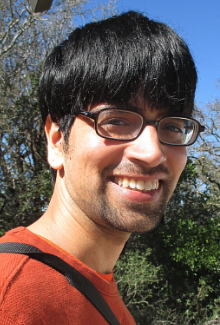 Jay Pujara合作论文数Information Sciences Institute, University of Southern California;Thomas Lord Department of Computer Science, University of Southern California7
 Daniel S. Katz合作论文数University of Illinois Urbana-Champaign, University of Illinois Urbana-Champaign;School of Information Sciences, University of Illinois Urbana-Champaign7
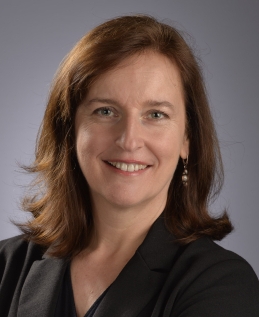 Ewa Deelman合作论文数Information Sciences Institute, Thomas Lord Department of Computer Science, Viterbi School of Engineering, University of Southern California;CI Compass7
 Rajiv Mayani合作论文数Univ Southern Calif Informat Sci Inst7Jose Manuel Gomez合作论文数Dpto . CC . de los Materiales e Ing|Universidad Complutense de Madrid7
 Marc Portier合作论文数6
 Filip Ilievski合作论文数Department of Computer Science, Faculty of Sciences, Vrije Universiteit Amsterdam;Information Sciences Institute, University of Southern California6
 Paul M. Thompson合作论文数Imaging Genetics Center, Lab of Neuro Imaging, Institute for Neuroimaging and Informatics, Keck School of Medicine, University of Southern California6
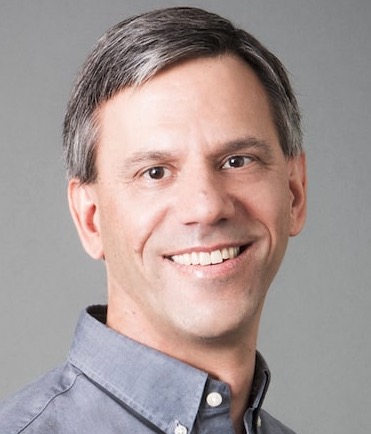 Craig Knoblock合作论文数Information Sciences Institute, University of Southern California6
 Scott David Peckham合作论文数University of Colorado6
 Esteban Garcia-Cuesta合作论文数Physics Department, Carlos III University -Avenida de la Universidad6
 Suzanne A. Pierce合作论文数Jackson School of Geosciences, The University of Texas at Austin6
 Nicholas P. Mckay合作论文数Department of Geosciences, University of Arizona6
 Julien Emile-Geay合作论文数Lamont-Doherty Earth Observatory;Columbia University;Lamont-Doherty Earth Observatory, Columbia University6
 Sean Bechhofer合作论文数Department of Computer Science, University of Manchester6Maria Stoica合作论文数Inst Arctic & Alpine Res, Univ Colorado Boulder5
 Ankush Khandelwal合作论文数university of minnesota5
 Li Xie合作论文数5
 Alice Allen合作论文数5Peter Sefton合作论文数University of Southern Queensland5
 Armen R. Kemanian合作论文数Department of Plant Science, College of Agricultural Sciences, Pennsylvania State University5Kelly M. Cobourn合作论文数5
 Idafen Santana-Perez合作论文数Department of Computer Science, University of Las Palmas de Gran Canaria5
 Kyle Chard合作论文数Department of Computer Science, University of Chicago;Argonne National Laboratory5
 Rosa Filgueira合作论文数School of Informatics, University of Edinburgh5