The rising popularity of computational workflows is driven by the need for repetitive and scalable data processing, sharing of processing know-how, and transparent methods. As both combined records of analysis and descriptions of processing steps, workflows should be reproducible, reusable, adaptable, and available. Workflow sharing presents opportunities to reduce unnecessary reinvention, promote reuse, increase access to best practice analyses for non-experts, and increase productivity. In reality, workflows are scattered and difficult to find, in part due to the diversity of available workflow engines and ecosystems, and because workflow sharing is not yet part of research practice. WorkflowHub provides a unified registry for all computational workflows that links to community repositories, and supports both the workflow lifecycle and making workflows findable, accessible, interoperable, and reusable (FAIR). By interoperating with diverse platforms, services, and external registries, WorkflowHub adds value by supporting workflow sharing, explicitly assigning credit, enhancing FAIRness, and promoting workflows as scholarly artefacts. The registry has a global reach, with hundreds of research organisations involved, and more than 800 workflows registered.
Computational workflows represent major investments of effort and expertise. As first-class, publishable research objects of their own, they are key to sharing methodological know-how for reuse, reproducibility, and transparency. Thus, the application of the FAIR Principles to workflows is inevitable to enable them to be Findable, Accessible, Interoperable, and Reusable. Making workflows FAIR reduces duplication of effort, assists in the reuse of best practice approaches and community-supported standards, and ensures that workflows as digital objects can support reproducible, robust science. FAIR workflows draw from both FAIR data and software principles, and they help ensure and support data FAIRification. The FAIR Principles emphasize the association of persistent identifiers and machine-actionable metadata with workflows. Implementing the Principles requires a framework with appropriate programmatic protocols and an accompanying ecosystem of services, tools, policies, and best practices, as well the buy-in of existing workflow systems. The European EOSC-Life Workflow Collaboratory is an example of such a digital infrastructure for the Biosciences. It includes a metadata standards framework for describing workflows that is managed and used by dedicated new FAIR workflow services and programmatic APIs for interoperability and metadata access. It includes the WorkflowHub registry and LifeMonitor workflow testing service, and it incorporates existing workflow systems and packaging solutions. Here, we introduce the FAIR Principles for workflows and connect FAIR workflows with the FAIR ecosystems they inhabit with the EOSC-Life Collaboratory as a concrete example. We also introduce other community efforts that are easing the ways that workflows are shared and reused by others, and we discuss how the variations in different workflow settings impact their FAIR perspectives.
The rapid evolution of digital pathology has enabled large-scale data acquisition, driving sophisticated clinical research and advancing the development of AI-driven tools. These innovations have also revolutionised histopathological slide review, especially the annotation step (i.e. the process of marking specific areas of interest on glass-mounted tissue samples to add relevant clinical information) by digitising the process, enhancing precision and efficiency, and facilitating collaboration. However, currently available open-source annotation tools typically employ single-label approaches that provide a flat representation of whole-slide images (WSI), limiting their ability to capture the complexity of the diagnosis-significant elements in a detailed and structured way. Furthermore, the difficulty of strictly following precise review protocols and lack of provenance tracking during annotation processes can result in high variability and limit reproducibility and reusability of the collected data. In this work we present the CRS4 Digital Pathology Platform (CDPP), an open-source system for research studies that manages WSI collections and focuses on high-quality, structured annotations, gathered according to well-defined protocols. Its main features include: (1) structured, multi-label morphological and clinical image annotation; (2) support for controlled but customisable annotation protocols; (3) dedicated annotation tools to facilitate enhanced accuracy, efficiency and consistency in the annotation process; and (4) workflow-based computational analysis with integrated provenance tracking. We show how the platform has successfully supported three different studies, demonstrating the CDPP’s ability to assist pathologists in the generation of high-quality annotated datasets, also suitable for reuse, in the context of digital pathology research.
Research Object Crate (RO-Crate) is a lightweight method to package research outputs along with their metadata. Signposting provides a simple yet powerful approach to navigate scholarly objects on the Web. Combining these technologies form a "webby" implementation of the FAIR Digital Object principles which is suitable for retrofitting to existing data infrastructures or even for ad-hoc research objects using regular Web hosting platforms. Here we give an update of recent community development and adoption of RO-Crate and Signposting. It is notable that programmatic access and more detailed profiles have received high attention, as well as several FDO implementations that use RO-Crate.
Recording the provenance of scientific computation results is key to the support of traceability, reproducibility and quality assessment of data products. Several data models have been explored to address this need, providing representations of workflow plans and their executions as well as means of packaging the resulting information for archiving and sharing. However, existing approaches tend to lack interoperable adoption across workflow management systems. In this work we present Workflow Run RO-Crate, an extension of RO-Crate (Research Object Crate) and Schema.org to capture the provenance of the execution of computational workflows at different levels of granularity and bundle together all their associated objects (inputs, outputs, code, etc.). The model is supported by a diverse, open community that runs regular meetings, discussing development, maintenance and adoption aspects. Workflow Run RO-Crate is already implemented by several workflow management systems, allowing interoperable comparisons between workflow runs from heterogeneous systems. We describe the model, its alignment to standards such as W3C PROV, and its implementation in six workflow systems. Finally, we illustrate the application of Workflow Run RO-Crate in two use cases of machine learning in the digital image analysis domain.
Workflows have become a major tool for the processing of Research Data, for example, data collection and data cleaning pipelines, data analytics, and data update feeds populating public archives. The EOSC-Life Research Infrastructure Cluster project brought together Europe’s Life Science Research Infrastructures to create an Open, Digital and Collaborative space for biological and medical research to develop a cloud-based Workflow Collaboratory. As adopting FAIR practices extends beyond data, the Workflow Collaboratory drives the implementation of FAIR computational workflows and tools. It fosters tool-focused collaborations and reuse via the sharing of data analysis workflows and offers an ecosystem of services for researchers and workflow specialists to find, use and reuse workflows. It’s web-friendly Digital Object Metadata Framework, based on RO-Crate and Bioschemas, supports the description and exchange of workflows across the services.
This dataset is a prototype implementation of a mechanism for linking provenance information and its metadata, also called provenance of provenance or meta-provenance. This dataset is an RO-Crate that bundles artifacts of an AI-based computational pipeline. The resulting RO-Crate contains (directly or by a reference) artifacts of the pipeline execution, such as input dataset, intermediate and final results, configuration files, pipeline implementation, log files, or provenance files. The RO-Crate is based on the CPM RO-Crate profile, which integrates the Common Provenance Model (CPM) and Process Run Crate profile. The description of the AI pipeline and an explanation of how the CPM RO-Crate profile is applied to bundle the pipeline execution artifacts is provided in our previous work. As this dataset aims to demonstrate the mechanism for linking provenance and meta-provenance, the input dataset used for the AI model training and testing is reduced only to a few images, as the size of the input dataset does not affect the mechanism. The images used in the input are from the Camelyon16 dataset.
Open and practical exchange, dissemination, and reuse of specimens and data have become a fundamental requirement for life sciences research. The quality of the data obtained and thus the findings and knowledge derived is thus significantly influenced by the quality of the samples, the experimental methods, and the data analysis. Therefore, a comprehensive and precise documentation of the pre-analytical conditions, the analytical procedures, and the data processing are essential to be able to assess the validity of the research results. With the increasing importance of the exchange, reuse, and sharing of data and samples, procedures are required that enable cross-organizational documentation, traceability, and non-repudiation. At present, this information on the provenance of samples and data is mostly either sparse, incomplete, or incoherent. Since there is no uniform framework, this information is usually only provided within the organization and not interoperably. At the same time, the collection and sharing of biological and environmental specimens increasingly require definition and documentation of benefit sharing and compliance to regulatory requirements rather than consideration of pure scientific needs. In this publication, we present an ongoing standardization effort to provide trustworthy machine-actionable documentation of the data lineage and specimens. We would like to invite experts from the biotechnology and biomedical fields to further contribute to the standard.
This dataset is an RO-Crate that bundles artifacts of an AI-based computational pipeline execution. It is an example of application of the CPM RO-Crate profile, which integrates the Common Provenance Model (CPM), and the Process Run Crate profile. As the CPM is a groundwork for the ISO 23494 Biotechnology — Provenance information model for biological material and data provenance standards series development, the resulting profile and the example is intended to be presented at one of the ISO TC275 WG5 regular meetings, and will become an input for the ISO 23494-5 Biotechnology — Provenance information model for biological material and data — Part 5: Provenance of Data Processing standard development. Description of the AI pipeline The goal of the AI pipeline whose execution is described in the dataset is to train an AI model to detect the presence of carcinoma cells in high resolution human prostate images. The pipeline is implemented as a set of python scripts that work over a filesystem, where the datasets, intermediate results, configurations, logs, and other artifacts are stored. In particular, the AI pipeline consists of the following three general parts: Image data preprocessing. Goal of this step is to prepare the input dataset – whole slide images (WSIs) and their annotations – for the AI model. As the model is not able to process the entire high resolution images, the preprocessing step of the pipeline splits the WSIs into groups (training and testing). Furthermore, each WSI is broken down into smaller overlapping parts called patches. The background patches are filtered out and the remaining tissue patches are labeled according to the provided pathologists’ annotations. AI model training. Goal of this step is to train the AI model using the training dataset generated in the previous step of the pipeline. Result of this step is a trained AI model. AI model evaluation. Goal of this step is to evaluate the trained model performance on a dataset which was not provided to the model during the training. Results of this step are statistics describing the AI model performance. In addition to the above, execution of the steps results in generation of log files. The log files contain detailed traces of the AI pipeline execution, such as file paths, model weight parameters, timestamps, etc. As suggested by the CPM, the logfiles and additional metadata present on the filesystem are then used by a provenance generation step that transforms available information into the CPM compliant data structures, and serializes them into files. Finally, all these artifacts are packed together in an RO-Crate. For the purpose of the example, we have included only a small fragment of the input image dataset in the resulting crate, as this has no effect on how the Process Run Crate and CPM RO-Crate profiles are applied to the use case. In real world execution, the input dataset would consist of terabytes of data. In this example, we have selected a representative image for each of the input dataset parts. As a result, the only difference between the real world application and this example would be that the resulting real world crate would contain more input files. Description of the RO-Crate Process Run Crate related aspects The Process Run Crate profile can be used to pack artifacts of a computational workflow of which individual steps are not controlled centrally. Since the pipeline presented in this example consists of steps that are executed individually, and that the pipeline execution is not managed centrally by a workflow engine, the process run crate can be applied. Each of the computational steps is expressed within the crate’s ro-crate-metadata.json file as a pair of elements: 1) SW used to create files; 2) specific execution of that SW. In particular, we use the SoftwareSourceCode type to indicate the executed python scripts and the CreateAction type to indicate actual executions. As a result, the crate consists the seven following “executables”: Three python scripts, each corresponding to a part of the pipeline: preprocessing, training, and evaluation. Four provenance generation scripts, three of which implement the transformation of the proprietary log files generated by the AI pipeline scripts into CPM compliant provenance files. The fourth one is a meta provenance generation script. For each of the executables, their execution is expressed in the resulting ro-crate-metadata.json using the CreateAction type. As a result, seven create-actions are present in the resulting crate. Input dataset, intermediate results, configuration files and resulting provenance files are expressed according to the underlying RO Crate specification. CPM RO-Crate related aspects The main purpose of the CPM RO-Crate profile is to enable identification of the CPM compliant provenance files within a crate. To achieve this, the CPM RO-Crate profile specification prescribes specific file types for such files: CPMProvenanceFile, and CPMMetaProvenanceFile. In this case, the RO Crate contains three CPM Compliant files, each documenting a step of the pipeline, and a single meta-provenance file. These files are generated as a result of the three provenance generation scripts that use available log files and additional information to generate the CPM compliant files. In terms of the CPM, the provenance generation scripts are implementing the concept of provenance finalization event. The three provenance generation scripts are assigned SoftwareSourceCode type, and have corresponding executions expressed in the crate using the CreateAction type. Remarks The resulting RO Crate packs artifacts of an execution of the AI pipeline. The scripts that implement individual steps of the pipeline and provenance generation are not included in the crate directly. The implementation scripts are hosted on github and just referenced from the crate’s ro-crate-metadata.json file to their remote location. The input image files included in this RO-Crate are coming from the Camelyon16 dataset.
This report describes the integration of RO-Crates into Data Stewardship Wizard and Galaxy during the BioHackathon Europe 2023, aiming to improve data management and sharing in scientific research. By utilizing RO-Crates, researchers can easily create machine-readable metadata for their datasets, ensuring long-term discoverability, accessibility, and reusability. The seamless integration of RO-Crates in these platforms enhances collaboration between researchers and institutions, facilitating data sharing and reuse across projects and domains. Future efforts may focus on enhancing RO-Crate's interoperability with other standards and platforms, as well as promoting wider adoption through outreach and education initiatives to meet the evolving needs of researchers and institutions in data stewardship.
Workflow Run RO-Crate ( https://w3id.org/ro/wfrun/ ), is a set of profiles of RO-Crate ( https://doi.org/10.3233/DS-210053 ) that capture workflow provenance in a lightweight FAIR data package, in order to support traceability, reproducibility and interoperable description of diverse computational analysis. We implemented the profile in multiple workflow systems, including Galaxy, COMPSs, StreamFlow, WfExS, Sapporo, Autosubmit. The command line tool runcrate ( https://pypi.org/project/runcrate/ ) can convert from the precursor CWLProv ( https://doi.org/10.1093/gigascience/giz095 ), and display or validate crates according to the profiles, with (prototype) repeat of a previous execution. The profiles are organised by increasing levels of details, allowing gradual adaptation, ranging from arbitrary sets of computational processes (implied user-driven workflows), through a WorkflowHub-compatible crate with workflow definition, to a full provenance trace for each step, their input and output values. This use of RO-Crate allows the contextualization of a computational workflow and its execution, e.g. relating to people, organisations, projects, funding, data sources and wider research questions and studies. For instance, in the TRE-FX project ( https://trefx.uk/ ) such crates are used as a lingua franca across federated Trusted Research Environments, as it can also address the security and review aspects. Workflow Run working group collaborates across ELIXIR nodes and EU-wide projects (BY-COVID, EOSC-Life, EJP-RD, EuroHPC, eFlows4HP, EuroScienceGateway, BioExcel-2) as well as national projects. After this first stable release of the profiles we are now expanding with more workflow systems, and tracking computational resources such as containers and memory usage. Cite as : https://doi.org/10.5281/zenodo.7996434 Simone Leo; Laura Rodríguez-Navas; José M. Fernández; Paul De Geest; Luca Pireddu; Michael R. Crusoe; Daniel Garijo; Iacopo Colonnelli; Raül Sirvent; Stian Soiland-Reyes
RO-Crate (Soiland-Reyes et al. 2022) is a lightweight method to package research outputs along with their metadata, based on Linked Data principles (Bizer et al. 2009) and W3C standards. RO-Crate provides a flexible mechanism for researchers archiving and publishing rich data packages (or any other research outcome) by capturing their dependencies and context. However, additional measures should be taken to ensure that a crate is also following the FAIR principles (Wilkinson 2016), including consistent use of persistent identifiers, provenance, community standards, clear machine/human-readable licensing for metadata and data, and Web publication of RO-Crates. The FAIR Digital Object (FDO) approach (De Smedt et al. 2020) gives a set of recommendations that aims to improve findability, accessibility, interoperability and reproducibility for any digital object, allowing implementation through different protocols or standards. Here we present how we have followed the FDO recommendations and turned research outcomes into FDOs by publishing RO-Crates on the Web using HTTP, following best practices for Linked Data. We highlight challenges and advantages of the FDO approach, and reflect on what is required for an FDO profile to achieve FAIR RO-Crates. The implementation allows for a broad range of use cases, across scientific domains. A minimal RO-Crate may be represented as a persistent URI resolving to a summary website describing the outputs in a scientific investigation (e.g. https://w3id.org/dgarijo/ro/sepln2022 with links to the used datasets along with software). One of the advantages of RO-Crates is flexibility, particularly regarding the metadata accompanying the actual research outcome. RO-Crate extends schema.org, a popular vocabulary for describing resources on the Web (Guha et al. 2016). A generic RO-Crate is not required to be typed beyond Dataset*1. In practice, RO-Crates declare conformance to particular profiles, allowing processing based on the specific needs and assumptions of a community or usage scenario. This, effectively, makes RO-Crates typed and thus machine-actionable. RO-Crate profiles serve as metadata templates, making it easier for communities to agree and build upon their own metadata needs. RO-Crates have been combined with machine-actionable Data Management Plans (maDMPs) to automate and facilitate management of research data (Miksa et al. 2020). This mapping allows RO-Crates to be generated out of maDMPs and vice versa. The ELIXIR Software Management Plans (Alves et al. 2021) is planning to move their questionnaire to a machine-actionable format with RO-Crate. ELIXIR Biohackathon 2022 will explore integration of RO-Crate and the Data Stewardship Wizard (Pergl et al. 2019) with Galaxy, which can automate FDO creation that also follows data management plans. A tailored RO-Crate profile has been defined to represent Electronic Lab Notebooks (ELN) protocols bundled together with metadata and related datasets. Schröder et al. (2022) uses RO-Crates to encode provenance information at different levels, including researchers, manufacturers, biological and chemical resources, activities, measurements, and resulting research data. The use of RO-Crates makes it easier to programmatically question-answer information related to the protocols, for instance activities, resources and equipment used to create data. Another example is WorkflowHub (Goble et al. 2021) which defines the Workflow RO-Crate profile (Bacall et al. 2022), imposing additional constraints such as the presence of a main workflow and a license. It also specifies which entity types and properties must be used to provide such information, implicitly defining a set of operations (e.g., get the main workflow and its language) that are valid on all complying crates. The workflow system Galaxy (The Galaxy Community 2022) retrieves such Workflow Crates using GA4GH TRS API. The workflow profile has been further extended (with OOP-like inheritance) in Workflow Testing RO-Crate, adding formal workflow testing components: this adds operations such as getting remote test instances and test definitions, used by the LifeMonitor service to keep track of the health status of multiple published workflows. While RO-Crates use Web technologies, they are also self-contained, moving data along with their metadata. This is a powerful construct for interoperability across FAIR repositories, but this raises some challenges with regards to mutability and persistence of crates. To illustrate how such challenges can be handled, we detail how the WorkflowHub repository follows several FDO principles: Workflow entries must be frozen for editing and have complete kernel metadata (title, authors, license, description) [FDOF4] before they can be assigned a persistent identifier, e.g. https://doi.org/10.48546/workflowhub.workflow.255.1 [FDOF1] Computational workflows can be composed of multiple files used as a whole, e.g. CWL files in a GitHub repository. These are snapshotted as a single RO-Crate ZIP, indicating the main workflow. [FDOF11] PID resolution can content-negotiate to Datacite’s PID metadata [FDOF2] or use FAIR Signposting to find an RO-Crate containing the workflow [FDOF3] and richer JSON-LD metadata resources [FDOF5,FDOF8], see Fig. 1 Metadata uses schema.org [FDOF7] following the community-developed Bioschemas ComputationalWorkflow profile [FDOF10]. Workflows are discovered using the GA4GH TRS API [FDOF5,FDOF6,FDOF11] and created/modified using CRUD operations [FDOF6] The RO-Crate profile, effectively the FDO Type [FDOF7], is declared as https://w3id.org/workflowhub/workflow-ro-crate/1.0; the workflow language (e.g. https://w3id.org/workflowhub/workflow-ro-crate#galaxy) is defined in metadata of the main workflow. Workflow entries must be frozen for editing and have complete kernel metadata (title, authors, license, description) [FDOF4] before they can be assigned a persistent identifier, e.g. https://doi.org/10.48546/workflowhub.workflow.255.1 [FDOF1] Computational workflows can be composed of multiple files used as a whole, e.g. CWL files in a GitHub repository. These are snapshotted as a single RO-Crate ZIP, indicating the main workflow. [FDOF11] PID resolution can content-negotiate to Datacite’s PID metadata [FDOF2] or use FAIR Signposting to find an RO-Crate containing the workflow [FDOF3] and richer JSON-LD metadata resources [FDOF5,FDOF8], see Fig. 1 Metadata uses schema.org [FDOF7] following the community-developed Bioschemas ComputationalWorkflow profile [FDOF10]. Workflows are discovered using the GA4GH TRS API [FDOF5,FDOF6,FDOF11] and created/modified using CRUD operations [FDOF6] The RO-Crate profile, effectively the FDO Type [FDOF7], is declared as https://w3id.org/workflowhub/workflow-ro-crate/1.0; the workflow language (e.g. https://w3id.org/workflowhub/workflow-ro-crate#galaxy) is defined in metadata of the main workflow. Further work on RO-Crate profiles include to formalise links to the API operations and repositories [FDOF5,FDOF7], to include PIDs of profiles and types in the FAIR Signposting, and HTTP navigation to individual resources within the RO-Crate. RO-Crate has shown a broad adoption by communities across many scientific disciplines, providing a lightweight, and therefore easy to adopt, approach to generating FAIR Digital Objects. It is rapidly becoming an integral part of the interoperability fabric between the different components as demonstrated here for WorkflowHub, contributing to building the European Open Science Cloud.
We introduce how the Galaxy research environment (Jalili et al. 2020) integrates with RO-Crate as an implementation of Findable Accessible Interoperable Reproducible Digital Objects (FAIR Digital Objects / FDO) (Wilkinson et al. 2016, Schultes and Wittenburg 2018) and how using RO-Crate as an exchange mechanism of workflows and their execution history helps integrate Galaxy with the wider ecosystem of ELIXIR (Harrow et al. 2021) and the European Open Science Cloud (EOSC-Life) to enable FAIR and reproducible data analysis. RO-Crate (Soiland-Reyes et al. 2022) is a generic packaging format containing datasets and their description using standards for FAIR Linked Data. The format is based on schema.org (Guha et al. 2016) annotations in JSON-LD, which allows for rich metadata representation. The RO-Crate effort aims to make best-practice in formal metadata description accessible and practical for use in a wider variety of situations, from an individual researcher working with a folder of data, to large data-intensive computational research environments. The RO-Crate community brings together practitioners from very different backgrounds, and with different motivations and use cases. Among the core target users are: researchers engaged with computation and data-intensive, workflow-driven analysis; digital repository managers and infrastructure providers; individual researchers looking for a straightforward tool or how-to guide to “FAIRify” their data; data stewards supporting research projects in creating and curating datasets. researchers engaged with computation and data-intensive, workflow-driven analysis; digital repository managers and infrastructure providers; individual researchers looking for a straightforward tool or how-to guide to “FAIRify” their data; data stewards supporting research projects in creating and curating datasets. Given the wide applicability of RO-Crate and the lack of practical implementations of FDOs, ELIXIR (Harrow et al. 2021) co-opted this initiative as the project to define a common format for research data exchange and repository entries. Thus, during the last year it’s been implemented in a wide range of services, such as: WorkflowHub (Goble et al. 2021) (a registry for describing, sharing and publishing scientific computational workflows) uses RO-Crates as an exchange format to improve reproducibility of computational workflows that follow the Workflow RO-Crate profile (Bacall et al. 2022); LifeMonitor (Leo et al. 2022) (a service to support the sustainability of computational workflows being developed as part of the EOSC-Life project) uses RO-Crate as an exchange format for describing test suites associated with workflows. Tools have been developed towards aiding the previously mentioned use cases and increasing the general usability of RO-Crates by providing a user-friendly (programmatic) interface for consumption and production of RO-Crates through programmatic libraries for consuming/producing RO-Crates (ro-crate-py De Geest et al. 2022, ro-crate-ruby Bacall and Whitwell 2022, ro-crate-js Lynch et al. 2021). The Galaxy project provides a research environment with data analysis and data management functionalities as a multi user platform, aiming to make computational biology accessible to research scientists that do not have computer programming or systems administration experience. As such, it stores not just analysis related data but also the complete analytical workflow, including its metadata. The internal data model involves the history entity, including all steps performed in a specific analysis, and the workflow entity, defining the structure of an analytical pipeline. From the start, Galaxy aims to enable reproducible analyses by providing capabilities to export (and import) all the analysis history details and workflow data and metadata in a FAIR way. As such it helps its users with the daily research data management. The Galaxy community is continuously improving and adding features, the integration of the FAIR Digital Object principles is a natural next step in this. To be able to support these FDOs, Galaxy leverages the RO-Crate Python client library (De Geest et al. 2022) and provides multiple entry points to import and export different research data objects representing its internal entities and associated metadata. These objects include: a workflow definition, which is used to share/publish the details of an analysis pipeline, including the graph of tools that need to be executed, and metadata about the data types required individual data files or a collection of datasets related to an analysis history a compressed archive of the entire analysis history including the metadata associated with it such as the tools used, their versions, the parameters chosen, workflow invocation related metadata, inputs, outputs, license, author, CWLProv description (Khan et al. 2019) of the workflow, contextual references in the form of Digital Object Identifiers (DOIs), ‘EMBRACE Data And Methods’ ontology (EDAM) terms (Ison et al. 2013), etc. a workflow definition, which is used to share/publish the details of an analysis pipeline, including the graph of tools that need to be executed, and metadata about the data types required individual data files or a collection of datasets related to an analysis history a compressed archive of the entire analysis history including the metadata associated with it such as the tools used, their versions, the parameters chosen, workflow invocation related metadata, inputs, outputs, license, author, CWLProv description (Khan et al. 2019) of the workflow, contextual references in the form of Digital Object Identifiers (DOIs), ‘EMBRACE Data And Methods’ ontology (EDAM) terms (Ison et al. 2013), etc. The adoption of RO-crate by Galaxy allows a standardised exchange of FDOs with other platforms in the ELIXIR Tools ecosystem, such as WorkflowHub and LifeMonitor. Integrating RO-Crate deeply into Galaxy and offering import and export options of various Galaxy objects such as Research Objects allows for increased standardisation, improved Research Data Management (RDM) functionalities, smoother user experience (UX) as well as improved interoperability with other systems. The integration in a platform used by biologists to do data intensive analysis, facilitates the publication of workflows and workflow invocations for all skill levels and democratises the ability to perform Open Science.
While studies in pathology are essential for the progress in the diagnostic and prognostic techniques in the field, pathologist time is becoming an increasingly scarce resource, and can indeed become the limiting factor in the feasibility of studies to be performed. In this work, we demonstrate how the Digital Pathology platform by CRS4, for supporting research studies in digital pathology, has been augmented by the addition of AI-based features to accelerate image examination to reduce the pathologist time required for clinical studies. The platform has been extended to provide computationally generated annotations and visual cues to help the pathologist prioritize high-interest image areas. The system includes an image annotation pipeline with DeepHealth-based deep learning models for tissue identification and prostate cancer identification. Annotations are viewed through the platform's virtual microscope and can be controlled interactively (e.g., thresholding, coloring). Moreover, the platform captures inference provenance information and archives it as RO-Crate artifacts containing data and metadata required for reproducibility. We evaluate the models and the inference pipeline, achieving AUC of 0.986 and 0.969 for tissue and cancer identification, respectively, and verifying linear dependence of execution speed on image tissue content. Finally, we describe the ongoing clinical validation of the contribution, including preliminary results, and discuss feedback from clinical professionals regarding the overall approach.
The WorkflowHub (workflowhub.eu) is a FAIR workflow registry sponsored by the European RI Cluster EOSC-Life and the European Research Infrastructure ELIXIR. It is workflow management system agnostic: workflows may remain in their native repositories in their native forms. As workflows are multi-component objects, including example and test data, they are packaged, registered, downloaded and exchanged as workflow centric Research Objects using the RO-Crate specification, making the Hub an implementation of FAIR Digital Object principles. A schema.org based Bioschemas profile describes the metadata about a workflow and encouraged use of the Common Workflow Language is provides a canonical description of the workflow itself. Workflow management systems such as Galaxy, Nextflow, and snakemake are working with the Hub to seamlessly and automatically support object packaging, registration and exchange. The WorkflowHub provides features such as community spaces, collections, versioning and snapshots, and contributor credit. It supports community registry standards and services such as GA4GH TRS and ELIXIR-AAI, and integrates with the LifeMonitor workflow testing service.
 Gianluigi Zanetti合作论文数CRS4, Italy26
 Luca Pireddu合作论文数CRS4, Pula, Italy24
 Stian Soiland-Reyes合作论文数School of Computer Science, University of Manchester23
 Frederik Coppens合作论文数Department of Plant Biotechnology and Genetics, Gent University13
 Carole Goble合作论文数School of Computer Science, The University of Manchester13
 Stuart Owen合作论文数SmithKline Beecham Pharmaceuticals11
 Salvador Capella Gutierrez合作论文数Technologies for Biomedical Research Laboratory, Barcelona Supercomputing Center9
 Eugenio Montini合作论文数9Fabrizio Benedicenti合作论文数9Finn Bacall合作论文数9Ignacio Eguinoa合作论文数Univ Ghent, VIB UGent Ctr Med Biotechnol, VIB, B-9000 Ghent, Belgium8
 Laura Rodriguez-Navas合作论文数8
 Luigi Naldini合作论文数Vita-Salute San Raffaele University;San Raffaele Telethon Institute for Gene Therapy8
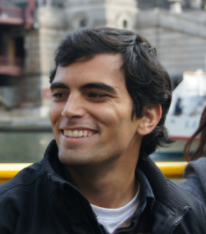 Daniel Garijo Verdejo合作论文数Ontology Engineering Group, Artificial Intelligence Department of the Computer Science Faculty, Universidad Politécnica de Madrid8
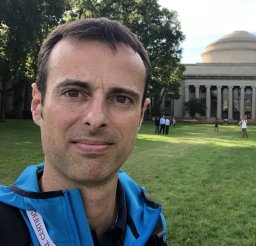 Andrea Calabria合作论文数National Research Council Institute for Biomedical Technologies Via Fratelli Cervi8
 Björn Grüning合作论文数Institut für Informatik, Technische Fakultät, University of Freiburg;Centre for Integrative Biological Signalling Studies7Peter Sefton合作论文数University of Southern Queensland7Biasco Luca合作论文数6
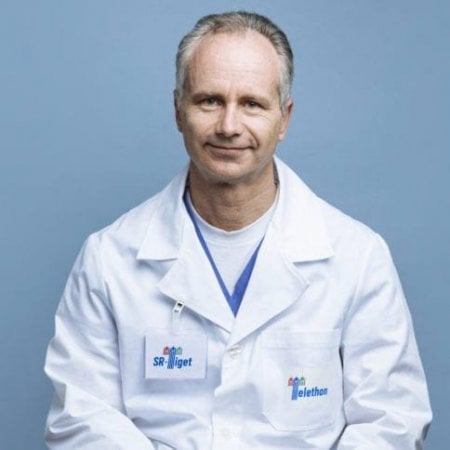 Alessandro Aiuti合作论文数Università Vita-Salute San Raffaele;Pediatric Immunohematology Unit, IRCCS Ospedale San Raffaele;Pediatric Clinical Research Unit, SR-Tiget6
 Josh Moore合作论文数6
 Michael R. Crusoe合作论文数6
 Herve Menager合作论文数Arizona State University6Martina Cesani合作论文数6
 Jason Swedlow合作论文数School of Life Sciences, University of Dundee6Alessandra Biffi合作论文数6Leyla Jael Castro合作论文数5
 Jose Maria Fernandez合作论文数5
 Marc Portier合作论文数5Alan R. Williams合作论文数5
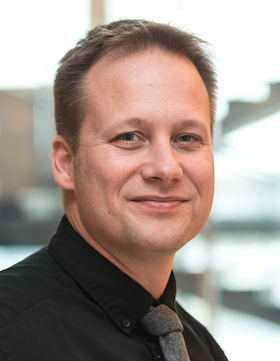 Paul Groth合作论文数Informatics Institute, University of Amsterdam;Faculty of Science, University of Amsterdam;Longform.Ai5
 Massimo Gaggero合作论文数Center for Advanced Studies, Research and Development in Sardinia5
 Elia Stupka合作论文数Telethon Institute of Genetics and Medicine5Manfred Schmidt合作论文数5
 Rudolf Wittner合作论文数Masaryk University4
 Aleksandra Tarkowska合作论文数4
 Jose Maria Fernandez Gonzalez合作论文数Life Sciences - Technologies for Biomedical Research Laboratory, Barcelona Supercomputing Center;Department of Life Sciences, Barcelona Supercomputing Center4
 Maria Sessa合作论文数Ospedale Niguarda4
 Christof von Kalle合作论文数Berlin Institute of Health, Charité – Universitätsmedizin Berlin;GeneWerk;Clinical Study Center, Charité – Universitätsmedizin Berlin4
 Luca Lianas合作论文数Dipartimento di Ingegneria Elettrica ed Elettronica, Consorzio COSMOLAB4Tiziana Plati合作论文数4Matej Gallo合作论文数3
 Bert Droesbeke合作论文数3
 Iacopo Colonnelli合作论文数Computer Science Department, University of Torino, Italy3
 Eoghan Ó. Carragáin合作论文数National Library of Ireland3Laura Lorioli合作论文数3Neduva Victor合作论文数3
 Petr Holub合作论文数3Paolo Anedda合作论文数Advanced Computing and Communications, Parco Scientifico e, Tecnologico3David J Dow合作论文数3




