Understanding how macroscopic thermodynamic behavior emerges from microscopic quantum dynamics remains an open problem. While equilibration of quantum observables is well established, thermodynamics also relies on variables not directly associated with linear operators, but which are defined instead as functions of expectation values. Whether and how such derived quantities inherit equilibration properties is an open question. Here, we establish that any continuously differentiable function of equilibrating expectation values also equilibrates. We apply this result to a bipartite isolated system, showing that the entropy and conjugate variables of each subsystem – defined through Jaynes' maximum entropy principle – equilibrate. Moreover, with the assumption that their equilibrium properties depend solely on local conserved quantities, we show the dynamical maximization of the total entropy, enforcing equality of conjugate variables across subsystems. These results provide a direct dynamical justification for entropy maximization and the emergence of thermodynamic equilibrium conditions, showing that fundamental principles of thermodynamics follow from the unitary evolution of quantum systems.
We study the performance of a quantum Otto heat engine with two spins coupled by a Heisenberg interaction, taking into account not only the mean values of work and efficiency but also their fluctuations. We first show that, for this system, the output work and its fluctuations are directly related to the magnetization and magnetic susceptibility of the system at equilibrium with either heat bath. We analyze the regions where the work extraction can be done with low relative fluctuation for a given range of temperatures, while still achieving an efficiency higher than that of a single spin system heat engine. In particular, we find that, due to the presence of `idle' levels, an increase in the inter-spin coupling can either increase or decrease fluctuations, depending on the other parameters. In all cases, however, we find that the relative fluctuations in work or efficiency remain large, implying that this microscopic engine is not very reliable as a source of work.
Interference is the mechanism through which waves can be structured into the most fascinating patterns. While for sensing, imaging, trapping, or in fundamental investigations, structured waves play nowadays an important role and are becoming the subject of many interesting studies. Using a coherent optical field as a probe, we show how to structure light into distributions presenting collapse and revival structures in its wavefront. These distributions are obtained from the Fourier spectrum of an arrangement of aperiodic diffracting structures. Interestingly, the resulting interference may present quasiperiodic structures of diffraction peaks on a number of distance scales, even though the diffracting structure is not periodic. We establish an analogy with revival phenomena in the evolution of quantum mechanical systems and illustrate this computation numerically and experimentally, obtaining excellent agreement with the proposed theory.
We study a quantum Otto cycle that uses a 2-qubit working substance whose Hamiltonian does not commute with itself at different times during unitary strokes. We investigate how the cycle responds to the loss of quantum adiabaticity when these strokes are operated with a finite duration. We find that qualitative features such as the possibility of counter-rotating cycles operating as heat engines, or a cycle efficiency that can increase with a decrease in the temperature difference between the baths, are resilient even to highly nonadiabatic strokes. However, cycle efficiency rapidly decreases, although it can still remain above the standard Otto value for small degrees of quantum nonadiabaticity.
We compare quantum Otto engines based on two different cycle models: a two-bath model, with a standard heat source and sink, and a measurement-based protocol, where the role of heat source is played by a quantum measurement. We furthermore study these cycles using two different "working substances": a single qutrit (spin-1 particle) or a pair of qubits (spin-1/2 particles) interacting via the XXZ Heisenberg interaction. Although both cycle models have the same efficiency when applied on a single-qubit working substance, we find that both can reach higher efficiencies using these more complex working substances by exploiting the existence of "idle" levels, i.e., levels that do not shift while the spins are subjected to a variable magnetic field. Furthermore, with an appropriate choice of measurement, the measurement-based protocol becomes more efficient than the two-bath model.
We show that a quantum heat engine operating between two thermal baths may exhibit unusual responses to changes in the baths' temperatures. For example, its thermodynamic efficiency may increase as their temperature difference decreases. Conversely, the engine may cease to operate if the hotter bath becomes too hot, or the colder bath too cold, even in the limit of absolute zero temperature. Moreover, in some circumstances it may run in either sense of the same thermodynamic cycle, with the physical heat reservoirs exchanging the roles of `hot' or `cold' bath. In these cases there is a `temperature gap': a finite range of temperatures for one of the baths within which no engine is possible, and on either side of which the engine runs in opposite senses. We demonstrate these and other counter-intuitive phenomena using a simple model of a quantum Otto cycle whose `working substance' is a pair of spins coupled by the isotropic Heisenberg interaction. Quantum correlations play no role in these effects, which are due solely to the structure of the energy spectrum. We explain many of them, and also previously reported efficiency gains exhibited by this model, using a simple physical picture in terms of energy flows via each system level.
We show that the physical mechanism for the equilibration of closed quantum systems is dephasing, and identify the energy scales that determine the equilibration timescale of a given observable. For realistic physical systems (e.g those with local Hamiltonians), our arguments imply timescales that do not increase with the system size, in contrast to previously known upper bounds. In particular we show that, for such Hamiltonians, the matrix representation of local observables in the energy basis is banded, and that this property is crucial in order to derive equilibration times that are non-negligible in macroscopic systems. Finally, we give an intuitive interpretation to recent theorems on equilibration time-scales.
In [A.W. Harrow and R.A. Low, Commun. Math. Phys. 291, 257-302 (2009)], it was shown that a quantum circuit composed of random 2-qubit gates converges to an approximate quantum 2-design in polynomial time. We point out and correct a flaw in one of the paper's main arguments. Our alternative argument highlights the role played by transpositions induced by the random gates in achieving convergence.
In [A.W. Harrow and R.A. Low, Commun. Math. Phys. 291, 257-302 (2009)], it was shown that a quantum circuit composed of random 2-qubit gates converges to an approximate quantum 2-design in polynomial time. We point out and correct a flaw in one of the paper's main arguments. Our alternative argument highlights the role played by transpositions induced by the random gates in achieving convergence.
Entanglement manipulation, and especially Entanglement Swapping is at the heart of current work on quantum information processing, purification and quantum teleportation. We will discuss how it may be generalized to multiparticle systems and how this enables multi-user quantum cryptographic protocols to be developed. Our scheme allows us to establish multiparticle entanglement between particles which belong to distant users in a communication network through a prior distribution of Bell state singlets followed by local measurements. We compare our method for generating entanglement with existing schemes using simple quantum networks, and highlight the advantages and applications in cryptographic conferencing and in reading messages from more than one source through a single quantum measurement. We also discuss how entanglement leads to the idea of ‘telecloning’, in which a teleportation-like protocol can be found which reproduces the output of an optimal quantum cloning machine
We show that, under certain combinations of the parameters governing the interaction of a harmonically trapped ion with a laser beam, it is possible to find one or more exact eigenstates of the Hamiltonian, with no approximations except the optical rotating-wave approximation. These are related via a unitary equivalence to exact eigenstates of the full Jaynes Cummings model ( including counter-rotating terms) supplemented by a static driving term.
We demonstrate that quantum-information processing can be implemented with ions trapped in a far detuned optical cavity. For sufficiently large detuning the system becomes insensitive to cavity decay. Following recent experimental progress, this scheme can be implemented with currently or soon available technology.
An effective interaction between trapped ions in thermal motion can be generated by illuminating them simultaneously with a single laser resonant with the ionic carrier frequency. The ac Stark shift induces simultaneous "virtual" two-phonon transitions via several motional modes. Within a certain laser intensity range these transitions can interfere constructively, resulting in a relatively fast, heating-resistant two-qubit logic gate.
We analyze approximate transformations of pure entangled quantum states by local operations and classical communication, finding explicit conversion strategies which optimize the fidelity of transformation. These results allow us to determine the most faithful teleportation strategy via an initially shared partially entangled pure state. They also show that procedures for entanglement manipulation such as entanglement catalysis [Jonathan and Plenio, Phys. Rev. Lett. 83, 3566 (1999)] are robust against perturbation of the states involved, and motivate the notion of non-local fidelity, which quantifies the difference in the entangled properties of two quantum states.
We describe a nonlinear interferometric setup to perform a complete optical Bell measurement, i.e. to unambigously discriminate the four polarization entangled EPR-Bell photon pairs. The scheme is robust against detector inefficiency.
The extension of Theorem 1 in [1] to target mixed states [see Eq. ( 9) and surrounding text] does not in fact follow in the manner stated in the text.As was pointed out to us by Vidal [2], our argument implicitly requires the ensemble decomposition of r that minimizes the sum in Eq. ( 9) to be independent of the entanglement monotone E j being considered.Since we have been unable to prove this statement one way or the other, the matter remains inconclusive in general.Note, however, that in the case of 2-qubit states there is only one nontrivial monotone (E 2 ) and the statement does indeed hold.In addition, Vidal has recently been able to calculate explicitly the value of the convex roof extension in Eq. ( 9) for this case [3].This therefore provides a complete solution to the question "which local transformations may be realized on a 2-qubit pure state?".
We find a minimal set of necessary and sufficient conditions for the existence of a local procedure that converts a finite pure state into one of a set of possible final states. This result provides a powerful method for obtaining optimal local entanglement manipulation protocols for pure initial states. As an example, we determine analytically the optimal distillable entanglement for arbitrary finite pure states. We also construct an explicit protocol achieving this bound.
We present an alternative scheme for the generation of a 2-qubit quantum gate interaction between laser-cooled trapped ions. The scheme is based on the AC Stark shift (lightshift) induced by laser light resonant with the ionic transition frequency. At {\it specific} laser intensities, the shift of the ionic levels allows the resonant excitation of transitions involving the exchange of motional quanta. We compare the performance of this scheme with respect to that of related ion-trap proposals and find that, for an experimental realisation using travelling-wave radiation and working in the Lamb-Dicke regime, an improvement of over an order of magnitude in the gate switching rate is possible.
Entanglement manipulation, and especially Entanglement Swapping is at the heart of current work on quantum information processing, purification and quantum teleportation. We will discuss how it may be generalized to multiparticle systems and how this enables multi-user quantum cryptographic protocols to be developed. Our scheme allows us to establish multiparticle entanglement between particles which belong to distant users in a communication network through a prior distribution of Bell state singlets followed by local measurements. We compare our method for generating entanglement with existing schemes using simple quantum networks, and highlight the advantages and applications in cryptographic conferencing and in reading messages from more than one source through a single quantum measurement. We also discuss how entanglement leads to the idea of 'telecloning', in which a teleportation-like protocol can be found which reproduces the output of an optimal quantum cloning machine.
The phenomenon of atomic population trapping in the Jaynes-Cummings model is analysed from a dressed-state point of view. A general condition for the occurrence of partial or total trapping from an arbitrary, pure initial atom-field state is obtained in the form of a bound to the variation of the atomic inversion. More generally, it is found that in the presence of initial atomic or atom-field coherence the population dynamics is governed not by the field's initial photon distribution, but by a 'weighted dressedness' distribution characterizing the joint atom-field state. In particular, individual revivals in the inversion can be analytically described to good approximation in terms of that distribution, even in the limit of large population trapping. This result is obtained through a generalization of the Poisson Summation Formula method for an analytical description of revivals developed by Fleischhauer and Schleich (1993, Phys. Rev. A, 47, 4258).
 Martin B Plenio合作论文数Institut für Theoretische Physik, Universitat Ulm9
 Thiago R. De Oliveira合作论文数Universidade Estadual de Campinas6
 M Murao合作论文数5
 Vlatko Vedral合作论文数Department of Physics, University of Oxford5
 Peter Knight合作论文数Department of Physics, Faculty of Natural Sciences, Imperial College London4
 Sukanta Bose合作论文数Department of Physics & Astronomy, College of Arts & Sciences, Washington State University3
 Maron Anka合作论文数2J. Du Rouchet合作论文数2Igor Tuche Diniz合作论文数2
 Susana Huelga合作论文数Institute of Theoretical Physics, Department of Physics, Ulm University2MA Nielsen合作论文数1Mga Paris合作论文数1E. Jane合作论文数1
 Christos Charalambous合作论文数Inst Fis Interdisciplinar & Sistemas Complejos IFI, UIB Campus1
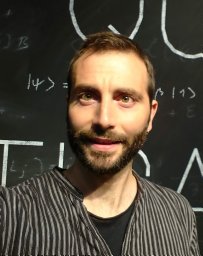 Arnau Riera合作论文数Universitat de Barcelona1
 Giacomo Mauro D'Ariano合作论文数QUIT Group;Dipartimento di Fisica;QUIT Group|Dipartimento di Fisica1K. Furuya合作论文数1
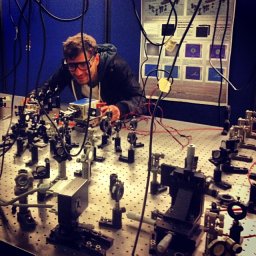 Daniel S. Tasca合作论文数Instituto de F;Universidade Federal do Rio de Janeiro;Rio de Janeiro;Instituto de F, Universidade Federal do Rio de Janeiro1
 Antonio Vidiella-Barranco合作论文数Universidade Estadual de Campinas1G. L'Hote合作论文数1
 Antonio Z. Khoury合作论文数Instituto de F ´ õsica;Universidade Federal Fluminense;Instituto de F ´ õsica, Universidade Federal Fluminense1
 Guifre Vidal合作论文数Perimeter Institute for Theoretical Physics1
 Maciej Lewenstein合作论文数Instituciò Catalana de Recerca i Estudis Avancats;ICFO-Institut de Ciencies Fotoniques1




