Whether singularities can form in fluids remains a foundational unanswered question in mathematics. This phenomenon occurs when solutions to governing equations, such as the 3D Euler equations, develop infinite gradients from smooth initial conditions. Historically, numerical approaches have primarily identified stable singularities. However, these are not expected to exist for key open problems, such as the boundary-free Euler and Navier-Stokes cases, where unstable singularities are hypothesized to play a crucial role. Here, we present the first systematic discovery of new families of unstable singularities. A stable singularity is a robust outcome, forming even if the initial state is slightly perturbed. In contrast, unstable singularities are exceptionally elusive; they require initial conditions tuned with infinite precision, being in a state of instability whereby infinitesimal perturbations immediately divert the solution from its blow-up trajectory. In particular, we present multiple new, unstable self-similar solutions for the incompressible porous media equation and the 3D Euler equation with boundary, revealing a simple empirical asymptotic formula relating the blow-up rate to the order of instability. Our approach combines curated machine learning architectures and training schemes with a high-precision Gauss-Newton optimizer, achieving accuracies that significantly surpass previous work across all discovered solutions. For specific solutions, we reach near double-float machine precision, attaining a level of accuracy constrained only by the round-off errors of the GPU hardware. This level of precision meets the requirements for rigorous mathematical validation via computer-assisted proofs. This work provides a new playbook for exploring the complex landscape of nonlinear partial differential equations (PDEs) and tackling long-standing challenges in mathematical physics.
We introduce the Universal Speech Model (USM), a single large model that performs automatic speech recognition (ASR) across 100+ languages. This is achieved by pre-training the encoder of the model on a large unlabeled multilingual dataset of 12 million (M) hours spanning over 300 languages, and fine-tuning on a smaller labeled dataset. We use multilingual pre-training with random-projection quantization and speech-text modality matching to achieve state-of-the-art performance on downstream multilingual ASR and speech-to-text translation tasks. We also demonstrate that despite using a labeled training set 1/7-th the size of that used for the Whisper model, our model exhibits comparable or better performance on both in-domain and out-of-domain speech recognition tasks across many languages.
We introduce Noise2Music, where a series of diffusion models is trained to generate high-quality 30-second music clips from text prompts. Two types of diffusion models, a generator model, which generates an intermediate representation conditioned on text, and a cascader model, which generates high-fidelity audio conditioned on the intermediate representation and possibly the text, are trained and utilized in succession to generate high-fidelity music. We explore two options for the intermediate representation, one using a spectrogram and the other using audio with lower fidelity. We find that the generated audio is not only able to faithfully reflect key elements of the text prompt such as genre, tempo, instruments, mood, and era, but goes beyond to ground fine-grained semantics of the prompt. Pretrained large language models play a key role in this story -- they are used to generate paired text for the audio of the training set and to extract embeddings of the text prompts ingested by the diffusion models. Generated examples: https://google-research.github.io/noise2music
Data augmentation is a ubiquitous technique used to provide robustness to automatic speech recognition (ASR) training. However, even as so much of the ASR training process has become automated and more "end-to-end", the data augmentation policy (what augmentation functions to use, and how to apply them) remains hand-crafted. We present Graph-Augment, a technique to define the augmentation space as directed acyclic graphs (DAGs) and search over this space to optimize the augmentation policy itself. We show that given the same computational budget, policies produced by G-Augment are able to perform better than SpecAugment policies obtained by random search on fine-tuning tasks on CHiME-6 and AMI. G-Augment is also able to establish a new state-of-the-art ASR performance on the CHiME-6 evaluation set (30.7% WER). We further demonstrate that G-Augment policies show better transfer properties across warm-start to cold-start training and model size compared to random-searched SpecAugment policies.
Many speech applications require understanding aspects beyond the words being spoken, such as recognizing emotion, detecting whether the speaker is wearing a mask, or distinguishing real from synthetic speech. In this work, we introduce a new state-of-the-art paralinguistic representation derived from large-scale, fully self-supervised training of a 600M+ parameter Conformer-based architecture. We benchmark on a diverse set of speech tasks and demonstrate that simple linear classifiers trained on top of our time-averaged representation outperform nearly all previous results, in some cases by large margins. Our analyses of context-window size demonstrate that, surprisingly, 2 second context-windows achieve 96% the performance of the Conformers that use the full long-term context on 7 out of 9 tasks. Furthermore, while the best per-task representations are extracted internally in the network, stable performance across several layers allows a single universal representation to reach near optimal performance on all tasks.
We summarize the results of a host of efforts using giant automatic speech recognition (ASR) models pre-trained using large, diverse unlabeled datasets containing approximately a million hours of audio. We find that the combination of pre-training, self-training and scaling up model size greatly increases data efficiency, even for extremely large tasks with tens of thousands of hours of labeled data. In particular, on an ASR task with 34k hours of labeled data, by fine-tuning an 8 billion parameter pre-trained Conformer model we can match state-of-the-art (SoTA) performance with only 3% of the training data and significantly improve SoTA with the full training set. We also report on the universal benefits gained from using big pre-trained and self-trained models for a large set of downstream tasks that cover a wide range of speech domains and span multiple orders of magnitudes of dataset sizes, including obtaining SoTA performance on many public benchmarks. In addition, we utilize the learned representation of pre-trained networks to achieve SoTA results on non-ASR tasks.
Knowledge Distillation is an effective method of transferring knowledge from a large model to a smaller model. Distillation can be viewed as a type of model compression, and has played an important role for on-device ASR applications. In this paper, we develop a distillation method for RNN-Transducer (RNN-T) models, a popular end-to-end neural network architecture for streaming speech recognition. Our proposed distillation loss is simple and efficient, and uses only the "y" and "blank" posterior probabilities from the RNN-T output probability lattice. We study the effectiveness of the proposed approach in improving the accuracy of sparse RNN-T models obtained by gradually pruning a larger uncompressed model, which also serves as the teacher during distillation. With distillation of 60% and 90% sparse multi-domain RNN-T models, we obtain WER reductions of 4.3% and 12.1% respectively, on a noisy FarField eval set. We also present results of experiments on LibriSpeech, where the introduction of the distillation loss yields a 4.8% relative WER reduction on the test-other dataset for a small Conformer model.
We present SpeechStew, a speech recognition model that is trained on a combination of various publicly available speech recognition datasets: AMI, Broadcast News, Common Voice, LibriSpeech, Switchboard/Fisher, Tedlium, and Wall Street Journal. SpeechStew simply mixes all of these datasets together, without any special re-weighting or re-balancing of the datasets. SpeechStew achieves SoTA or near SoTA results across a variety of tasks, without the use of an external language model. Our results include 9.0% WER on AMI-IHM, 4.7% WER on Switchboard, 8.3% WER on CallHome, and 1.3% on WSJ, which significantly outperforms prior work with strong external language models. We also demonstrate that SpeechStew learns powerful transfer learning representations. We fine-tune SpeechStew on a noisy low resource speech dataset, CHiME-6. We achieve 38.9% WER without a language model, which compares to 38.6% WER to a strong HMM baseline with a language model.
The predictions of wide Bayesian neural networks are described by a Gaussian process, known as the Neural Network Gaussian Process (NNGP). Analytic forms for NNGP kernels are known for many models, but computing the exact kernel for convolutional architectures is prohibitively expensive. One can obtain effective approximations of these kernels through Monte-Carlo estimation using finite networks at initialization. Monte-Carlo NNGP inference is orders-of-magnitude cheaper in FLOPs compared to gradient descent training when the dataset size is small. Since NNGP inference provides a cheap measure of performance of a network architecture, we investigate its potential as a signal for neural architecture search (NAS). We compute the NNGP performance of approximately 423k networks in the NAS-bench 101 dataset on CIFAR-10 and compare its utility against conventional performance measures obtained by shortened gradient-based training. We carry out a similar analysis on 10k randomly sampled networks in the mobile neural architecture search (MNAS) space for ImageNet. We discover comparative advantages of NNGP-based metrics, and discuss potential applications. In particular, we propose that NNGP performance is an inexpensive signal independent of metrics obtained from training that can either be used for reducing big search spaces, or improving training-based performance measures.
Recently, a semi-supervised learning method known as "noisy student training" has been shown to improve image classification performance of deep networks significantly. Noisy student training is an iterative self-training method that leverages augmentation to improve network performance. In this work, we adapt and improve noisy student training for automatic speech recognition, employing (adaptive) SpecAugment as the augmentation method. We find effective methods to filter, balance and augment the data generated in between self-training iterations. By doing so, we are able to obtain word error rates (WERs) 4.2%/8.6% on the clean/noisy LibriSpeech test sets by only using the clean 100h subset of LibriSpeech as the supervised set and the rest (860h) as the unlabeled set. Furthermore, we are able to achieve WERs 1.7%/3.4% on the clean/noisy LibriSpeech test sets by using the unlab-60k subset of LibriLight as the unlabeled set for LibriSpeech 960h. We are thus able to improve upon the previous state-of-the-art clean/noisy test WERs achieved on LibriSpeech 100h (4.74%/12.20%) and LibriSpeech (1.9%/4.1%).
We employ a combination of recent developments in semi-supervised learning for automatic speech recognition to obtain state-of-the-art results on LibriSpeech utilizing the unlabeled audio of the Libri-Light dataset. More precisely, we carry out noisy student training with SpecAugment using giant Conformer models pre-trained using wav2vec 2.0 pre-training. By doing so, we are able to achieve word-error-rates (WERs) 1.4%/2.6% on the LibriSpeech test/test-other sets against the current state-of-the-art WERs 1.7%/3.3%.
Recently, SpecAugment, an augmentation scheme for automatic speech recognition that acts directly on the spectrogram of input utterances, has shown to be highly effective in enhancing the performance of end-to-end networks on public datasets. In this paper, we demonstrate its effectiveness on tasks with large scale datasets by investigating its application to the Google Multidomain Dataset (Narayanan et al., 2018). We achieve improvement across all test domains by mixing raw training data augmented with SpecAugment and noise-perturbed training data when training the acoustic model. We also introduce a modification of SpecAugment that adapts the time mask size and/or multiplicity depending on the length of the utterance, which can potentially benefit large scale tasks. By using adaptive masking, we are able to further improve the performance of the Listen, Attend and Spell model on LibriSpeech to 2:2% WER on test-clean and 5:2% WER on test-other.
We present SpecAugment, a simple data augmentation method for speech recognition. SpecAugment is applied directly to the feature inputs of a neural network (i.e., filter bank coefficients). The augmentation policy consists of warping the features, masking blocks of frequency channels, and masking blocks of time steps. We apply SpecAugment on Listen, Attend and Spell networks for end-to-end speech recognition tasks. We achieve state-of-the-art performance on the LibriSpeech 960h and Swichboard 300h tasks, outperforming all prior work. On LibriSpeech, we achieve 6.8% WER on test-other without the use of a language model, and 5.8% WER with shallow fusion with a language model. This compares to the previous state-of-the-art hybrid system of 7.5% WER. For Switchboard, we achieve 7.2%/14.6% on the Switchboard/CallHome portion of the Hub5'00 test set without the use of a language model, and 6.8%/14.1% with shallow fusion, which compares to the previous state-of-the-art hybrid system at 8.3%/17.3% WER.
We investigate how the final parameters found by stochastic gradient descent are influenced by over-parameterization. We generate families of models by increasing the number of channels in a base network, and then perform a large hyper-parameter search to study how the test error depends on learning rate, batch size, and network width. We find that the optimal SGD hyper-parameters are determined by a "normalized noise scale," which is a function of the batch size, learning rate, and initialization conditions. In the absence of batch normalization, the optimal normalized noise scale is directly proportional to width. Wider networks, with their higher optimal noise scale, also achieve higher test accuracy. These observations hold for MLPs, ConvNets, and ResNets, and for two different parameterization schemes ("Standard" and "NTK"). We observe a similar trend with batch normalization for ResNets. Surprisingly, since the largest stable learning rate is bounded, the largest batch size consistent with the optimal normalized noise scale decreases as the width increases.
We specify a loss function L that is a function of the parameters (or weights) of the model, and a training set Strain of size Ntrain. The total loss Lτ is obtained by summing all the individual losses L(s) of training samples indexed by s. We optimize Lτ either by stochastic gradient descent (SGD) or SGD + momentum. We fix a batch size B, a learning rate and, in the case of SGD + momentum, a momentum m. We do not consider annealing or any other kind of parameter schedule.
We obtain new constraints on the anomaly coefficients of 6D N = 1 0 $$ mathcal{N}=left(1,0right) $$ supergravity theories using local and global anomaly cancellation conditions. We show how these constraints can be strengthened if we assume that the theory is well-defined on any spin space-time with an arbitrary gauge bundle. We distinguish the constraints depending on the gauge algebra only from those depending on the global structure of the gauge group. Our main constraint states that the coefficients of the anomaly polynomial for the gauge group G should be an element of 2H 4 (BG; ℤ ) ⊗ Λ S where Λ S is the unimodular string charge lattice. We show that the constraints in their strongest form are realized in F-theory compactifications. In the process, we identify the cocharacter lattice, which determines the global structure of the gauge group, within the homology lattice of the compactification manifold.
We obtain new constraints on the anomaly coefficients of 6D \( \mathcal{N}=\left(1,0\right) \) supergravity theories using local and global anomaly cancellation conditions. We show how these constraints can be strengthened if we assume that the theory is well-defined on any spin space-time with an arbitrary gauge bundle. We distinguish the constraints depending on the gauge algebra only from those depending on the global structure of the gauge group. Our main constraint states that the coefficients of the anomaly polynomial for the gauge group G should be an element of 2H4(BG; ℤ) ⊗ Λ S where Λ S is the unimodular string charge lattice. We show that the constraints in their strongest form are realized in F-theory compactifications. In the process, we identify the cocharacter lattice, which determines the global structure of the gauge group, within the homology lattice of the compactification manifold.
We construct a general class of Calabi-Yau threefolds from fiber products of rational elliptic surfaces with section, generalizing a construction of Schoen to include all Kodaira fiber types. The resulting threefolds each have two elliptic fibrations with section over rational elliptic surfaces and blowups thereof. These elliptic fibrations generally have nonzero Mordell-Weil rank. Each of the elliptic fibrations has a physical interpretation in terms of a six-dimensional F-theory model with one or more non-Higgsable abelian gauge fields. Many of the models in this class have mild singularities that do not admit a Calabi-Yau resolution; this does not seem to compromise the physical integrity of the theory and can be associated in some cases with massless hypermultiplets localized at the singular loci. In some of these constructions, however, we find examples of abelian gauge fields that cannot be "unHiggsed" to a nonabelian gauge field without producing unphysical singularities that cannot be resolved. The models studied here can also be used to exhibit T-duality for a class of little string theories.
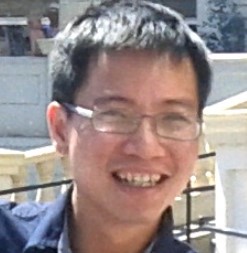 Quoc V. Le合作论文数Google11
 Yu Zhang (张羽)合作论文数Meta Superintelligence Labs9
 Chung-Cheng Chiu合作论文数Google Brain7
 William Chan (陳俊樂)合作论文数Ideogram AI6
 Samuel Monnier合作论文数6
 Yonghui Wu (吴永辉)合作论文数ByteDance Seed5
 Gregory W. Moore合作论文数Department of Physics and Astronomy, School of Arts and Sciences, Rutgers University;Department of Mathematics, School of Arts and Sciences, Rutgers University5
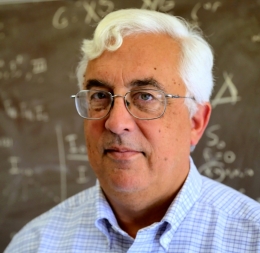 David R. Morrison合作论文数Department of Mathematics, University of California, Santa Barbara;Department of Physics, University of California, Santa Barbara4
 Bo Li合作论文数Google DeepMind4
 Wei Han合作论文数Google4
 Edward Sweeney合作论文数4James Qin合作论文数Google3
 Bhuvana Ramabhadran合作论文数Google;Columbia University3
 Ekin Dogus Cubuk合作论文数Periodic Labs3
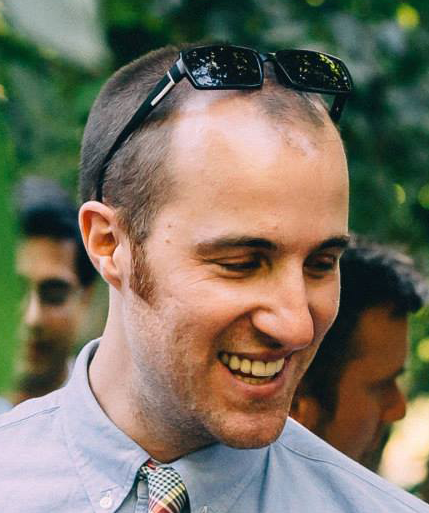 Jascha Sohl-Dickstein合作论文数Anthropic3
 Zhifeng Chen合作论文数Apple2Michele Del Zotto合作论文数Uppsala University2
 Joel Shor合作论文数Deep Genomics2
 Jonathan J. Heckman合作论文数Department of Physics and Astronomy, School of Arts & Sciences, University of Pennsylvania2
 Tara Sainath合作论文数Google DeepMind2
 Francoise Beaufays合作论文数Google2
 Jiahui Yu合作论文数Meta2
 Barret Zoph合作论文数OpenAI2
 Yongqiang Wang合作论文数NVIDIA2
 Samuel L. Smith合作论文数DeepMind2
 Nanxin Chen合作论文数OpenAI2
 Pedro J Moreno Mengibar合作论文数Humain2
 Ruoming Pang (庞若鸣)合作论文数OpenAI2
 Cyril Closset合作论文数Mathematical Institute, University of Oxford2
 Aren Jansen合作论文数Google DeepMind2james e owen合作论文数1david elrod合作论文数1carl mansfield合作论文数1
 Christian Frank合作论文数1
 Jason Riesa合作论文数Google Inc1Shibo Wang合作论文数Google1Sam Blackwell合作论文数1CC Chiu合作论文数1
 Timo I. Denk合作论文数1
 Nenad Tomasev合作论文数Google DeepMind1
 Yongji Wang合作论文数1Stefano Cremonesi合作论文数1
 Stanislav Nikolov合作论文数DeepMind1Youzheng Chen合作论文数Google1Vera Axelrod合作论文数Google1peng zhao合作论文数Simons Center for Geometry and Physics, Stony Brook University1
 Zhehuai Chen (陈哲怀)合作论文数Google;AISpeech1
 Tom Rudelius合作论文数University of California1




